My Mindful Robot
 84
84

My Mindful Robot
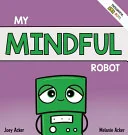
Joey and Melanie Acker’s ‘My Mindful Robot’ tackles the challenging task of explaining mindfulness to children with a charming, if somewhat simplistic, robotic allegory. The strength lies in its direct approach; by personifying mindfulness in ‘Mindful Bot,’ the authors create a tangible character for young minds to latch onto. The passage where Mindful Bot describes feeling her ‘circuits calm’ when focusing on her breath offers a clear, accessible metaphor for interoception, a key component of mindful practice. However, the narrative occasionally feels a touch didactic, with the explanations sometimes overshadowing the story’s natural flow. While effective for very young audiences, older children might find the robotic framework a bit too literal. The book succeeds in its primary goal: making a complex concept understandable and actionable for its target demographic. It’s a functional tool for parents and educators.
📝 Description
84
Published in 2021, 'My Mindful Robot' uses robotic characters to introduce mindfulness to children.
Joey and Melanie Acker's 'My Mindful Robot' introduces young readers to mindfulness through a story about Mindful Bot and her builder. The characters demonstrate and teach strategies for emotional regulation to other robots. The book aims to make mindfulness understandable and show it as a practical tool for managing feelings.
This book is for children, parents, educators, and caregivers who want simple ways to teach emotional intelligence and self-regulation. It serves as a guide for introducing mindfulness concepts in a way children can relate to, especially those who find these skills difficult to grasp or use. The story reflects the impact of the digital age by using technology characters to explain human emotions and awareness.
Emerging in 2021 amid a surge in social-emotional learning literature, 'My Mindful Robot' aligns with a contemporary focus on early intervention and mental well-being for youth. While not explicitly esoteric, its use of technological metaphors to explain humanistic concepts like emotional awareness and self-control echoes traditions that use allegory to convey complex inner states. The book grounds abstract psychological principles in a relatable, modern context, mirroring how various spiritual and philosophical traditions have historically employed narratives and symbolic figures to teach inner discipline.
💡 Why Read This Book?
• Learn concrete strategies for emotional regulation through the 'calming circuits' metaphor, directly inspired by Mindful Bot's techniques. • Understand the core principles of mindfulness as presented in the 2021 publication, specifically how it aids in managing feelings like frustration or anxiety. • Gain practical methods for explaining complex emotions to children using the relatable robot characters and their problem-solving dialogues.
⭐ Reader Reviews
Honest opinions from readers who have explored this book.
❓ Frequently Asked Questions
What age group is 'My Mindful Robot' best suited for?
The book is ideal for preschoolers and early elementary school children, typically ages 3-7. Its simple language and bright illustrations are designed to engage young minds learning about emotions and self-regulation.
Who are the authors of 'My Mindful Robot'?
The book was authored by Joey Acker and Melanie Acker. It was first published on October 24, 2021.
What is the main message of 'My Mindful Robot'?
The core message is that mindfulness is an important skill for managing emotions and finding calm, presented in a way that children can easily understand and practice.
Are there specific mindfulness techniques taught in the book?
Yes, the book introduces techniques like focusing on breath to help characters, and by extension readers, find their calm when experiencing strong emotions.
Does the book use illustrations?
Yes, 'My Mindful Robot' features fun, bright illustrations that enhance the narrative and help convey the emotional concepts to young readers.
What is the original publication date of 'My Mindful Robot'?
The book was first published on October 24, 2021.
🔮 Key Themes & Symbolism
Emotional Regulation
The narrative centers on teaching robots how to manage their internal states, mirroring the human need for emotional regulation. Mindful Bot's ability to find calm through specific practices serves as a model. This theme is crucial for developing children's capacity to understand and respond to their feelings constructively, rather than being overwhelmed by them. The book presents emotional regulation not as suppression, but as a skill that can be learned and applied, much like learning to build or program.
Mindfulness as a Skill
Unlike abstract philosophical concepts, 'My Mindful Robot' frames mindfulness as a practical, learnable skill. The robot characters, designed for logic and function, are taught mindfulness, suggesting its universal applicability. This approach clarifies the practice, making it accessible to young children by relating it to their developing cognitive abilities. The emphasis is on consistent application, highlighting that like any skill, mindfulness improves with practice.
The Builder's Role
The 'builder' character represents the facilitator or educator – the one who introduces and guides the learning process. This figure is essential in demonstrating how to teach complex concepts like mindfulness. The builder's interaction with Mindful Bot and the other robots underscores the importance of patient instruction and support in social-emotional development. Their presence highlights the role of supportive adults in helping children navigate their inner worlds.
Robots and Humanity
The use of robots as protagonists offers a unique lens through which to explore human emotions and cognitive processes. By assigning human-like emotional challenges to artificial beings, the book invites readers to consider the fundamental nature of feelings and consciousness. It subtly questions what it means to be 'alive' or 'aware,' using the robots' journey towards mindfulness as a parallel to human growth and self-discovery.
💬 Memorable Quotes
Direct passages from the work, attributed to the author.
“Mindfulness is an important, lifelong skill that helps children manage emotions.”
— This statement directly defines the book's purpose: to present mindfulness as a practical, enduring tool for emotional well-being, especially crucial during childhood development.
“Join Mindful Bot as her and her builder teach the other robots strategies.”
— This highlights the narrative structure, focusing on instruction and learning within a social context, where a mentor figure guides others in acquiring new abilities.
“With fun, bright illustrations and easy-to-understand language...”
— This description points to the book's pedagogical approach, prioritizing visual engagement and clear communication to make the learning process enjoyable and effective for young readers.
💡 Key Ideas
Editorial paraphrase of the work's core concepts — not direct quotes.
Mindful Bot is a master of mindfulness!
This line immediately establishes the central character's expertise and the book's primary theme, setting the stage for learning about mindful practices from a knowledgeable source.
The work explores how they can use it when they are feeling other emotions so that they can find their calm.
This paraphrased concept emphasizes the practical application of mindfulness, showing its utility in moments of emotional distress and its power to restore inner peace.
🌙 Esoteric Significance
Tradition
While 'My Mindful Robot' does not overtly align with a specific historical esoteric tradition like Hermeticism or Gnosticism, it democratizes and secularizes core concepts often found within them. Practices such as focused breathing and present-moment awareness are foundational in many contemplative paths, including Buddhist meditation and Stoic philosophy, both of which have influenced Western esotericism. The book's innovation lies in translating these ancient techniques into a modern, child-friendly format using technological metaphors, making accessible what might otherwise be perceived as complex or arcane.
Symbolism
The primary symbol is the 'Mindful Robot' itself, representing the potential for disciplined awareness and emotional control within any being, biological or artificial. The 'calming circuits' metaphor signifies the internal mechanisms of self-regulation that can be activated through mindful practice. The builder figure symbolizes the guiding principle or enlightened consciousness that facilitates growth and understanding in others, akin to a guru or initiate guiding a novice.
Modern Relevance
This work is highly relevant to contemporary mindfulness-based interventions (MBIs) and the broader field of positive psychology. Thinkers and practitioners in areas like secular mindfulness, cognitive behavioral therapy (CBT), and even certain branches of transhumanist thought that explore consciousness might find resonance. Educators and parents are increasingly seeking tools like 'My Mindful Robot' to foster resilience and emotional intelligence in children, reflecting a modern societal emphasis on mental well-being.
👥 Who Should Read This Book
• Parents and caregivers seeking accessible tools to introduce mindfulness and emotional regulation to children aged 3-7. • Educators and school counselors looking for engaging resources to support social-emotional learning in early childhood classrooms. • Therapists and child psychologists who utilize bibliotherapy and narrative techniques to help young clients understand and manage their feelings.
📜 Historical Context
Published in 2021, 'My Mindful Robot' arrives amidst a burgeoning field of children's literature dedicated to social-emotional learning (SEL). The late 2010s and early 2020s saw a significant increase in books aimed at teaching emotional intelligence, self-regulation, and mindfulness to young audiences, a trend amplified by growing societal awareness of mental health. This period also marked a surge in digital-native content creators and themes, making the use of robot characters a contemporary and relevant choice. While not directly engaging with esoteric traditions, the book taps into a broader cultural interest in self-awareness and inner peace, concepts explored for centuries in various spiritual and philosophical lineages. Its emergence can be seen as part of a modern interpretation of ancient contemplative practices, adapted for a 21st-century child. The work does not appear to have faced significant controversy or censorship, aligning with the generally accepted value of SEL initiatives.
📔 Journal Prompts
Mindful Bot's calming circuits: How can you activate your own internal 'calming circuits' when feeling overwhelmed?
The builder's role: What strategies did the builder use to teach Mindful Bot, and how can you apply them in your own learning?
Robot emotions: If you were a robot learning about feelings, what would be the most surprising emotion to understand?
Finding your calm: Describe a time you used a specific technique to find your calm, similar to how Mindful Bot does.
Robot learning: Reflect on a skill you learned that felt as challenging as learning mindfulness might feel for a robot.
🗂️ Glossary
Mindfulness
The practice of paying attention to the present moment without judgment. In the book, it's presented as a tool to manage emotions and find calm.
Mindful Bot
The main character of the book, a robot who learns and teaches mindfulness strategies, serving as a guide for young readers.
Builder
The character who instructs Mindful Bot and the other robots, representing the role of a teacher or guide in learning emotional regulation skills.
Calming Circuits
A metaphorical term used in the book to describe the internal process or mechanism that helps one feel calm, often activated by mindful practices like deep breathing.
Emotional Regulation
The ability to manage and respond to one's emotions in a healthy and appropriate way. The book teaches this through the robot characters' experiences.
Social-Emotional Learning (SEL)
The process through which children and adults acquire the knowledge, attitudes, and skills to understand and manage emotions, set and achieve positive goals, feel and show empathy, establish and maintain positive relationships, and make responsible decisions.
Finding Your Calm
A key outcome of practicing mindfulness, referring to the state of peace and stability achieved when one can manage difficult emotions effectively.
This book appears in 1 collection
🔮 Readers Also Liked
Browse all →









From the “Mindfulness” Collection
View all →







More Free Occult Philosophy Books
View all →