The Bridge
 77
77

The Bridge
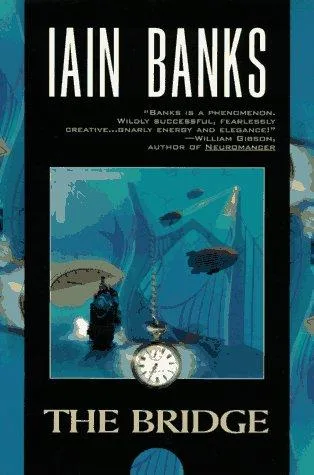
Iain Banks’s *The Bridge* is less a novel and more an intricate, often disorienting, philosophical engine. Its primary strength lies in its audacious conceptualization of the Causeway – a sprawling, artificial edifice designed to house and perhaps contain a specific, troubled population. The work plunges the reader into the psyche of John S., whose internal fragmentation mirrors the island’s imposed order. While the narrative’s deliberate obliqueness can be frustrating, particularly in its early stages, the sheer intellectual audacity of its construction is undeniable. A passage detailing the island's construction and its psychological implications for its inhabitants offers a stark glimpse into Banks's bleakly imaginative vision. The book’s limitation is its sheer density; the narrative requires significant reader investment and a willingness to embrace ambiguity. Ultimately, *The Bridge* is a demanding but intellectually stimulating exploration of consciousness and control.
📝 Description
77
Iain Banks's 1986 novel, The Bridge, uses a surreal narrative to question reality and control.
The Bridge, published in 1986, follows John S. on a remote, artificial island designed to house a segment of humanity. This island, known as the 'Causeway,' functions as a self-contained system whose purpose remains deliberately unclear. It could be a prison or a therapeutic space, reflecting John's own deep psychological distress and existential crisis. Banks crafts a dense, philosophical science fiction narrative that avoids simple explanations. The story delves into the protagonist's struggle with his perception of reality and his place within the island's structured environment.
Readers who enjoy intricate world-building and inquiries into consciousness will find The Bridge rewarding. It demands attention due to its unconventional structure and bleak outlook. The novel engages with themes of manufactured reality, the subjective experience of time, and the ethics of societal engineering. The Causeway serves as a central metaphor for a controlled setting where individual identity is secondary to a perceived collective benefit.
Emerging in 1986, The Bridge reflects anxieties surrounding technological advancement and societal control prevalent during the Cold War. It engages with themes akin to cyberpunk, but with a more introspective and philosophical approach. The novel's focus on constructed environments and the manipulation of perception aligns with esoteric traditions that question the nature of our perceived reality. Banks's work invites readers to consider the boundaries between the individual and the collective, and the methods used to maintain order.
💡 Why Read This Book?
• Gain a visceral understanding of constructed realities, as exemplified by the artificial island setting of the Causeway, and how such environments impact individual perception. • Experience a unique narrative voice that challenges conventional storytelling, mirroring the protagonist John S.'s fractured consciousness. • Contemplate the ethical implications of societal control and engineered environments, as depicted in the novel's stark depiction of its inhabitants' lives.
⭐ Reader Reviews
Honest opinions from readers who have explored this book.
❓ Frequently Asked Questions
What is the primary setting of Iain Banks's *The Bridge*?
The novel is primarily set on a vast, artificial island known as the Causeway, constructed to house a specific segment of humanity. This island serves as a central metaphor for control and manufactured reality.
When was Iain Banks's novel *The Bridge* first published?
*The Bridge* by Iain Banks was first published in 1986, placing it within the broader landscape of late 20th-century speculative fiction.
What kind of philosophical themes does *The Bridge* explore?
The book delves into themes of consciousness, manufactured reality, societal control, free will versus determinism, and the nature of sanity within engineered environments.
Is *The Bridge* considered a typical science fiction novel?
While it contains speculative elements, *The Bridge* leans more towards philosophical and psychological fiction. It is less about technological exposition and more about the existential impact of its concepts.
Who is the main protagonist in *The Bridge*?
The central protagonist is John S., a character grappling with profound psychological distress and an existential crisis within the confines of the Causeway.
What is the significance of the Causeway in the novel?
The Causeway is a key symbol, representing a meticulously controlled environment designed to manage or contain its inhabitants, raising questions about freedom and artificial existence.
🔮 Key Themes & Symbolism
Manufactured Realities
The novel meticulously constructs the Causeway, an artificial island that functions as both a physical and psychological prison. This environment is designed to control its inhabitants, blurring the lines between external reality and internalized perception. The narrative explores how such a constructed world shapes identity, memory, and the very concept of self, questioning whether true freedom is possible within imposed structures.
Fractured Consciousness
John S., the protagonist, embodies a state of profound mental fragmentation. His internal world is as complex and disorienting as the island he inhabits. The book uses his psychological state to explore the subjective nature of reality and the challenges of maintaining a coherent sense of self when subjected to external manipulation or internal breakdown. This mirrors the broader societal fragmentation depicted.
Societal Control and Ethics
Banks interrogates the ethics of large-scale societal engineering. The Causeway's purpose, whether therapeutic or punitive, is ambiguous, forcing readers to consider the moral implications of systems designed to manage human behavior. The novel presents a chilling vision of control where individual autonomy is sacrificed for a dubious collective benefit, prompting reflection on the price of order.
The Nature of Identity
Within the controlled environment of the Causeway, the novel questions what constitutes an individual's identity. Are we defined by our experiences, our memories, or the roles society assigns us? John S.'s struggle to reconcile his past with his present reality on the island highlights the fragility of identity and the human need for authenticity, even in manufactured circumstances.
💬 Memorable Quotes
Direct passages from the work, attributed to the author.
“The island was a place to be forgotten.”
— This statement captures the core function and existential dread associated with the Causeway, highlighting its role as a site of containment and erasure of individual histories.
“He remembered only what they allowed him to.”
— This suggests a deliberate manipulation of memory and perception, pointing to the pervasive control mechanisms at play on the island and the subjective nature of recalled experience.
“The Causeway was not just land, but a state of mind.”
— This interpretation emphasizes the psychological dimension of the island, framing it as an internal landscape as much as a physical structure, where mental states are as critical as geographical boundaries.
“Order was the only true form of chaos.”
— This paradoxical statement challenges conventional notions of order and chaos, suggesting that rigid, imposed structures can be more destructive and disorienting than apparent randomness.
“He was a prisoner of his own construction.”
— This reflects the protagonist's internal struggle and the idea that his psychological state, perhaps exacerbated by his environment, is the ultimate source of his confinement.
🌙 Esoteric Significance
Tradition
While not explicitly tied to a single esoteric lineage, *The Bridge* shares thematic concerns with Gnostic ideas of a false demiurge creating a flawed material world and the human struggle for liberation from illusion. The artificial island can be seen as a modern manifestation of a Gnostic 'Pleroma' or 'Archon'-controlled realm, where true knowledge and freedom are suppressed.
Symbolism
The Causeway itself is a potent symbol of a fabricated reality, a prison designed by unseen forces. The protagonist, John S., represents the trapped soul seeking gnosis or self-awareness. The fragmented narrative structure mirrors the shattered psyche, with the act of piecing together the story symbolizing the path towards understanding and potential liberation from the imposed order.
Modern Relevance
Contemporary discussions surrounding virtual reality, simulated existence (e.g., the simulation hypothesis), and the ethics of advanced AI and societal management find echoes in Banks's work. Thinkers exploring transhumanism and digital consciousness might find the novel's interrogation of identity and reality particularly relevant to current technological frontiers.
👥 Who Should Read This Book
• Readers interested in philosophical science fiction exploring the boundaries of consciousness and reality, particularly those who appreciate authors like Philip K. Dick or Ursula K. Le Guin. • Students of existentialism and critical theory who wish to examine literary representations of societal control, manufactured environments, and the nature of the self. • Fans of Iain Banks's broader work looking to understand his early exploration of complex psychological landscapes and speculative world-building, predating his Culture series.
📜 Historical Context
Iain Banks's *The Bridge*, released in 1986, emerged in a literary landscape increasingly shaped by speculative fiction that grappled with technological anxiety and societal control. The era saw a surge in cyberpunk, with authors like William Gibson exploring themes of cybernetics and corporate dominance in works such as *Neuromancer* (also 1984). Banks’s novel, however, took a more introspective and philosophical route, focusing on the psychological ramifications of engineered environments rather than purely technological advancement. Its bleak portrayal of a vast, artificial island designed to contain and manage its inhabitants resonated with Cold War-era anxieties about division and confinement, though Banks eschewed overt political allegory. The book’s unconventional narrative structure and its challenging exploration of consciousness marked it as a distinct voice, distinguishing it from more mainstream science fiction of the period and earning it a reputation for its demanding, yet rewarding, intellectual depth.
📔 Journal Prompts
The Causeway as a constructed reality: its purpose and inhabitants' perceptions.
John S.'s internal fragmentation and its connection to the island's structure.
The ethical implications of engineered societies depicted in the Causeway.
Interpreting the symbolism of the artificial island and its inhabitants.
Reflections on the nature of memory and identity within controlled environments.
🗂️ Glossary
The Causeway
The vast, artificial island setting of the novel, designed to house and potentially control a specific population. It functions as a central metaphor for manufactured reality and societal control.
John S.
The primary protagonist of *The Bridge*, a character experiencing profound psychological distress and an existential crisis within the confines of the Causeway.
Manufactured Reality
The concept that the perceived world, particularly the environment of the Causeway, is not natural or organic but deliberately created and maintained, raising questions about authenticity and freedom.
Psychological Fragmentation
The state of the protagonist's mind, characterized by a lack of coherence, fractured memories, and distorted perceptions, mirroring the complex and disorienting nature of the novel's setting.
Societal Engineering
The deliberate design and management of social structures and environments to influence or control the behavior and lives of individuals, as exemplified by the purpose of the Causeway.
Gnosis
A concept often found in esoteric traditions, referring to spiritual knowledge or insight, particularly knowledge of a divine nature. The protagonist's journey can be interpreted as a search for such self-knowledge.
Archons
In Gnosticism, these are malevolent entities or rulers who maintain the material world as a prison for divine sparks, preventing their return to the spiritual realm. The creators/managers of the Causeway can be seen as a modern parallel.
🔮 Readers Also Liked
Browse all →









More by Iain Banks
All books →

More Free Occult Philosophy Books
View all →