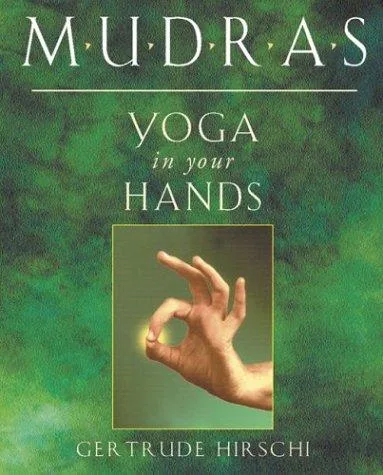
Mudras
 75
75

Mudras
Gertrud Hirschi's "Mudras" presents a lucid guide to a practice often shrouded in mystique. It eschews overly academic language for clear, accessible explanations, a significant strength for those new to the subject. The book's organization, cataloging mudras by their intended effect—such as for concentration or calm—is particularly helpful. One particularly effective section details the "Gyan Mudra" (mudra of knowledge), explaining its simple yet potent application for mental clarity. However, the book sometimes leans towards a generalized approach, lacking deeper dives into the specific philosophical underpinnings or regional variations of mudra practice found in more specialized texts. Despite this, Hirschi’s "Mudras" serves as a reliable, practical introduction for anyone seeking to incorporate these subtle gestures into their personal practice.
📝 Description
75
Gertrud Hirschi's Mudras, published in 2016, systematically explains the significance of hand gestures in spiritual practices.
Mudras by Gertrud Hirschi details various hand postures used in spiritual and meditative traditions. Published in 2016, the book explains these gestures as tools for physical, mental, and spiritual well-being. It describes how specific mudras can channel energy, alter consciousness, and support deeper meditation states. The work serves as both a reference and a practical guide for incorporating these techniques into daily life.
The book is for individuals interested in Eastern spirituality, yoga, meditation, and alternative healing. It suits practitioners aiming to deepen their understanding of yogic and Buddhist practices, and those curious about the energetic effects of physical postures. Beginners will find clear instructions, while experienced practitioners may discover new mudras or gain fresh perspectives on familiar ones. It offers accessible methods for enhancing mindfulness and personal energetic balance.
Mudras have ancient origins in India, appearing in Vedic rituals, classical dance, and Buddhist iconography. Their practice entered Western awareness through the expansion of yoga and Buddhist philosophy in the late 19th and early 20th centuries. Hirschi's 2016 book draws on this historical transmission, presenting a modern synthesis of these practices. It makes ancient gestures accessible, informed by extensive study and personal experience, connecting them to the concept of subtle energy flow.
💡 Why Read This Book?
• Learn the specific technique and energetic intention behind the "Gyan Mudra," a fundamental gesture for enhancing focus, as detailed in Hirschi's accessible explanations. • Discover how to utilize over 100 distinct mudras, each presented with clear instructions and potential benefits, drawing from ancient Indian traditions first systematically documented centuries ago. • Gain practical methods for integrating specific mudras, like the "Anjali Mudra" (prayer seal), into your daily meditation or yoga routine to cultivate inner peace, as demonstrated throughout the book's actionable guidance.
⭐ Reader Reviews
Honest opinions from readers who have explored this book.
❓ Frequently Asked Questions
What is the historical origin of mudras as discussed in Gertrud Hirschi's book?
Mudras, as explored in "Mudras," have ancient roots in India, appearing in Vedic rituals and early Buddhist traditions. Their practice predates the common era, with significant development occurring over centuries in yogic and meditative contexts.
How does Gertrud Hirschi explain the energetic impact of mudras?
Hirschi explains that mudras are believed to channel the body's subtle energy, known as prana or qi. Specific hand positions are thought to stimulate particular energetic pathways or chakras, influencing mental and physical states.
Can beginners effectively use the mudras described in this book?
Yes, "Mudras" is designed for accessibility. Hirschi provides clear instructions and explanations for numerous gestures, making it suitable for beginners seeking to incorporate these practices into their routines.
What is the significance of the "Anjali Mudra"?
The "Anjali Mudra," often called the prayer seal, involves pressing the palms together at the heart center. Hirschi likely describes it as a gesture of reverence, gratitude, and unity, commonly used in greetings and meditation.
When was Gertrud Hirschi's book 'Mudras' first published?
Gertrud Hirschi's book "Mudras" was first published in 2016, offering a contemporary compilation and explanation of these ancient practices.
Does the book cover mudras used in different spiritual traditions?
While focusing heavily on traditions originating from India, such as yoga and Buddhism, "Mudras" likely touches upon the universality of hand gestures in spiritual contexts, drawing from practices that have spread globally.
🔮 Key Themes & Symbolism
Energetic Channeling Through Gestures
The central tenet of Hirschi's "Mudras" is that deliberate hand positions act as conduits for subtle energies within the body. The book details how specific configurations of fingers and palms can direct prana or qi, influencing the practitioner's energetic field. This concept aligns with traditional Indian medicine and yogic philosophy, where blockages or imbalances in energy flow are seen as root causes of distress. By understanding and applying these gestures, practitioners can theoretically clear these blockages and promote a state of energetic harmony and well-being.
Mind-Body Connection via Mudras
Hirschi's work emphasizes the profound connection between physical gestures and mental states. Each mudra is presented not just as a physical posture but as a means to cultivate specific psychological qualities, such as concentration, peace, or compassion. The book explores how the physical act of forming a mudra can send signals to the brain, influencing mood, focus, and emotional regulation. This psychosomatic link is a key aspect, suggesting that by altering the physical form, one can intentionally shift internal experience.
Integration into Daily Practice
A significant theme is the practical application of mudras beyond formal meditation sessions. Hirschi provides guidance on how to incorporate these gestures into everyday activities, whether during work, travel, or other routines. The goal is to make the benefits of mudra practice accessible and continuous, transforming mundane moments into opportunities for spiritual cultivation. This approach democratizes esoteric practices, suggesting that profound inner work can be achieved through simple, consistent physical actions integrated into life.
Symbolic and Literal Meanings
The book explores both the symbolic representation and the literal energetic function of various mudras. For instance, the "Gyan Mudra" (knowledge gesture) not only symbolizes wisdom but is also believed to enhance cognitive function by stimulating specific nerve endings or energetic points in the hand. Hirschi navigates these layers of meaning, explaining how the visual form of a mudra often corresponds to its intended effect, thereby reinforcing its efficacy through both psychological association and energetic principles.
💬 Memorable Quotes
Direct passages from the work, attributed to the author.
“The "Anjali Mudra" unites the two hemispheres of the brain and fosters inner harmony.”
— This interpretation suggests the "Anjali Mudra," the prayer seal, has a direct physiological and energetic effect, promoting balance and integration within the practitioner's being.
“Each finger corresponds to a specific element or energetic influence.”
— This statement underscores the detailed symbolic system underlying mudras, implying that the composition of a mudra involves a deliberate arrangement of energetic forces represented by each digit.
“Mudras can be used to cultivate specific qualities like patience or courage.”
— This interpretation emphasizes the intentional use of mudras as tools for personal development, suggesting they can actively shape one's character and emotional disposition.
💡 Key Ideas
Editorial paraphrase of the work's core concepts — not direct quotes.
Hand gestures serve as bridges between the physical and the subtle realms.
This paraphrased concept highlights the core idea that mudras are not merely decorative but functional, acting as intermediaries that allow practitioners to interact with and influence energetic currents and consciousness.
The practice of mudras is an ancient art that enhances mindfulness.
This paraphrased concept links the historical depth of mudras with their contemporary relevance as a technique for increasing present-moment awareness and mental clarity.
🌙 Esoteric Significance
Tradition
Mudras are integral to several Indic esoteric traditions, primarily Hinduism and Buddhism, and have found resonance within modern Yoga and Tantra. Hirschi's work synthesizes these practices, presenting them as universal energetic tools. It aligns with the concept of macrocosm-microcosm correspondence, where the human body, particularly the hands, can mirror and influence cosmic energies. This approach fits within a broader framework of embodied spirituality, where physical form is a vehicle for divine expression and energetic transformation, a hallmark of many Tantric and yogic lineages.
Symbolism
Key symbols include the specific finger-to-finger connections, each representing elemental forces or energetic principles. For example, the "Gyan Mudra" (index finger touching thumb) symbolizes knowledge and consciousness, often linked to Jupiter and representing wisdom. The "Anjali Mudra" (palms pressed together) symbolizes unity, reverence, and the divine balance, often seen as bringing together the left (feminine) and right (masculine) energetic channels. These gestures are not arbitrary but are believed to activate specific psycho-physical states through their symbolic resonance and energetic configuration.
Modern Relevance
In contemporary practice, Hirschi's "Mudras" informs various somatic therapies, advanced yoga teacher training, and mindfulness-based stress reduction programs. Therapists and instructors utilize the book's clear explanations to guide clients and students in using mudras for emotional regulation, focus enhancement, and energetic balancing. Thinkers and practitioners in fields like embodied cognition and psychoneuroimmunology may find the book's exploration of the mind-body link through physical gesture particularly relevant to their research and applications.
👥 Who Should Read This Book
• Yoga practitioners seeking to deepen their practice beyond asana and pranayama, by learning specific hand gestures that can enhance meditation and energy flow. • Individuals interested in mindfulness and meditation techniques who want practical, accessible tools to cultivate states of calm, focus, or inner peace. • Students of comparative religion or esoteric studies looking for a clear, systematic guide to the symbolic and energetic significance of hand gestures in Eastern spiritual traditions.
📜 Historical Context
The practice of mudras is ancient, with origins deeply embedded in the spiritual and artistic traditions of India, appearing in Vedic rituals, classical Indian dance, and early Buddhist iconography. By the time Gertrud Hirschi's "Mudras" was published in 2016, the West had a long-standing familiarity with these gestures, largely through the popularization of yoga and Eastern philosophies since the late 19th century. Figures like Swami Vivekananda, who lectured in the US in 1893, were instrumental in introducing yogic concepts, including meditative practices. Hirschi's work arrives in an era where comparative religion studies and mindfulness practices are mainstream, yet it distinguishes itself by offering a detailed, systematic guide to a specific, often overlooked, aspect of these traditions. It benefits from, and contributes to, a broader Western engagement with somatic and contemplative practices, standing apart from purely academic or purely devotional texts by its practical, accessible approach.
📔 Journal Prompts
The "Gyan Mudra" and its effect on mental clarity.
How the "Anjali Mudra" fosters a sense of unity during meditation.
The symbolic meaning of finger positions in mudra practice.
Integrating mudras into daily routines for energetic balance.
Personal experiences with specific mudras for emotional regulation.
🗂️ Glossary
Mudras
Specific hand and finger gestures used in spiritual, meditative, and ritualistic practices, believed to influence energy flow and consciousness.
Prana
The vital life force or energy believed to flow through the body, often associated with breath, and influenced by practices like mudras and yoga.
Chakras
Energy centers within the subtle body, typically visualized along the spine, which are believed to be influenced by various spiritual practices, including mudras.
Gyan Mudra
A common mudra where the tip of the index finger touches the tip of the thumb, often associated with knowledge, wisdom, and mental clarity.
Anjali Mudra
The prayer seal gesture, formed by pressing the palms together in front of the chest, symbolizing reverence, gratitude, and unity.
Subtle Body
The non-physical aspect of the human being, comprising energetic channels (nadis), energy centers (chakras), and vital force (prana), influenced by practices like mudras.
Pranayama
The yogic practice of breath control, often integrated with mudras and meditation to enhance the flow of prana and achieve altered states of consciousness.
🔮 Readers Also Liked
Browse all →









More by Gertrud Hirschi
All books →
More Free Occult Philosophy Books
View all →