Inner Sound
 73
73

Inner Sound
Jonathan Weinel's "Inner Sound" tackles a fascinating subject: the digital translation of internal conscious states. The author meticulously details how electronic music and virtual reality, in particular, offer unprecedented tools for artists to represent phenomena like hallucinations. Weinel's strength lies in his technical grounding, explaining complex digital processes with admirable clarity. However, the book occasionally feels more like a technical survey than a deeply philosophical exploration, at times leaving the reader yearning for more profound contemplation on the *experience* of these simulated states rather than just their construction. A particularly illuminating section discusses the use of binaural beats for inducing altered states, demonstrating the practical application of his theories. While the artistic and technical aspects are well-covered, the philosophical underpinnings, though present, could have been more forcefully articulated. "Inner Sound" is a valuable technical primer for artists working with consciousness simulation, but its philosophical weight is secondary to its practical applications.
📝 Description
73
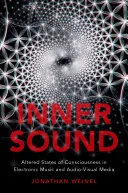
Jonathan Weinel's 2018 book Inner Sound connects electronic music, digital art, and the simulation of consciousness.
Published in 2018, Inner Sound investigates how electronic music, digital art, and virtual reality technologies can represent subjective conscious states. Weinel examines the use of emerging audio technologies and immersive platforms to depict and potentially replicate internal phenomena such as hallucinations and altered states of consciousness. The author details the creative possibilities that digital tools offer artists aiming to translate internal experiences into tangible forms.
The book is aimed at artists, musicians, technologists, philosophers of mind, and researchers interested in how consciousness is experienced and how it can be conveyed through digital media. It will resonate with individuals who examine the limits of sensory perception and the ethical considerations of simulating subjective states. Professionals in media studies, psychology, and cognitive science will also find pertinent information within its pages.
Inner Sound arises from a tradition of artistic and technological experimentation tracing back to early electronic music composers and 20th-century avant-garde art. The development of synthesizers, digital signal processing, and immersive tools like VR opened new artistic avenues. Weinel's book engages with current dialogues on consciousness, artificial intelligence, and the digital portrayal of human experience, extending earlier work in psychoacoustics and electronic art.
💡 Why Read This Book?
• Gain a concrete understanding of how electronic music and digital art, particularly since the advent of digital audio workstations and VR, can be used to simulate subjective conscious states, moving beyond abstract descriptions. • Explore the specific technological advancements and artistic techniques discussed by Weinel that enable the creation of audio-visual artworks designed to represent phenomena like hallucinations, as detailed in the book's exploration of digital tools. • Understand the historical lineage of these explorations, tracing connections from early electronic music pioneers to contemporary immersive media, providing a focused view of this specific creative trajectory.
⭐ Reader Reviews
Honest opinions from readers who have explored this book.
❓ Frequently Asked Questions
When was Jonathan Weinel's 'Inner Sound' first published?
'Inner Sound' by Jonathan Weinel was first published on February 1, 2018, marking its entry into contemporary discussions on digital art and consciousness.
What role does virtual reality play in 'Inner Sound'?
The book highlights virtual reality as an immersive technology capable of enhancing the simulation of subjective internal conscious states, allowing for more accurate representations of experiences like hallucinations.
Can 'Inner Sound' help artists create new forms of audio-visual art?
Yes, the book details how developments in electronic music and digital art offer new possibilities for artists to create audio-visual artworks that represent internal conscious states.
What kind of internal states does the book focus on simulating?
'Inner Sound' focuses on simulating subjective internal conscious states, specifically mentioning the experience of hallucinations and altered states of consciousness.
Who is the intended audience for 'Inner Sound'?
The book is aimed at artists, musicians, technologists, philosophers of mind, and researchers interested in the intersection of digital media, consciousness, and the simulation of subjective experience.
What is the primary focus of Weinel's analysis in 'Inner Sound'?
Weinel's primary focus is on how electronic music and art, combined with digital technology and immersive platforms, enable the representation of subjective internal conscious states.
🔮 Key Themes & Symbolism
Digital Simulation of Consciousness
The core of Inner Sound lies in exploring how digital technologies, particularly electronic music production and immersive virtual reality environments, can be harnessed to create simulations of internal conscious states. Weinel investigates the technical and artistic methodologies required to translate subjective experiences, such as altered states or hallucinations, into perceptible digital forms. This theme examines the potential for art to not just depict but actively emulate aspects of human consciousness, pushing the boundaries of representational media and our understanding of subjective reality through technological means.
Electronic Music and Audio-Visual Art
Weinel examines the evolution of electronic music and audio-visual art as mediums uniquely suited for representing internal phenomena. The book details how advancements in sound synthesis, digital signal processing, and interactive media since the mid-20th century have equipped artists with sophisticated tools. It explores how these tools can be employed to construct sonic and visual landscapes that mirror the often complex and non-linear nature of internal mental states, moving beyond traditional representational paradigms.
Phenomenology and Immersive Technologies
This theme focuses on the phenomenological aspect of consciousness and how immersive technologies like virtual reality offer new avenues for its exploration and representation. Inner Sound discusses the potential for VR to create environments that engage the user's senses in ways that can evoke or simulate specific conscious encounters. The work probes the philosophical implications of using technology to replicate or influence subjective experience, questioning the boundaries between authentic experience and digitally mediated perception.
Artistic Representation of Internal States
Inner Sound addresses the challenge and possibility of artists representing subjective internal conscious states through their work. It looks at how digital technologies provide unprecedented potential for creating audio and audio-visual artworks that capture experiences like hallucinations. The book explores the creative process and technical considerations involved in translating the intangible field of the mind into tangible artistic outputs, examining the efficacy and ethics of such digital renderings.
💬 Memorable Quotes
Direct passages from the work, attributed to the author.
“Developments in electronic music and art have enabled new possibilities for creating audio and audio-visual artworks.”
— This statement highlights the technological advancements that have empowered artists to move beyond traditional mediums, opening doors for the creation of complex works capable of representing internal states.
“Combined with immersive technologies such as virtual reality goggles and high-quality loudspeakers, the potential for accurate simulations of conscious encounters.”
— This highlights the synergistic role of specific technologies—VR and advanced audio systems—in achieving more precise and convincing simulations of subjective conscious experiences.
“Artists can now create audio-visual artworks representing internal phenomena.”
— This concise interpretation focuses on the outcome of technological progress discussed in the book: the expanded creative capacity for artists to externalize inner experiences through media.
💡 Key Ideas
Editorial paraphrase of the work's core concepts — not direct quotes.
The potential for representing subjective internal conscious states, such as the experience of hallucinations, using digital technology.
This paraphrased concept emphasizes the core ambition of the book: to investigate how digital tools can be used to give form to the often ineffable nature of internal mental experiences like hallucinations.
The work explores the possibility for representing subjective internal conscious states using digital technology.
This paraphrased concept underlines the book's central thesis regarding the application of digital tools to articulate and replicate the inner world of human consciousness.
🌙 Esoteric Significance
Tradition
While not explicitly tied to a single historical esoteric lineage like Hermeticism or Gnosticism, "Inner Sound" engages with themes resonant with esoteric thought, particularly the exploration of consciousness beyond ordinary perception. Its focus on internal states, altered experiences, and the potential for technology to facilitate or simulate these echoes traditions that emphasize inner exploration and non-ordinary states of awareness. The work can be seen as a modern, technologically-informed approach to understanding the 'inner planes' or subjective realities often discussed in esoteric literature.
Symbolism
The book's core 'symbols' are arguably the technological tools themselves—synthesizers, algorithms, VR headsets—which function as modern talismans or instruments for accessing and manipulating consciousness. The 'sound' itself, particularly electronic and synthesized sound, becomes a symbolic vehicle for internal states, capable of bypassing rational filters to evoke direct subjective experience. The concept of 'simulation' acts as a potent motif, questioning the nature of reality and the authenticity of digitally mediated perception, a theme explored in various mystical traditions concerning illusion (maya) versus true reality.
Modern Relevance
Contemporary thinkers and practitioners in fields like neuroaesthetics, psychedelic research (particularly concerning technologically-assisted altered states), and digital art are increasingly engaging with the concepts presented in "Inner Sound." The work is relevant to artists using AI and generative algorithms for creative expression, as well as developers of VR/AR experiences seeking to create more profound psychological immersion. It speaks to a growing interest in the intersection of technology, consciousness, and subjective experience, informing discussions on digital well-being and the future of human-computer interaction.
👥 Who Should Read This Book
• Digital artists and electronic musicians seeking to explore the representation of subjective conscious states in their work, offering technical and conceptual frameworks. • Philosophers of mind and cognitive scientists interested in the technological simulation of consciousness and the phenomenology of digital experiences. • Researchers in media studies and virtual reality development looking to understand the potential of immersive technologies for exploring internal psychological landscapes.
📜 Historical Context
Jonathan Weinel's "Inner Sound" emerged in 2018, a period marked by rapid advancements in digital audio workstations, virtual reality hardware, and sophisticated audio-visual art installations. This era saw a surge of interest in the philosophical implications of artificial intelligence and simulated realities, building on earlier conceptual work in cybernetics and media theory from figures like Norbert Wiener and Marshall McLuhan. The book's focus on representing subjective conscious states through electronic means can be seen as a continuation of avant-garde explorations in sound art and experimental film dating back to the mid-20th century, movements that sought to break from representational norms. Unlike purely academic philosophical treatises on consciousness, Weinel's work grounds these discussions in the practical capabilities of contemporary digital tools, positioning it within the field of digital arts and media studies. The specific reception or engagement by named contemporaries is not detailed in the provided blurb, but the work engages with the broader intellectual currents of digital art and consciousness studies.
📔 Journal Prompts
The potential for representing subjective internal conscious states using digital technology.
How do immersive technologies like virtual reality simulate conscious encounters?
The role of electronic music in creating audio-visual artworks for internal states.
What are the ethical considerations of accurately simulating hallucinations?
Exploring the intersection of sound design and altered states of consciousness.
🗂️ Glossary
Subjective Internal Conscious States
Refers to the personal, first-person experiences of consciousness, including thoughts, emotions, perceptions, hallucinations, and altered states, as opposed to objective, observable phenomena.
Audio-Visual Artworks
Art forms that combine sound and visual elements, often created using digital technologies, to produce a unified sensory experience.
Digital Technology
The use of electronic computing and digital data processing in the creation, manipulation, and dissemination of art, music, and information.
Hallucinations
Sensory experiences that appear real but are created by the mind, often associated with altered states of consciousness, psychological conditions, or sensory deprivation.
Altered States of Consciousness
Any mental state significantly different from a normal waking state, potentially induced by meditation, psychoactive substances, trauma, or technological means.
Immersive Technologies
Technologies such as virtual reality (VR) and augmented reality (AR) that create a sense of presence and engagement within a simulated or enhanced environment.
Virtual Reality (VR)
A computer-generated simulation of a three-dimensional image or environment that can be interacted with in a seemingly real or physical way by a person using special electronic equipment.









![Reiki - Manual Original del Dr. Mikao Usui [Spanish]](/img/thumb/reiki-manual-original-del-dr-mikao-usui-spanish-f-arjava-petter-551356.webp)