Mind Power
 79
79

Mind Power
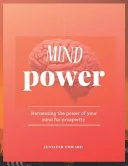
Jennifer Edward’s Mind Power arrives with an ambitious promise: to distill the essence of mental control into practical, actionable steps. The author’s strength lies in her directness; she avoids the spiritual meandering that often plagues similar texts, opting instead for a no-nonsense, technique-driven approach. The chapter detailing "habitualization loops" is particularly effective, breaking down the process of ingrained change into manageable components. However, the book occasionally falters in its ambition to be universally applicable. While the techniques are sound, the underlying philosophy sometimes feels underdeveloped, lacking the deeper theoretical grounding that would distinguish it from countless other self-help guides. For instance, the exploration of "subconscious programming" could benefit from more specific examples or references to established psychological models. Despite this, Edward provides a solid framework for those willing to engage with the exercises. Mind Power offers a pragmatic toolkit for mental recalibration.
📝 Description
79
Jennifer Edward's 2024 book, Mind Power, offers practical methods for cognitive and emotional self-management.
Mind Power, published in 2024, is a practical manual focused on personal advancement through cognitive and emotional faculties. Jennifer Edward structured the book to equip readers with actionable strategies for self-awareness and control over internal states. It aims to provide tools for reshaping thought patterns and emotional responses, emphasizing the direct application of mental discipline for tangible life improvements. The book is for adults committed to self-improvement and overcoming personal obstacles. It suits those interested in practical psychology and personal development who seek concrete techniques. Individuals feeling stagnant in their lives or wishing to improve decision-making and well-being will find direct guidance here. The book is designed for proactive individuals ready for change.
Edward's work addresses adults actively pursuing self-improvement and seeking methods to overcome personal obstacles. It is suitable for those interested in practical psychology, self-help, and personal development who desire concrete techniques rather than abstract theories. Individuals feeling stuck in their personal or professional lives, or those who wish to enhance their decision-making abilities and overall well-being, will find value in its direct guidance. It is designed for the proactive individual ready to implement change.
Published in the mid-2020s, Mind Power enters a crowded self-help field with an emphasis on direct mental control and habit formation. This approach echoes principles from earlier 20th-century movements like New Thought, associated with figures such as Wallace Wattles. While not explicitly referencing thinkers like William James, who examined habit's power, Edward's book is part of a tradition that views the mind as central to shaping reality. Its 2024 release situates it within current conversations on mindfulness and cognitive behavioral techniques, aiming to provide a unified methodology.
💡 Why Read This Book?
• Gain practical techniques for mental recalibration, directly applicable from the "habitualization loops" discussed in Chapter 3, enabling you to consciously reshape thought patterns. • Learn to harness emotional regulation strategies, as presented in the section on "Emotional Anchoring," to navigate challenging situations with greater composure and control. • Develop disciplined focus through Edward's specific "concentration drills," detailed in Chapter 5, to improve productivity and achieve your stated goals more effectively.
⭐ Reader Reviews
Honest opinions from readers who have explored this book.
❓ Frequently Asked Questions
When was Jennifer Edward's Mind Power first published?
Mind Power by Jennifer Edward was first published on December 14, 2024, positioning it as a contemporary exploration of mental self-mastery.
What are the main subjects covered in Mind Power?
The book primarily covers self-mastery, mental discipline, cognitive control, emotional regulation, habit formation, and practical psychology for personal success and fulfillment.
Does Mind Power offer practical exercises?
Yes, Mind Power provides numerous practical techniques and exercises designed to help readers actively cultivate mental mastery and implement personal change.
What is the core philosophy behind Mind Power?
The core philosophy is that conscious direction of one's thoughts and emotions is the key to overcoming limitations and achieving desired life outcomes.
Is Mind Power suitable for beginners in self-help?
Yes, its direct and practical approach makes it accessible for beginners seeking actionable strategies for personal development and mental improvement.
What kind of results can one expect from applying the principles in Mind Power?
Readers can expect enhanced self-awareness, improved emotional control, stronger focus, and the ability to consciously influence personal circumstances towards greater success and fulfillment.
🔮 Key Themes & Symbolism
Cognitive Self-Mastery
This theme centers on the deliberate cultivation of control over one's thought processes. Edward posits that thoughts are not mere occurrences but malleable forces that can be directed. The book explores techniques to identify and reframe limiting beliefs, manage intrusive thoughts, and foster a mindset conducive to achieving goals. It emphasizes the active role individuals play in shaping their internal dialogue, moving beyond passive reception of thoughts to conscious authorship. This internal discipline is presented as the foundation for external success and personal well-being.
Emotional Architecture
Mind Power addresses the construction and regulation of emotional states. It suggests that emotions, like thoughts, can be understood and influenced through systematic practice. The work details methods for identifying emotional triggers, developing resilience, and cultivating desired emotional responses. This involves not suppressing feelings but understanding their origins and learning to respond constructively. By architecting one's emotional landscape, readers are guided to achieve greater inner peace and stability, which in turn supports effective action in the external world.
Habitualization and Behavioral Change
A significant focus is placed on the science of habit formation and its application to personal transformation. Edward breaks down how habits are formed, reinforced, and can be deliberately altered. The book provides structured approaches to establishing beneficial routines and dismantling detrimental ones. This theme underscores the idea that consistent, directed action, even in small increments, leads to significant long-term change. It links the mastery of thought and emotion directly to the practical implementation of new behaviors for a more fulfilling life.
Intentional Manifestation
This theme connects the internal work of mental and emotional mastery to the external realization of goals. Mind Power suggests that by aligning one's thoughts, emotions, and actions with a clear intention, individuals can effectively influence their circumstances. It explores how focused mental energy, coupled with consistent behavioral patterns, can contribute to manifesting desired outcomes. This is presented not as passive wishful thinking but as an active process of creative engagement with reality, guided by disciplined internal states.
💬 Memorable Quotes
Direct passages from the work, attributed to the author.
“Your thoughts are the architects of your reality; learn to wield your mental tools with precision.”
— This statement captures the book's core premise: that conscious mental activity has a direct, causal impact on one's life experiences. It encourages readers to view their minds as active agents of creation rather than passive recipients of circumstance.
“Emotions are signals, not dictators. Understand their message, then choose your response.”
— This highlights the book's approach to emotional intelligence. It reframes emotions as informative rather than controlling forces, empowering readers to develop a more deliberate and less reactive relationship with their feelings.
“Consistent practice, however small, builds the bridge from intention to achievement.”
— This emphasizes the importance of discipline and incremental progress. It suggests that significant results stem from the steady application of techniques, rather than sporadic, large efforts, fostering a sustainable path to goals.
“Identify the root of a habit, then systematically replace its function.”
— This points to the practical methodology for behavioral change presented in the book. It advocates for understanding the underlying mechanisms of habits before attempting to modify them through targeted replacement strategies.
“The mastery of your inner world is the prerequisite for control over your outer world.”
— This foundational concept suggests a hierarchy of influence, positing that true external control or success begins with developing internal discipline and self-awareness.
🌙 Esoteric Significance
Tradition
While not explicitly tied to a single esoteric lineage, Mind Power draws upon principles resonant with Hermeticism and the broader Western Esoteric Tradition. Its focus on the power of thought and intention aligns with Hermetic axioms like "As Above, So Below," suggesting a correspondence between the inner mental world and external reality. The emphasis on self-mastery and the deliberate shaping of one's consciousness can be seen as a modern, secularized interpretation of alchemical or magical principles concerning the transformation of the self. It represents a practical application of mind-over-matter concepts, accessible outside of formal initiatory structures.
Symbolism
The book's primary symbolic motif is the mind itself, depicted as a garden to be cultivated, a tool to be honed, or a kingdom to be ruled. The concept of "mental pathways" can be seen as symbolic of neural networks and ingrained thought patterns, akin to the paths trod in a labyrinth or the ley lines of a landscape. "Anchoring" emotions or thoughts utilizes symbolic association, linking a specific feeling or idea to a concrete mental image or sensation, much like a magical sigil or a mnemonic device, to ensure recall and stability.
Modern Relevance
The principles articulated in Mind Power find significant relevance in contemporary fields such as neuro-linguistic programming (NLP), positive psychology, and productivity coaching. Modern practitioners of manifestation techniques, often drawing from a blend of spiritual and psychological concepts, utilize similar strategies of focused intention and belief management. Thinkers and coaches who emphasize habit formation, like James Clear in "Atomic Habits," share a common ground with Edward's focus on systematic behavioral change. The book's enduring appeal lies in its adaptability to current discussions on mental wellness and personal efficacy.
👥 Who Should Read This Book
• Individuals seeking practical, non-spiritual techniques for self-improvement: Those wary of esoteric jargon but desiring concrete methods to enhance focus, motivation, and emotional resilience will find actionable strategies. • Aspiring entrepreneurs and professionals: Readers aiming to boost productivity, improve decision-making, and overcome mental blocks in competitive environments can leverage the book's focus on mental discipline. • Anyone feeling stuck or overwhelmed: Individuals experiencing personal stagnation or emotional distress can benefit from the structured approach to understanding and reshaping thought patterns and habits.
📜 Historical Context
Jennifer Edward's Mind Power, published in 2024, enters a crowded field of self-help literature. Its emphasis on direct mental control and habit formation aligns with the enduring legacy of New Thought, a movement that gained significant traction in the early 20th century with authors like Wallace Wattles. Wattles's "The Science of Getting Rich" (1910) similarly focused on the power of thought in shaping financial and personal success. While Edward's work doesn't explicitly cite Wattles or his contemporaries, it echoes their core tenet: the mind's creative power. The book's practical, technique-driven approach also positions it within the lineage of cognitive psychology and behavioral science, albeit with a more direct self-empowerment angle than purely academic studies. In the 2020s, this approach contrasts with the more mindfulness-centric or spiritually abstract texts, offering a grounded, actionable methodology for readers seeking tangible results.
📔 Journal Prompts
Reflect on the "habitualization loops" described in Chapter 3 and identify one you wish to alter.
Analyze your "emotional signals" using the framework from the 'Emotional Architecture' section; what message is a recent strong emotion conveying?
Consider your "mental tools" – which ones are sharpest, and which require honing?
Describe a goal you intend to "manifest" and outline the specific thoughts and actions required.
Map out a "mental pathway" you frequently travel; is it serving your progress or hindering it?
🗂️ Glossary
Mental Mastery
The state of consciously controlling and directing one's thoughts, emotions, and mental focus to achieve desired outcomes and personal growth.
Habitualization Loops
The cycle of cue, routine, and reward that forms and reinforces behaviors, which can be systematically understood and modified.
Emotional Anchoring
A technique involving linking a specific emotion to a particular mental image, word, or physical sensation for recall and regulation.
Limiting Beliefs
Internalized assumptions or convictions that restrict potential or hinder progress, often operating at a subconscious level.
Cognitive Reframing
The process of identifying and challenging negative or unhelpful thought patterns and replacing them with more constructive perspectives.
Intentional Focus
The deliberate act of concentrating mental energy on a specific goal or task, minimizing distractions and maximizing cognitive resources.
Subconscious Programming
The underlying patterns of thought and belief, often formed early in life, that influence behavior and perception without conscious awareness.
This book appears in 1 collection
🔮 Readers Also Liked
Browse all →









From the “Mind Power” Collection
View all →






More Free Occult Philosophy Books
View all →