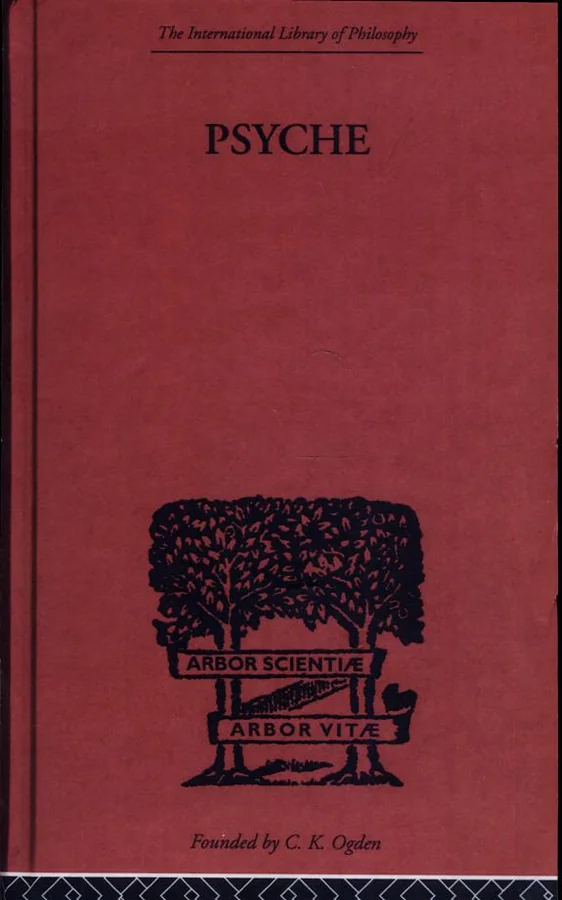
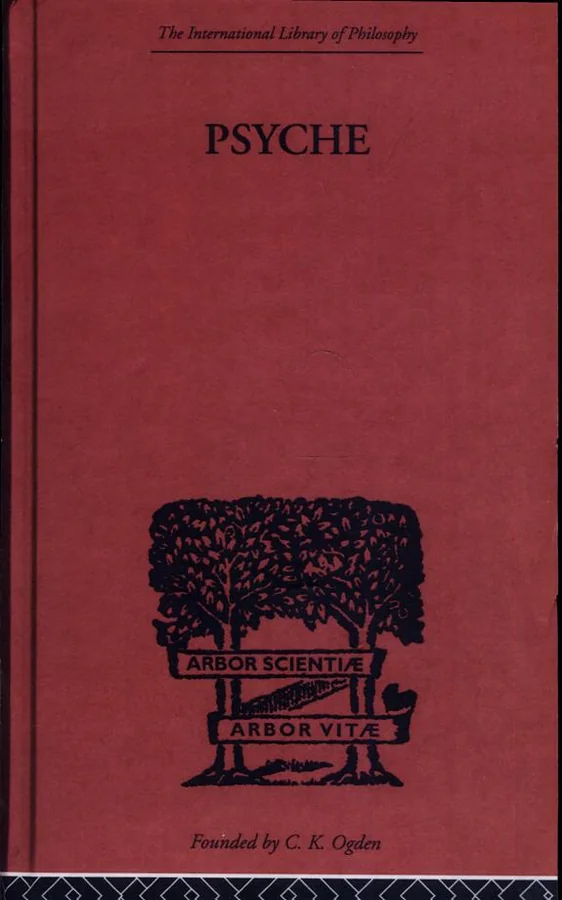
Psyche
 81
81

Psyche
Erwin Rohde’s Psyche is less a book to be read and more a vast, meticulously excavated ruin of ancient thought. Its strength lies in its unparalleled scholarly depth, charting the very genesis of the Greek soul concept from Homeric echoes to Hellenistic mystery cults. Rohde’s tracing of the *psyche*'s journey from a mere breath to a complex entity of consciousness and individuality is astonishing. However, its very thoroughness can be its undoing for the modern reader; the prose, while precise, is dense, and the sheer volume of references to Greek texts, often untranslated in the original edition, demands significant prior knowledge. A particularly striking section details the evolving understanding of the afterlife, illustrating how fear of oblivion gave way to more elaborate underworld cosmologies. Psyche remains a monumental, if demanding, achievement in understanding the ancient Greek psyche.
📝 Description
81
Erwin Rohde's Psyche, first published in 1896, examines the ancient Greek conception of the soul.
Published in 1896, Erwin Rohde's Psyche is a detailed historical study of how ancient Greeks understood the soul and its place in their world. Rohde meticulously analyzes Greek texts to chart the development of ideas about consciousness, death, and the afterlife. This is not a simple overview, but a scholarly reconstruction of ancient beliefs, emphasizing the intellectual currents that shaped them. The book requires careful reading and offers a deep dive into the intellectual history of classical antiquity.
Rohde's work emerged during a time of significant academic focus on ancient Greece. It offered a perspective that countered purely materialist or positivist interpretations, engaging with contemporary scholarly debates. He presented a distinct view on the origins of the concept of the soul, setting his work apart from contemporaries like Wilamowitz-Moellendorff. Psyche is a dense academic text, best suited for those with a strong interest in the history of ideas and a tolerance for rigorous textual analysis.
While often categorized as classical scholarship, Rohde's Psyche touches upon themes relevant to esoteric traditions. It investigates the ancient Greek preoccupation with the soul's journey beyond the physical body and its interactions with unseen forces. The book's examination of altered states of consciousness, divine possession, and the landscape of the afterlife resonates with inquiries found in various occult philosophies. Rohde's meticulous reconstruction of these beliefs, though academic, provides a historical foundation for understanding ancient attempts to grapple with the mysteries of existence and the non-material dimensions of reality.
💡 Why Read This Book?
• Gain a comprehensive understanding of the evolution of the Greek concept of the soul, tracing its development from the Homeric era through to later philosophical schools, a depth not found in superficial overviews. • Explore the ancient Greek perspective on death and the afterlife, specifically examining the transition from simple notions of Hades to complex mythologies and the emergence of personal accountability, as detailed in Rohde's analysis. • Grasp the historical roots of ecstatic experience and divine inspiration, understanding how ancient Greeks perceived these phenomena and their connection to the *daimon*, a concept extensively explored by Rohde.
⭐ Reader Reviews
Honest opinions from readers who have explored this book.
❓ Frequently Asked Questions
When was Erwin Rohde's 'Psyche' first published, and why is this date significant?
Psyche was first published in 1896. This date places its release during a pivotal era for classical scholarship, allowing it to engage with and influence late 19th-century debates on ancient Greek religion and philosophy.
What is the primary focus of Erwin Rohde's 'Psyche'?
The book's primary focus is the historical development of the concept of the soul ('psyche') in ancient Greece, examining its religious, philosophical, and cultural manifestations from the Homeric age onwards.
Does 'Psyche' discuss ancient Greek views on the afterlife?
Yes, a significant portion of Psyche is dedicated to exploring ancient Greek beliefs about death, the underworld (Hades), and the fate of the soul after bodily demise, charting their evolution over centuries.
Is 'Psyche' considered an esoteric text, or a scholarly one?
While its subject matter touches on profound spiritual and psychological concepts, Psyche is primarily a work of rigorous academic scholarship, intended for classical philologists and historians of religion rather than esoteric practitioners.
What ancient Greek concepts does Rohde analyze in depth?
Rohde analyzes concepts such as the *psyche* (soul), *daimon* (divine spirit/fate), dreams, prophecy, divine possession, and the various depictions of the underworld and the afterlife in ancient Greek literature and belief.
How does 'Psyche' relate to other works on ancient Greek thought from its era?
Published in 1896, Psyche was a major contribution to the study of Greek religion and philosophy, offering a comprehensive historical approach that engaged with, and sometimes challenged, prevailing theories of its time.
🔮 Key Themes & Symbolism
The Evolving Soul Concept
Rohde meticulously traces the concept of the *psyche* from its earliest appearances in Homeric poetry, where it often signified a life-force or shade, through its complexification in Pythagorean, Platonic, and mystery cult traditions. The work details how the soul transitioned from a passive entity associated with breath and the underworld to an active principle of consciousness, morality, and individual destiny. This evolution reflects broader shifts in Greek culture towards introspection and personal responsibility, moving beyond purely ritualistic understandings of spiritual existence.
Death and the Underworld
A significant focus of Psyche is the ancient Greek conception of death and the afterlife. Rohde examines the various representations of Hades, the field of the dead, and the shifting attitudes towards it. Initially depicted as a shadowy, undifferentiated existence, the underworld gradually acquired more detailed cosmologies and moral dimensions, influenced by philosophical inquiry and mystery religions. The book highlights the ancient anxieties surrounding oblivion and the desire for a more meaningful post-mortem existence, exploring how these fears shaped religious practices and beliefs.
Divine Inspiration and Ecstasy
Psyche examines the phenomenon of divine inspiration, prophecy, and ecstatic states as understood by the ancient Greeks. Rohde investigates the role of the *daimon*, often interpreted as a divine intermediary or guiding spirit, and the experiences of possession and divination. He analyzes how these altered states of consciousness were integrated into religious cults and philosophical thought, offering pathways to divine knowledge or prophetic insight. This exploration provides crucial context for understanding ancient Greek spirituality beyond rational discourse.
The Birth of Individual Consciousness
Central to Rohde's thesis is the argument that Greek culture, particularly from the 5th century BCE onwards, witnessed the emergence of a more pronounced sense of individual consciousness and personal accountability. This is linked to the developing understanding of the *psyche* as the seat of reason, will, and moral agency. The book explores how philosophical inquiry and the evolution of legal and ethical systems contributed to this shift, differentiating the ancient Greek experience from earlier, more collectivist or fate-driven worldviews.
💬 Memorable Quotes
Direct passages from the work, attributed to the author.
“The fear of the unknown fate after death was a powerful driver of belief.”
— This interpretation points to the psychological underpinnings of ancient religious development, suggesting that the profound uncertainty surrounding mortality fueled the creation of elaborate mythologies and afterlife concepts.
“The *daimon* acted as a mediator between the human and the divine.”
— This concept underscores the role of intermediary spiritual forces in ancient Greek thought, illustrating how beings like the *daimon* facilitated interaction with the divine realm and influenced human destiny.
“Homer's underworld is a place of pale shades, lacking true existence.”
— This highlights a specific characteristic of the early Greek conception of the afterlife, contrasting the bleak existence of the dead in the Homeric poems with later, more developed theological and philosophical ideas about post-mortem existence.
💡 Key Ideas
Editorial paraphrase of the work's core concepts — not direct quotes.
The Greeks conceived of the soul as a breath, a shadow, a shade in Hades.
This paraphrased concept highlights the early, often insubstantial, understanding of the soul in ancient Greece, emphasizing its connection to life-force and its diminished state after death in the Homeric view.
The development of introspection led to a more complex understanding of the soul.
This paraphrased idea suggests a causal link between growing philosophical and personal reflection in ancient Greece and the increasing sophistication and interiority attributed to the concept of the soul.
🌙 Esoteric Significance
Tradition
While primarily a work of classical scholarship, Psyche's deep dive into the origins of soul concepts and ecstatic states provides foundational material for Western esoteric traditions. It offers historical context for later movements like Theosophy and Jungian psychology, which explored archetypal patterns of consciousness and the collective unconscious. Rohde's work, though secular in its methodology, illuminates the ancient roots of ideas about spiritual experience that later esotericists would reinterpret and integrate into their own systems of belief and practice.
Symbolism
The concept of the *psyche* itself functions as a central symbol, representing the evolving human understanding of consciousness, individuality, and spiritual essence. Rohde also examines the symbolism of the *daimon*, an often ambiguous divine or semi-divine intermediary spirit, which in later esoteric thought could be associated with fate, genius, or even a higher self. The imagery of the underworld (Hades) and the journey of the soul are potent symbolic motifs, representing the confrontation with mortality, the unknown, and the potential for spiritual transformation.
Modern Relevance
Contemporary scholars of religion, psychology, and classical antiquity continue to draw upon Rohde’s meticulous research. His exploration of the historical emergence of self-awareness and the complex relationship between collective belief and individual experience remains relevant. Thinkers in fields like depth psychology, comparative religion, and phenomenology find value in his detailed analysis of ancient Greek conceptions of the inner life, which informs modern discussions on consciousness, myth, and the human psyche's enduring quest for meaning.
👥 Who Should Read This Book
• Students of Ancient Greek Religion and Philosophy: Those seeking a comprehensive, historically grounded understanding of how concepts of the soul, consciousness, and the afterlife developed in classical antiquity will find this work indispensable. • Comparative Mythology Scholars: Researchers interested in the evolution of religious beliefs and spiritual concepts across cultures will benefit from Rohde’s detailed tracing of Greek ideas. • Intellectual Historians: Readers focused on the history of Western thought, particularly the philosophical and religious underpinnings of consciousness and the self, will find Rohde’s scholarship clear.
📜 Historical Context
Erwin Rohde’s Psyche, first published in 1896, emerged during a transformative period for classical studies. It entered a scholarly landscape dominated by comparative mythology and the search for Indo-European roots, but Rohde offered a distinctly historical and philological approach. His work engaged with the intellectual currents of late 19th-century Germany, including the burgeoning interest in psychology and the history of consciousness, while firmly grounding his analysis in ancient Greek texts. Psyche was a significant intervention, challenging prevailing views that often saw Greek religion as solely primitive or purely symbolic. It presented a more nuanced picture of spiritual evolution, directly confronting scholars like Ulrich von Wilamowitz-Moellendorff, though its detailed focus on the internal development of belief systems offered a distinct perspective from more externally focused analyses.
📔 Journal Prompts
The Homeric conception of the *psyche* as a shade in Hades.
The role of divine inspiration and ecstatic states in ancient Greek life.
Ancient Greek anxieties regarding death and the unknown afterlife.
The evolution of the *daimon* as a spiritual concept.
The emergence of individual consciousness in classical Greece.
🗂️ Glossary
Psyche
In ancient Greek thought, initially referring to breath or life-force, it evolved to encompass the soul, mind, consciousness, and the individual personality, becoming a central concept in philosophy and religion.
Daimon
A supernatural being or divine power, often acting as an intermediary between gods and humans, influencing destiny, inspiration, or ethical guidance. Its interpretation varied significantly across different periods and philosophical schools.
Hades
The ancient Greek god of the underworld and also the name of the realm over which he ruled, typically depicted as a shadowy, somber place for the souls of the dead.
Ecstasy
A state of being outside oneself, characterized by intense emotion, spiritual rapture, or altered consciousness, often associated with divine possession or prophetic vision in ancient Greek contexts.
Prophecy
The foretelling of future events, often believed to be divinely inspired. In ancient Greece, this was frequently associated with oracles and specific religious rituals designed to elicit divine communication.
Mystery Cults
Religious movements in the ancient world that offered secret rites and initiations, promising spiritual benefits and a more profound understanding of life, death, and the divine, often focusing on specific deities.
Homeric
Pertaining to the epics attributed to the ancient Greek poet Homer, the Iliad and the Odyssey, which provide foundational insights into early Greek culture, mythology, and values.
🔮 Readers Also Liked
Browse all →









More by Erwin Rohde
All books →


More Free Occult Philosophy Books
View all →