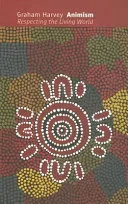
Animism
 84
84

Animism
Graham Harvey's "Animism" offers a crucial corrective to simplistic anthropological definitions. By first publishing in 2005, the work already signaled a shift away from viewing animism as mere "spirit belief" and toward understanding it as a fundamental mode of relationality with the world. Harvey effectively uses examples from the Ojibwe, Maori, and Aboriginal Australian peoples to illustrate the breadth of animistic perspectives. A particular strength lies in its deconstruction of the Western bias that often underlies such studies. However, the sheer diversity explored can, at times, feel less like a cohesive argument and more like an extended survey. The section discussing eco-Paganism, while relevant, feels somewhat tacked on rather than fully integrated. Nevertheless, the book provides essential groundwork for anyone seeking to understand non-Western cosmologies and their contemporary relevance.
📝 Description
84
Graham Harvey's 2005 book re-examines animism beyond its common anthropological usage.
Graham Harvey's "Animism" challenges the traditional anthropological view of animism as a primitive belief system. Instead, Harvey frames it as a broad spectrum of worldviews that attribute spiritual life to all entities, both natural and artificial. This perspective, he argues, is not limited to indigenous cultures but appears in various forms globally.
The book critiques early anthropological studies, such as those by E.B. Tylor, which viewed animism as an early stage of religious evolution. Harvey positions animism as a complex and valid worldview, engaging with later scholarship like Alfred Gell's work on the social life of things. He moves the discussion away from simple notions of belief to a more dynamic understanding of agency and relation.
Harvey introduces concepts like the "animic gaze," the act of perceiving spiritual agency in the world, and the "social life of objects," showing how non-human things can be viewed as active social participants. The book also notes the resurgence of animistic ideas in contemporary movements, particularly eco-spirituality.
This book engages with animism not merely as an academic subject but as a living tradition and a framework for understanding contemporary spiritualities. It offers a counterpoint to Western philosophical divisions between the animate and inanimate, resonating with traditions that emphasize interconnectedness and the agency of the non-human world. By reframing animism, Harvey provides a lens through which to examine modern paganisms, eco-philosophies, and other belief systems that challenge anthropocentric views.
💡 Why Read This Book?
• Learn how Graham Harvey redefines "animism" away from primitive superstition, demonstrating its presence in diverse cultures like the Ojibwe and Maori, offering a richer understanding of global spiritual perspectives. • Understand the "social life of things" concept, which challenges Western objectification by showing how non-human entities are perceived as active agents in relation to humans, as explored in the book's analysis. • Gain insight into the resurgence of animistic thought within contemporary eco-Paganism, providing a bridge between historical indigenous worldviews and modern spiritual practices seeking connection with nature.
⭐ Reader Reviews
Honest opinions from readers who have explored this book.
❓ Frequently Asked Questions
When was Graham Harvey's "Animism" first published?
Graham Harvey's "Animism" was first published in 2005, marking a significant contribution to the re-evaluation of animistic studies in the early 21st century.
What cultures are discussed in Graham Harvey's "Animism"?
The book discusses a range of cultures, including the Ojibwe, Maori, and Aboriginal Australian peoples, to illustrate the diversity of animistic worldviews.
What is the "animic gaze" as described by Graham Harvey?
The "animic gaze" refers to the perspective that perceives spiritual agency or life in entities, challenging the Western assumption of inanimate objects and the natural world.
Does "Animism" by Graham Harvey focus only on indigenous peoples?
No, while it extensively covers indigenous communities like the Maori, the work also applies its understanding of animism to broader religious worldviews, including eco-Paganism.
How does Harvey's "Animism" differ from earlier anthropological views?
Harvey's work moves beyond 19th-century evolutionary models, such as those proposed by E.B. Tylor, to present animism as a complex, diverse, and valid way of understanding the world, rather than a primitive precursor to other religions.
What is the significance of Alfred Gell in relation to "Animism"?
Alfred Gell's work on the "social life of things" is a key intellectual precursor to Harvey's re-examination of animism, influencing the understanding of objects as having agency within social contexts.
🔮 Key Themes & Symbolism
Beyond Primitive Beliefs
Graham Harvey challenges the long-standing anthropological tendency to categorize animism as a rudimentary belief system, particularly as seen in the work of E.B. Tylor. Instead, the book argues for understanding animism as a diverse spectrum of relational worldviews. It highlights how spiritual life and agency are perceived in a vast array of entities, from natural elements to manufactured objects, transcending the Western dichotomy between animate and inanimate. This reframing invites readers to reconsider their own perceptions of the world and the entities within it.
The Social Life of Things
Drawing inspiration from scholars like Alfred Gell, Harvey explores the concept of the "social life of things." This perspective posits that non-human entities are not merely passive objects but can be understood as active participants in social relationships. The work examines how cultures like the Maori perceive relationships with ancestors, land, and artifacts as dynamic and reciprocal. This theme encourages a deeper engagement with the material world, recognizing the inherent agency and significance attributed to objects across various traditions.
Animism in Contemporary Practice
The book connects historical and anthropological understandings of animism to contemporary spiritual movements, notably eco-Paganism. It illustrates how modern practitioners seek to revive or re-engage with animistic principles to foster a more profound connection with the natural world. By examining how communities like the Ojibwe have maintained their animistic traditions, Harvey shows the enduring relevance of these worldviews in addressing ecological concerns and fostering alternative modes of existence in the 21st century.
Diversity of Animic Gazes
Harvey emphasizes the "animic gaze" – the act of perceiving spiritual life or agency – as a fundamental aspect of animism. The book showcases the vast diversity of these gazes across different cultures. It moves beyond a singular definition, revealing how the attribution of spirit, consciousness, or relational capacity varies greatly. This exploration underscores that animism is not a monolithic entity but a fluid and many-sided approach to experiencing and interacting with the cosmos.
💬 Memorable Quotes
Direct passages from the work, attributed to the author.
“Animism is not a religion, but a way of relating to the world.”
— This interpretation highlights the book's central thesis: animism is less about a fixed set of doctrines and more about a dynamic, relational approach to understanding existence and interacting with all entities.
“The world is full of beings, not things.”
— This concept, central to animistic thought, challenges the Western separation of subject and object, suggesting that all entities possess a form of being or agency worthy of recognition and respect.
“The concept of 'spirits' is often a Western imposition.”
— Harvey suggests that the term 'spirits' might not accurately capture the indigenous understanding of animating forces or relational capacities attributed to the world, urging a more nuanced approach.
“Eco-Paganism draws upon animistic principles for its connection to nature.”
— This statement points to the contemporary relevance of animism, showing how modern spiritual movements like eco-Paganism actively incorporate its core ideas to foster environmental consciousness and connection.
“Indigenous ontologies reveal multiple ways of being human and non-human.”
— This interpretation underscores how animistic traditions offer alternative frameworks for understanding existence, blurring the lines between different categories of being and challenging anthropocentric views.
🌙 Esoteric Significance
Tradition
While not strictly adhering to a single esoteric lineage like Hermeticism or Theosophy, Harvey's work appeals to animistic philosophies found across various indigenous traditions and, more recently, within modern Pagan and nature-based spiritualities. It offers a conceptual bridge, translating complex indigenous ontologies into terms accessible to Western esoteric practitioners seeking to understand spirit inherent in nature and the cosmos.
Symbolism
The book implicitly engages with the symbolism of the natural world – plants, animals, landscapes – as imbued with agency and spirit. For instance, the **concept of the 'animic gaze'** itself functions as a symbolic lens, representing the shift from a purely materialist view to one that perceives interconnectedness and inherent life force in all entities, from stones to rivers.
Modern Relevance
Contemporary thinkers and practitioners in fields like eco-spirituality, deep ecology, and certain branches of modern Paganism draw heavily on the conceptual framework established by Harvey's work. His redefinition of animism provides a philosophical basis for advocating for the rights of nature, fostering interspecies communication, and developing non-anthropocentric ethics, influencing current discussions on environmentalism and consciousness.
👥 Who Should Read This Book
• Students of comparative religion and anthropology seeking to move beyond outdated evolutionary models of belief systems and engage with nuanced indigenous cosmologies. • Practitioners of modern Paganism, especially eco-Paganism, who wish to understand the philosophical roots and diverse expressions of animistic worldviews that inform their spiritual practices. • Scholars and thinkers interested in the philosophy of mind, consciousness, and the nature of being, who want to explore non-Western perspectives on the relationship between humans and the non-human world.
📜 Historical Context
Published in 2005, Graham Harvey's "Animism" emerged during a period of significant re-evaluation within anthropology and religious studies concerning indigenous cosmologies. It directly challenged the legacy of 19th-century evolutionary frameworks, notably E.B. Tylor's "Primitive Culture" (1871), which had historically relegated animism to an early, simplistic stage of religious development. Harvey's work engaged with the burgeoning "anthropology of religion" and scholars like Alfred Gell, who explored the social dimensions of objects. While not a direct critique of a specific competing school, "Animism" implicitly countered persistent essentialist and reductionist views prevalent in some Western academic circles. Its reception was largely positive within academic discourse, facilitating a broader academic acceptance of animism as a complex and diverse set of worldviews, rather than a uniform belief system.
📔 Journal Prompts
The animic gaze as a lens for perceiving hidden life.
Reflecting on the "social life of things" in your immediate environment.
Exploring the boundaries between 'being' and 'thing' in your daily life.
The role of animism in contemporary ecological awareness.
How Ojibwe perspectives on animism might inform human-nature relations.
🗂️ Glossary
Animism
A worldview characterized by the perception of spiritual agency or life in entities, often extending beyond humans to include plants, animals, natural phenomena, and manufactured objects.
Animic Gaze
The act or perspective of perceiving spiritual life, consciousness, or agency within entities that Western thought might classify as inanimate or non-sentient.
Social Life of Things
A concept suggesting that non-human entities possess agency and participate in social relationships, challenging the Western view of objects as passive and inert.
Indigenous Ontologies
The distinct ways of understanding reality, existence, and being that are specific to particular indigenous cultures, often differing significantly from Western philosophical frameworks.
Eco-Paganism
A modern spiritual movement that emphasizes reverence for nature and ecological consciousness, often drawing upon animistic principles and indigenous traditions.
Relational Worldviews
Philosophical or spiritual frameworks that emphasize interconnectedness and reciprocal relationships between all entities, rather than focusing on isolated subjects or objects.
E.B. Tylor
An influential anthropologist whose late 19th-century work, particularly 'Primitive Culture', framed animism as a foundational stage in the evolution of religious thought.