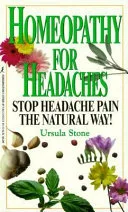
Homeopathy for Headaches
 76
76

Homeopathy for Headaches
Ursula Stone’s "Homeopathy for Headaches" presents a clear, question-and-answer format for navigating the intricate world of homeopathic headache remedies. Its strength lies in its accessibility; it demystifies a complex system for the layperson. The work diligently explains how remedies are chosen based on symptom totality, a core tenet of Hahnemannian practice. However, the book’s primary limitation is its inherent reliance on homeopathic theory, which lacks widespread validation within conventional medical science. A particularly illustrative section details the selection of *Belladonna* for throbbing, intense headaches with flushed skin, highlighting the principle of symptom matching. While valuable for adherents, its efficacy remains a matter of belief rather than empirically proven fact for skeptics. It serves as a competent introduction to a specific therapeutic system.
📝 Description
76
Ursula Stone's 1999 book, Homeopathy for Headaches, presents a distinct approach to headache relief.
This guide champions homeopathic remedies as an alternative to conventional pharmaceuticals, suggesting they work with the body's own healing abilities. It is written for individuals seeking natural ways to manage headache pain, particularly those new to homeopathy or who have not found other methods effective. Readers interested in how diluted substances might influence physical health will find it informative.
The book focuses on the homeopathic principle of 'like cures like' and the process of potentization, where substances are diluted and shaken to enhance their effects. Stone stresses that treatment should be individualized based on the specific characteristics of a headache. The late 20th century saw growing public interest in alternative medicine, and this book emerged during a time of debate about pharmaceutical approaches to healthcare.
Published in 1999, 'Homeopathy for Headaches' is situated within the broader revival of interest in vitalistic and energetic healing modalities that gained traction in the late 20th century. It engages with the principles of homeopathy, a system developed in the early 19th century that posits a substance causing symptoms in a healthy person can cure similar symptoms in a sick person. This approach aligns with esoteric traditions that emphasize the body's innate capacity for self-healing, often understood through non-material or energetic forces rather than solely physical mechanisms.
💡 Why Read This Book?
• Learn how homeopathic remedies, as detailed in "Homeopathy for Headaches," are believed to work *with* the body's natural defenses, not against them, offering a unique perspective on self-healing. • Discover specific homeopathic remedies and their indicated uses for various headache types, as explained through the book's question-and-answer format, providing practical knowledge. • Understand the homeopathic principle of "like cures like" (similia similibus curentur), a foundational concept that underpins the remedy selection process discussed throughout the guide.
⭐ Reader Reviews
Honest opinions from readers who have explored this book.
❓ Frequently Asked Questions
What makes homeopathic remedies different from conventional headache medications according to Ursula Stone?
Ursula Stone explains that unlike conventional drugs which can disrupt the immune system, homeopathic remedies are believed to work harmoniously with the body's natural defenses, enhancing its inherent ability to heal itself and alleviate headache pain.
How does "Homeopathy for Headaches" help readers identify the right remedy?
The book uses a question-and-answer format to guide readers. By matching specific headache symptoms to remedy profiles, it assists in identifying the most suitable homeopathic treatment, emphasizing individualized care.
Is Ursula Stone's book suitable for beginners in homeopathy?
Yes, the book is designed as a clearly written guide, making it accessible for beginners. It breaks down complex homeopathic concepts into understandable terms for those new to the practice.
What is the primary principle of homeopathy discussed in the book?
The book explores the fundamental homeopathic principle of 'like cures like' (similia similibus curentur), explaining how a substance that causes symptoms in a healthy person can be used in diluted form to treat similar symptoms in an ill person.
Does the book offer remedies for all types of headaches?
The guide aims to cover 'all kinds of headaches,' providing readers with potential homeopathic solutions for a wide range of headache presentations and intensities.
When was 'Homeopathy for Headaches' first published?
Ursula Stone's 'Homeopathy for Headaches' was first published in 1999, positioning it within a period of growing public interest in alternative and complementary health practices.
🔮 Key Themes & Symbolism
Body's Natural Defenses
The core assertion of "Homeopathy for Headaches" is that true healing originates from within. The book consistently argues that homeopathic remedies are not mere suppressants of symptoms but catalysts that stimulate the body's innate ability to restore balance. This contrasts sharply with the common perception of pharmaceutical drugs, which are often viewed as external agents that can override or disrupt natural physiological processes. Stone emphasizes the energetic nature of these remedies, suggesting they work on a subtler level to empower the organism's self-healing mechanisms, fostering a more sustainable path to wellness.
Symptom-Specific Remedy Selection
Central to the homeopathic approach detailed in this guide is the meticulous matching of individual symptoms to specific remedies. The book illustrates how a headache's character—be it throbbing, sharp, dull, or accompanied by nausea or light sensitivity—is paramount in determining the correct homeopathic choice. This individualized approach moves beyond a one-size-fits-all model, positing that a deep understanding of the patient's unique experience is key to unlocking the efficacy of the chosen remedy. This method is the practical application of the 'like cures like' principle.
Gentle, Non-Invasive Healing
"Homeopathy for Headaches" champions a philosophy of healing that prioritizes gentleness and minimal intervention. In an era often dominated by strong pharmaceuticals, the book offers an alternative that aims to avoid the side effects and disruptions associated with conventional medicine. The remedies discussed are prepared through a process of serial dilution and succussion, resulting in highly diluted substances. This method is presented as a way to achieve relief without imposing a burden on the body's systems, aligning with a desire for holistic and non-toxic health practices.
💬 Memorable Quotes
Direct passages from the work, attributed to the author.
“Homeopathic remedies work with the body's natural defenses, enhancing its power to heal itself.”
— This statement captures the fundamental difference the book draws between homeopathy and conventional medicine. It highlights the belief that homeopathy acts as a supportive force, empowering the body's own healing capabilities rather than imposing an external solution.
“Readers learn how to combat the pain of all kinds of headaches with simple homeopathic remedies.”
— This highlights the practical, problem-solving aspect of the book. It promises actionable advice for a common ailment, suggesting that the information provided is directly applicable to alleviating suffering.
“Unlike common pharmaceutical drugs which can disrupt the body's immune response to illness...”
— This phrase sets up the core argument for homeopathy's superiority, according to the author's perspective. It frames conventional medicine as potentially harmful to natural bodily functions, thereby justifying the need for alternative approaches.
“This clearly written question-and-answer guide...”
— This describes the format and accessibility of the book. It suggests that the complex principles of homeopathy have been simplified into an easy-to-follow structure for the reader.
“Now, with this clearly written question-and-answer guide readers learn how to combat the pain of all kinds of headaches...”
— This interpretation focuses on the direct benefit and empowerment offered to the reader. It emphasizes the book's role as a tool for self-management of a common and often debilitating condition.
🌙 Esoteric Significance
Tradition
While homeopathy is primarily considered a system of alternative medicine, its foundational principles touch upon esoteric concepts of vitalism and energetic medicine. It aligns with vitalist traditions that posit a life force or vital energy animating living organisms, a concept explored in various esoteric philosophies, including some branches of Hermeticism and Theosophy. The idea of potentization, where dilution and succussion are believed to increase a substance's energetic power, can be seen as a form of energetic manipulation or amplification, echoing alchemical processes of transformation and refinement.
Symbolism
The core symbol is the 'diluted remedy' itself, representing the principle of 'less is more' and the idea that the essence or energetic imprint of a substance can be more potent than its material form. Another motif is the 'totality of symptoms,' which acts as a symbolic map of the individual's suffering. The specific choice of remedies, often derived from plant, mineral, or animal kingdoms, can also carry symbolic weight, linking the remedy's known effects or historical associations to the patient's condition.
Modern Relevance
Contemporary interest in holistic health, mindfulness, and personalized medicine continues to fuel engagement with homeopathic principles. Practices like functional medicine and energy healing, which focus on root causes and subtle energetic influences, share conceptual common ground with homeopathy. Furthermore, the DIY wellness movement and the increasing demand for natural remedies ensure that books like Stone's remain relevant for individuals seeking non-pharmaceutical options for managing chronic conditions such as headaches.
👥 Who Should Read This Book
• Individuals experiencing chronic or recurring headaches seeking natural, non-pharmaceutical relief strategies. • Beginners interested in understanding the basic principles and practical application of homeopathy for common ailments. • Those exploring holistic health modalities and comparing different approaches to symptom management beyond conventional medicine.
📜 Historical Context
Ursula Stone's "Homeopathy for Headaches," first published in 1999, arrived during a significant period of public engagement with complementary and alternative medicine (CAM). The late 20th century witnessed a growing disillusionment with the side effects of pharmaceutical drugs and a concurrent rise in interest in holistic health practices. Homeopathy, with its roots in the work of Samuel Hahnemann in the late 18th century, experienced resurgences throughout the 19th and 20th centuries. This book tapped into that lineage, offering a specific application of homeopathic principles to a widespread ailment. At the time, mainstream medicine often viewed homeopathy with skepticism, sometimes criticizing its lack of robust scientific validation, particularly concerning the principle of potentization. However, proponents, like Stone, emphasized its perceived safety and individualized approach. The book emerged amidst a wider discourse that included figures like Andrew Weil, who popularized integrative medicine, and movements advocating for patient empowerment in healthcare decisions.
📔 Journal Prompts
The specific nature of your headache and its correspondence to homeopathic materia medica.
How the concept of "like cures like" might apply to other areas of personal challenge.
The energetic properties attributed to homeopathic remedies and their potential influence.
Your personal experience with natural defenses versus pharmaceutical interventions for pain.
The role of individualized symptom totality in guiding a treatment path.
🗂️ Glossary
Homeopathy
A system of alternative medicine based on the principle of 'like cures like' (similia similibus curentur), using highly diluted substances that are believed to stimulate the body's healing response.
Similia Similibus Curentur
Latin for 'like cures like.' This is the fundamental principle of homeopathy, suggesting that a substance causing symptoms in a healthy person can, in diluted form, treat similar symptoms in an ill person.
Potentization
The process of preparing homeopathic remedies through serial dilution and succussion (vigorous shaking), believed to increase the remedy's energetic power.
Materia Medica
A comprehensive reference work that describes the medicinal properties of substances used in homeopathy, detailing their effects on the body and mind.
Succussion
The process of vigorously shaking a diluted substance during the preparation of a homeopathic remedy. It is considered essential for activating the remedy's energetic potential.
Symptom Totality
In homeopathy, this refers to the complete picture of a patient's symptoms—physical, mental, and emotional—which is used to select the most appropriate remedy.
Vital Force (or Vital Energy)
A concept in vitalist philosophies, including homeopathy, that refers to an animating principle or energy that distinguishes living beings from non-living matter. Homeopathic remedies are thought to act upon this force.