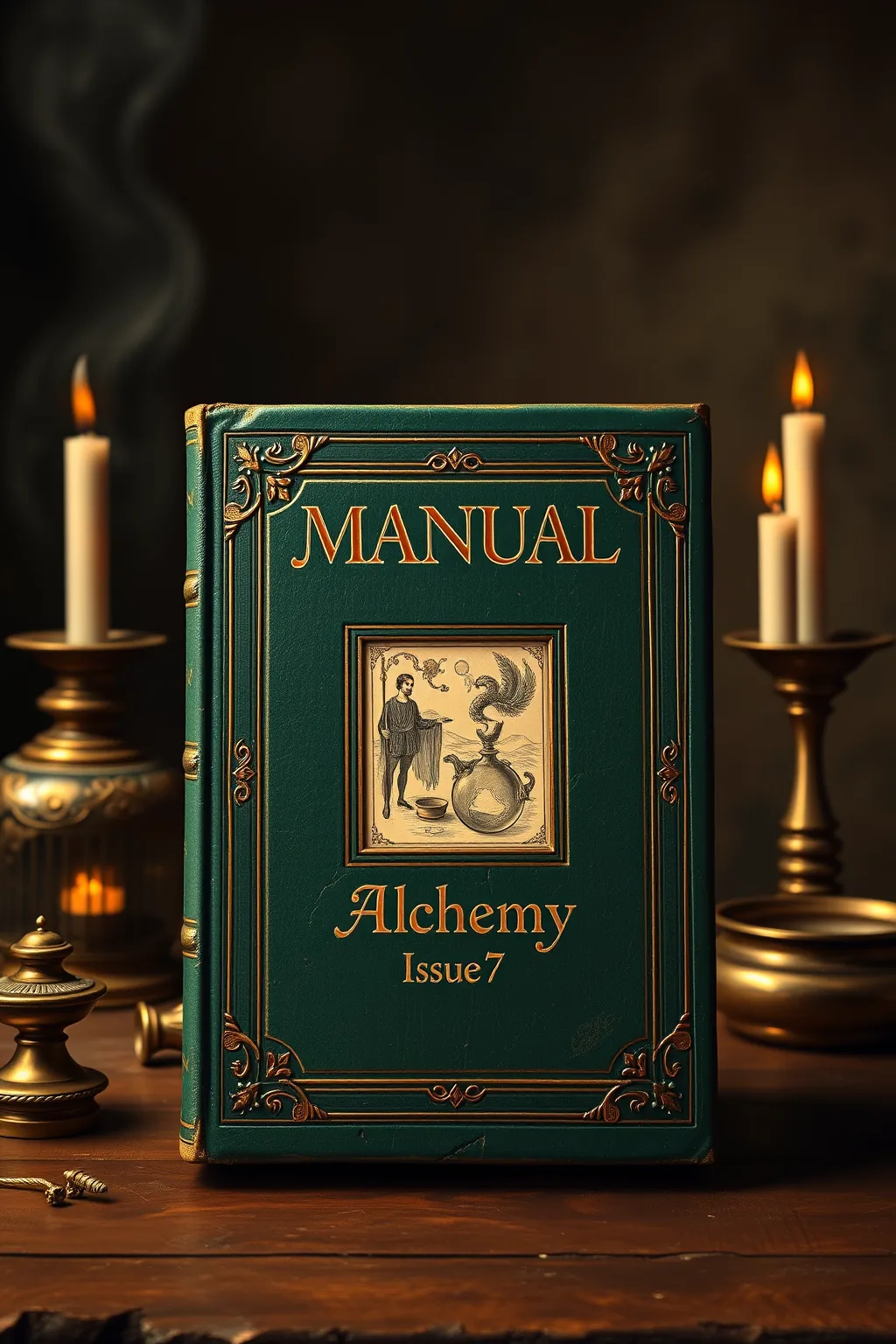
Manual / Issue 7: Alchemy
 82
82

Manual / Issue 7: Alchemy


The 'Manual / Issue 7: Alchemy' by the RISD Museum offers a profound exploration of alchemy and its relevance to contemporary art. For modern esoteric seekers, this book serves as a bridge between ancient wisdom and current artistic practices. The text is rich with historical context and philosophical depth, making it a valuable resource for those interested in the hermetic traditions. The authors effectively illustrate how alchemy can inspire and inform artistic disciplines, encouraging readers to engage in a trans-disciplinary approach. The book's emphasis on the synthesis of culture, science, and existential boundaries makes it a unique and enlightening read. It challenges readers to think beyond dominant modes of understanding and to explore the porous boundaries between art and alchemy. This text is a must-read for anyone seeking to deepen their understanding of esoteric practices and their application in modern art. Rating: 4.5/5.
📝 Description
82
Published by the RISD Museum, 'Manual / Issue 7: Alchemy' examines alchemy's connection to art.
This publication considers the historical practice of alchemy and its relationship to artistic creation. It looks at the symbolism and hidden knowledge associated with alchemical processes, suggesting how these ideas inform creative work. The book aims to create a space for thought about the connections between science, art, and spiritual pursuits. It is written for those interested in esoteric subjects, the study of occult traditions, and mystical practices. The text discusses the broad scope and interdisciplinary character of alchemy. It also considers the relevance of this old practice today.
Alchemy, a tradition often misunderstood as purely metallurgical, has a rich esoteric dimension. Its symbolism frequently relates to transformation, both material and spiritual. Practices and texts within alchemy often encode complex philosophical ideas about the nature of reality, consciousness, and the divine. This publication from the RISD Museum engages with this deeper layer, connecting alchemical concepts to the visual and conceptual language of art. It places the book within a lineage of works that interpret alchemical imagery and theory beyond its literal interpretations.
✍️ Author

RISD Museum
The Rhode Island School of Design (RISD , pronounced "Riz-D") is a private art school in Providence, Rhode Island, United States. The school was founded as a coeducational institution in 1877 by Helen Adelia Rowe Metcalf, who sought to increase the accessi…
💡 Why Read This Book?
Reading 'Manual / Issue 7: Alchemy' today provides a fresh perspective on the enduring relevance of alchemy in contemporary art. This book will equip readers with a deeper understanding of how esoteric practices can inspire creative disciplines. By exploring the intersection of art and alchemy, readers will gain insights into trans-disciplinary approaches and the synthesis of various cultural and scientific influences. This text is invaluable for artists, esoteric enthusiasts, and anyone interested in the philosophical implications of hermetic traditions.
⭐ Reader Reviews
Honest opinions from readers who have explored this book.
❓ Frequently Asked Questions
What is the focus of 'Manual / Issue 7: Alchemy'?
The book focuses on the intersection of alchemy and contemporary art, exploring how esoteric practices can inspire and inform artistic disciplines.
Who should read this book?
This book is ideal for artists, esoteric enthusiasts, and anyone interested in the philosophical implications of hermetic traditions and their application in modern art.
What historical context does the book provide?
The book delves into the historical context of alchemy, highlighting its influence on modern art and the philosophical depth of hermetic practices.
🔮 Key Themes & Symbolism
The Trans-Disciplinary Nature of Alchemy
Alchemy and art are not singular pursuits but trans-disciplinary practices that blend culture, science, and existential boundaries. This theme explores how these fields can be synthesized into a repeatable, mystical practice.
Symbolism and Hidden Knowledge
The book looks at the detailed symbolism and hidden knowledge that underpin alchemical practices. It reveals the wide implications of these symbols in the modern world, offering seekers a deeper understanding of the mystical arts.
Philosophical Significance of Alchemy
Alchemy is not just a historical practice but a philosophical quest that challenges dominant modes of thought. This theme explores the existential borders and the implications of alchemy in the contemporary context.
💬 Memorable Quotes
Direct passages from the work, attributed to the author.
“Their practitioners are trans-disciplinary, disjointed, and solitary in their practice.”
— This highlights the solitary and complex nature of alchemists and artists, who often work in isolation.
“Their labor and the ordering of their lives become porous, overlaid in the pursuit of other-than or beyond-dominant modes of understanding.”
— This reflects the deep integration of alchemy into the lives of its practitioners, challenging conventional wisdom.
“Art and alchemy are not singular, unified pursuits.”
— This emphasizes the complex and complex nature of these disciplines, which defy simple categorization.
“The implications of existential borders into a discipline that is repeatable, a practice.”
— This suggests the transformative potential of alchemy in exploring and transcending existential boundaries.
💡 Key Ideas
Editorial paraphrase of the work's core concepts — not direct quotes.
To engage as an alchemist/artist is to be the perpetual student of the present moment.
This quote underscores the continuous learning and presence required in alchemical and artistic practices.
🌙 Esoteric Significance
Tradition
This book belongs to the Hermetic tradition, which emphasizes the mystical union of opposites and the transformation of the self. It draws on ancient alchemical texts and symbols to illuminate the path to spiritual enlightenment.
Symbolism
Key symbols in this work include the Philosopher's Stone, the Ouroboros, and the alchemical elements of fire, water, air, and earth. Each symbol represents different stages of transformation and spiritual growth.
Modern Relevance
Today, this book is relevant for modern practitioners who seek to integrate alchemical principles into their artistic and spiritual practices. It offers insights into the trans-disciplinary nature of alchemy and its potential to transform contemporary art and spirituality.
👥 Who Should Read This Book
Beginners in alchemy may find this book challenging but rewarding, as it offers useful insights into the mystical arts. Scholars of occult studies will appreciate the rich, evocative discussions on symbolism and hidden knowledge. Spiritual seekers will find inspiration in the philosophical significance of alchemy, while practitioners of the mystical arts will benefit from the unique perspectives on trans-disciplinary practices.
📜 Historical Context
Written in an era where the boundaries between art, science, and mysticism were increasingly blurred, 'Manual / Issue 7: Alchemy' reflects the Renaissance spirit of exploration and discovery. This book was important when written because it captured the zeitgeist of a time when alchemy was seen as a bridge between the material and spiritual worlds. Its influence can be seen in the works of modern artists and alchemists who continue to explore the mystical and esoteric dimensions of their practices.
📔 Journal Prompts
Reflect on how the trans-disciplinary nature of alchemy can be applied to your own artistic or spiritual practice.
Explore the symbolism of the Philosopher's Stone and its relevance to your personal transformation.
Consider the implications of existential borders in your quest for spiritual enlightenment.
How does the integration of alchemy into your life challenge conventional modes of understanding?
Write about a time when you felt the porous, overlaid nature of your labor and life, and how it led to deeper insights.
🗂️ Glossary
Philosopher's Stone
A legendary alchemical substance said to be capable of turning base metals into gold and granting immortality.
Ouroboros
A symbol of a serpent or dragon swallowing its own tail, representing the cycle of life, death, and rebirth.
Hermetic Tradition
A philosophical and spiritual tradition based on the writings attributed to Hermes Trismegistus, emphasizing the mystical union of opposites.
Alchemical Elements
The four classical elements—fire, water, air, and earth—each representing different stages of transformation and spiritual growth.
Trans-Disciplinary Practice
A practice that integrates knowledge and methods from multiple disciplines, challenging conventional boundaries and modes of understanding.
This book appears in 3 collections
🔮 Readers Also Liked
Browse all →









From the “Hermeticism” Collection
View all →








More Free Alchemy & Hermeticism Books
View all →