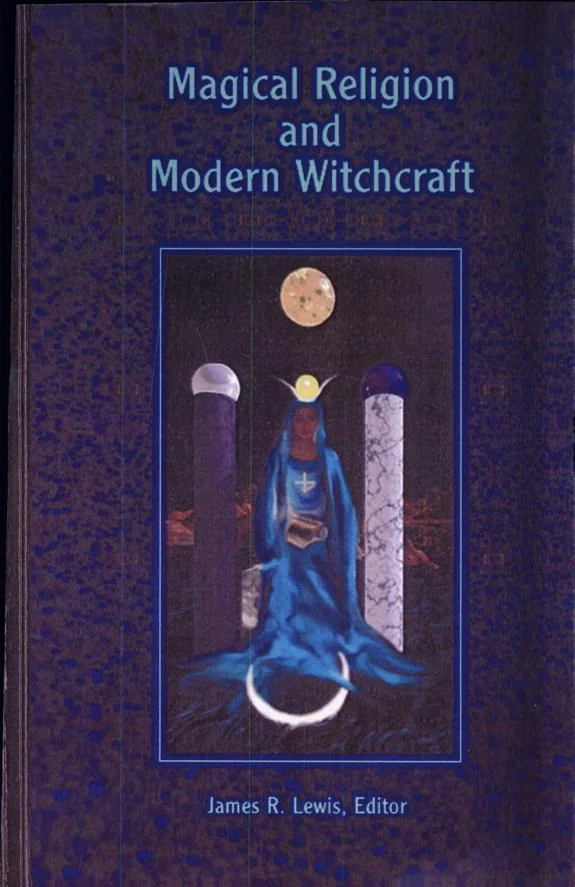
Magical Religion and Modern Witchcraft
 76
76

Magical Religion and Modern Witchcraft
James R. Lewis's 1996 collection, "Magical Religion and Modern Witchcraft," is a crucial, if sometimes dry, academic survey of neo-Paganism. Its strength lies in the diverse perspectives offered by scholars who are themselves practitioners, providing an insider-outsider view that eluded many earlier studies. The historical-critical essays, in particular, offer valuable context for understanding the intellectual foundations of modern Pagan movements. However, the collection occasionally suffers from a degree of academic detachment, which, while ensuring rigor, can make some sections feel less immediate for readers seeking a more experiential connection to the subject matter. A standout element is the careful dissection of "goddess theology," presented not as a simple revival but as a complex theological development. This anthology serves as an important, foundational text for understanding the academic discourse surrounding neo-Paganism at the close of the 20th century.
📝 Description
76
Published in 1996, James R. Lewis's edited collection examines contemporary neo-Paganism through academic and practitioner lenses.
This 1996 anthology, edited by James R. Lewis, offers a scholarly look at neo-Paganism. It gathers essays from academics and practitioners, moving past simple descriptions to analyze the beliefs and practices of this growing spiritual movement. The collection includes discussions on goddess theology and historical viewpoints, aiming for a structured understanding of modern Pagan traditions. Lewis intended the book for students of religion and cultural historians, as well as those seriously interested in the academic study of contemporary spiritual groups. It provides a research-oriented perspective, distinct from introductory or devotional materials. Readers who value detailed analysis and rigorous scholarship will find this volume particularly useful. The book appeared during a time of increased academic interest in new religious movements. Lewis’s anthology contributed to this by featuring essays from within the movement, written by those with academic training. This approach offered a different perspective from purely external analyses, helping to build a more detailed understanding of Paganism's role in the changing religious world.
This collection positions itself within the academic study of contemporary esoteric and new religious movements. It focuses on neo-Paganism, a tradition that emerged in the 20th century, drawing on diverse sources from ancient polytheism to occult traditions. The book's approach is to analyze these developments through scholarly frameworks, examining theological concepts, historical influences, and the self-identification of practitioners. It contributes to understanding how modern spiritual expressions engage with both older religious forms and contemporary cultural shifts, distinguishing itself from purely folkloric or sensationalized accounts.
💡 Why Read This Book?
• Gain a scholarly understanding of neo-Paganism's academic reception and internal theological debates as presented in the 1996 publication, moving beyond popular misconceptions. • Analyze the development of "goddess theology" as a significant religious innovation explored within the book's essays. • Appreciate the historical-critical method applied to contemporary Pagan traditions, as detailed in the collection's scholarly contributions.
⭐ Reader Reviews
Honest opinions from readers who have explored this book.
❓ Frequently Asked Questions
When was "Magical Religion and Modern Witchcraft" first published?
"Magical Religion and Modern Witchcraft" was first published on April 19, 1996, marking it as an important early academic survey of contemporary neo-Paganism.
Who are some of the contributors to James R. Lewis's anthology?
The anthology features contributions from academically trained neo-Pagans, though specific names vary by edition. The emphasis is on scholars actively engaged in the movements they discuss.
What is the primary focus of the essays in this book?
The book's essays focus on contemporary neo-Paganism, examining its diverse expressions, including goddess theology, historical-critical perspectives, and the academic study of these movements.
Does the book offer practical magical instruction?
No, "Magical Religion and Modern Witchcraft" is an academic anthology focused on the study and analysis of neo-Paganism, not a practical guide to magical practices.
What historical period does the book primarily address?
The book primarily addresses the state of neo-Paganism in the late 20th century, with its initial publication in 1996 reflecting the trends and academic discourse of that era.
What distinguishes this book from other works on witchcraft?
Its distinction lies in its scholarly approach and its focus on contemporary neo-Paganism from an academic perspective, rather than historical occultism or beginner-level guides.
🔮 Key Themes & Symbolism
Academic Study of Neo-Paganism
This anthology positions neo-Paganism as a legitimate subject for rigorous academic inquiry. It showcases how scholars, many of whom are practitioners, apply critical analysis to contemporary spiritual paths. The work moves beyond mere description to explore the theological, historical, and sociological dimensions of these movements, reflecting a shift in religious studies towards engaging with newer forms of spirituality.
Goddess Theology
A significant thread in the book is the exploration of "goddess theology." This theme examines the theological frameworks that place the divine feminine at the center of worship and cosmology within various neo-Pagan traditions. Contributors analyze its origins, its theological implications, and its role in shaping identity and practice for adherents.
Historical-Critical Approaches
The anthology investigates how neo-Pagans engage with history. This includes efforts to reconstruct ancient practices and beliefs, as well as critical examinations of historical sources. The "historical-critical essays" section highlights the tension between scholarly historical methods and the lived, often mythopoetic, experience of contemporary Pagans.
The Religious Landscape
Lewis's work considers neo-Paganism's emergence and potential impact on the broader religious landscape. By presenting a comprehensive overview of a significant spiritual movement, the book suggests that these traditions are not marginal curiosities but forces that may reshape future religious expression and understanding.
💬 Memorable Quotes
Direct passages from the work, attributed to the author.
“Many of the contributors are academically trained neo-pagans.”
— This observation highlights the unique position of the anthology, featuring scholars who possess both insider knowledge and the critical tools of academic research, bridging the gap between lived experience and scholarly analysis.
“The resulting volume is a benchmark study of a significant movement.”
— This points to the book's importance in the academic study of religion, establishing it as a key reference work for understanding neo-Paganism during the period of its publication in 1996.
“Contemporary neo-paganism ranging from goddess theology to historical-critical essays.”
— This expresses the dual focus of the anthology: exploring both the theological innovations, such as the prominence of goddess worship, and the scholarly methods used to engage with the past within modern Pagan traditions.
“A significant movement that promises to reshape the religious field of the next century.”
— This interpretation suggests a forward-looking perspective within the book, recognizing the growing influence and potential for neo-Paganism to impact future religious thought and practice.
“The work examines contemporary neo-paganism.”
— This straightforward statement underscores the anthology's core objective: to provide a focused and analytical look at the diverse spiritual and religious expressions emerging within neo-Paganism in the late 20th century.
🌙 Esoteric Significance
Tradition
While not strictly adhering to a single lineage like Hermeticism or Theosophy, this work engages with the broader umbrella of Western Esotericism by examining modern spiritual movements that draw from diverse, often syncretic, sources. It fits within the academic study of esoteric traditions, analyzing how contemporary Pagans reinterpret ancient mythologies and spiritual concepts, often diverging from classical esoteric frameworks in favor of nature-based spirituality and reconstructionist approaches.
Symbolism
The book frequently touches upon symbols central to neo-Paganism, such as the Triple Goddess (Maiden, Mother, Crone) and the Horned God. These figures represent cyclical time, the divine feminine and masculine principles, and the connection to nature. The anthology explores how these symbols are not merely decorative but form the basis of theological systems, ethical frameworks, and ritual practices for modern adherents.
Modern Relevance
Contemporary scholars of religion and practitioners of modern Pagan paths continue to cite this 1996 volume as a foundational text for understanding the academic discourse surrounding neo-Paganism. Thinkers exploring the evolution of spiritualities outside mainstream religions, as well as those researching the academic legitimation of minority religions, find its essays on goddess theology and historical-critical methods particularly relevant.
👥 Who Should Read This Book
• Academic researchers in religious studies seeking foundational texts on the academic study of neo-Paganism. • Students of comparative religion interested in the diversity of contemporary spiritual movements and their theological underpinnings. • Practitioners of modern Paganism who wish to understand the scholarly analysis and historical context of their traditions as presented in 1996.
📜 Historical Context
Published in 1996, "Magical Religion and Modern Witchcraft" emerged during a burgeoning period for both neo-Paganism and its academic study. The late 20th century saw a rise in scholarly interest in new religious movements, and Lewis’s anthology contributed significantly by presenting a collection of essays from within the movement itself, authored by academics. This provided a crucial counterpoint to earlier, often more external, analyses. The era was marked by a growing awareness of diverse spiritual paths, moving beyond traditional Western religions. While figures like Margot Adler had already begun documenting Paganism, Lewis’s collection focused on a more direct scholarly engagement with theological and historical-critical dimensions, distinguishing it from purely sociological or anthropological accounts. The work implicitly engaged with the intellectual currents of comparative religion and the sociology of religion, seeking to legitimize neo-Paganism as a subject worthy of serious academic attention.
📔 Journal Prompts
The academic framing of "neo-Paganism" as a distinct religious category.
The theological implications of "goddess theology" as explored in the essays.
The challenges of applying "historical-critical essays" to contemporary spiritual movements.
The concept of neo-Paganism reshaping the religious landscape.
The role of academically trained practitioners in studying their own traditions.
🗂️ Glossary
Neo-Paganism
A contemporary religious movement that draws inspiration from pre-Christian European polytheistic religions. It encompasses a wide variety of traditions, including Wicca, Druidry, and various forms of polytheistic reconstructionism.
Goddess Theology
A theological framework within some neo-Pagan traditions that centers on the divine feminine as the primary or sole deity. It often emphasizes aspects of creation, nurturing, and cyclical transformation.
Historical-Critical Essays
Scholarly essays that apply historical research methods to understand the origins, development, and textual basis of religious beliefs and practices, in this context applied to neo-Paganism.
Polytheism
The belief in and worship of multiple gods and goddesses. Many neo-Pagan traditions are polytheistic, seeking to revive or create pantheons inspired by ancient cultures.
Reconstructionism
A branch of neo-Paganism that seeks to revive and reconstruct ancient ethnic or religious traditions, such as Celtic, Norse, or Greco-Roman polytheism, based on available historical and archaeological evidence.
Wicca
A modern Pagan religion that typically involves the worship of a Goddess and a God, with an emphasis on nature, magic, and ritual. It was popularized in the mid-20th century.
Esoteric
Relating to or accessible only by a small number of people with a specialized knowledge or interest. In a religious context, it often refers to hidden meanings or spiritual practices beyond the exoteric or public understanding.
This book appears in 1 collection
🔮 Readers Also Liked
Browse all →








From the “Neopaganism” Collection
View all →





More Free Witchcraft & Paganism Books
View all →