Twilight of the Celtic gods

 75
75

Twilight of the Celtic gods
Clarke's exploration of Celtic myth's afterlife in esoteric circles is a commendable effort to trace persistent pagan motifs. The strength of *Twilight of the Celtic Gods* lies in its diligent cataloging of how figures and concepts from early Irish and Welsh sources reappear in occult literature and practice from the 18th century onwards. However, the book sometimes suffers from a lack of critical distance, occasionally presenting speculative connections as established fact without sufficient qualification. A notable passage discusses the supposed link between the Celtic god Lug and later alchemical symbolism, a connection that, while intriguing, requires more robust evidence to be fully convincing. Despite this, the work offers a valuable survey for those interested in the enduring resonance of Celtic imagery in Western esotericism. It serves as a useful, if sometimes overly enthusiastic, guide to a specific vein of occult history.
📝 Description
75
David Clarke's 1997 book traces Celtic mythology's persistence in later esoteric traditions.
Published in 1997, *Twilight of the Celtic Gods* examines the lasting influence of Celtic mythology and how it was incorporated into later esoteric thought. The book details how ancient pagan beliefs, often suppressed or blended with other faiths, continued to shape spiritual and magical ideas long after Christianity spread through the British Isles. Clarke investigates the survival and new interpretations of Celtic deities, heroes, and worldviews within various occult and folk practices.
This work is for readers interested in the connections between folklore, comparative mythology, and Western esotericism. It speaks to those wanting to understand the origins of certain magical practices and spiritual philosophies that draw from pre-Christian European heritage. Students of Celtic studies, occult history, and comparative religion will find its analysis useful for grasping how ancient motifs endure in contemporary spiritual thought.
This book emerged during a time of revived interest in indigenous European spiritualities and pagan revival movements. It addresses a desire to connect with pre-Christian European heritage, often seen as an alternative to Abrahamic religions. By engaging with figures and concepts from early Irish and Welsh literature, Clarke situates his work within discussions about the endurance of mythic structures in both academic and esoteric circles.
💡 Why Read This Book?
• Understand the persistence of pre-Christian Celtic deities and their reinterpretation in modern magical systems, offering insights beyond superficial folklore. • Trace the lineage of specific figures like Cernunnos through historical occult texts and Neo-Pagan practices, providing a concrete historical map. • Grasp the symbolic survival of animistic beliefs and the concept of the Otherworld, revealing how ancient worldviews continue to inform esoteric philosophy.
⭐ Reader Reviews
Honest opinions from readers who have explored this book.
❓ Frequently Asked Questions
When was Twilight of the Celtic Gods first published?
The book was first published in 1997, a period marked by increasing interest in indigenous European spiritualities and their reinterpretation within esoteric traditions.
What is the primary focus of David Clarke's book?
The book focuses on how Celtic mythology and pagan beliefs have survived and been integrated into later esoteric and occult traditions, particularly in the West.
Does the book discuss specific Celtic deities?
Yes, it examines the reinterpretation of specific Celtic deities such as Lug and Cernunnos within various occult and Neo-Pagan frameworks.
What kind of symbolism is explored in Twilight of the Celtic Gods?
The work explores the symbolic survival of animistic beliefs and the concept of the Otherworld from ancient Celtic traditions and their presence in esoteric thought.
Who would benefit most from reading this book?
Readers interested in Western esotericism, comparative mythology, folklore studies, and the history of occultism, especially those with an interest in Celtic heritage, will find it valuable.
What is the historical period covered by the book's analysis?
The book analyzes the influence of Celtic myth from ancient times through its re-emergence and reinterpretation in esoteric traditions from roughly the 18th century onwards.
🔮 Key Themes & Symbolism
Persistence of Pagan Deities
The work meticulously traces how figures from the Celtic pantheon, such as Lug and Cernunnos, were not lost but rather transmuted and revitalized within later esoteric movements. It details their reappearance in grimoires, ceremonial magic, and 19th and 20th-century occult literature, demonstrating a continuous, albeit transformed, spiritual lineage that challenged dominant monotheistic narratives.
Animism and the Otherworld
Clarke investigates the enduring power of animistic worldviews prevalent in Celtic cultures, focusing on the concept of the Otherworld (Tír na nÓg). This dimension, populated by supernatural beings and embodying a different order of reality, is shown to inform esoteric ideas about spirit realms, faerie magic, and the interconnectedness of nature and the divine. The book highlights how these concepts provided an alternative cosmology.
Syncretism and Reinterpretation
A central theme is the dynamic process of syncretism, where ancient Celtic beliefs merged with Christianity and later adapted to occult frameworks. The book explores how symbols, myths, and rituals were reinterpreted to fit new spiritual paradigms, allowing ancient energies and archetypes to persist. This reinterpretation is presented not as dilution but as a form of adaptation and survival within evolving cultural contexts.
Folklore as Esoteric Source
Clarke argues that seemingly simple folklore and folk magic practices often contain kernels of ancient esoteric knowledge. The book examines how motifs found in ballads, local legends, and popular superstitions can be traced back to older pagan traditions, suggesting that the esoteric current flowed not only through formal magical texts but also through the collective unconscious and oral traditions.
💬 Memorable Quotes
Direct passages from the work, attributed to the author.
“The old gods never truly died; they merely retreated into the shadows of legend.”
— This interpretation suggests that the deities of ancient Celtic religion did not vanish entirely but persisted in a transformed state, accessible through myth, folklore, and later esoteric practices.
“The concept of the Otherworld remained a potent source for later magical explorations.”
— This highlights the enduring influence of the Celtic Otherworld on esoteric thought, indicating its function as a spiritual geography for magical practitioners seeking contact with non-ordinary realities.
“Cernunnos reappeared in the magical discourse of the 19th century.”
— This points to the specific revival of the Celtic horned god Cernunnos within occult circles during the 19th century, showcasing the re-emergence of ancient pagan figures in modern esotericism.
“Animistic beliefs provided a foundation for understanding nature spirits.”
— This emphasizes how ancient Celtic animism, the belief that natural objects possess spirits, formed a basis for later esoteric ideas about interacting with elemental or nature deities.
“The twilight of the old gods was also the dawn of new magical systems.”
— This suggests a cyclical view of spiritual history, where the decline of one religious era (paganism) paved the way for the emergence of new forms of magic and esoteric practice drawing on its remnants.
🌙 Esoteric Significance
Tradition
This work primarily fits within the Western Esoteric Tradition, specifically its branches focused on Neo-Paganism, Celtic Reconstructionism, and ceremonial magic. It explores how ancient Celtic polytheism and its associated mythologies were reinterpreted and integrated into systems that sought to revive or reconstruct pre-Christian European spiritual practices, diverging from strictly Hermetic or Kabbalistic lineages by focusing on a distinct cultural-mythological source.
Symbolism
Key symbols include Cernunnos, the horned god often associated with nature, fertility, and the underworld, who reappears in modern magical contexts. The concept of the Otherworld (Tír na nÓg) serves as a symbolic representation of an unseen spiritual reality, a area of enchantment and the ancestors, crucial for understanding Celtic cosmology and its influence on astral projection or spirit work. The ubiquitous Celtic knotwork also symbolizes interconnectedness and eternity, reflecting a worldview where boundaries are fluid.
Modern Relevance
Contemporary Neo-Pagan movements, particularly Celtic Reconstructionist Paganism, draw directly on the type of mythological and symbolic analysis found in Clarke's work. Modern ceremonial magicians and Wiccans may also incorporate Celtic deities and concepts into their rituals. Thinkers exploring animism and earth-based spirituality find resonance in the book's depiction of ancient Celtic worldviews, influencing contemporary ecological spirituality and nature-based magical practices.
👥 Who Should Read This Book
• Students of comparative mythology and folklore: Gain insight into how ancient mythic structures persist and transform across centuries and cultural contexts. • Practitioners of Neo-Paganism and Celtic spirituality: Discover the historical roots and esoteric interpretations of Celtic deities, symbols, and beliefs informing modern practice. • Researchers of Western Esotericism: Understand the specific ways Celtic traditions have been incorporated into occultism, ceremonial magic, and alternative spiritual movements since the 18th century.
📜 Historical Context
Published in 1997, *Twilight of the Celtic Gods* emerged during a period of significant Neo-Pagan revival and academic interest in European indigenous religions. The late 20th century saw a growing desire to reclaim pre-Christian heritage, often as a counter-narrative to established Western religions. Clarke's work engaged with scholars like Miranda Green, who was actively researching Celtic art and religion, and contemporary esotericists who were incorporating Celtic themes into their practices. Unlike purely academic studies, Clarke's book bridged the gap, exploring the transmission of these myths into occultism and ceremonial magic. It arrived at a time when authors like John Michael Greer were also exploring Western esoteric traditions, contributing to a broader discourse on the survival and adaptation of ancient spiritual currents.
📔 Journal Prompts
The reinterpretation of Cernunnos: How does his imagery connect with modern concepts of wildness?
Reflect on the concept of the Otherworld as presented in the book and its potential meaning for inner landscapes.
The survival of pagan deities: Consider which archetypes from Celtic myth seem most potent today.
Animistic beliefs: Explore how a belief in nature spirits might alter one's perception of the local environment.
The process of syncretism: Analyze how older traditions might adapt to new cultural influences in contemporary spirituality.
🗂️ Glossary
Cernunnos
A Celtic deity depicted with antlers, often associated with wild nature, fertility, animals, and the underworld. His imagery has been revived in modern Neo-Paganism and esoteric traditions.
The Otherworld (Tír na nÓg)
In Celtic mythology, a supernatural realm often described as an island paradise, inhabited by gods, fairies, and heroes. It represents a spiritual dimension distinct from the mortal world.
Animism
The belief that natural objects, phenomena, and the universe itself possess souls or spirits. This worldview was prevalent in ancient Celtic cultures and informs many nature-based spiritual practices.
Syncretism
The merging or blending of different religious or philosophical beliefs, often occurring when cultures interact. In this context, it refers to the fusion of Celtic paganism with Christianity and later esoteric thought.
Lug
A prominent Celtic deity, often associated with skills, arts, kingship, and the sun. He was a complex figure whose worship spread widely across Celtic regions.
Dagda
A major deity in the Irish pantheon, often depicted as a father figure, associated with fertility, abundance, and wisdom. He possessed magical attributes and artifacts.
Grigori
While not strictly Celtic, this term relates to angelic beings or watchers in some esoteric traditions. Its mention might signify broader comparative links explored in the book.
🔮 Readers Also Liked
Browse all →





More by David Clarke
All books →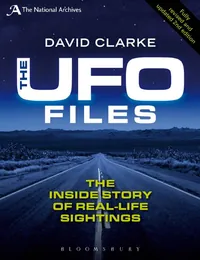


More Free Witchcraft & Paganism Books
View all →