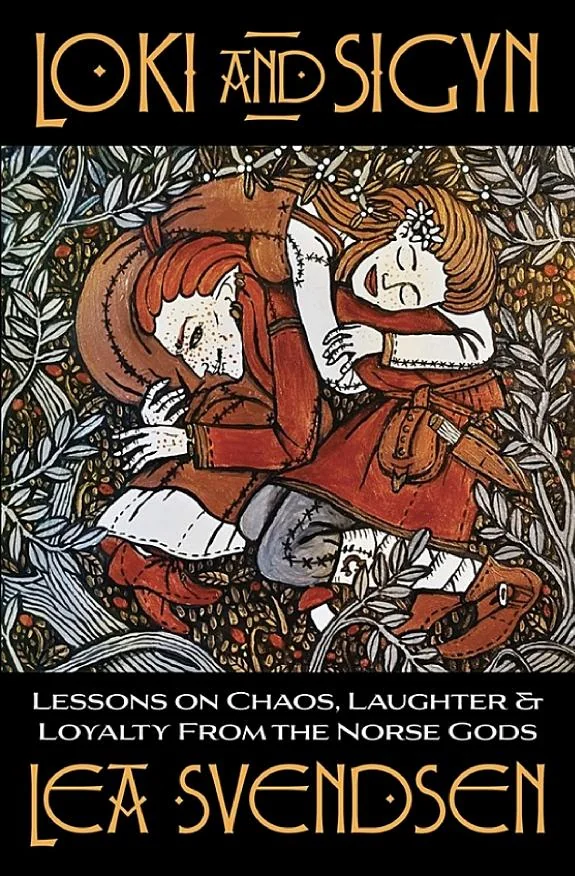
Loki and Sigyn
 78
78

Loki and Sigyn
Lea Svendsen's "Loki and Sigyn" confronts the uncomfortable and often controversial position Loki occupies within modern American Heathenry. The author’s approach is commendable for its directness, seeking to bridge the gap between academic scrutiny and lived devotional experience. Svendsen succeeds admirably in presenting a spectrum of opinions on Loki, drawing from established voices in the field. The inclusion of rituals and devotional practices for both Loki and Sigyn is a significant strength, offering tangible pathways for engagement that move beyond mere intellectual assent. However, the work occasionally feels like a collection of disparate voices rather than a wholly integrated argument. While the personal anecdotes add flavor, they sometimes detract from the scholarly rigor one might expect. The exploration of Sigyn, while present, feels somewhat secondary to the primary focus on Loki's problematic status. Despite these minor limitations, the book provides a valuable, if sometimes uneven, resource for understanding a complex deity and his often-forgotten partner in a contemporary religious context.
📝 Description
78
Lea Svendsen's 2022 book examines the Norse deities Loki and Sigyn.
Lea Svendsen's 2022 work, Loki and Sigyn, provides a scholarly and devotional look at the Norse trickster god and his often overlooked consort. It addresses current debates in American Heathenry regarding Loki's contentious place in modern practice, drawing on viewpoints from both academics and practitioners. The book moves past theoretical theological discussions to incorporate practical applications.
This text is for Norse Pagan and Heathen practitioners wanting a deeper understanding of Loki and Sigyn, beyond common interpretations. It will also interest scholars of comparative mythology and religious studies who seek specific perspectives on deity archetypes and their roles in contemporary spiritual movements. Readers interested in devotional practices will find relevant material within its pages.
This book situates itself within the early 21st-century discourse of Neo-Paganism, specifically North American Heathenry. It emerges during a time of considerable growth and diversification in these traditions. Unlike earlier, more general introductions to Norse mythology, Svendsen's work concentrates on specific deities and their reception today. It speaks to a need for more detailed engagement with figures like Loki, who has been a subject of discussion within Heathen communities since at least the early 2000s.
💡 Why Read This Book?
• Gain practical devotional and ritual frameworks specifically for Loki and Sigyn, moving beyond theoretical discussions to active worship as presented in the book's practical sections. • Understand the specific controversies surrounding Loki's veneration within American Heathenry since the early 2000s, offering context not found in general Norse mythology texts. • Discover nuanced perspectives on Sigyn, moving her from a marginal figure to a deity with her own devotional significance, as detailed in the book's examination of her role.
⭐ Reader Reviews
Honest opinions from readers who have explored this book.
❓ Frequently Asked Questions
What is the primary focus of "Loki and Sigyn" by Lea Svendsen?
The book primarily examines the controversial status of the Norse deity Loki within contemporary American Heathenry and seeks to bring greater attention to his wife, Sigyn, offering both scholarly perspectives and practical devotional methods.
Who are the main figures discussed in the book?
The central figures are Loki, the Norse trickster god, and his consort Sigyn. The book also features contributions and perspectives from various established Heathens.
What kind of content can I expect regarding Loki?
The book addresses why Loki is a problematic figure for some within American Heathenry, presenting varied viewpoints from academic and practical standpoints, and exploring ways to honor him.
Does the book offer ways to worship Sigyn?
Yes, the book provides rituals and devotional practices specifically for honoring Sigyn, aiming to elevate her status beyond her traditional portrayal as solely Loki's wife.
When was "Loki and Sigyn" published?
The book was first published in 2022, reflecting contemporary discussions and practices within the Heathen community.
What makes this book different from other books on Norse mythology?
Unlike general myth collections, "Loki and Sigyn" focuses specifically on the contemporary reception and devotional practice of these two deities within a specific religious movement (American Heathenry).
🔮 Key Themes & Symbolism
The Problematic Trickster
This theme addresses the inherent challenges in venerating Loki within modern Heathenry. The work dissects the reasons behind his controversial status, moving beyond simple mythological narratives to explore how his archetype clashes with contemporary ethical frameworks or community norms. It examines interpretations that view Loki as a force of chaos detrimental to social order, contrasting this with perspectives that see him as a necessary catalyst for change or a complex, multi-faceted deity worthy of respect and devotion.
Sigyn: The Overlooked Consort
Central to the book is the reclamation and elevation of Sigyn's spiritual significance. Svendsen argues against her traditional portrayal as merely a suffering wife, presenting her as a powerful figure of loyalty, endurance, and perhaps even hidden strength. The work explores her mythological roles and offers devotional avenues for practitioners seeking to connect with her as an independent divine entity, emphasizing her role in providing solace and steadfastness.
Devotional Practice and Modern Heathenry
This theme focuses on the practical application of faith, particularly within the context of 21st-century American Heathenry. The book provides concrete rituals, prayers, and devotional acts intended for honoring both Loki and Sigyn. It underscores the importance of lived experience and personal communication with the divine, offering tools for individuals to build their own relationships with these deities beyond established dogma or academic theory.
Diverse Hermeneutics
The work champions a plurality of interpretations regarding Norse deities. By presenting varied viewpoints from both academic scholars and practicing Heathens, it demonstrates that there is no single, monolithic understanding of figures like Loki. This approach encourages critical thinking and open dialogue within the community, acknowledging that different practitioners may have vastly different relationships and theological frameworks for approaching the gods.
💬 Memorable Quotes
Direct passages from the work, attributed to the author.
“Why is Loki a problem in American culture?”
— This question serves as the central inquiry driving the book's exploration into the controversial nature of Loki's veneration among contemporary Heathens, framing the subsequent discussions.
“Sigyn is all but forgotten.”
— This statement highlights the neglect of Sigyn in traditional and modern discussions of Norse mythology, setting the stage for the book's effort to restore her prominence.
“varying perspectives from established heathens”
— This phrase indicates the book's commitment to presenting a spectrum of views from recognized figures within the Heathen community, ensuring a balanced and informed discussion.
“rituals/devotional practices for honoring Loki and Sigyn”
— This points to the practical, experiential aspect of the book, offering concrete methods for engaging with these deities on a personal and spiritual level.
“personal anecdotes and communications from my long, wild ride with the Norse gods”
— This suggests a personal narrative element from the author, grounding the scholarly and devotional content in her own lived spiritual journey and interactions with the divine.
🌙 Esoteric Significance
Tradition
While rooted in Norse mythology and Heathenry, the work engages with broader esoteric principles concerning deity archetypes and the nature of the divine. It operates within a modern, eclectic spiritual landscape where ancient mythologies are reinterpreted for contemporary lived religion, rather than adhering strictly to a singular lineage like Hermeticism or Theosophy. Its significance lies in its contribution to the ongoing development of modern Pagan theology and practice.
Symbolism
Key symbols include Loki's association with fire and chaos, representing transformative energy and the disruption of stagnant norms. Sigyn's symbolism often revolves around endurance and steadfastness, particularly her role in holding the venom dripping onto Loki, symbolizing unwavering loyalty and the capacity to bear immense suffering with grace. The book explores these symbols not just as mythological motifs but as living forces relevant to modern practitioners' spiritual lives.
Modern Relevance
This work is highly relevant to contemporary practitioners of Heathenry and Norse Neo-Paganism seeking nuanced understandings of their core deities. It informs discussions among groups exploring the ethics of deity veneration and provides practical resources for those wishing to engage with Loki and Sigyn beyond popular or simplistic interpretations. Thinkers and practitioners involved in comparative mythology and modern religious movements will find its case study valuable.
👥 Who Should Read This Book
• Practitioners of American Heathenry seeking to understand and read through the controversial veneration of Loki within their communities. • Students of comparative mythology and religious studies interested in the evolution of deity archetypes and their modern reception. • Individuals drawn to the Norse pantheon who wish to explore devotional practices for both Loki and the often-overlooked Sigyn.
📜 Historical Context
Lea Svendsen's "Loki and Sigyn" arrived in 2022 during a period of significant expansion and internal discourse within Neo-Paganism, particularly the branches focused on reconstructed pre-Christian European religions. American Heathenry, which saw substantial growth from the late 20th century onwards, grappled with questions of theological interpretation, ethical frameworks, and the inclusion of potentially disruptive figures like Loki. The work engages with debates that have simmered for decades, moving beyond the foundational texts of figures like Stephen McNallen or earlier Asatru proponents. Svendsen’s approach, incorporating both academic analysis and practitioner insights, reflects a broader trend in esoteric studies towards bridging the gap between scholarly research and lived religious experience. The book’s focus on Loki’s controversial nature directly addresses tensions present in communities seeking to establish coherent religious identities, contrasting with earlier, more unified approaches to Norse mythology prevalent in the 1970s and 80s.
📔 Journal Prompts
Loki's problematic status in American Heathenry: Analyze the core arguments presented.
Sigyn's role beyond passive suffering: What alternative interpretations does the book offer?
Reflect on the balance between academic perspectives and personal devotional experiences in understanding deities.
Identify three specific rituals or devotional practices detailed for Loki or Sigyn.
Consider the concept of the 'trickster archetype' in relation to Loki's portrayal.
🗂️ Glossary
American Heathenry
A modern religious movement inspired by the pre-Christian beliefs and practices of Germanic peoples, particularly in North America, characterized by diverse interpretations and practices.
Deity Archetype
A fundamental, universal pattern or model of a divine being that exists in the collective unconscious, as explored through mythology and psychology.
Devotional Practice
Religious or spiritual activities undertaken by an individual or group to express reverence, honor, or love towards a deity or deities.
Heathenry
A broad term for modern Pagan religions inspired by the pre-Christian beliefs of Germanic peoples, often encompassing Norse, Anglo-Saxon, and other related traditions.
Loki
A complex figure in Norse mythology, often depicted as a trickster, shape-shifter, and sometimes malevolent entity, whose veneration is debated in modern Heathenry.
Norse Mythology
The body of myths originating from the ancient Norse and Germanic peoples, concerning the cosmology, gods, heroes, and supernatural beings of the Norse pantheon.
Sigyn
The wife of Loki in Norse mythology, often portrayed as a devoted and enduring consort, whose own spiritual significance is explored in the book.
This book appears in 1 collection
🔮 Readers Also Liked
Browse all →





From the “Neopaganism” Collection
View all →






More Free Witchcraft & Paganism Books
View all →




![ERIC ED481283: Salem Witch Trials. [Lesson Plan].](/img/thumb/eric-ed481283-salem-witch-trials-lesson-plan-eric.webp)