Living in the Light

 79
79

Living in the Light
Shakti Gawain's "Living in the Light" offers a gentle yet insistent call to personal empowerment, a significant contribution to the self-help landscape of the 1980s. Its strength lies in its accessible language and the practical, step-by-step approach it takes to integrating spiritual awareness into the mundane. Gawain masterfully translates complex metaphysical ideas into actionable advice, particularly in her sections on managing energy and trusting intuition. However, the book occasionally veers into an earnestness that, for some readers, might feel repetitive, especially in its repeated emphasis on positive affirmation. The concept of "inner guidance" is presented as universally available and straightforward to access, which, while aspirational, may oversimplify the often-complex process of discerning one's own intuitive signals. Despite this, the work remains a valuable guide for anyone seeking to consciously cultivate a more spiritually aligned daily existence. It’s a foundational text for those beginning their journey inward.
📝 Description
79
Shakti Gawain's Living in the Light, published in 1985, offers a practical guide to integrating spiritual principles into daily life.
This book is not a theoretical text but a practical manual designed for everyday living. Gawain guides readers to understand their inner selves and connect with a universal energy or divine presence. The work emphasizes integrating spiritual principles into daily actions and decisions. Key focuses include cultivating a positive mindset, managing personal energy, and developing intuition. These elements are presented as pathways toward a more fulfilling existence.
Living in the Light is intended for individuals seeking to deepen their spiritual practice and apply it to their material lives. It speaks to those who feel a gap between their spiritual beliefs and their daily experiences. Readers will find accessible tools for enhancing self-awareness, improving relationships, and finding greater peace and purpose. The book is especially useful for those exploring self-help and New Age philosophies who want concrete methods for personal transformation.
Published in 1985, Living in the Light emerged during a period of growing interest in New Age thought and personal development. This era saw increased engagement with consciousness studies, Eastern philosophies, and alternative healing. Gawain's approach, while drawing on earlier spiritual traditions, presented a Western, psychologically informed perspective. It resonated with an audience seeking practical spirituality, aligning with a cultural milieu that included figures popularizing similar themes of spiritual empowerment.
💡 Why Read This Book?
• Gain practical methods for "inner guidance" to make decisions aligned with your authentic self, a concept central to Gawain's 1985 work. • Learn to manage your personal "energy" more effectively, transforming potential stress into productive, positive action, as detailed in the book's core teachings. • Cultivate "positive thinking" not as mere optimism, but as a conscious spiritual tool to reshape your reality and foster inner peace.
⭐ Reader Reviews
Honest opinions from readers who have explored this book.
❓ Frequently Asked Questions
What is the core philosophy of Shakti Gawain's "Living in the Light"?
The core philosophy centers on living consciously in alignment with one's higher self and universal energy. It emphasizes practical application of spiritual principles to daily life, focusing on self-awareness, positive thinking, and intuitive guidance to foster personal growth and well-being.
When was "Living in the Light" first published?
"Living in the Light" was first published in 1985, placing it within the burgeoning New Age movement and personal development literature of that era.
How does the book address overcoming negativity?
The book addresses negativity by teaching readers to recognize and transform limiting beliefs and thought patterns. It advocates for conscious energy management and the cultivation of positive affirmations and gratitude as tools to shift perspective and attract more positive experiences.
Is "Living in the Light" a religious text?
No, "Living in the Light" is not a religious text in the traditional sense. It draws from universal spiritual principles found across many traditions but focuses on personal experience and practical application rather than adherence to specific dogma.
What is "inner guidance" according to Shakti Gawain?
According to Gawain, "inner guidance" refers to the intuitive wisdom or higher intelligence that resides within each individual. The book provides techniques for quieting the mind and accessing this inner voice to receive direction and support for life choices.
Who was Shakti Gawain?
Shakti Gawain was an American author and spiritual teacher known for her work in personal growth and spiritual development. "Living in the Light" is one of her most influential books, published originally in 1985, which helped popularize concepts of intuitive living.
🔮 Key Themes & Symbolism
Cultivating Inner Guidance
The work emphasizes developing a direct connection to one's inner wisdom, often referred to as the "higher self" or "intuition." Gawain guides readers through exercises designed to quiet the mental chatter and learn to discern and trust these inner signals. This theme is central to making conscious, aligned decisions in all aspects of life, moving beyond external validation or societal pressures. It's presented as a learnable skill, accessible to everyone willing to practice listening to their own inner knowing.
Energy Management for Well-being
Living in the Light introduces the concept of personal energy as a vital force that can be consciously managed. Gawain explains how thoughts, emotions, and actions impact one's energy field and overall well-being. The book offers techniques for clearing negative energy, protecting one's energetic space, and consciously directing energy towards constructive goals. This approach empowers individuals to take responsibility for their internal state and its external manifestations.
The Power of Conscious Awareness
A foundational theme is the transformative power of bringing conscious awareness to one's thoughts, feelings, and behaviors. Gawain posits that by observing ourselves without judgment, we can identify limiting patterns and choose new responses. This practice of "living in the light" means operating from a place of presence and clarity, fostering self-acceptance and a deeper connection to the universal flow of life. It’s about intentional living, not passive existence.
Responsibility and Empowerment
The book strongly advocates for taking full personal responsibility for one's life experiences. Gawain frames challenges not as external impositions but as opportunities for growth and learning that arise from within. This perspective is deeply empowering, shifting the focus from victimhood to agency. By understanding that we co-create our reality through our beliefs and energy, readers are encouraged to actively shape their lives with intention and self-awareness.
💬 Memorable Quotes
Direct passages from the work, attributed to the author.
“The more you trust your intuition, the more intuitive you become.”
— This statement highlights the reciprocal relationship between trust and intuition. Gawain suggests that acting on one's inner knowing, even in small ways, strengthens the connection to this faculty, making it more reliable and accessible over time.
“You are the creator of your reality.”
— This is a core tenet emphasizing personal agency. Gawain's interpretation suggests that our beliefs, thoughts, and expectations actively shape our experiences, empowering us to take conscious control of our lives rather than feeling subject to external circumstances.
“Positive thinking is not about denying reality, but about focusing on the good.”
— This clarifies the practice of positive thinking as advocated in the book. It's not about ignoring problems but about intentionally directing mental energy towards solutions, possibilities, and appreciations, thereby influencing outcomes positively.
“Listen to your inner guidance; it knows the way.”
— This direct instruction underscores the importance of intuition. Gawain presents inner guidance as a reliable internal compass, urging readers to cultivate the practice of listening to and acting upon this subtle, internal wisdom.
💡 Key Ideas
Editorial paraphrase of the work's core concepts — not direct quotes.
When you are in the flow of life, you are guided and supported.
This quote expresses the state of being aligned with universal energies. It implies that by releasing resistance and embracing a receptive attitude, one can experience synchronicity and effortless progression, feeling supported by a greater force.
🌙 Esoteric Significance
Tradition
While not strictly adhering to a single esoteric lineage, "Living in the Light" draws heavily from universal spiritual principles found in various traditions, including New Thought, Transcendentalism, and elements of Eastern mysticism. Its focus on "inner guidance" and "energy management" aligns with concepts found in Theosophy and later New Age interpretations of spiritual mechanics. Gawain's approach bridges esoteric concepts with accessible self-help, making these ideas available to a broader audience seeking practical spiritual application.
Symbolism
The book employs the pervasive symbolism of "light" itself, representing consciousness, truth, and divine presence. "Darkness" or "shadow" symbolizes ignorance, limiting beliefs, and the unacknowledged aspects of the self. The concept of "flow" acts as a motif, representing alignment with the natural order and universal energies, contrasting with resistance or struggle. These symbols are used to illustrate the core principles of conscious awareness and energetic alignment.
Modern Relevance
Gawain's work continues to influence contemporary spiritual and self-help circles. Concepts like "mindfulness," "energy healing," and "manifestation" echo the principles laid out in "Living in the Light." Modern practitioners of life coaching, positive psychology, and various forms of energy work often reference or are influenced by the accessible frameworks she provided. Her emphasis on personal responsibility and the power of thought remains a cornerstone in many contemporary personal development programs.
👥 Who Should Read This Book
['• Individuals new to spiritual concepts seeking a practical, non-dogmatic introduction to self-awareness and personal growth.\n• Those feeling stuck or disconnected in their daily lives, looking for actionable techniques to foster inner peace and purpose.\n• Explorers of New Age and self-help literature interested in foundational texts that emphasize intuitive living and conscious creation.', '• Practitioners of meditation or mindfulness seeking to deepen their practice and integrate it more fully into daily decision-making.\n• Anyone interested in understanding the energetic aspects of well-being and learning tools to manage personal energy more effectively.\n• Readers who appreciate a gentle, encouraging, and empowering approach to personal transformation.', '• Comparative religion or philosophy students examining the evolution of self-help and New Age thought in the late 20th century.\n• Individuals undergoing life transitions who need practical guidance for navigating change with greater self-trust.\n• Those who have read other works on positive thinking or spiritual psychology and want to explore a seminal text in the field.']
📜 Historical Context
Published in 1985, Shakti Gawain's "Living in the Light" emerged during a period of significant expansion for the New Age movement. The preceding decades had seen a growing interest in Eastern spirituality, consciousness research, and alternative healing, fueled by figures like Alan Watts and the counterculture of the 1960s. By the mid-80s, these ideas had begun to permeate mainstream self-help and personal development. Gawain's work offered a blend of psychological insight and spiritual principles, differentiating itself from more purely academic or dogmatic explorations. It resonated with a public seeking practical applications for spiritual concepts, a trend also seen in the rise of authors like Marianne Williamson. While not directly engaging with the more esoteric traditions like Hermeticism or Kabbalah in academic terms, Gawain's emphasis on inner guidance and energetic principles tapped into a similar current of seeking direct, experiential knowledge, distinct from organized religion.
📔 Journal Prompts
The practice of "inner guidance" and its role in decision-making.
Identifying and transforming limiting beliefs encountered in daily life.
Consciously directing personal "energy" towards a specific goal.
Moments of "conscious awareness" that shifted your perspective.
Taking "personal responsibility" for an outcome and the lessons learned.
🗂️ Glossary
Inner Guidance
The intuitive wisdom or inner knowing accessible through quieting the mind and connecting with one's higher self or universal consciousness. It serves as an internal compass for making life choices.
Energy Management
The practice of consciously influencing and directing one's personal energy field, including thoughts, emotions, and physical vitality, to promote well-being and achieve desired outcomes.
Conscious Awareness
The state of being fully present and observant of one's thoughts, feelings, bodily sensations, and surroundings without judgment, allowing for intentional choices and responses.
Limiting Beliefs
Deeply ingrained assumptions or convictions about oneself, others, or the world that restrict potential and hinder personal growth. Identifying and releasing these is key to transformation.
Positive Thinking
A mental attitude that focuses on constructive aspects and positive outcomes, not as a denial of reality, but as a way to influence one's energy and attract favorable experiences.
Flow State
A state of effortless action and deep engagement where one feels fully immersed and energized in an activity, often characterized by a sense of synchronicity and alignment with life's currents.
Higher Self
The spiritual or divine aspect of an individual, representing their true, integrated, and most evolved consciousness. Connecting with the Higher Self is often synonymous with accessing inner guidance.
🔮 Readers Also Liked
Browse all →









More by Shakti Gawain
All books →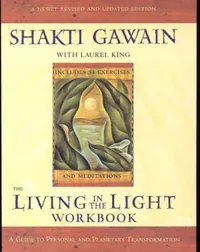




More Free Spiritual Development Books
View all →