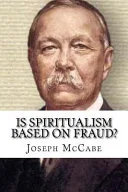
Is Spiritualism Based on Fraud?
 75
75

Is Spiritualism Based on Fraud?
Joseph McCabe’s rigorous dissection of Spiritualism in "Is Spiritualism Based on Fraud?" is a masterclass in critical inquiry. Rather than simply dismissing the movement, McCabe systematically unpacks the purported evidence for spirit communication, highlighting the logical fallacies and potential for deception. His engagement with Sir Arthur Conan Doyle, a notable proponent of Spiritualism, frames the central conflict between belief and skepticism. A particular strength lies in McCabe’s methodical approach to debunking specific phenomena, such as alleged spirit materializations, which he attributes to trickery and suggestion. However, the book's dense argumentation, while thorough, might prove challenging for readers unfamiliar with the historical context of Spiritualism or rationalist philosophy. The work’s unwavering focus on exposing fraud, while its stated aim, occasionally overshadows a deeper exploration of the psychological or societal needs that Spiritualism fulfilled for its adherents. Ultimately, McCabe provides a compelling, albeit stark, case against the veracity of Spiritualist claims.
📝 Description
75
Joseph McCabe's 1921 book questions the sincerity of Spiritualist mediums.
Joseph McCabe's "Is Spiritualism Based on Fraud?" scrutinizes the claims of the Spiritualist movement, which saw widespread popularity in the early 20th century. McCabe, known for his rationalist critiques of religion and pseudoscience, systematically questions the authenticity of alleged supernatural occurrences and the communications reported by mediums.
He examines the evidence presented by prominent Spiritualists, dissecting testimonies and methods with a skeptical eye. The book aims to expose what McCabe viewed as deception within the Spiritualist movement, offering a detailed argument against its supernatural assertions. This work is relevant for those studying the history of parapsychology, skepticism, and rationalist examinations of spiritual beliefs.
Readers interested in the historical context of Spiritualism, particularly its peak period, will find this text informative. It also appeals to those curious about debunking techniques and philosophical arguments against supernatural claims. The book engages with the intellectual debates of the early 20th century concerning science and belief, specifically around phenomena like séances and mediumship.
This book sits within the rationalist tradition that emerged strongly in the late 19th and early 20th centuries, directly challenging spiritualist movements that gained traction after events like World War I. It engages with a specific historical debate concerning the alleged communication with spirits, a core tenet of Spiritualism. McCabe's work aligns with a broader intellectual current that sought to apply scientific reasoning and empirical verification to phenomena often attributed to the supernatural, questioning the validity of beliefs outside of scientific scrutiny.
💡 Why Read This Book?
• Gain a critical perspective on the historical Spiritualist movement by examining McCabe’s analysis of séances and mediumship, particularly his debunking of alleged materializations, a key phenomenon discussed in the book. • Understand the rationalist methodology applied to supernatural claims through McCabe's detailed critique, which challenges the evidential basis presented by figures like Sir Arthur Conan Doyle in the early 20th century. • Appreciate the intellectual climate of the early 20th century concerning Spiritualism and skepticism, learning how McCabe countered widespread beliefs with logical reasoning and empirical scrutiny.
⭐ Reader Reviews
Honest opinions from readers who have explored this book.
❓ Frequently Asked Questions
What historical figures are discussed in "Is Spiritualism Based on Fraud?"
The book prominently features Sir Arthur Conan Doyle, a renowned advocate for Spiritualism, and his public debates with the author. It also addresses the practices of various mediums whose claims McCabe scrutinizes.
When was "Is Spiritualism Based on Fraud?" first published?
While the original text is likely older, the edition reviewed was first published on August 30, 2021, indicating a modern re-examination of historical debates.
What specific Spiritualist phenomena does Joseph McCabe analyze?
McCabe analyzes phenomena such as materialization, telekinesis, and spirit photography, common claims made by Spiritualists during séances and public demonstrations.
What is Joseph McCabe's general stance on Spiritualism?
Joseph McCabe adopts a highly skeptical and critical stance, viewing Spiritualism primarily as a form of fraud and deception rather than a genuine connection to the spirit world.
What was the primary location of the debate between McCabe and Doyle mentioned in the book?
The excerpt mentions a significant debate between McCabe and Sir Arthur Conan Doyle took place at the Queen's Hall in London.
What intellectual movement does Joseph McCabe represent?
Joseph McCabe was a prominent figure in the rationalist movement, advocating for skepticism, critical thinking, and scientific explanation over supernatural or religious beliefs.
🔮 Key Themes & Symbolism
The Mechanics of Mediumship
The work meticulously details the alleged methods employed by mediums to create the illusion of spirit communication. McCabe scrutinizes techniques like materialization, where spirits are supposedly made visible, and telekinesis, the movement of objects by unseen forces. He often attributes these occurrences to sleight of hand, confederates, or psychological manipulation, presenting a counter-narrative that grounds these phenomena in terrestrial trickery rather than ethereal intervention. The focus is on exposing the practical 'how-to' of fraudulent spiritualist performances.
Rationalist Critique of Evidence
Central to McCabe's argument is the application of rationalist principles to evaluate Spiritualist claims. He emphasizes the need for verifiable evidence, logical consistency, and the absence of fraud. The book systematically breaks down testimonies and purported proof, highlighting logical fallacies, biased observations, and the unreliability of anecdotal evidence. McCabe champions scientific methodology as the sole arbiter of truth, contrasting it with the faith-based acceptance prevalent in Spiritualist circles.
Societal Appeal of Spiritualism
While primarily focused on debunking, McCabe implicitly touches upon why Spiritualism gained traction, especially in the early 20th century. The desire for solace after loss, particularly following devastating wars, made the promise of continued communication with loved ones deeply appealing. The book serves as a counterpoint to this emotional pull, arguing that such comfort should not be sought through deceptive means, and that the pursuit of truth, however uncomfortable, is paramount.
The Role of Public Debate
The book underscores the importance of public discourse in challenging pseudoscientific claims. The mention of the debate with Sir Arthur Conan Doyle highlights how prominent figures engaged with these issues openly. McCabe positions such intellectual contests as vital for public education, aiming to equip audiences with the critical faculties to discern fact from fiction in matters of belief and the supernatural.
💬 Memorable Quotes
Direct passages from the work, attributed to the author.
“My book has a serious aim.”
— This statement clarifies McCabe's intent: not mere entertainment or casual observation, but a focused, critical examination intended to achieve a specific outcome – likely the exposure of fraud.
“The pen of even the dullest author—and I trust I do not fall into that low category of delinquents—must grow lively or sarcastic at times in the course of such a study as this.”
— This reveals McCabe's authorial voice, suggesting that the subject matter itself, dealing with perceived absurdity, naturally invites a sharp, perhaps even humorous, critical tone.
“When one finds Spiritualists gravely believing that a corpulent lady is transferred by spirit hands, at”
— This fragment illustrates the kind of extraordinary claim McCabe finds ludicrous within Spiritualism, setting up his subsequent skeptical analysis of such 'spirit' interventions.
“I trust I do not fall into that low category of delinquents—”
— This self-aware, slightly ironic remark from McCabe highlights his confidence in his own intellectual rigor while implicitly criticizing those who might uncritically accept Spiritualist claims.
💡 Key Ideas
Editorial paraphrase of the work's core concepts — not direct quotes.
On March 11 of this year Sir Arthur Conan Doyle did me the honour of debating the claims of Spiritualism with me before a vast and distinguished audience at the Queen's Hall, London.
This quote establishes the historical context and the high-profile nature of the debate surrounding Spiritualism, positioning McCabe as a direct intellectual adversary to key proponents like Doyle.
🌙 Esoteric Significance
Tradition
While not strictly adhering to a single esoteric lineage, McCabe's work functions as a critical counterpoint to traditions that embrace spirit communication and non-material realities, such as Theosophy or certain branches of Spiritualism itself. His rationalist approach aligns more with Enlightenment-era empiricism and skepticism, directly challenging the foundations of esoteric belief systems that rely on subjective experience and unverified phenomena.
Symbolism
The book's primary 'symbol' is the séance room itself, often depicted as a stage for trickery. Phenomena like 'materialization' become symbols of deception, representing the supposed ability of spirits to manifest physically, which McCabe seeks to explain. The 'spirit hands' mentioned in the blurb symbolize the tangible, yet allegedly fraudulent, evidence presented by mediums.
Modern Relevance
McCabe's meticulous debunking techniques remain relevant for contemporary critical thinking and media literacy. Skeptics and rationalist organizations continue to apply similar methodologies to modern claims of paranormal activity, psychic phenomena, and alternative spiritualities, drawing on the historical groundwork laid by critics like McCabe.
👥 Who Should Read This Book
• Researchers of early 20th-century parapsychology and the history of Spiritualism, seeking a primary skeptical viewpoint on the movement's claims. • Skeptics and critical thinkers interested in learning debunking techniques and rationalist arguments against supernatural phenomena, as exemplified by McCabe's critique of mediums. • Students of comparative religion and belief systems who wish to understand the intellectual opposition to Spiritualism during its peak popularity, particularly the debates involving figures like Sir Arthur Conan Doyle.
📜 Historical Context
Joseph McCabe's "Is Spiritualism Based on Fraud?" engages with a fervent period of spiritual exploration and skepticism in the late 19th and early 20th centuries. The movement gained significant traction following the immense loss of life during World War I, offering solace through supposed communication with the deceased. Prominent figures like Sir Arthur Conan Doyle championed Spiritualism, leading to public debates with rationalists and scientists. McCabe, a prolific critic of religion and advocate for scientific reasoning, stood firmly against this tide. His work directly confronts the claims of mediums, challenging the perceived evidence presented by the Spiritualist movement, which was a significant cultural force at the time, often contrasted with the emerging scientific understanding of psychology and physics. This intellectual battleground was populated by various schools of thought, from theosophy to outright scientific materialism, with Spiritualism occupying a contentious middle ground.
📔 Journal Prompts
The alleged 'spirit hands' used in materializations: what psychological needs might such an image fulfill?
Reflect on the Queen's Hall debate: how does public discourse shape belief in phenomena like Spiritualism?
McCabe's critique of mediums: consider the ethical implications of profiting from purported supernatural abilities.
Analyze the concept of 'fraud' in the context of Spiritualism versus objective scientific evidence.
Contrast the rationalist approach with faith-based acceptance when evaluating extraordinary claims.
🗂️ Glossary
Spiritualism
A religious movement based on the belief that the spirits of the dead can communicate with the living, often through mediums.
Medium
A person believed to be able to communicate with the spirits of the dead or to act as a conduit for supernatural forces.
Materialization
In Spiritualism, the alleged phenomenon of spirits becoming visible or tangible to observers, often appearing as physical forms.
Telekinesis
The purported ability to move or influence objects by mental powers alone, without physical contact.
Séance
A meeting at which people attempt to make contact with the spirit world, typically led by a medium.
Rationalism
A belief system or practice based on reason and logic, often involving skepticism towards supernatural or religious claims.
Fraud
Wrongful or criminal deception intended to result in financial or personal gain.

















![The History of Spiritualism. [With Plates, Including Portraits.]](/img/thumb/the-history-of-spiritualism-with-plates-including-portraits-arthur-conan-doyle-008182.webp)