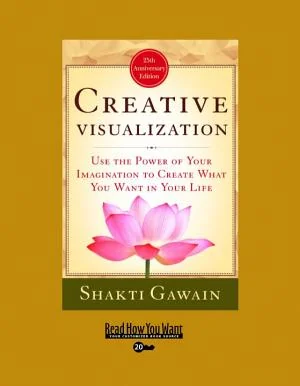
Creative Visualization (EasyRead Super Large 20pt Edition)
 82
82

Creative Visualization (EasyRead Super Large 20pt Edition)
Shakti Gawain's Creative Visualization, particularly this EasyRead edition, democratizes a powerful esoteric tool. Its strength lies in its no-nonsense, step-by-step approach, stripping away much of the dense theoretical baggage that often accompanies such subjects. Gawain presents visualization not as mystical conjecture but as a trainable mental skill. The original publication year, 1978, places it firmly within the popularization wave of New Age thought, yet its practical applications feel remarkably current. A limitation, however, is the book's singular focus; it offers little in the way of critique or exploration of potential pitfalls, presenting visualization as universally effective. The insistence on positive thought, while foundational, can sometimes feel simplistic when confronted with complex life circumstances. Nevertheless, for those seeking a direct method to harness mental imagery for concrete aims, Gawain provides a clear, if unadorned, roadmap.
📝 Description
82
Shakti Gawain's Creative Visualization, published in 1978, teaches how to use imagination to shape your reality.
This book presents a straightforward method for using mental imagery to achieve personal goals. Gawain details techniques designed to direct thoughts and inner pictures, suggesting that conscious mental focus can influence external circumstances. The approach is for anyone interested in personal growth and empowerment through focused mental effort. It connects with ideas found in spiritual psychology and practical goal-setting practices. Readers open to the mind's influence on the body and the power of focused intention will find its methods useful.
Key to Gawain's system is the idea that similar energies attract similar experiences. This principle suggests that one's prevailing thoughts and emotions draw corresponding events into their life. The book outlines specific practices, including affirmations, guided visualizations, and cultivating positive feelings. It highlights the necessity of belief, sustained effort, and aligning one's internal state with desired external results.
Creative Visualization emerged in 1978, aligning with the New Age movement's focus on human potential and consciousness. This period saw widespread interest in mind-over-matter concepts, meditation, and personal transformation. Gawain's work contributed to this milieu by offering accessible exercises rooted in the belief that focused mental states can directly impact one's lived experience, drawing from traditions that emphasize the power of intention.
💡 Why Read This Book?
• Learn a structured method for goal manifestation, directly applicable through the "step-by-step" process detailed in the book, enabling you to consciously shape desired outcomes. • Understand the foundational principles of the "like attracts like" concept as explained by Gawain, empowering you to align your mental and emotional states with your aspirations. • Gain practical techniques for cultivating positive mental imagery and affirmations, as presented in the early chapters, to overcome self-limiting beliefs and boost self-efficacy.
⭐ Reader Reviews
Honest opinions from readers who have explored this book.
❓ Frequently Asked Questions
What is the core principle of Shakti Gawain's Creative Visualization?
The core principle is that your dominant thoughts and feelings attract similar experiences into your life, often summarized as 'like attracts like.' Gawain teaches how to consciously direct these mental energies to manifest desired outcomes.
When was Creative Visualization first published, and what was the context?
Creative Visualization was first published in 1978, during a period of widespread interest in the New Age movement and human potential, making its accessible approach to mental power highly relevant at the time.
Is this book suitable for beginners in esoteric studies?
Yes, the 'EasyRead Super Large 20pt Edition' and Gawain's straightforward writing style make it very accessible for beginners interested in practical application of esoteric concepts.
What kind of goals can be pursued using these techniques?
The book suggests a wide range of goals, from personal development and improved relationships to financial well-being and creative expression, emphasizing that the techniques are adaptable to individual aspirations.
Does the book offer specific exercises for practicing visualization?
Yes, the book provides numerous exercises, including guided imagery scripts, affirmation practices, and methods for setting clear intentions, all designed to be implemented by the reader.
How does this book relate to the broader New Age movement of the 1970s?
It is a key text from the New Age movement's popularization phase, offering practical, self-help oriented techniques for consciousness and personal transformation, aligning with the era's focus on inner power.
🔮 Key Themes & Symbolism
The Power of Imagination
Gawain emphasizes that imagination is not mere fantasy but a potent force capable of shaping reality. The book details how to consciously engage this faculty, moving beyond passive daydreaming to active mental creation. It explores the idea that the mind's eye can build the blueprint for desired experiences, aligning internal perception with external manifestation.
Goal Setting and Manifestation
A central theme is the systematic approach to achieving goals through mental discipline. The book outlines how to define clear intentions, visualize outcomes with emotional conviction, and maintain belief. This process is presented as a direct method for attracting circumstances, opportunities, and resources needed to realize one's aspirations.
Mind-Body Connection
The work underscores the interconnectedness of the mind and body, positing that mental states directly influence physical well-being and life circumstances. It advocates for cultivating positive emotions and beliefs, suggesting that a harmonious inner state is crucial for creating a positive outer reality. This holistic perspective is key to effective visualization.
Conscious Creation
Creative Visualization champions the concept of conscious creation, empowering individuals to take active roles in shaping their lives rather than being subject to fate. It provides tools and perspectives to understand that one's thoughts, feelings, and beliefs are active agents in the continuous process of creating one's reality.
💬 Memorable Quotes
Direct passages from the work, attributed to the author.
“The most important thing is to feel the reality of the desired goal.”
— This highlights the crucial role of emotional conviction in visualization. It's not enough to merely picture a goal; one must genuinely *feel* the emotions associated with its attainment as if it has already happened.
“Visualize yourself as already having what you want.”
— This expresses the core practice of embodying the desired state. By mentally experiencing success or fulfillment, one primes the subconscious mind and begins to attract corresponding external circumstances.
“Belief is essential to the creative process.”
— Gawain stresses that unwavering faith in the possibility of one's desires manifesting is a prerequisite. Doubt acts as an energetic block, hindering the effective use of visualization techniques.
“You are the creator of your own reality.”
— This fundamental tenet shifts responsibility and power to the individual. It suggests that external circumstances are reflections of one's inner state, thoughts, and beliefs.
“Relaxation is key to opening the mind.”
— Before effective visualization can occur, Gawain suggests achieving a state of deep physical and mental relaxation. This quiets the conscious mind's chatter, allowing the subconscious to be more receptive.
🌙 Esoteric Significance
Tradition
Gawain's work draws heavily from the broader New Thought and mind-over-matter traditions, which have roots in 19th-century movements like Christian Science and spiritualism. While not strictly Hermetic or Kabbalistic, it echoes principles found in those traditions regarding the power of focused intention and the correspondence between inner states and outer reality. It represents a modern, democratized iteration of ancient ideas about creation through thought.
Symbolism
The primary 'symbol' in Gawain's work is the mental image itself. Within the context of visualization, the imagined goal becomes a potent symbol representing the desired future reality. The book implicitly uses the symbol of the 'seed' – planting a thought or image in the mind, nurturing it with belief and emotion, and expecting it to grow into manifest form.
Modern Relevance
Creative Visualization remains highly relevant today, influencing modern self-help gurus, manifestation coaches, and the broader wellness industry. Its core principles are echoed in practices like positive psychology, mindfulness-based stress reduction, and the popularization of the Law of Attraction, making it a foundational text for contemporary discussions on personal empowerment and intentional living.
👥 Who Should Read This Book
• Individuals new to self-empowerment techniques seeking a clear, actionable guide to using their mind for goal achievement. • Practitioners of other spiritual or psychological disciplines interested in integrating visualization into their existing practices. • Skeptics open to exploring practical, non-dogmatic methods for personal change and manifestation.
📜 Historical Context
Creative Visualization emerged in 1978, a period marked by the energetic expansion of the New Age movement. This era saw a surge in interest in Eastern philosophies, consciousness studies, and self-help psychology, partly fueled by the counterculture of the preceding decade. Books like Fritjof Capra's *The Tao of Physics* (1975) explored the parallels between modern physics and mystical thought, contributing to a climate receptive to ideas about the mind's power. Gawain's work offered a distinctly practical, secularized approach to manifestation, distinguishing it from more overtly religious or mystical texts. While figures like Werner Erhard were popularizing consciousness seminars with EST, Gawain provided a home-study method. The book's accessible language and focus on tangible results made it a significant contributor to the popularization of what would become known as the Law of Attraction, even before the term gained widespread recognition.
📔 Journal Prompts
The 'desired goal' as a mental construct: how does its perceived reality shift your current feelings?
Reflect on the effectiveness of 'belief' as a component in your past attempts at achieving goals.
Analyze the role of 'relaxation' in your capacity to focus mental imagery.
Consider instances where your 'imagination' actively shaped an outcome, positive or negative.
Explore the concept of 'conscious creation' in relation to a specific challenge you currently face.
🗂️ Glossary
Visualization
The practice of forming mental images of desired outcomes, experiences, or goals, often accompanied by emotional engagement, to influence reality.
Affirmation
Positive statements, typically in the present tense, used repeatedly to reinforce desired beliefs, attitudes, or outcomes in the subconscious mind.
Manifestation
The process by which thoughts, beliefs, and desires are brought into physical reality through the power of the mind and intention.
Like Attracts Like
A core principle suggesting that one's dominant thoughts, feelings, and beliefs tend to attract corresponding experiences and circumstances into one's life.
Inner Game
Refers to the internal mental and emotional landscape—thoughts, beliefs, attitudes—which Gawain posits is the primary driver of external results.
Subconscious Mind
The part of the mind operating below conscious awareness, believed to be highly receptive to suggestion and deeply influential in shaping behavior and reality.
Intention
A focused purpose or aim, consciously set and directed towards achieving a specific outcome through mental effort and visualization.
This book appears in 1 collection
🔮 Readers Also Liked
Browse all →








From the “Affirmations” Collection
View all →








More Free Occult Philosophy Books
View all →