Light on Yoga

 79
79

Light on Yoga
Iyengar's "Light on Yoga" remains an imposing, almost architectural, achievement in yoga literature. Its sheer scope, detailing hundreds of asanas with an exacting precision that was revolutionary for its time, is its greatest strength. The photographic plates, though dated, offer stark clarity to the postures. However, the book's density can also be its limitation; the philosophical sections, while present, are often overshadowed by the exhaustive postural instruction. A passage detailing the correct performance of Sirsasana (Headstand) exemplifies the book's meticulousness, offering multiple stages of entry and alignment cues that demand focused attention. For those seeking an authoritative, biomechanically-oriented guide to the physical practice of Hatha Yoga, it is indispensable.
📝 Description
79
B. K. S. Iyengar's Light on Yoga, published in 1965, details over 200 yoga postures with precise alignment instructions.
First published in 1965, Light on Yoga is a detailed guide to Ashtanga Yoga. B. K. S. Iyengar describes more than 200 postures, explaining alignment, contraindications, and benefits for each. The book also examines the ethical and philosophical foundations of yoga, referencing Patanjali's Yoga Sutras.
This text is for practitioners seeking a thorough understanding of yoga. It is useful for beginners learning postures and for advanced yogis refining their practice. Teachers and students interested in the biomechanics of postures and a structured approach to yoga discipline will find it particularly valuable.
The book appeared as Western interest in Eastern spiritual traditions grew. While other texts offered introductions, Iyengar's work provided extensive detail and systematic instruction. Its 1965 release coincided with a cultural fascination with India, but the book stood out for its rigorous, almost scientific, method. It quickly became a core text for the growing international yoga community.
This book connects to the Hatha Yoga tradition, specifically the system of Ashtanga Yoga described by Patanjali. Iyengar emphasizes the physical postures (*asanas*) and breath control (*pranayama*) as primary means for developing bodily health, mental focus, and spiritual awareness. He breaks down the eight limbs of yoga, prioritizing the physical practice as a method for cultivating discipline and concentration. The text highlights the concept of *Sthira Sukham Asanam*, meaning a posture should be steady, comfortable, and alert.
💡 Why Read This Book?
• Learn the precise anatomical alignment for over 200 asanas, understanding the foundational principles of *asana* as detailed in this 1965 text, which offers a unique approach to postural correction. • Grasp the philosophical context of yoga through Iyengar's structured interpretation of Patanjali's Yoga Sutras, gaining insight into the eight limbs of Ashtanga Yoga as presented in the book's introductory chapters. • Develop a disciplined approach to practice by understanding the emphasis on *pranayama* and *asana* as interconnected disciplines, as demonstrated through the detailed instructions for each posture.
⭐ Reader Reviews
Honest opinions from readers who have explored this book.
❓ Frequently Asked Questions
When was B. K. S. Iyengar's "Light on Yoga" first published?
B. K. S. Iyengar's seminal work, "Light on Yoga," was first published in 1965, establishing a comprehensive guide to yoga practice for a global audience.
What are the main subjects covered in "Light on Yoga"?
The book primarily covers detailed instructions for over 200 yoga postures (asanas), breathing techniques (pranayama), and the philosophical principles of yoga, particularly as derived from Patanjali's Yoga Sutras.
Is "Light on Yoga" suitable for beginners?
Yes, while extensive, the book provides detailed instructions for beginners, though a qualified teacher's guidance is often recommended for safe and effective practice, especially for complex asanas.
What is the significance of the term Ashtanga Yoga in this book?
Iyengar uses "Light on Yoga" to explain Ashtanga Yoga, referring to the eight-limbed path described by Patanjali, with a significant focus on the physical aspects (asana) and breath control (pranayama).
Does the book explain the philosophical aspects of yoga?
Absolutely. Beyond the physical postures, Iyengar dedicates considerable space to the ethical and philosophical dimensions of yoga, interpreting Patanjali's Yoga Sutras and their relevance to practice.
Where did B. K. S. Iyengar teach yoga?
B. K. S. Iyengar taught extensively from his institute in Pune, India, and traveled internationally, significantly influencing the global spread and understanding of Hatha Yoga from the mid-20th century onward.
🔮 Key Themes & Symbolism
The Eight Limbs of Ashtanga
Iyengar meticulously unpacks the eight limbs of yoga as codified by Patanjali. While often interpreted spiritually, Iyengar grounds these limbs in practical application, beginning with the ethical observances (*yamas* and *niyamas*) and progressing through posture (*asana*), breath control (*pranayama*), and withdrawal of the senses (*pratyahara*). The book emphasizes that physical practice is not an end in itself but a crucial foundation for the subtler stages of concentration (*dharana*), meditation (*dhyana*), and liberation (*samadhi*). This systematic breakdown provides a roadmap for a holistic yogic path.
Precision in Asana
A hallmark of Iyengar's approach is the extreme precision demanded in each posture. "Light on Yoga" provides detailed instructions on anatomical alignment, the correct engagement of muscles, and the specific benefits and contraindications for over 200 asanas. This rigor transforms yoga from a mere physical activity into a precise science of the body and mind. The book's emphasis on *Sthira Sukham Asanam* (steady, comfortable posture) underscores the need for both stability and ease, achieved through meticulous attention to detail.
The Role of Pranayama
Beyond asana, Iyengar places significant importance on *pranayama*, or breath control. The text dedicates substantial sections to explaining various breathing techniques, their physiological effects, and their role in cultivating mental focus and energy. Iyengar presents pranayama not just as a means to calm the nervous system but as an integral part of the yogic path, leading towards deeper states of consciousness. The disciplined practice of breath control is shown to be as vital as mastering physical postures.
Yoga as a Path to Self-Knowledge
Fundamentally, "Light on Yoga" presents the entire practice as a rigorous discipline for self-discovery. The physical and mental training outlined in the book is intended to purify the body, steady the mind, and awaken inner awareness. Iyengar interprets yoga as a profound system for understanding oneself and one's place in the universe. The journey through the asanas and pranayama is framed as a process of shedding ignorance and cultivating insight, leading to a more integrated and conscious existence.
💬 Memorable Quotes
Direct passages from the work, attributed to the author.
“The body is the temple of God. It is only fitting that we keep it in perfect health and strength.”
— This statement expresses Iyengar's view of the body not as an obstacle to spiritual growth, but as a sacred vessel. Maintaining physical well-being is presented as a fundamental aspect of spiritual discipline and reverence.
“Asana is the third limb of Ashtanga Yoga. It is the first step towards the realization of the self.”
— This highlights the foundational importance Iyengar places on physical postures. It suggests that mastering the body through asana is a prerequisite for deeper spiritual inquiry and self-realization within the yogic framework.
“The practice of asana purifies the body and steadies the mind.”
— This concise interpretation explains the dual benefit of yoga postures. It's not just about physical fitness; it's also about achieving a calm, focused mental state essential for contemplative practices.
“The greatest way to serve humanity is to serve oneself by becoming perfect.”
— Iyengar suggests that personal refinement through yoga practice is not selfish, but rather a way to ultimately contribute more effectively to the world by embodying strength, clarity, and balance.
“The posture should be steady and comfortable.”
— This is a direct interpretation of the Sanskrit sutra *Sthira Sukham Asanam*. It defines the ideal state of an asana: stable yet relaxed, requiring balance and awareness to achieve.
🌙 Esoteric Significance
Tradition
While firmly rooted in the Hatha Yoga tradition derived from ancient Indian texts, Iyengar's approach in "Light on Yoga" can be seen as a modern, systematic interpretation that bridges the physical and the contemplative. It aligns with yogic lineages that view the body as a vehicle for spiritual evolution, emphasizing discipline and self-mastery. His meticulous attention to detail and biomechanics offers a practical, almost alchemical, method for transforming the physical form into a vessel for higher consciousness, echoing Tantric principles of working with the body's energies.
Symbolism
The asanas themselves, while presented with scientific precision, carry symbolic weight within the yogic tradition. For example, postures like *Vrikshasana* (Tree Pose) symbolize grounding and balance, connecting earth and sky, while *Savasana* (Corpse Pose) represents surrender and the dissolution of the ego, a crucial step towards meditative states. The systematic progression through the eight limbs of Ashtanga Yoga also symbolizes the journey from the external world of action to the internal area of pure consciousness.
Modern Relevance
Iyengar's methodology, as detailed in "Light on Yoga," continues to be highly influential. Contemporary yoga styles such as Iyengar Yoga, which directly adheres to his principles, maintain a global following. His emphasis on anatomical precision and therapeutic application has also permeated mainstream yoga practices and teacher training programs worldwide. Thinkers and practitioners in fields ranging from physical therapy and sports science to mindfulness and stress reduction draw upon the foundational principles of disciplined practice and body-mind integration first systematically laid out in this text.
👥 Who Should Read This Book
• Aspiring and current yoga instructors seeking an authoritative reference for asana alignment, contraindications, and the philosophical underpinnings of the practice. • Dedicated yoga practitioners aiming to deepen their understanding of posture and breath control, moving beyond superficial physical exercise to a more disciplined yogic path. • Students of comparative religion and philosophy interested in the practical application and systematic development of one of India's most significant contemplative traditions.
📜 Historical Context
Published in 1965, B. K. S. Iyengar's "Light on Yoga" emerged during a global surge of interest in Eastern philosophies and practices, particularly yoga. While figures like Swami Vivekananda had introduced Vedanta to the West decades earlier, and Transcendental Meditation was gaining traction, Iyengar's work offered an unprecedented, systematic, and detailed approach to Hatha Yoga. It provided a rigorous counterpoint to more abstract or esoteric interpretations of yoga prevalent at the time. Unlike the more philosophical or meditative focus of some contemporary Indian gurus, Iyengar’s book emphasized precise physical instruction, influenced by his own rigorous training and anatomical understanding. Its detailed photography and clear, step-by-step guidance for over 200 asanas set a new standard, influencing countless yoga teachers and practitioners worldwide and solidifying the importance of asana within the broader yogic tradition.
📔 Journal Prompts
The precise alignment cues for Trikonasana (Triangle Pose).
The concept of *Sthira Sukham Asanam* in your daily life.
The progression through the eight limbs of Ashtanga Yoga.
The role of pranayama in achieving mental steadiness.
The significance of *Savasana* as a practice.
🗂️ Glossary
Asana
A physical posture or pose in yoga, emphasizing steady and comfortable positioning.
Pranayama
The practice of breath control and regulation, considered vital for energy control and mental clarity in yoga.
Yama
Ethical restraints or moral disciplines that form the first limb of Ashtanga Yoga, guiding one's interaction with the external world.
Niyama
Observances or disciplines related to the self, forming the second limb of Ashtanga Yoga, focusing on inner conduct.
Dharana
The sixth limb of Ashtanga Yoga, referring to the concentration of the mind on a single point or object.
Dhyana
Meditation, the seventh limb of Ashtanga Yoga, characterized by a sustained flow of concentration.
Samadhi
Enlightenment or profound meditative absorption, the eighth and final limb of Ashtanga Yoga, representing a state of liberation.
🔮 Readers Also Liked
Browse all →







More by B. K. S. Iyengar
All books →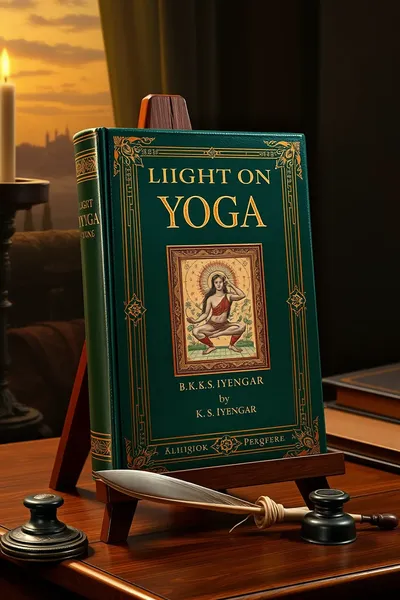





More Free Occult Philosophy Books
View all →