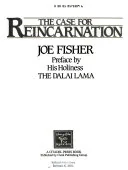
The Case for Reincarnation
 79
79

The Case for Reincarnation
Joe Fisher’s exploration of reincarnation in his 1992 volume is less a polemic and more a patient accumulation of data points. He avoids the pitfalls of sensationalism, instead opting for a methodical presentation of cases that suggest a continuity of self. A particular strength lies in his analysis of cases involving spontaneous past-life recall in children, which often exhibit striking details verifiable through historical records. However, the work occasionally suffers from a lack of rigorous refutation of alternative psychological explanations for these phenomena, sometimes treating anecdotal evidence as definitive proof without fully acknowledging the subjective element. The section detailing hypnotic regression experiences, while intriguing, feels less grounded than his examination of spontaneous cases. Despite this, Fisher's persistent inquiry into the evidence makes the book a valuable resource for anyone seriously considering the possibility of life after death beyond conventional religious dogma.
📝 Description
79
Joe Fisher's 1992 book, The Case for Reincarnation, examines evidence for consciousness persisting beyond death.
Published in 1992, Joe Fisher's The Case for Reincarnation moves beyond mere belief to investigate arguments and phenomena that support the idea of rebirth. The book considers past-life recall, mediumship, and altered states of consciousness as possible indicators of a spiritual continuity. Fisher addresses the concept of an enduring 'soul' or 'essential self' that experiences multiple lifetimes. He questions whether memory is solely a function of the brain, suggesting it may belong to this continuous consciousness. The work also touches upon karmic implications, proposing that actions in one life can shape the circumstances of future existences within a framework of spiritual development.
This book is aimed at readers with an open mind interested in the question of life after death. It will particularly resonate with those curious about the philosophical and empirical basis for reincarnation, especially if they have encountered personal experiences or anecdotal evidence they wish to understand better. Fisher's approach is for the dedicated inquirer rather than someone seeking simple conclusions.
Fisher's work emerged in the early 1990s, a period when interest in parapsychology and alternative spiritualities was present, though often outside mainstream academic discussion. It engaged with debates on consciousness, memory, and the nature of reality, often in contrast to materialist scientific views. This was a time when researchers like Ian Stevenson were conducting extensive studies on children reporting past-life memories, creating a context of academic investigation into reincarnation.
💡 Why Read This Book?
• Understand the concept of karmic causality as presented by Fisher, learning how actions in this life might be theorized to influence future existences, offering a framework for ethical consideration. • Examine specific cases of spontaneous past-life recall, such as those involving children, to evaluate the presented evidence for continuity of consciousness beyond death. • Gain insight into the role of memory in reincarnation theory, exploring Fisher's argument that memory may not be solely dependent on brain function but could be a property of the enduring soul.
⭐ Reader Reviews
Honest opinions from readers who have explored this book.
❓ Frequently Asked Questions
What is the primary focus of Joe Fisher's 'The Case for Reincarnation'?
The book primarily focuses on presenting and examining evidence that supports the concept of reincarnation, exploring phenomena like past-life recall and mediumship as potential indicators of consciousness continuity beyond physical death.
When was 'The Case for Reincarnation' originally published?
Joe Fisher's 'The Case for Reincarnation' was first published in 1992.
Does the book rely on anecdotal evidence or scientific study?
The book utilizes a range of evidence, including anecdotal accounts of past-life recall and hypnotic regression, alongside discussions of research that attempts to explore these phenomena, though it navigates the challenges of empirical validation in this field.
What is the concept of karma as discussed in the book?
In the context of the book, karma refers to the principle that actions and experiences in one life can influence the circumstances and development of subsequent lives, forming a causal chain for spiritual evolution.
Who is Joe Fisher?
Joe Fisher is the author of 'The Case for Reincarnation,' a work that investigates the possibility of life after death through the lens of rebirth and accumulated evidence.
Are there specific cases of past-life recall discussed?
Yes, the book examines various documented cases, particularly those involving children who exhibit detailed and verifiable memories of previous lives, as evidence for reincarnation.
🔮 Key Themes & Symbolism
Continuity of Consciousness
The central theme posits that consciousness is not solely a product of the physical brain but an independent entity that can persist and transfer between lifetimes. Fisher explores how phenomena like xenoglossy (speaking unlearned languages) and detailed past-life memories, particularly in children, are presented as evidence for this enduring soul or self. The work suggests that this continuity allows for spiritual growth and the working out of karmic patterns across multiple existences, challenging materialistic views of existence.
Karmic Causality
Fisher examines reincarnation through the lens of karma, presenting it not as mere punishment or reward, but as a natural law of cause and effect governing spiritual development. The book suggests that the circumstances, talents, and challenges encountered in a given lifetime are influenced by actions and experiences from previous existences. This framework provides a moral and developmental structure for the soul's journey, implying that each life offers lessons and opportunities for evolution.
Memory Beyond the Brain
A significant aspect of the book is the exploration of memory as a potential faculty of the soul, independent of neurological structures. Fisher discusses cases where individuals recall detailed information from past lives, including names, places, and events, that they could not have acquired through normal means. This challenges conventional understanding of memory and points towards a deeper, transpersonal aspect of consciousness that carries knowledge and experience across incarnations.
Evidence for Rebirth
The book meticulously gathers and analyzes various forms of evidence that Fisher argues support the doctrine of reincarnation. This includes spontaneous past-life recall in children, information obtained through hypnotic regression, and phenomena associated with mediumship. By presenting these cases, Fisher aims to build a compelling argument that reincarnation is a plausible explanation for observed human experiences and anomalies that conventional science struggles to address.
💬 Memorable Quotes
Direct passages from the work, attributed to the author.
“The continuity of consciousness is the essential proposition that reincarnation seeks to explain.”
— This statement captures the core argument of the book: that the fundamental principle driving the concept of rebirth is the idea that our awareness, our 'self,' does not cease to exist with the body.
“Memory is not solely a function of the brain; it may be a characteristic of the soul.”
— Fisher suggests that the ability to remember is not limited to biological processes but could be an inherent quality of the enduring spiritual essence, allowing it to retain experiences across lifetimes.
“Children's past-life memories often contain verifiable details unknown to their families.”
— This observation points to a key piece of evidence Fisher examines: the remarkable accuracy and specificity found in young children's claims of remembering previous lives.
“The spiritual journey involves learning and evolving across multiple physical existences.”
— This interpretation emphasizes the developmental aspect of reincarnation, framing each life as a step in a longer process of soul growth and understanding.
💡 Key Ideas
Editorial paraphrase of the work's core concepts — not direct quotes.
Karmic causality suggests that present circumstances are informed by past actions.
This paraphrased concept highlights the principle that our current life situations are viewed as the result of choices and actions taken in previous existences, forming a cycle of cause and effect.
🌙 Esoteric Significance
Tradition
Fisher's work aligns with the broader Western esoteric tradition's interest in the soul's journey, particularly drawing from Theosophical concepts of reincarnation and karma, which were popularized in the late 19th and early 20th centuries. It departs from purely religious dogma by seeking evidential support and engaging with psychological and parapsychological phenomena. The book bridges mystical inquiry with a quasi-empirical approach, seeking to provide a rational basis for belief in rebirth within a spiritual framework.
Symbolism
While not heavily symbolic in its prose, the overarching concept of the 'cycle' or 'wheel' of birth, death, and rebirth is a powerful, ancient symbol of cosmic order and the soul's journey. The 'scar' or 'mark' on a child's body, often cited in past-life recall cases, can be interpreted as a physical manifestation of a past event, symbolizing the indelible imprint of experience on the soul.
Modern Relevance
Contemporary interest in consciousness, quantum physics' implications for reality, and the growing acceptance of mindfulness and meditation practices have created fertile ground for revisiting Fisher's arguments. Thinkers exploring transpersonal psychology, near-death experience research, and even some forms of trauma healing implicitly or explicitly engage with the idea of consciousness persisting beyond the physical, echoing themes Fisher explored.
👥 Who Should Read This Book
• Students of comparative religion and philosophy seeking to understand the arguments for reincarnation beyond faith-based assertions. • Inquirers interested in parapsychology and consciousness studies looking for documented cases and theoretical frameworks supporting life after death. • Skeptics open to examining evidence for phenomena that challenge materialistic explanations of existence and the nature of the self.
📜 Historical Context
Joe Fisher's 'The Case for Reincarnation' emerged in 1992, a period marked by a resurgence of interest in consciousness studies and parapsychology, often operating outside mainstream academic acceptance. The book contributed to a burgeoning literature exploring alternative spiritualities and the nature of existence beyond the materialist paradigm that dominated much of Western thought. Contemporaries like Raymond Moody were exploring near-death experiences, while Ian Stevenson's meticulous research into children's past-life memories provided a framework of empirical investigation that Fisher's work engaged with. While not facing overt censorship, the subject matter itself existed in intellectual currents often viewed with skepticism by established scientific and philosophical institutions.
📔 Journal Prompts
The concept of karmic causality and its implications for present actions.
Specific details from verifiable past-life recall cases presented in the book.
The argument for memory as a property of the soul, independent of the brain.
The distinction between evidence presented for spontaneous recall versus hypnotic regression.
Personal reflections on the continuity of self across different life stages.
🗂️ Glossary
Reincarnation
The belief that the soul or spirit, after biological death, begins a new life in a new body. This cyclical process is thought to continue until a state of spiritual liberation is achieved.
Karma
A principle of cause and effect where intent and actions of an individual influence their future. In reincarnation theory, karma dictates the circumstances of future lives.
Past-life recall
The phenomenon where individuals, often children, claim to remember specific details of a previous life, including names, places, and events that can sometimes be verified.
Xenoglossy
The purported ability to speak or write a language that the speaker has not learned through normal means, often cited as evidence for past-life memories.
Hypnotic Regression
A therapeutic technique where a person is guided into a hypnotic state to recall past events, including, in some cases, alleged memories of past lives.
Consciousness
The state or quality of awareness, or of being aware of an external object or something within oneself. In this context, it is considered potentially independent of the physical body.
Soul
The spiritual or immaterial part of a human being or animal, regarded as immortal. In reincarnation beliefs, it is the entity that transmigrates.
This book appears in 1 collection
🔮 Readers Also Liked
Browse all →









From the “Reincarnation” Collection
View all →







More Free Occult Philosophy Books
View all →