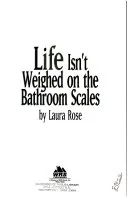
Life Isn't Weighed on the Bathroom Scales
 79
79

Life Isn't Weighed on the Bathroom Scales
Laura Rose’s 1994 text, "Life Isn't Weighed on the Bathroom Scales," offers a welcome counterpoint to the relentless pursuit of quantifiable self-improvement. The author navigates the often-unacknowledged spiritual and psychological dimensions of personal development with a thoughtful, if occasionally oblique, approach. Rose excels in her critique of superficial metrics for success, particularly in her examination of how societal pressures distort our perception of inner worth. A limitation, however, lies in the book's sometimes abstract presentation, which can obscure the practical application of its core ideas for some readers. The passage discussing the 'unseen scales' and their illusory nature, while conceptually rich, could benefit from more concrete illustration. Despite this, the work's enduring value is its challenge to conventional notions of progress and its gentle insistence on embracing the non-linear, often paradoxical, nature of true inner change. It’s a valuable text for those disillusioned with facile answers to complex personal questions.
📝 Description
79
Laura Rose's 1994 book argues that personal growth is not a quantifiable achievement.
Published in 1994, "Life Isn't Weighed on the Bathroom Scales" challenges the common self-help notion that personal development is a series of measurable steps toward an ideal. Laura Rose suggests that growth is a fluid, sometimes contradictory process. The book asks readers to examine their ambitions, their definitions of success, and the subtle influences that shape their lives. It moves away from prescriptive advice and toward an understanding of the deeper psychological currents at play. Rose encourages a more complex view of self discovery, one that accepts uncertainty and the internal contradictions within individuals.
The work posits that self worth and progress cannot be measured by external standards. Rose introduces the idea of inner alchemy, where true transformation happens internally rather than through outward accomplishments. The book also discusses the importance of acknowledging and integrating the less desirable parts of oneself, viewing them not as defects but as necessary elements of a complete personality. The author argues that genuine development comes from accepting these aspects, not from trying to achieve an impossible perfection.
Emerging in the mid-1990s, a period of growing interest in alternative psychologies and spiritualities, Laura Rose's book offered a critique of mainstream self-help. While distinct from the earlier New Age peak, it resonated in a climate open to non-traditional self-understanding. The book provided an alternative to more rigid spiritual systems, attracting readers interested in Jungian psychology and various hermetic ideas. It spoke to those seeking frameworks beyond conventional self-improvement narratives, aligning with a broader search for meaning outside established doctrines.
💡 Why Read This Book?
• Gain an alternative framework for understanding personal growth, moving beyond quantifiable achievements, as Rose articulates in her critique of 'bathroom scales' for measuring self-worth. • Explore the concept of inner alchemy as presented in the book, learning how transformation is viewed as an internal, qualitative process rather than an external, quantitative one. • Reframe your understanding of personal challenges and perceived 'shadow' aspects, recognizing their integral role in wholeness, a concept Rose develops throughout her work.
⭐ Reader Reviews
Honest opinions from readers who have explored this book.
❓ Frequently Asked Questions
What is the central message of Laura Rose's "Life Isn't Weighed on the Bathroom Scales"?
The central message is that personal growth and self-worth cannot be measured by external achievements or societal standards. The book advocates for an internal, qualitative understanding of development, challenging the notion of quantifiable progress.
When was "Life Isn't Weighed on the Bathroom Scales" first published?
The book was first published in 1994, positioning it within a period of growing interest in alternative psychological and spiritual perspectives.
What kind of esoteric ideas does the book explore?
It delves into concepts of inner alchemy, the integration of shadow aspects of the self, and a critique of superficial motivational paradigms, suggesting a more nuanced path to personal transformation.
Is this book a typical self-help guide?
No, it is intentionally positioned as a counterpoint to conventional self-help. It avoids prescriptive advice and instead offers a philosophical and psychological exploration of personal development.
Who might benefit most from reading this book?
Individuals seeking a deeper, less conventional understanding of personal growth, those disillusioned with superficial self-help trends, and readers interested in the psychological and subtle dimensions of transformation will find value.
Does the book offer practical exercises?
While not a manual of step-by-step exercises, the book encourages introspection and a re-evaluation of one's internal metrics for progress, fostering a different approach to self-awareness.
🔮 Key Themes & Symbolism
Critique of External Validation
The book fundamentally questions the societal obsession with external validation and quantifiable success. Rose argues that metrics like career advancement, material possessions, or even perceived spiritual attainment often serve as 'bathroom scales' – illusory measures of true worth. The work explores how this external focus can hinder genuine inner development by creating pressure for conformity and preventing individuals from recognizing their unique, non-linear paths to growth. It encourages a shift from seeking approval to cultivating internal integrity.
Inner Alchemy and Transformation
Rose introduces the concept of inner alchemy, drawing parallels to ancient transformative processes. This theme posits that significant personal change is not about adding or subtracting external elements, but about a profound internal transmutation. It involves working with one's own psychological and spiritual substance, much like an alchemist works with base metals. The book suggests that true transformation is an organic unfolding, often requiring patience and a willingness to engage with the less tangible aspects of the self.
Embracing the Shadow Self
A significant theme is the integration of the shadow self – those aspects of our personality that are repressed or denied. Rather than viewing these parts as flaws to be eliminated, Rose reframes them as essential components of a complete and authentic individual. The work explores how confronting and understanding these hidden facets, rather than resisting them, is crucial for achieving wholeness and unlocking deeper self-awareness. This approach diverges from many self-help narratives that focus solely on positivity.
The Paradox of Progress
The book challenges the conventional, linear understanding of progress. Rose suggests that true development often involves paradoxes – moments of apparent regression that lead to deeper understanding, or periods of stillness that are profoundly active internally. It posits that life's journey is not a steady climb but a complex dance, where perceived stasis can be a vital phase of integration. This perspective encourages readers to release the anxiety associated with constant forward motion and embrace the natural rhythms of change.
💬 Memorable Quotes
Direct passages from the work, attributed to the author.
“The scales we use to measure ourselves are often invented by others.”
— This statement highlights the book's core critique of external validation. It suggests that societal pressures and conventional metrics for success are not inherent truths but imposed frameworks that distort our perception of genuine worth and progress.
“To be whole, one must embrace the unacknowledged corners of the psyche.”
— This interpretation points to the concept of integrating the shadow self. It suggests that authenticity and completeness are achieved not by suppressing difficult or hidden aspects of oneself, but by acknowledging and understanding them.
“Progress is not always a straight line; sometimes it is a spiral.”
— This conveys the book's perspective on the non-linear nature of personal development. It challenges the idea of constant forward movement, suggesting that revisiting themes or experiencing apparent setbacks can be integral parts of a deeper, spiraling growth process.
“The weight of being is not found on a bathroom scale.”
— This concise statement captures the book's title and central argument. It asserts that the essence of one's existence and value cannot be quantified or measured by superficial means.
💡 Key Ideas
Editorial paraphrase of the work's core concepts — not direct quotes.
True transformation is an internal chemistry, not an external acquisition.
This paraphrased concept emphasizes the theme of inner alchemy. It contrasts the book's view of development as a profound internal process of transmutation with the common tendency to equate growth with accumulating external achievements or possessions.
🌙 Esoteric Significance
Tradition
This work aligns with a modern interpretive stream of Western Esotericism, particularly drawing from psychological hermeticism and Gnostic undertones. It departs from purely ritualistic or magical traditions by focusing on the internal, psychological transmutation of the individual. While not strictly Kabbalistic or Theosophical, it shares with these traditions an interest in hidden correspondences and the idea that the microcosm (the individual) reflects the macrocosm. Rose's approach emphasizes self-knowledge as the primary vehicle for transformation, a common thread in many esoteric paths.
Symbolism
The central symbol is the 'bathroom scale,' representing external, quantifiable metrics of worth and progress. This is contrasted with subtler, internal measures of growth. The concept of 'inner alchemy' serves as another key motif, symbolizing the profound, internal transmutation of psychological and spiritual elements, akin to transforming base metals into gold, but applied to the self. The 'shadow self' also functions symbolically, representing the hidden, unacknowledged aspects of the psyche that must be integrated for wholeness.
Modern Relevance
Contemporary readers interested in depth psychology, particularly Jungian analysis, find resonance with Rose's exploration of the shadow and the non-linear nature of growth. Her critique of societal pressures and superficial metrics remains highly relevant in an age dominated by social media validation and productivity culture. Thinkers and practitioners focused on embodied cognition and somatic psychology might also find value in her emphasis on internal, qualitative shifts over external performance. The book's themes continue to inform discussions on authentic living and psychological integration.
👥 Who Should Read This Book
• Individuals disillusioned with conventional self-help literature: Those weary of prescriptive advice and superficial positivity will find a more nuanced, philosophical exploration of personal development. • Students of depth psychology: Readers interested in Jungian concepts, the shadow, and the complex, non-linear nature of psychological integration will discover relevant themes. • Seekers of authentic self-knowledge: Anyone looking to move beyond external validation and cultivate a deeper, internal understanding of their own worth and growth path will benefit.
📜 Historical Context
Published in 1994, "Life Isn't Weighed on the Bathroom Scales" emerged during a cultural moment when the self-help industry was booming, yet also facing increased scrutiny. While the overt New Age spiritual movements of the 1970s and 80s had begun to wane, a persistent interest in alternative psychologies and esoteric thought continued. Laura Rose’s work offered a more introspective and philosophically grounded alternative to the often-simplistic motivational literature prevalent at the time. It resonated with individuals exploring Jungian psychology, which gained renewed attention, and various Hermetic traditions that offered deeper symbolic frameworks. Unlike more dogmatic spiritual guides, Rose's approach was nuanced, acknowledging the complexities of human experience. The book found its audience among those seeking a more authentic path to self-discovery, away from the perceived superficiality of mainstream wellness trends, and provided a counter-narrative to the era's pervasive emphasis on external achievement.
📔 Journal Prompts
Reflect on the 'unseen scales' the book mentions and how they influence your self-perception.
Consider the concept of 'inner alchemy' in relation to a personal challenge you are currently facing.
Explore the 'shadow aspects' of your personality that the book suggests integrating.
How does the idea of 'progress as a spiral' challenge your current understanding of personal development?
What does 'weight' mean to you, beyond the literal, in the context of your life?
🗂️ Glossary
Inner Alchemy
A metaphorical process of psychological and spiritual transformation, akin to ancient alchemical practices, focused on transmutation within the individual rather than external manipulation of matter.
Shadow Self
In Jungian psychology and related esoteric thought, refers to the unconscious aspects of the personality that the conscious ego does not identify in itself; those traits that are repressed or denied.
External Validation
Seeking approval, worth, or confirmation of one's value from outside oneself, often through societal metrics, achievements, or the opinions of others.
Quantifiable Progress
The idea that personal growth or development can be measured using numerical or objective standards, such as career advancement, income, or completed tasks.
Authenticity
The quality of being genuine and true to oneself, characterized by alignment between one's inner experience and outer expression, independent of external pressures.
Microcosm/Macrocosm
A concept found in various esoteric traditions suggesting that the smaller world (microcosm, e.g., the human being) reflects the larger universe (macrocosm), and vice versa.
Psychological Hermeticism
An approach that interprets the principles of Hermetic philosophy (like 'As Above, So Below') in terms of internal psychological processes and self-transformation.
This book appears in 1 collection
🔮 Readers Also Liked
Browse all →







From the “Affirmations” Collection
View all →






More Free Occult Philosophy Books
View all →