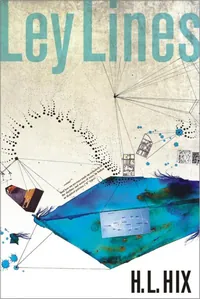
Ley Lines
 81
81

Ley Lines
John Havelock Fidler’s *Ley Lines* offers a systematic approach to a topic often mired in speculation. The book distinguishes itself by attempting to map and analyze the energetic qualities of these supposed terrestrial currents, rather than just their visual alignments. Fidler’s detailed charts and diagrams, particularly those illustrating the proposed network over specific regions, are a notable strength, providing a tangible basis for his theories. However, the work occasionally suffers from an overly technical presentation that can obscure the intuitive appeal of geomancy for some readers. A passage discussing the correlation between ley line intersections and areas of anomalous psychological phenomena, for instance, is both intriguing and challenging, demanding careful consideration. While the foundational premise of earth energies has been explored by many, Fidler’s rigorous mapping offers a unique contribution. It is a valuable resource for those seeking a structured investigation into geomantic theory.
📝 Description
81
John Havelock Fidler's 1986 book, Ley Lines, examines geomantic energies and their influence on human consciousness.
Ley Lines, published in 1986, meticulously examines geomantic energies and their connection to landscape and human consciousness. John Havelock Fidler presents the Earth's surface as underpinned by an energetic grid. This grid, he argues, influences historical sites, megalithic structures, and even human behavior. The book goes beyond simply cataloging these lines to investigate the energetic grid itself.
This work is best suited for serious students of earth mysteries, geomancy, and archaeoastronomy. Readers interested in the energetic geography of sacred sites, dowsing, and how ancient peoples might have perceived and used terrestrial currents will find substantial material. It demands a willingness to engage with detailed mapping and theoretical frameworks. Fidler's research comes from a time of renewed interest in ley lines, building on earlier work by Alfred Watkins and John Michell.
Fidler's work is situated within the tradition of earth mysteries, a field that investigates supposed energetic patterns and ancient knowledge related to the Earth's landscape. It follows in the lineage of researchers like Alfred Watkins, who identified alignments of ancient sites, and John Michell, who popularized the concept of ley lines as part of a global energy system. This book contributes to the discourse on geomancy, the practice of divining or understanding the Earth's energies, and its connection to human history and spiritual development.
💡 Why Read This Book?
• Understand the structured theoretical framework behind ley line networks, including Fidler's specific mapping methodologies, which goes beyond simple visual alignments. • Explore the proposed energetic properties of these lines and their potential influence on historical site selection, as detailed in his analysis of megalithic locations. • Gain insight into the 1980s geomantic landscape, understanding Fidler's contribution alongside contemporaries like John Michell and the evolving discourse on earth energies.
⭐ Reader Reviews
Honest opinions from readers who have explored this book.
❓ Frequently Asked Questions
What is the primary focus of John Havelock Fidler's 'Ley Lines'?
The book's primary focus is the systematic examination and mapping of hypothesized invisible energy pathways, or 'ley lines,' believed to crisscross the Earth, and their potential influence on ancient sites and human consciousness.
When was 'Ley Lines' by John Havelock Fidler first published?
'Ley Lines' by John Havelock Fidler was first published on January 1, 1986.
Does Fidler's book only discuss alignments of ancient sites?
No, Fidler's work extends beyond mere alignment theories. He attempts to analyze the energetic qualities of the ley lines themselves and their potential geometric structuring of the landscape.
Who would benefit most from reading 'Ley Lines'?
Serious students of geomancy, earth mysteries, archaeoastronomy, and those interested in the energetic geography of sacred sites would find this book particularly beneficial.
What kind of evidence does Fidler present for ley lines?
Fidler presents detailed maps, diagrams, and theoretical frameworks, correlating supposed ley lines with historical sites, geological features, and patterns of human activity.
Is 'Ley Lines' considered a foundational text in geomancy?
While building on earlier work by figures like Alfred Watkins, Fidler's 1986 publication is considered a significant contribution for its systematic approach and detailed mapping within the geomantic field.
🔮 Key Themes & Symbolism
Geomantic Energy Grids
Fidler posits that the Earth is crisscrossed by invisible lines of energetic force, forming a global grid. These 'ley lines' are not arbitrary but follow specific patterns, often intersecting at significant points. The book explores how these energies might influence the landscape and be perceived by sensitive individuals or ancient cultures, connecting power spots and sacred sites.
Ancient Site Connections
A central theme is the connection between ley lines and the placement of ancient monuments, temples, stone circles, and other megalithic structures. Fidler argues that prehistoric peoples recognized these energetic pathways and deliberately aligned their constructions along them, utilizing the natural terrestrial forces for spiritual or practical purposes.
Mapping Terrestrial Energies
The work emphasizes the importance of systematic mapping and analysis in understanding ley lines. Fidler presents detailed charts and diagrams illustrating his theories, attempting to quantify and visualize the flow of earth energies. This methodical approach aims to move geomancy from pure speculation towards a more empirical study.
Consciousness and Landscape
Fidler touches upon the relationship between these terrestrial energies and human consciousness. The book explores how ley lines might influence psychological states, perception, and even historical events. This suggests a reciprocal relationship where the landscape's energy affects inhabitants, and perhaps ancient inhabitants actively worked with these energies.
💬 Memorable Quotes
Direct passages from the work, attributed to the author.
“The Earth is not a passive sphere but a vibrant entity, its surface crisscrossed by lines of power.”
— This statement captures Fidler's core premise: that the planet possesses an active, energetic circulatory system, akin to a living organism, with ley lines serving as conduits for this vital force.
“Ancient alignments are not coincidental; they are deliberate responses to terrestrial energy flows.”
— This interpretation highlights Fidler's belief that the placement of megalithic sites and other ancient structures was a conscious act by early cultures to harness or harmonize with the natural energetic currents of the Earth.
“Mapping these lines reveals a hidden geometry underlying the sacred geography of our world.”
— This suggests that beyond mere visual connections, Fidler's work uncovers a deeper, geometric order to the placement of sacred sites, dictated by the invisible network of ley lines he proposes.
“The intersection of ley lines often corresponds with locations of unusual natural phenomena or historical significance.”
— This points to Fidler's observation that points where ley lines converge are not randomly distributed but tend to be centers of heightened activity, whether geological, biological, or even related to human experience.
“Understanding the landscape requires perceiving the energies that shape it, not just its visible forms.”
— This emphasizes a shift in perspective that Fidler advocates: moving from a purely material understanding of the Earth to one that incorporates unseen energetic forces as fundamental to its nature and influence.
🌙 Esoteric Significance
Tradition
Fidler's work aligns broadly with the tradition of geomancy and earth mysteries, which seeks to understand the energetic and spiritual qualities of the Earth's landscape. It draws implicitly from ancient traditions that recognized sacred geography but presents its findings through a more modern, analytical lens, influenced by post-Watkins ley line research and contemporary earth energy studies.
Symbolism
The primary symbol is the 'ley line' itself – an invisible conduit of terrestrial energy. Another motif is the intersection point of these lines, often seen as a nexus of power, frequently marked by ancient sacred sites like stone circles or temples. The geometric patterns formed by these lines also carry symbolic weight, suggesting an underlying cosmic order imprinted on the Earth.
Modern Relevance
Contemporary practitioners of dowsing, landscape magic, and certain forms of ecospirituality continue to draw on the principles explored by Fidler. His systematic mapping and theoretical approach resonate with modern researchers in archaeoastronomy and earth grid studies seeking empirical evidence for these phenomena, influencing how the energetic geography of sacred sites is investigated.
👥 Who Should Read This Book
• Students of geomancy and earth mysteries seeking a structured, mapping-based approach to ley line theory. • Researchers of ancient sites and archaeoastronomy interested in understanding proposed energetic grids and their influence on megalithic construction. • Dowsers and energy workers looking to expand their knowledge of terrestrial energy flows and their potential impact on consciousness and landscape.
📜 Historical Context
John Havelock Fidler's *Ley Lines*, published in 1986, emerged during a vibrant period for earth mysteries and alternative archaeology. The 1970s and 80s saw a surge in popular and academic interest in topics like sacred geometry, archaeoastronomy, and dowsing, building on the foundations laid by figures such as Alfred Watkins and John Michell. Fidler's work contributed to this discourse by offering a more structured, mapping-focused approach to ley line theory, moving beyond simple linear alignments to investigate the energetic grid itself. This era also saw competing ideas in ufology and New Age spirituality exploring similar concepts of terrestrial energies. While not a mainstream academic text, Fidler's book found its audience among enthusiasts and researchers seeking systematic explanations for the placement of ancient sites, engaging with a growing body of literature on geomancy.
📔 Journal Prompts
The proposed geometric patterns of ley lines and their connection to ancient site placement.
Fidler's concept of 'terrestrial energy flows' and their potential influence on historical locations.
Reflect on the significance of energy nexus points where ley lines intersect.
How might the understanding of ley lines alter one's perception of a familiar landscape?
Consider the challenges in verifying the energetic qualities of the Earth's grid as described by Fidler.
🗂️ Glossary
Ley Line
Hypothesized invisible lines of terrestrial energy that connect significant geographical or historical sites, forming a grid across the Earth's surface.
Geomancy
A system of divination or a practice concerned with the energetic and spiritual qualities of the Earth and its landscape.
Terrestrial Energy
The natural energetic forces believed to emanate from the Earth, often associated with geological formations, magnetic fields, or specific locations.
Sacred Site
A location recognized for its religious, spiritual, or historical significance, often believed to possess unique energetic properties.
Alignment
The positioning of ancient structures or natural features in a straight line, often interpreted as being intentionally related to celestial bodies or terrestrial energies.
Nexus Point
A location where multiple ley lines converge, considered to be a point of concentrated terrestrial energy.
Earth Grid
The theoretical network of ley lines and energy currents that proponents believe underlies the Earth's surface.