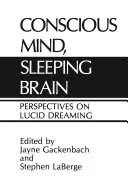
Conscious Mind, Sleeping Brain
 72
72

Conscious Mind, Sleeping Brain
The central premise of a conscious mind active within a sleeping brain is immediately arresting, drawing the reader into the paradox of lucid dreaming. Gackenbach and LaBarge effectively frame lucid dreaming not merely as a curiosity but as a critical lens through which to examine the very nature of consciousness and sleep. The strength lies in its rigorous, academic approach to a topic often relegated to anecdotal accounts. However, the book's dense academic style, while precise, can present a barrier to readers seeking a more accessible introduction. The exploration of the 'controlled dream' offers a compelling glimpse into the potential for agency within the dreamscape, but the work could benefit from more direct engagement with the subjective experience of lucid dreamers beyond the theoretical. It is a valuable, if demanding, contribution to understanding the mind's nocturnal theater.
📝 Description
72
Published in 2012, Conscious Mind, Sleeping Brain examines lucid dreaming's conscious awareness within sleep.
This book investigates the state of lucid dreaming, where an individual gains awareness while asleep. It centers on the idea of a conscious mind operating within a sleeping body, questioning how consciousness relates to the brain during deep sleep. The authors explore this duality, challenging common beliefs about awareness and its connection to the physical state of sleeping.
The work is geared toward academics and practitioners interested in consciousness studies, psychology, and spiritual traditions. It will also appeal to those who have experienced lucid dreams and desire a thorough, scientific, and philosophical analysis of the subject. The book draws from early research in parapsychology and sleep studies, positioning itself alongside discussions influenced by figures like Stephen LaBerge, while also distinguishing itself from purely biological explanations.
Conscious Mind, Sleeping Brain engages with traditions that explore altered states of consciousness and the nature of mind beyond the physical body. It builds upon a history of interest in dreams as windows into other realities or deeper aspects of the self, a theme present in various spiritual practices. The book situates lucid dreaming within a lineage of inquiry that seeks to understand subjective experience and consciousness independent of ordinary waking perception, connecting with practices that aim for greater self-awareness and control within the dream state.
💡 Why Read This Book?
• Understand the dual nature of consciousness as explored in the concept of the 'conscious mind, sleeping brain,' offering a unique framework for studying awareness beyond ordinary waking states, as detailed in the book's foundational chapters. • Gain insight into the scientific and philosophical underpinnings of lucid dreaming, moving beyond popular notions to a more structured understanding of dream awareness and its implications, drawing on the research presented. • Explore the complex relationship between the physical brain state and subjective experience, particularly how consciousness can operate independently of external sensory input, a core theme developed throughout the text.
⭐ Reader Reviews
Honest opinions from readers who have explored this book.
❓ Frequently Asked Questions
What is the primary phenomenon discussed in 'Conscious Mind, Sleeping Brain'?
The book's primary focus is lucid dreaming, a state where an individual becomes consciously aware that they are dreaming while their body remains asleep. This allows for a unique exploration of consciousness.
Who are the authors of 'Conscious Mind, Sleeping Brain'?
The authors are J. Gackenbach and S. LaBarge. S. LaBarge is particularly noted for his pioneering work in lucid dream research.
When was 'Conscious Mind, Sleeping Brain' first published?
The book was first published on December 6, 2012, placing it within a period of significant academic interest in consciousness studies.
What are the two fundamental questions the book seeks to address?
The book aims to address two fundamental questions: 'What is consciousness?' and 'What is sleep?', using lucid dreaming as a case study.
What is the core paradox presented by the title?
The title 'Conscious Mind, Sleeping Brain' presents a paradox: a mind that is aware and active (conscious) while the body is in a state of rest and apparent inactivity (sleeping brain).
What is the esoteric angle of lucid dreaming as presented in the book?
The esoteric angle lies in viewing lucid dreaming as a gateway to exploring inner realities and potential states of consciousness beyond the ordinary, aligning with mystical traditions.
🔮 Key Themes & Symbolism
The Nature of Consciousness
This work challenges conventional views by presenting consciousness not as solely tied to waking activity, but as a phenomenon capable of existing independently within the sleeping brain. It questions what it means to be 'awake' and 'asleep,' suggesting that awareness can transcend physical states. The book uses lucid dreaming as a primary example, where the dreamer is subjectively aware yet physiologically asleep, prompting a re-evaluation of consciousness's boundaries and potential.
The Phenomenology of Sleep
Beyond mere physiological cessation of activity, the book explores the subjective experience of sleep and dreaming through the lens of lucid awareness. It examines how the sleeping brain can host a fully conscious mind, blurring the lines between internal experience and external reality. This perspective invites readers to consider sleep not as an absence of being, but as an alternate mode of existence with its own unique cognitive landscape.
Lucid Dreaming as a Tool
The phenomenon of lucid dreaming is treated as a critical tool for investigating consciousness. The book suggests that by achieving awareness within a dream, individuals gain a unique vantage point to study the mind's architecture and its capacity for self-awareness. This active participation in the dream state is presented as a method for exploring the self and its relationship to the subconscious.
Mind-Body Duality
The book revisits the age-old mind-body problem, using lucid dreaming to illustrate a potential dissociation or independent operation of the conscious mind from the sleeping brain. It explores how mental states can be experienced vividly while the physical body is in a state of deep rest, raising questions about the fundamental connection and potential separation between mental and physical realities.
💬 Memorable Quotes
Direct passages from the work, attributed to the author.
“A conscious mind in a sleeping brain.”
— This phrase captures the core paradox of lucid dreaming, where awareness persists while the body is in a state of deep sleep, challenging our assumptions about consciousness.
“Dreamers are consciously aware that they are dreaming while they seem to be soundly asleep.”
— This defines the lucid dream state, highlighting the subjective experience of knowing one is dreaming during physiological sleep, a key focus for the authors' investigation.
“Awake to their inner worlds while they are asleep to the external world.”
— This interpretation of the lucid dreamer's state emphasizes a shift in focus from external sensory input to internal mental landscapes, suggesting an alternate form of awareness.
“What is consciousness? And what is sleep?”
— These fundamental questions frame the book's inquiry, positioning lucid dreaming as a unique phenomenon that necessitates a deeper examination of these core aspects of human experience.
“The title provides a vivid image of the phenomenon of lucid dreaming.”
— This statement underlines the evocative power of the book's title, suggesting it immediately conjures the central subject matter and its inherent intrigue for the reader.
🌙 Esoteric Significance
Tradition
While the work is presented from an academic perspective, its exploration of consciousness beyond the physical body aligns with themes found in Hermeticism and Gnosticism, particularly concerning inner awareness and the potential for transcendence. It doesn't explicitly belong to a single esoteric lineage but touches upon the universal human inquiry into non-ordinary states of consciousness, viewing lucid dreaming as a potential gateway to understanding subtler realities.
Symbolism
The central 'conscious mind, sleeping brain' duality can be seen as a modern symbolic representation of the waking ego (conscious mind) temporarily disengaged from the physical form (sleeping brain) to explore inner realms. The act of dreaming itself symbolizes the subconscious or unconscious mind at play, while lucidity introduces an element of intentionality and self-awareness within that symbolic landscape.
Modern Relevance
Contemporary practices in mindfulness, meditation, and even certain therapeutic approaches to trauma increasingly explore the malleable nature of consciousness and the potential for self-directed experience. Thinkers and practitioners interested in non-ordinary states, consciousness hacking, and the intersection of psychology and spirituality find value in the book's empirical yet open-minded approach to dream states and awareness.
👥 Who Should Read This Book
• Students of consciousness and psychology seeking a scientific yet philosophical exploration of altered states of awareness, particularly lucid dreaming. • Individuals with a background in esoteric studies or mysticism interested in how academic research intersects with traditional concepts of inner worlds and non-ordinary perception. • Dream researchers and practitioners looking for a foundational text that bridges empirical findings with theoretical discussions on the nature of consciousness during sleep.
📜 Historical Context
First published in 2012, 'Conscious Mind, Sleeping Brain' emerged during a resurgence of academic interest in consciousness studies, building upon decades of research in sleep science and parapsychology. It follows in the lineage of pioneers like Stephen LaBerge, whose work in the 1970s and beyond brought lucid dreaming into more serious scientific consideration. The book's approach, grounded in empirical observation and theoretical exploration, contrasts with earlier, more mystical interpretations of dreams. It engages with the broader intellectual currents questioning the nature of consciousness, particularly in relation to neurological states. While not directly tied to a specific censorship event, the study of altered states of consciousness has historically navigated skepticism from mainstream science, a landscape Gackenbach and LaBarge navigated with their rigorous methodology.
📔 Journal Prompts
The paradox of the conscious mind within the sleeping brain: explore your own experiences of awareness during rest.
Reflect on the concept of 'inner worlds' versus the 'external world' as presented in the book.
Consider the implications of being 'awake to their inner worlds' – what potential does this hold for self-discovery?
Analyze the questions 'What is consciousness?' and 'What is sleep?' from your personal perspective, informed by the book's premise.
Examine the state of 'soundly asleep' and how it contrasts with the 'consciously aware' dreamer.
🗂️ Glossary
Lucid Dreaming
A state of dreaming in which the dreamer becomes aware that they are dreaming. This awareness can range from a fleeting recognition to a profound realization, often allowing for some degree of control or intentionality within the dream.
Conscious Mind
Refers to the state of awareness and subjective experience that characterizes waking life, characterized by thought, perception, and volition. In this context, it is explored for its potential to operate independently of the physical body's ordinary state.
Sleeping Brain
The physiological state of the brain during sleep, typically characterized by altered patterns of neural activity (e.g., slow-wave sleep, REM sleep). The book questions the assumption that this state precludes conscious experience.
Phenomenology
The philosophical study of the structures of experience and consciousness. In this book, it refers to the examination of the subjective experience of lucid dreaming.
Altered States of Consciousness
Any state of consciousness that deviates significantly from the normal waking state. Lucid dreaming is considered an altered state, alongside meditation, hypnosis, and drug-induced states.
Inner Worlds
Refers to the subjective, internal range of thoughts, emotions, memories, and imagination. In the context of lucid dreaming, it signifies the dream environment that becomes accessible to conscious awareness.
Volition
The faculty or power of using one's will. In lucid dreaming, volition refers to the ability of the dreamer to intentionally direct their actions or thoughts within the dream state.