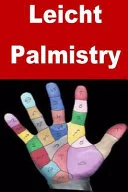
Leicht Palmistry
 71
71

Leicht Palmistry
Marthi Johnson's Leicht Palmistry attempts to cut through the dense prose that often encumbers introductory texts on chiromancy. The 2016 publication date places it in a contemporary context, seeking to offer clarity where older manuals can be opaque. Its strength lies in its methodical, two-part structure, which promises a clear progression from fundamental concepts to more applied interpretations. For instance, the direct approach to explaining the Mount of Jupiter as a symbol of ambition and leadership, rather than a vague descriptor, is a commendable feature. However, the book’s brevity, while aiming for accessibility, sometimes sacrifices the depth required for truly sophisticated readings. A passage detailing the Heart Line, for example, might offer a basic definition but could benefit from exploring the subtle variations and interrelationships with other lines more thoroughly. It serves as a functional primer, but advanced practitioners will likely need to supplement it with more comprehensive resources. Leicht Palmistry is a clear starting point for the uninitiated, offering a less intimidating entry into the subject.
📝 Description
71
Marthi Johnson published Leicht Palmistry in August 2016 as a clear guide to hand reading.
Marthi Johnson's Leicht Palmistry, released in 2016, offers a structured method for learning palmistry. The book aims to simplify the practice, moving away from the complex texts that can deter newcomers. It functions as a practical manual, complete with step-by-step directions suitable for individuals learning on their own or those pursuing professional study.
This book is particularly suited for readers who find existing palmistry literature confusing or too demanding. It welcomes beginners interested in the basic elements of hands as well as those aiming for a solid understanding of the craft. Leicht Palmistry serves both casual enthusiasts seeking personal reflection and dedicated students committed to mastering palm reading.
Palmistry, with roots in ancient India, Greece, and Rome, has reappeared throughout history, notably during the Renaissance and 19th century. Johnson's 2016 book was released during a period of renewed interest in esoteric practices. It contrasts with earlier, more dense palmistry texts, positioning itself as an accessible entry point into a tradition that has long been connected with divination.
💡 Why Read This Book?
• Gain a clear, step-by-step method for understanding palmistry, directly addressing the ambiguity noted in other texts, as detailed in its two-part structure established in its 2016 publication. • Learn to interpret fundamental hand features like the Life Line and Mount of Venus, moving beyond simple identification to grasping their symbolic meaning as presented in the book's foundational lessons. • Develop a practical skill for self-reflection or professional interest, using the book's structured approach to build confidence in reading hand patterns, a direct benefit of its amateur-friendly design.
⭐ Reader Reviews
Honest opinions from readers who have explored this book.
❓ Frequently Asked Questions
Is Leicht Palmistry suitable for absolute beginners with no prior knowledge of palm reading?
Yes, Leicht Palmistry is specifically designed for beginners who find other palmistry books too ambiguous. Its step-by-step instructions and two-part structure aim to provide a clear and accessible learning experience from the ground up.
What is the main difference between Part 1 and Part 2 of Leicht Palmistry?
Part 1 of Leicht Palmistry focuses on the fundamental descriptions and basic elements of palm reading, laying the groundwork for understanding. Part 2 then builds upon this foundation, likely delving into more nuanced interpretations and applications of the principles introduced.
When was Leicht Palmistry first published and by whom?
Leicht Palmistry was first published on August 16, 2016, authored by Marthi Johnson. This 2016 publication date positions it as a relatively modern guide in the field of palmistry.
Can this book help someone looking to practice palmistry professionally?
The book is designed for both amateurs and those aspiring to take up palmistry as a profession. Its clear, structured approach aims to provide a solid foundation necessary for developing professional-level skills.
Does the book cover advanced palmistry techniques or focus only on basics?
While the book's primary aim is to be an easy-to-follow guide for learning at home, its structure suggests a progression. It starts with basics but is intended to equip readers with the knowledge to potentially pursue more advanced aspects of palmistry.
What kind of palmistry approach does Leicht Palmistry follow?
Leicht Palmistry follows a methodical, step-by-step approach, aiming for clarity and ease of understanding. It focuses on the systematic interpretation of hand features, including lines, mounts, and shapes, to demystify the practice.
🔮 Key Themes & Symbolism
Structured Learning of Chiromancy
Leicht Palmistry emphasizes a methodical, lesson-based approach to learning chiromancy. Unlike texts that present information in a dense, often overwhelming manner, Johnson's work is structured in two parts to facilitate comprehension. The initial section likely covers the foundational elements—hand shapes, finger characteristics, and the primary lines—while the subsequent part studies the interpretation and interplay of these features. This pedagogical design is crucial for explaining palmistry, making it accessible to individuals who may have been intimidated by the subject's historical complexity and varied interpretations.
Explaining Hand Lines
A core theme is the clear explanation of the major and minor hand lines, such as the Life Line, Head Line, and Heart Line. The book aims to provide unambiguous definitions and interpretations for each, moving away from the often-vague descriptions found in older palmistry manuals. By focusing on specific line formations and their common meanings, Leicht Palmistry empowers readers to begin analyzing hands with confidence, fostering a practical understanding of how these lines are believed to reflect character and potential life paths.
The Significance of Mounts and Hand Shapes
Beyond the lines, Leicht Palmistry dedicates attention to the mounts (e.g., Mount of Venus, Mount of Jupiter) and the overall shape of the hand and fingers. These elements are presented as integral components of a palm reading, offering insights into personality traits, strengths, and inclinations. The book guides the reader in identifying the prominence of these mounts and classifying hand types, integrating this information with line analysis for a more holistic interpretation, as outlined in its comprehensive instructional framework.
Accessibility for Amateurs and Professionals
The book's design caters to a dual audience: the curious amateur and the serious student aiming for professional proficiency. This accessibility is achieved through clear language, a logical progression of topics, and a focus on practical application. By providing a solid, unambiguous foundation, Leicht Palmistry equips individuals with the essential knowledge to either explore palmistry as a personal pursuit or to build a career, bridging the gap between casual interest and dedicated study.
💬 Memorable Quotes
Direct passages from the work, attributed to the author.
“This book is for those who want to learn palmistry at home but cannot reach their goal of learning because the books written on the subject are too ambiguous to follow.”
— This statement directly addresses the core problem Leicht Palmistry seeks to solve: the lack of clarity in existing palmistry literature. It positions the book as a practical solution for self-learners struggling with ambiguous or overly complex texts.
“The book is designed in two parts for better understanding and comfort.”
— This highlights the pedagogical structure of Leicht Palmistry, emphasizing its deliberate design to enhance learning. The two-part format suggests a progression from foundational knowledge to more complex applications, prioritizing the reader's ease and comprehension.
“A simple, step-by-step guide for all those who want to learn palmistry at home.”
— This succinctly describes the book's primary purpose and methodology. It promises a straightforward, actionable approach, making the complex art of palmistry approachable for home study.
“The first part contains a basic description...”
— This phrase indicates the content focus of the initial section of the book. It suggests that Leicht Palmistry begins with fundamental definitions and explanations before moving on to more intricate details or interpretations.
💡 Key Ideas
Editorial paraphrase of the work's core concepts — not direct quotes.
This book is designed for amateurs as well as for those persons who want to take palmistry as their profession.
This quote underscores the book's broad appeal and utility. It signals that the content balances introductory material suitable for hobbyists with the depth required for individuals serious about mastering palmistry as a vocational skill.
🌙 Esoteric Significance
Tradition
Leicht Palmistry engages with the Western tradition of chiromancy, a practice often interwoven with Hermeticism and Neoplatonism throughout history. While not explicitly aligning with a specific mystical order, its focus on interpreting physical characteristics to understand inner disposition and potential life paths reflects the Hermetic principle of 'As Above, So Below.' The book's structured approach, however, departs from the more symbolic or allegorical interpretations sometimes found in esoteric texts, aiming for a more direct, almost scientific, method of analysis within the divinatory framework.
Symbolism
Key symbols in palmistry, as explored in Leicht Palmistry, include the major lines: the Life Line (representing vitality and major life events), the Head Line (intellect and mental approach), and the Heart Line (emotional life and relationships). The mounts, such as the Mount of Venus (love, passion) and Mount of Jupiter (ambition, leadership), also serve as symbolic indicators of personality traits and potential. The book likely interprets the shape and clarity of these lines and the prominence of these mounts as direct reflections of the individual's inherent nature and life experiences.
Modern Relevance
In contemporary esoteric circles, Leicht Palmistry serves as an accessible entry point for individuals exploring practical divination or psychological astrology alternatives. Its clear, step-by-step methodology can appeal to modern practitioners who value empirical observation and structured learning, bridging the gap between ancient divinatory arts and contemporary self-help or psychological profiling. Thinkers and practitioners interested in somatic psychology or embodied cognition might also find value in its focus on reading information directly from the physical form.
👥 Who Should Read This Book
['• Absolute beginners in palmistry seeking a straightforward, unambiguous guide to learn the basics of hand reading from home.', '• Aspiring professional palm readers who require a solid foundational understanding before studying more complex techniques and interpretations.', '• Individuals interested in self-discovery and personal growth who prefer practical, step-by-step methods over abstract philosophical concepts in esoteric studies.']
📜 Historical Context
Palmistry, or chiromancy, has a long and varied history, with roots tracing back to ancient Indian Vedic traditions, Greek philosophy, and Roman interpretations. Its practice experienced significant surges in popularity during periods like the Renaissance, where figures like Johannes Hartlieb documented its methods, and the late 19th and early 20th centuries, coinciding with the rise of occult societies such as the Hermetic Order of the Golden Dawn. These movements often integrated palmistry with other esoteric disciplines like astrology and tarot. Marthi Johnson's Leicht Palmistry, published in 2016, emerges in a contemporary landscape where interest in divination and self-help metaphysics has been amplified by online platforms. It seeks to differentiate itself from the dense, often arcane manuals that characterized earlier eras, such as the works of William John Warner (Cheiro) or even earlier practitioners whose texts might be considered less accessible to the modern layperson. The book's publication date places it in an era where practical, explained guides are highly sought after, positioning it against the more traditional, sometimes esoteric-focused, approaches to chiromancy that dominated previous centuries.
📔 Journal Prompts
The clarity of the Life Line: how does its appearance in Leicht Palmistry correlate with your own understanding of your vitality?
Reflect on the description of the Mount of Jupiter; what ambitions does this suggest for your future studies?
Compare the interpretation of the Heart Line in this book to your personal emotional landscape.
Analyze the foundational descriptions provided in Part 1; which concept feels most intuitively understood?
Consider the book's aim to combat ambiguity; how does this structured approach to palmistry impact your learning process?
🗂️ Glossary
Chiromancy
The practice of divining character and future events by the examination of the palm of the hand. It is synonymous with palmistry.
Life Line
A major line on the palm, typically curving around the base of the thumb, believed to indicate vitality, health, and significant life events.
Head Line
A major line running horizontally across the palm, generally interpreted as representing a person's intellectual capacity, thinking style, and mental traits.
Heart Line
A major line running horizontally across the upper palm, typically associated with emotional life, romantic relationships, and psychological well-being.
Mounts
Fleshy, raised areas on the palm located at the base of the fingers and below the thumb, each associated with a planet and corresponding character traits (e.g., Mount of Venus, Mount of Jupiter).
Ambiguous
Open to more than one interpretation; having a double meaning; unclear or inexact because a choice between alternatives has not been made.
Amateur
A person who engages in a pursuit, especially a sport, on an unpaid basis; someone who studies or practices an art or science for the love of it rather than for professional reasons.
This book appears in 1 collection
🔮 Readers Also Liked
Browse all →









From the “Palmistry” Collection
View all →







More Free Occult Philosophy Books
View all →