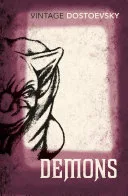
Demons
 82
82

Demons
Dostoevsky’s *Demons* is less a subtle exploration and more a furious exorcism of the radical ideologies that he perceived as poisoning Russia. The novel is a dizzying, often overwhelming, portrayal of intellectual and moral rot, vividly captured through its volatile cast of characters. The scene depicting the chaotic revolutionary meeting, where Stavrogin’s chilling charisma and the group’s petty squabbles are laid bare, exemplifies the book's genius in exposing the vanity and destructive absurdity lurking beneath grand pronouncements. However, the sheer density of characters and subplots can, at times, obscure the central argument, demanding significant reader investment. Despite this, the prophetic power of Dostoevsky’s critique of secular utopianism remains stark and potent. *Demons* is a vital, albeit challenging, testament to the enduring struggle between spiritual faith and ideological extremism.
📝 Description
82
Fyodor Dostoevsky’s *Demons* was first published in 1916.
Fyodor Dostoevsky wrote *Demons* in response to the murder of a student by nihilist revolutionaries in 1869. Initially conceived as a pamphlet, the novel grew to examine abstract political theories and their destructive impact. It follows a complex cast of characters who represent various forms of intellectual and spiritual decline. The narrative explores how ideas can lead to violence when detached from human empathy. Readers will find a dense portrayal of characters grappling with faith, doubt, and ideological fervor. The book offers a stark look at the consequences of philosophical systems when they manifest in the real world. It is a novel that questions the foundations of radical thought and its hold on individuals.
The novel emerged during a time of significant intellectual upheaval in Russia. Dostoevsky reacted to the rise of atheistic materialism and nihilism, movements gaining traction among intellectuals. He specifically addressed the political atmosphere that culminated in the 1869 murder by Sergey Nechayev's group. *Demons* stands as a counterpoint to the utopian ideas promoted by contemporary radical thinkers. It engages directly with the debates shaping Russia's future, offering a critical perspective on revolutionary aspirations.
While primarily a political and philosophical novel, *Demons* touches on themes relevant to esoteric thought concerning the corruption of the spirit by abstract ideologies. Dostoevsky presents characters consumed by intellectual systems that deny spiritual or transcendent realities, leading to moral decay. The novel illustrates how a purely materialistic or rationalistic worldview, when taken to extremes, can result in a profound emptiness and a capacity for destructive action. It examines the internal struggles that arise when individuals reject traditional moral frameworks in favor of secular doctrines, a common concern in discussions of spiritual descent.
💡 Why Read This Book?
• You will gain a visceral understanding of the psychological allure and destructive potential of radical political ideologies, as depicted through the fervor of characters like Pyotr Verkhovensky, making abstract theories feel dangerously real. • You will explore the profound existential questions surrounding faith and doubt in a post-Enlightenment world, mirroring Dostoevsky's own spiritual struggles and his critique of atheistic materialism prevalent in the 1860s. • You will witness Dostoevsky's masterful dissection of societal breakdown, understanding how intellectual nihilism can manifest in real-world violence and chaos, as exemplified by the events surrounding the student Shatov's fate.
⭐ Reader Reviews
Honest opinions from readers who have explored this book.
❓ Frequently Asked Questions
What event inspired Dostoevsky to write Demons?
Dostoevsky was motivated by the 1869 political murder of a student by members of the revolutionary group 'People's Retribution', led by Sergey Nechayev. This event crystallized his fears about the destructive potential of radical ideologies.
Is Demons a political manifesto?
Dostoevsky intended *Demons* as a "novel-pamphlet" to critique the materialist and nihilist ideologies he saw infecting Russia. While highly political, it functions as a fictional exploration of these ideas through character and plot, not a direct treatise.
Who are the main ideological factions depicted in Demons?
The novel portrays various revolutionary and nihilist groups, often characterized by their atheism, materialism, and desire for radical social change. These are contrasted with characters grappling with faith, tradition, and spiritual meaning.
What is the significance of the character Stavrogin?
Nikolai Stavrogin is a central, enigmatic figure embodying spiritual emptiness and moral ambiguity. His charisma and detachment make him a catalyst for many of the novel's destructive events, representing a void at the heart of ideological movements.
How does Dostoevsky portray the impact of atheism?
Dostoevsky suggests that a rejection of God and traditional morality leads to a collapse of ethical boundaries, enabling nihilism, fanaticism, and ultimately, violence. The novel explores the consequences of living without spiritual anchors.
What does 'demons' refer to in the title?
The title refers to the destructive, irrational, and often fanatical ideologies and spiritual forces that Dostoevsky believed were possessing individuals and Russian society, leading them away from faith and reason.
🔮 Key Themes & Symbolism
Nihilism and Materialism
The novel critically examines the rise of nihilism and atheistic materialism in 19th-century Russia, portraying them as corrosive forces that strip away traditional morality and spiritual meaning. Dostoevsky illustrates how these ideologies, detached from human empathy, can lead to fanaticism and violence. Characters like Pyotr Verkhovensky embody the destructive zeal of revolutionary thought, prioritizing abstract political goals over individual lives and human connection, showing how a denial of God can pave the way for moral chaos.
The Crisis of Faith
Central to *Demons* is the struggle with faith in an era of burgeoning scientific rationalism and atheistic philosophy. Dostoevsky explores the profound spiritual void left by the abandonment of God and traditional values, and the desperate search for meaning that follows. Characters grapple with doubt, seeking solace in various ideologies or succumbing to despair. The novel posits that without a spiritual foundation, individuals and society are susceptible to destructive 'demons' of ideology and self-deception.
Ideology and Violence
Dostoevsky meticulously details the terrifying nexus between abstract political ideologies and real-world violence. He depicts how revolutionary fervor, fueled by utopian ideals and a rejection of established order, can dehumanize individuals and justify brutal actions. The novel serves as a stark warning against the dangers of intellectual arrogance and the pursuit of radical change without regard for human cost, illustrating how 'ideas' can become instruments of destruction.
The Nature of Evil
Beyond political extremism, *Demons* probes the nature of spiritual and psychological evil. Characters like Stavrogin represent a profound emptiness, a void from which destructive impulses can emerge. Dostoevsky suggests that evil is not merely a social construct but a pervasive spiritual force that can corrupt individuals and societies, particularly when they abandon faith and moral accountability. The novel explores how internal spiritual decay can manifest as external chaos.
💬 Memorable Quotes
Direct passages from the work, attributed to the author.
“The idea that 'man will arrange himself anew in the likeness of a perfect being'...”
— This reflects the utopian ambition of revolutionaries who sought to remake humanity based on secular, often atheistic, ideals, a project Dostoevsky viewed as inherently dangerous and dehumanizing.
“Characters are driven by abstract notions rather than genuine human connection.”
— This interpretation highlights how Dostoevsky portrays ideological fanatics as detached from the lived realities and emotional needs of others, viewing people as mere tools for their abstract schemes.
“A profound sense of spiritual emptiness permeates the characters.”
— This captures the essence of figures like Stavrogin, whose charisma masks a deep inner void, illustrating Dostoevsky's exploration of spiritual desolation as a source of destructive behavior.
“The novel critiques the superficiality of revolutionary pronouncements.”
— This points to Dostoevsky's satirical depiction of revolutionary circles, exposing their internal contradictions, vanity, and the gap between their grand theories and their petty, often violent, actions.
💡 Key Ideas
Editorial paraphrase of the work's core concepts — not direct quotes.
Interpretation: The work suggests that if God does not exist, then everything is permitted, dissolving moral law.
This paraphrase captures Dostoevsky's core concern that the denial of divine order leads to a complete breakdown of ethics, where any action becomes permissible in the absence of ultimate accountability.
🌙 Esoteric Significance
Tradition
While not strictly belonging to a single esoteric lineage, *Demons* speaks to Gnostic themes of spiritual deception and the struggle against a false demiurge (represented by corrupting ideologies). Dostoevsky's focus on spiritual warfare, the pervasiveness of inner 'demons,' and the search for authentic truth aligns with mystical traditions that emphasize the unseen forces influencing human affairs and the perilous path of spiritual discernment.
Symbolism
The 'demons' themselves symbolize the invasive, destructive ideologies and spiritual forces that possess individuals and society, leading them astray from truth and love. Stavrogin, the charismatic but spiritually empty central figure, can be seen as a symbol of the void at the heart of a faithless world, a hollow idol attracting followers to ruin. The recurring motif of fire and destruction further underscores the catastrophic consequences of unchecked ideological fervor.
Modern Relevance
Contemporary thinkers concerned with political polarization, the spread of disinformation, and the psychological impact of radical ideologies find *Demons* remarkably prescient. Schools of thought examining existentialism, spiritual warfare, and the critique of secular utopianism often cite Dostoevsky's work. His exploration of how abstract ideas can manifest as destructive forces remains relevant to understanding modern fanaticism and societal fragmentation.
👥 Who Should Read This Book
• Students of political philosophy and Russian history: Gain direct insight into the intellectual currents and anxieties that shaped revolutionary movements in the 19th century. • Readers interested in existential and spiritual crises: Explore profound questions of faith, doubt, and the search for meaning through Dostoevsky's complex characters and their moral dilemmas. • Those analyzing the roots of modern extremism: Understand how abstract ideologies, detached from human reality, can lead to societal chaos and violence, as powerfully depicted in the novel's narrative.
📜 Historical Context
Written in the aftermath of the 1869 murder of a student by Sergey Nechayev's radical cell, Fyodor Dostoevsky's *Demons* (published 1916) served as a furious riposte to the rising tide of nihilism and atheistic materialism in Russia. The era was marked by intellectual upheaval following Alexander II's emancipation of the serfs, fostering movements that challenged traditional autocratic and religious structures. Dostoevsky engaged directly with contemporary radical thinkers, including those influenced by Nikolai Chernyshevsky, whose ideas he saw as precursors to societal collapse. The novel’s reception was polarized; while conservatives praised its prophetic warnings, liberals often criticized its perceived exaggeration and reactionary stance. It stood in stark contrast to the more optimistic socialist and positivist philosophies gaining traction among intellectuals.
📔 Journal Prompts
Pyotr Verkhovensky's manipulative tactics and their impact on others.
Nikolai Stavrogin's profound emptiness and its consequences.
The character Shatov's struggle between revolutionary ideals and spiritual belief.
The contrast between abstract ideology and genuine human connection.
The novel's depiction of faith as an antidote to nihilism.
🗂️ Glossary
Nihilism
A philosophical stance that denies any meaning or intrinsic value to life, often associated with the rejection of traditional morality, religion, and social structures.
Materialism
A philosophical viewpoint that matter is the fundamental substance in nature, and that all phenomena, including mental states and consciousness, are results of material interactions.
Atheism
The disbelief or lack of belief in the existence of God or gods, often linked to secular philosophies that reject supernatural explanations for phenomena.
Utopianism
The advocacy of a utopian society, often characterized by idealized social, political, and economic conditions, which Dostoevsky critiques as potentially dangerous and unrealistic.
Radicalism
Advocacy of or adherence to fundamental or extreme political, social, or economic change, often challenging established norms and institutions.
Spiritual Warfare
The concept of invisible conflict between spiritual forces, often involving internal struggles against temptation, doubt, or malevolent influences.
Novel-pamphlet
Dostoevsky's term for *Demons*, indicating his intention to use the novel form to deliver a pointed critique of contemporary political and ideological issues.