Legendborn
 71
71

Legendborn
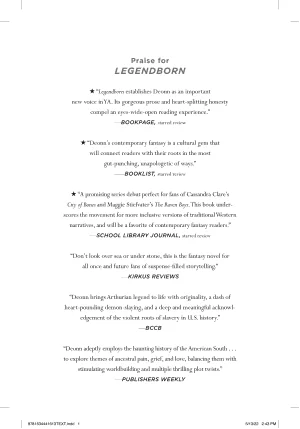
Tracy Deonn's Legendborn presents a compelling fusion of Arthurian myth and the lived experience of a Black teenager navigating grief and ancestral power. The novel's strength lies in its bold reimagining of Camelot's lore, grounding it in the charged atmosphere of a Southern university campus and the painful realities of American history. Bree's journey from a place of profound loss to one of empowered self-discovery is handled with nuance. However, the sheer volume of lore and the intricate plotting occasionally threaten to overwhelm the emotional core. A particularly striking passage involves Bree confronting the echoes of slavery within the very foundations of the magical world she enters. While the pacing falters slightly in the middle, the conclusion offers a potent synthesis of magic, history, and personal growth. Legendborn succeeds as a dynamic, identity-affirming fantasy.
📝 Description
71
Tracy Deonn's Legendborn, published in 2020, weaves Arthurian legend into a contemporary fantasy.
Sixteen-year-old Bree Matthews discovers a secret society at her university, the Order of the Once and Future King, after her mother's death. This discovery forces her to confront her own magical abilities and a hidden world of sorcery. The novel follows Bree as she navigates this new reality while grappling with intense grief and questions of her identity.
Legendborn blends classic Arthurian myth with Southern Gothic elements. It examines themes of heritage, the legacy of slavery, and the complexities of race within a magical setting. The story challenges traditional retellings of Arthurian lore by centering a Black protagonist and addressing historical injustices.
The novel taps into esoteric traditions by reinterpreting Arthurian legend through a modern, decolonized lens. It explores concepts of inherited power, or 'Bloodline,' and the spiritual bonds formed through a 'Patron' system. The narrative frames magical heritage as something tied to ancestry, and pits characters against forces that seek to control or suppress this power, reflecting a struggle against historical oppression within a mystical framework.
💡 Why Read This Book?
• Gain insight into how ancestral trauma and magical inheritance intertwine, as seen through Bree's struggle with her family's legacy and the Order's secrets. • Experience a reimagining of Arthurian legend that actively confronts historical injustices, offering a new perspective on power dynamics within fantasy narratives. • Discover a unique blend of Southern Gothic atmosphere and high fantasy, exemplified by the depiction of the magical society operating within the deceptive tranquility of a Southern university.
⭐ Reader Reviews
Honest opinions from readers who have explored this book.
❓ Frequently Asked Questions
What is the significance of the Order of the Once and Future King in Legendborn?
The Order is a secret society at UNC Chapel Hill, comprised of descendants of King Arthur's knights. They guard magical artifacts and fight mythological threats, operating under the guise of academic study, as explored in the novel's 2022 publication.
How does Legendborn address themes of grief and identity?
The protagonist, Bree Matthews, grapples with the recent death of her mother, using her journey into the magical world as a way to understand her past and forge a new identity, a central theme of the 2022 novel.
What is the role of slavery in the book's magical system?
Legendborn directly confronts the historical legacy of slavery, revealing how it has shaped the magical bloodlines and power structures within the Order, presenting a critical lens on inherited privilege and oppression.
Are there real-world locations featured in Legendborn?
Yes, the novel is set primarily at the University of North Carolina at Chapel Hill, a real institution founded in 1789, and its surrounding areas, grounding the fantasy elements in a tangible, historical setting.
What is a 'Patron' in the context of Legendborn?
A Patron is a powerful magical being or ancestral spirit with whom a member of the Order forms a bond. This connection grants them specific abilities and responsibilities within the magical hierarchy depicted in the 2022 book.
Does Legendborn contain elements of Southern Gothic literature?
Absolutely. The book incorporates Southern Gothic tropes such as a sense of decaying grandeur, hidden secrets within seemingly idyllic settings, and the pervasive influence of history and lineage, particularly evident in its 2022 release.
🔮 Key Themes & Symbolism
Ancestral Legacy and Trauma
The novel intricately explores how ancestral history, particularly the trauma of slavery, directly impacts present-day magical abilities and societal structures within the Order. Bree's own lineage is a source of both immense power and inherited pain. The work questions how historical injustices shape individual destinies and magical inheritances, presenting a nuanced view of 'bloodline' that extends beyond simple magical aptitude to encompass historical burdens and resilience.
Reimagined Arthurian Lore
Legendborn offers a radical reinterpretation of Arthurian legends, transplanting them to a contemporary Southern university and centering a Black female protagonist. It challenges traditional interpretations by highlighting the perspectives of those historically marginalized in such narratives. Concepts like King Arthur, the Knights of the Round Table, and Merlin are reframed through a lens that acknowledges race, class, and gender, questioning the inherent heroism and universality often ascribed to these myths.
Grief and Self-Discovery
Bree's journey is profoundly shaped by the recent death of her mother. Her entry into the magical world is, in part, an unconscious search for answers about her mother's past and her own identity. The narrative uses the fantastical elements to externalize and explore the internal process of grieving, learning to live with loss, and ultimately forging a strong sense of self separate from, yet informed by, her heritage and experiences.
Southern Gothic and Hidden Worlds
The novel masterfully blends the atmospheric elements of Southern Gothic literature—secrets, decay, a palpable sense of history—with a hidden magical society. The University of North Carolina at Chapel Hill serves as a microcosm where ancient magical conflicts play out beneath the surface of academic life. This creates a compelling duality, where the familiar setting is infused with the uncanny and the sinister, reflecting deeper societal undercurrents.
💬 Memorable Quotes
Direct passages from the work, attributed to the author.
“She was a living, breathing reminder that the past was not dead. It was not even past.”
— This reflects the novel's core theme of history's enduring influence. It highlights how ancestral legacies, including the horrors of slavery, continue to shape the present and manifest in tangible ways, even within a magical context.
“The world was built on the backs of the dead. And the dead did not stay buried.”
— This statement underscores the novel's engagement with historical injustice and its supernatural consequences. It suggests that unresolved historical grievances and the spirits of the oppressed can actively influence the living world.
“Magic is not about controlling the world. It's about understanding your place in it.”
— This interpretation of magic emphasizes wisdom and alignment over brute force. It suggests that true magical power comes from self-awareness and a deep connection to the natural and historical forces around you.
“They tried to erase us, but they couldn't erase our magic.”
— This powerful statement speaks to the resilience of marginalized communities and their cultural or spiritual heritage. It asserts that despite attempts at suppression and erasure, inherent power and identity persist and can be reclaimed.
💡 Key Ideas
Editorial paraphrase of the work's core concepts — not direct quotes.
Grief is a weapon. It can be used to destroy you, or it can be used to destroy your enemies.
This quote captures Bree's initial struggle with loss, portraying grief not just as an emotion but as a potent force. The interpretation suggests that understanding and controlling this force is key to survival and empowerment within the dangerous world she enters.
🌙 Esoteric Significance
Tradition
While not adhering strictly to a single established esoteric lineage, Legendborn draws heavily from Neo-Platonic concepts of innate spiritual power and the influence of ancestral spirits, akin to certain Gnostic or even Afro-Diasporic traditions. The idea of a 'Bloodline' possessing inherent magical capacity echoes notions found in Hermeticism and Kabbalah regarding divine sparks or inherent spiritual essences within individuals. The novel departs from purely intellectual traditions by emphasizing lived experience, emotional resonance, and the visceral connection to historical trauma as conduits for power.
Symbolism
The Southern university campus itself functions as a symbolic landscape, representing a veneer of tradition and order hiding deep, historical injustices and magical conflicts. The Arthurian artifacts, like Excalibur, are recontextualized not merely as symbols of kingship but as objects imbued with contested histories and power dynamics tied to lineage and oppression. Merlin, often depicted as a wise, detached mage, is presented here with a complex, possibly problematic, connection to the lineage and power structures, prompting reevaluation of archetypal figures.
Modern Relevance
Contemporary scholars and practitioners of comparative mythology and critical race theory in literature find fertile ground in Legendborn's approach to deconstructing established narratives. Its influence can be seen in newer fantasy works that prioritize diverse voices and actively engage with historical and social issues. The novel's exploration of inherited trauma and magical resilience appeals to modern discussions around intergenerational healing and the search for identity in a post-colonial world, making it relevant to discussions in both academic and spiritual circles interested in the intersection of history, magic, and identity.
👥 Who Should Read This Book
• Young adult readers seeking fantasy that authentically addresses themes of race, grief, and identity, moving beyond simplistic good-vs-evil tropes. • Enthusiasts of Arthurian legend who are open to radical reinterpretations that challenge traditional perspectives and acknowledge historical complexities. • Students of comparative mythology and cultural studies interested in how classic narratives are being reshaped to reflect contemporary social and political landscapes.
📜 Historical Context
Published in 2022, Tracy Deonn's Legendborn arrived during a period of intense cultural reckoning concerning race and historical narratives. The novel emerged within a wave of diverse fantasy literature that sought to decolonize established mythologies, directly challenging the predominantly white European focus of traditional Arthurian retellings. Its grounding in the American South and its explicit engagement with the legacy of slavery set it apart from contemporary fantasy, which often shied away from such direct historical confrontation. While authors like N.K. Jemisin were already critically acclaimed for similar explorations of race and power in fantasy, Legendborn specifically targeted the Arthurian canon, a space rarely interrogated through this lens. The book's reception highlighted a growing appetite for fantasy that mirrored contemporary social and political discourse, reflecting a broader societal shift toward acknowledging and rectifying historical omissions and injustices.
📔 Journal Prompts
The concept of the Bloodline and its connection to ancestral memory.
Bree's navigation of the Order's secrets and her mother's past.
Reflecting on the intersection of historical trauma and magical power.
The symbolic weight of the Southern university setting.
Exploring the recontextualization of Arthurian archetypes like Merlin.
🗂️ Glossary
The Order
A secret society at UNC Chapel Hill, composed of descendants of King Arthur's knights, who possess magical abilities and are tasked with protecting the world from mythological threats.
Bloodline
The inherent magical power and ancestral lineage passed down through generations, often tied to specific magical aptitudes and historical connections within the world of Legendborn.
Patron
A powerful magical entity or spirit with whom a member of the Order forms a bond, granting them specific powers and guidance, often linked to their ancestral heritage.
Scion
An individual born with significant magical potential within a specific lineage, often a central figure within the magical hierarchy and conflicts of the story.
The Root
A representation of the deep, often hidden, historical and magical foundations of the world, particularly those connected to ancient lineages and foundational magical events.
Arthurian Lore
The myths, legends, and stories surrounding King Arthur, his knights, and the magical elements associated with Camelot, which are reinterpreted and integrated into the novel's modern setting.
Selwyn Kane
A character whose perspective is featured in a short story included with the book, offering an additional narrative voice within the Legendborn universe.
This book appears in 2 collections
🔮 Readers Also Liked
Browse all →






From the “Secret Societies” Collection
View all →






More Free Occult Philosophy Books
View all →