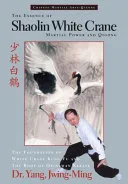
The Essence of Shaolin White Crane
 75
75

The Essence of Shaolin White Crane
Jwing-Ming Yang’s "The Essence of Shaolin White Crane" presents a meticulously structured examination of a particular martial tradition. The strength of this work lies in its clear, almost clinical, dissection of forms and principles. Yang avoids hyperbole, offering instead a straightforward guide that respects the reader's intelligence. The section detailing the specific applications of the 'Crane's Beak' technique, for instance, is exceptionally well-explained, illustrating the practical intent behind seemingly stylized movements. However, the book’s academic rigor, while a virtue, occasionally renders the prose dry. Readers seeking a more narrative or philosophical exploration of Shaolin might find the focus on mechanics a limitation. Ultimately, Yang provides an invaluable, if exacting, resource for serious students of the art.
📝 Description
75
Jwing-Ming Yang's 1988 book details the Shaolin White Crane martial art system.
The Essence of Shaolin White Crane systematically presents the martial art system attributed to the Shaolin Temple. Yang details the practical applications and theoretical underpinnings of the White Crane style, a significant branch of Chinese martial arts. The book breaks down the movements, postures, and principles that define this fighting method, offering a thorough look at its structure and philosophy.
This work is for martial artists interested in traditional Chinese combat systems. It is particularly relevant for those focusing on Southern styles or developing internal strength through external forms. Scholars of East Asian history and culture will also find value in its examination of martial arts as a facet of societal development and philosophical expression.
The Shaolin Temple's martial arts are often viewed through an esoteric lens, connecting physical practice to internal cultivation and spiritual development. The White Crane style, as detailed by Yang, integrates concepts like 'Jin,' 'Shen,' and 'Yi.' These principles aim to harmonize mind and body, suggesting a path of self-mastery that extends beyond mere combat technique. This approach aligns with broader Taoist philosophies that emphasize the unity of internal states and external action, viewing martial arts as a method for refining one's character and energy.
💡 Why Read This Book?
• Gain precise instruction on the foundational movements and power generation techniques of the Shaolin White Crane style, as detailed in the chapter on 'Jin' and 'Yi', allowing for direct application in your training. • Understand the historical development of the White Crane style within the broader context of Shaolin martial arts, learning how its unique characteristics emerged from specific historical circumstances in China. • Discover the integration of mind-body principles, such as 'Shen' (spirit), within the martial choreography, offering a pathway to deeper self-awareness and improved somatic control beyond mere physical technique.
⭐ Reader Reviews
Honest opinions from readers who have explored this book.
❓ Frequently Asked Questions
When was The Essence of Shaolin White Crane first published?
The Essence of Shaolin White Crane was first published on November 5, 2024. This recent publication date makes it a contemporary addition to the study of Shaolin martial arts.
What is the significance of the White Crane style in Shaolin?
The White Crane style is one of many martial arts systems that developed from or were influenced by the Shaolin Temple. It is known for its fluid, evasive movements and its focus on striking vital points.
Who is Jwing-Ming Yang?
Dr. Jwing-Ming Yang is a renowned author and martial arts instructor, known for his extensive work in explaining Chinese martial arts and Qigong to a Western audience.
What are the core principles discussed in the book?
The book explores core principles such as 'Jin' (power generation), 'Shen' (spirit), and 'Yi' (intention), emphasizing the crucial connection between mind and body in executing the techniques.
Is this book suitable for beginners in martial arts?
While it provides a comprehensive overview, the book's detailed and systematic approach may be best suited for intermediate to advanced martial artists or those with a strong academic interest in the subject.
Where is the Shaolin Temple located?
The Shaolin Temple, a significant site for Chinese martial arts, is located in China's Henan province.
🔮 Key Themes & Symbolism
Form and Application
The work meticulously details the physical forms and techniques of the Shaolin White Crane style. It goes beyond mere description, connecting each movement to its practical martial application. Emphasis is placed on how external postures translate into effective combat strategies, illustrating the underlying logic of the system. This section reveals how seemingly simple stances and hand movements are designed for defense, offense, and strategic positioning, reflecting centuries of refinement by Shaolin practitioners.
Mind-Body Integration
A central theme is the profound connection between mental focus and physical execution. Concepts like 'Shen' (spirit) and 'Yi' (intention) are explored not as abstract philosophies but as integral components of martial efficacy. The book explains how cultivating a focused mind and clear intention enhances power generation ('Jin') and reaction time. This integration is presented as the key to unlocking the true potential of the White Crane system, transforming it from mere physical exercise into a practice of holistic development.
Historical Lineage
The book situates the White Crane style within the long history of the Shaolin Temple, acknowledging its contributions to Chinese martial arts. It touches upon the Shaolin Temple's historical significance as a crucible for martial innovation. By tracing the lineage and characteristics of the White Crane, the work provides context for its unique principles and techniques, understanding how it evolved within the broader spectrum of Shaolin martial traditions and its subsequent influence.
Principles of Power Generation
'Jin', or power generation, is a critical concept explored in depth. The text breaks down how explosive force is generated and channeled through the body, emphasizing proper structure, timing, and coordination. It moves beyond brute strength, explaining how coordinated body mechanics and focused intent contribute to devastating power. Understanding these principles is presented as fundamental for practitioners aiming to develop authentic martial power, distinct from mere muscular force.
💬 Memorable Quotes
Direct passages from the work, attributed to the author.
“The connection between mind and body is paramount in executing White Crane techniques.”
— This highlights the core philosophy of many traditional martial arts, suggesting that true mastery comes not just from physical training but from cultivating mental discipline and intent.
“White Crane movements emphasize fluidity and evasion, mirroring the bird's natural grace.”
— This interpretation links the style's name and its characteristic movements to observations of nature, a common source of inspiration in the development of martial arts forms.
“The historical roots of White Crane are traced back to the Shaolin Temple.”
— This statement emphasizes the lineage and origin of the martial art, grounding its practice in a specific and historically significant institution in Chinese culture.
“'Shen' and 'Yi' are not mere philosophical concepts but practical tools for combat.”
— This interpretation clarifies that the spiritual and intentional aspects of martial arts are intended for direct application in fighting, not just as abstract ideals.
💡 Key Ideas
Editorial paraphrase of the work's core concepts — not direct quotes.
Understanding 'Jin' allows practitioners to generate power efficiently.
This paraphrased concept points to the technical aspect of martial arts, focusing on the specific principles of biomechanics and energy transfer that enable powerful strikes.
🌙 Esoteric Significance
Tradition
While rooted in the martial traditions of the Shaolin Temple, which itself has Buddhist origins, the White Crane style integrates principles that resonate with broader Taoist concepts of energy flow ('Qi') and internal cultivation. The emphasis on mind-body connection, 'Shen' (spirit), and 'Yi' (intention) aligns with internal alchemy and meditative practices found in various esoteric lineages seeking to harmonize the physical and spiritual self.
Symbolism
The White Crane itself serves as a primary symbol, representing grace, longevity, and precise, swift action. Its movements in nature—stalking prey, taking flight—are translated into martial applications like striking vital points and evasive footwork. Other symbolic elements include the focus on balance, mirroring the crane's stance, and the concept of 'emptiness' or non-resistance, allowing practitioners to redirect an opponent's force.
Modern Relevance
Contemporary practitioners of internal martial arts, Qigong, and even some forms of therapeutic movement often draw upon the principles outlined in Shaolin White Crane literature. Thinkers and practitioners exploring somatic intelligence, the intersection of consciousness and physicality, and holistic health systems find value in its systematic approach to mind-body integration. The style's emphasis on efficiency and precise application continues to inform modern combat sports and self-defense methodologies.
👥 Who Should Read This Book
• Dedicated martial artists seeking to understand the theoretical and practical underpinnings of traditional Chinese combat systems, particularly those interested in Southern Shaolin styles. • Scholars of East Asian history and cultural studies interested in the evolution of martial arts as a social and philosophical practice within monastic traditions. • Practitioners of Qigong or internal arts who wish to explore how principles of energy cultivation ('Qi') and mind-body integration are applied in a martial context.
📜 Historical Context
The Shaolin Temple, a Buddhist monastery in China's Henan province, has been a significant center for martial arts development for over 1500 years, though its exact origins remain a subject of scholarly debate. By the Tang Dynasty (618–907 CE), Shaolin monks were recognized for their fighting prowess. The development of distinct styles, such as the White Crane, occurred over centuries as monks adapted combat techniques for self-defense and monastic discipline. The White Crane style itself is often attributed to the Southern Shaolin tradition, characterized by its fluid, evasive movements and emphasis on striking. While Shaolin arts faced periods of suppression, notably during the Qing Dynasty (1644–1912), their influence spread widely. Contemporary martial artists like Ip Man, who developed Wing Chun, were influenced by Shaolin principles, showcasing the enduring legacy and cross-pollination of these traditions.
📔 Journal Prompts
The integration of 'Shen' and 'Yi' within the Crane's Beak technique.
Reflecting on the historical context of Shaolin Temple martial arts dissemination.
Analyzing the biomechanics of 'Jin' generation in specific stances.
Comparing the fluidity of White Crane movements to natural avian behavior.
The role of intention ('Yi') in executing defensive maneuvers.
🗂️ Glossary
Shaolin Temple
A historic Buddhist monastery in Henan, China, renowned as a significant center for the development and practice of Chinese martial arts.
White Crane Style
A martial art style attributed to the Shaolin tradition, characterized by fluid, evasive movements, precise strikes, and often mimicking the form of a crane.
Jin
A fundamental concept in Chinese martial arts referring to integrated power or explosive force, generated through coordinated body mechanics and intent.
Shen
Often translated as 'spirit' or 'mind,' Shen refers to the conscious awareness, mental focus, and overall vitality that animates physical movement in martial arts.
Yi
Meaning 'intention' or 'mind's eye,' Yi is the mental direction and focus that guides movement and power generation in martial practice.
Qi
The vital life force or energy believed to flow through all living things, central to many Chinese martial arts and health practices.
Crane's Beak
A specific hand formation or striking technique within the White Crane style, designed to target vital points with precision.