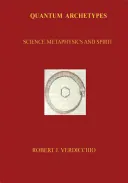
Le poids qui me convient

 71
71

Le poids qui me convient
Deepak Chopra's *Le poids qui me convient*, first appearing in 1999, attempts to bridge the perceived chasm between quantum physics and personal well-being. Chopra’s characteristic style is present, making complex ideas about consciousness and the body accessible. He skillfully draws on Ayurvedic principles, offering a holistic perspective that moves beyond symptom management. The section discussing the observer effect and its potential relation to our internal states is particularly engaging, though it risks oversimplification for those well-versed in physics. The book’s primary limitation lies in its broad generalizations; while intended to empower, some passages may feel prescriptive rather than illustrative, potentially alienating readers who do not resonate with its specific metaphysical framework. Nevertheless, the work provides a valuable entry point for understanding the mind's role in health.
This book offers a compelling, if occasionally simplified, exploration of consciousness and its impact on physical existence.
📝 Description
71
Deepak Chopra's 1999 book, *Le poids qui me convient*, connects ancient wisdom with modern science.
Originally published in 1999, *Le poids qui me convient* is Deepak Chopra's exploration of how ancient philosophical traditions and contemporary scientific thought intersect. The book addresses consciousness, the mind-body link, and the pursuit of overall well-being. Chopra offers readers practical methods to understand and manage their inner states. He encourages a view of health that reaches beyond surface concerns to examine the deeper forces influencing our lives. This work is for those interested in contemplative practices, less conventional health approaches, and the philosophical ideas behind consciousness. Readers who wish to combine spiritual or metaphysical ideas with personal growth and healing will find value here. It speaks to individuals who question standard beliefs and are open to the mind's capacity to affect physical and emotional conditions, often finding connections between Eastern philosophies and quantum physics.
Published in 1999, *Le poids qui me convient* appeared during a time of increased Western interest in mind-body medicine and Eastern spirituality. Deepak Chopra gained recognition in the 1990s for promoting a holistic health view that merged Ayurvedic ideas with Western science. This period saw a rise in New Age literature, with writers like Fritjof Capra discussing the links between physics and consciousness. Chopra's writing contributed to this cultural shift, making complex philosophical concepts more accessible to a broad audience.
💡 Why Read This Book?
• You will learn how concepts from quantum physics, like the observer effect, are interpreted by Chopra to influence our perception of reality and well-being, moving beyond conventional biological explanations. • You will gain an understanding of Ayurvedic principles, such as the *doshas*, and how they are presented as a framework for achieving balance and health by integrating mind, body, and spirit. • You will explore practical applications for managing internal states and fostering resilience, drawing on the book's emphasis on intention and conscious awareness as tools for personal transformation.
⭐ Reader Reviews
Honest opinions from readers who have explored this book.
❓ Frequently Asked Questions
What is the original publication year of Deepak Chopra's 'Le poids qui me convient'?
The French translation 'Le poids qui me convient' is based on Deepak Chopra's original work first published in 1999, exploring mind-body connections and consciousness.
What philosophical traditions does 'Le poids qui me convient' draw upon?
The book draws from ancient Indian traditions, particularly Ayurveda, and also engages with concepts from quantum physics and Western philosophy to discuss consciousness.
Does the book offer practical exercises?
Yes, the work suggests practical approaches for managing thoughts and emotions, aiming to foster a sense of balance and well-being by understanding the mind-body connection.
Is 'Le poids qui me convient' a scientific text?
While it references scientific concepts, particularly from quantum physics, the book is more of a philosophical and spiritual exploration of consciousness and health rather than a strictly scientific treatise.
Who is Deepak Chopra?
Deepak Chopra is an author and speaker known for his work in the fields of spirituality, mind-body medicine, and alternative health, blending Eastern and Western philosophies.
What is the primary message of 'Le poids qui me convient'?
The central message is that our internal state, influenced by consciousness and perception, plays a significant role in our overall health and experience of life.
🔮 Key Themes & Symbolism
Consciousness and Quantum Physics
This theme examines Chopra's interpretation of quantum mechanics, particularly the observer effect, as a lens through which to understand subjective experience and the creation of reality. The book posits that consciousness is not merely a byproduct of the brain but an active participant in shaping the physical world. It seeks to demonstrate how an individual's awareness and intentions can influence their perceived reality and physical state, challenging a purely materialistic worldview prevalent in some scientific circles.
The Mind-Body Connection
Central to the book is the interconnectedness of the mind and body. Chopra draws heavily on Ayurvedic principles, especially the concept of *doshas* (Vata, Pitta, Kapha), to explain how mental and emotional imbalances can manifest as physical ailments. The work suggests that achieving physical health requires addressing the root causes of disharmony, which often lie in one's thoughts, beliefs, and emotional patterns. This holistic approach advocates for self-awareness as a primary tool for healing and maintaining equilibrium.
Pursuit of Well-being
The book frames well-being not just as the absence of disease but as a state of holistic balance and inner peace. It introduces concepts that encourage readers to take an active role in their own health and happiness by cultivating mindful awareness and understanding their deepest motivations. The emphasis is on self-empowerment through knowledge of one's inner landscape, suggesting that true well-being arises from a harmonious integration of physical, mental, and spiritual dimensions.
Perception as Reality
A significant theme is how our perception constructs our reality. The book explores how ingrained beliefs, past experiences, and emotional conditioning shape the way we interpret events and interact with the world. Chopra suggests that by becoming aware of these filters, individuals can begin to shift their perspectives, leading to profound changes in their emotional states and overall life experience. This theme encourages a re-evaluation of personal narratives and the power of conscious thought.
💬 Memorable Quotes
Direct passages from the work, attributed to the author.
“Our perception of reality is not a passive reception but an active construction.”
— This highlights the book's central argument that we are not merely observers of the world, but active participants in shaping our experience through our thoughts and beliefs.
“The mind and body are not separate entities but parts of an interconnected whole.”
— This expresses the core concept of mind-body unity, a core part of Ayurvedic philosophy and a recurring theme in Chopra's work on holistic health and consciousness.
“True well-being arises from inner balance and harmony.”
— This expresses the book's definition of health, moving beyond mere physical absence of illness to a state of integrated physical, mental, and spiritual equilibrium.
“Understanding our internal states is key to transforming our external reality.”
— This points to the empowering message that by cultivating self-awareness and managing our inner world, we can influence our circumstances and experiences.
“The principles of quantum physics offer new ways to think about consciousness.”
— This references the book's attempt to bridge scientific inquiry with spiritual understanding, suggesting that modern physics provides metaphors for exploring the nature of awareness.
🌙 Esoteric Significance
Tradition
This work aligns with the Neo-Vedantic and Ayurvedic traditions of India, integrating their principles with modern scientific discourse, particularly quantum physics. It departs from traditional esoteric lineages by framing these ancient concepts within a contemporary, accessible, and often scientifically-adjacent narrative. While not strictly Hermetic or Gnostic, it shares their interest in hidden knowledge and the power of consciousness to influence reality.
Symbolism
The concept of *doshas* (Vata, Pitta, Kapha) serves as a symbolic map of individual constitution and energetic balance within the Ayurvedic framework. The observer effect from quantum physics is used symbolically to represent the active role of consciousness in shaping perceived reality. The interplay between light and shadow, or awareness and ignorance, can be seen as a motif representing the journey from unconscious patterns to conscious understanding.
Modern Relevance
Chopra's work continues to influence contemporary wellness culture, mindfulness movements, and integrated medicine. Thinkers and practitioners in fields ranging from positive psychology to neuroplasticity often echo his ideas about the mind's power. His emphasis on consciousness as fundamental has found resonance with some interpretations of quantum mechanics and consciousness studies, influencing discussions on artificial intelligence and the nature of reality.
👥 Who Should Read This Book
• Individuals interested in exploring the intersection of spirituality, consciousness, and health, particularly those drawn to Eastern philosophies like Ayurveda. • Readers seeking practical frameworks for personal growth and emotional well-being who are open to metaphysical concepts and mind-body integration approaches. • Those curious about how modern scientific ideas, such as quantum physics, are interpreted and applied to understand subjective experience and the nature of reality.
📜 Historical Context
Published in 1999, *Le poids qui me convient* arrived during a cultural moment ripe with interest in the mind-body connection and alternative spirituality. Deepak Chopra had already established himself as a prominent voice in this space throughout the 1990s, popularizing the integration of Ayurvedic medicine with Western concepts of health. The era saw a broader embrace of New Age philosophies, with authors like Marianne Williamson also gaining traction for their spiritual teachings. Chopra's work resonated with a public seeking holistic approaches to well-being, often looking to Eastern traditions for guidance. While not directly engaging with figures like Carl Jung in this specific text, Chopra's exploration of consciousness and the psyche echoed Jungian archetypes and the collective unconscious, albeit through an Eastern lens. The reception was largely positive among his established audience, solidifying his position as a leading figure in the self-help and spiritual wellness movement.
📔 Journal Prompts
The concept of *doshas* as a map of personal constitution.
Your perception of reality and the observer effect.
The interconnectedness of your mind and body.
Cultivating inner balance for holistic well-being.
Transforming external reality through internal awareness.
🗂️ Glossary
Ayurveda
An ancient Indian system of holistic medicine that focuses on balancing the body, mind, and spirit through diet, lifestyle, and herbal treatments. It emphasizes individual constitution and the influence of natural elements.
Doshas
In Ayurveda, the three fundamental bio-energetic forces (Vata, Pitta, Kapha) that govern physiological and psychological functions. Imbalances in these doshas are believed to lead to illness.
Quantum Physics
The branch of physics dealing with the smallest units of energy and matter, including subatomic particles. Concepts like the observer effect are often discussed in relation to consciousness.
Observer Effect
In quantum mechanics, the phenomenon where the act of observing or measuring a system can influence its state. Chopra uses this as a metaphor for consciousness's role in reality.
Consciousness
The state or quality of awareness, or of being aware of an external object or something within oneself. In this context, it's explored as a fundamental aspect of reality.
Holistic
Characterized by the belief that the parts of something are intimately interconnected and explicable only by reference to the whole. Applied to health, it means considering the entire person.
Mind-Body Connection
The concept that the mind and body are not separate but interact and influence each other, affecting physical health and emotional well-being.
🔮 Readers Also Liked
Browse all →









More by Deepak Chopra
All books →


More Free Occult Philosophy Books
View all →