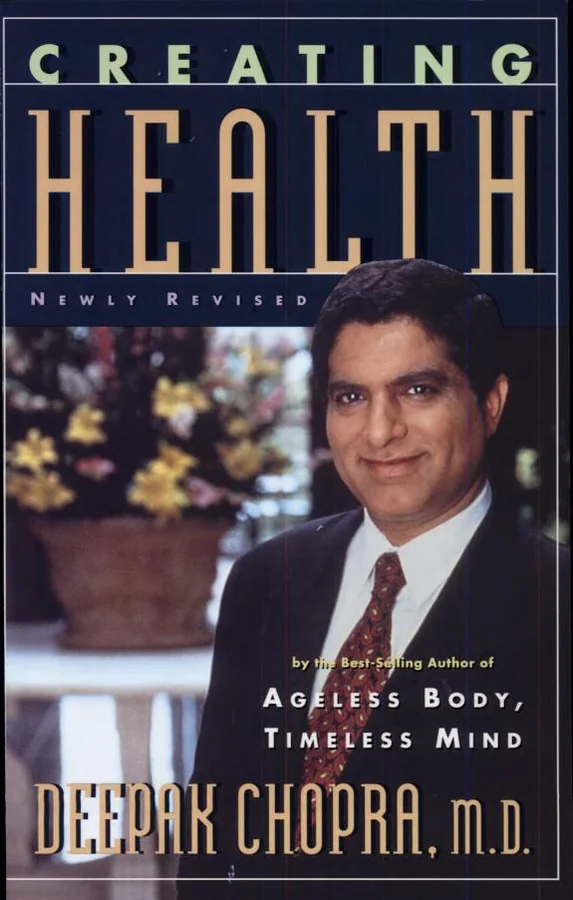
Creating Health
 72
72

Creating Health
Deepak Chopra's "Creating Health" revisits his foundational work on the mind's role in physical well-being, notably incorporating mindfulness meditation techniques. The book’s strength lies in its accessible introduction to the idea that consciousness is not merely an epiphenomenon but an active participant in health, a concept it explores through the lens of quantum physics and Eastern philosophies. The revised edition's emphasis on breath-focused meditation, as detailed in its later chapters, offers practical tools for readers. However, some of the more speculative claims linking quantum mechanics directly to individual health outcomes can feel stretched, a common critique of Chopra's work across his career. Despite this, the core message about the power of intentional awareness in cultivating health remains potent. It’s a valuable resource for those new to the mind-body paradigm.
📝 Description
72
Deepak Chopra's 1995 book Creating Health revisits mind-body connection principles for alternative health seekers.
Creating Health, published in 1995, reexamines Dr. Deepak Chopra's earlier ideas on the connection between the mind and body in healing. This edition is for people looking for health solutions outside of conventional medicine, particularly those who feel dissatisfied with standard medical treatments. The book speaks to individuals interested in a holistic approach to wellness, especially those curious about how consciousness affects physical health. It also appeals to readers who practice contemplation and seek ways to manage their health through these practices. The book is relevant for anyone questioning the effectiveness of traditional medical systems.
It arrived in the mid-1990s, a time when public interest in mind-body medicine and complementary therapies was growing. This period also saw increasing criticism of purely mechanical views of health. Other figures like Dr. Andrew Weil were becoming known for advocating integrated health approaches. The core ideas of Creating Health center on consciousness as a basic part of existence that directly impacts physical health. The book discusses how thoughts, feelings, and beliefs can show up as physical conditions. It also introduces methods to use this mind-body connection for better well-being.
This work fits within the broader stream of consciousness studies and alternative healing traditions that gained traction in the late 20th century. It draws from concepts found in Vedanta philosophy and Ayurvedic medicine, which posit a fundamental unity between mind, body, and spirit. The book's emphasis on consciousness as a primary force in shaping reality aligns with non-dualistic philosophies that view the material world as an emanation of consciousness. It seeks to bridge these ancient understandings with modern scientific inquiry, offering practical applications for personal health and well-being.
💡 Why Read This Book?
• You will learn how to apply mindfulness meditation, a specific technique introduced in this book, to actively influence your perception of health and well-being, moving beyond passive reception of medical advice. • You will gain an understanding of the "quantum self" concept as presented by Chopra, which posits consciousness as the foundation of reality and health, offering a unique philosophical framework not typically found in standard medical texts. • You will discover practical methods for integrating breath-focused meditation into your daily life, as detailed in the revised sections of the book, to foster a more balanced state of mind and body.
⭐ Reader Reviews
Honest opinions from readers who have explored this book.
❓ Frequently Asked Questions
When was Deepak Chopra's Creating Health first published?
Creating Health was first published in September 1995. This edition was a revision of his earlier work, incorporating new perspectives and practices.
What specific meditation technique does Creating Health emphasize?
The book specifically introduces and emphasizes mindfulness meditation, described as a simple yet powerful form of breath-focused meditation.
What is the core philosophy behind Creating Health?
The core philosophy is that the mind, or consciousness, plays a fundamental role in creating physical health, challenging purely materialistic views of the body.
Who is the target audience for this book?
The book is aimed at individuals seeking alternative health methods, those interested in mind-body medicine, and people dissatisfied with the limitations of traditional healthcare.
Does Creating Health discuss scientific concepts?
Yes, Dr. Chopra frequently draws upon concepts from quantum physics to explain the interconnectedness of consciousness and matter, applying them to the realm of health.
Is Creating Health suitable for beginners in meditation?
Yes, the book presents mindfulness meditation as a simple technique, making it accessible for individuals new to meditation or contemplative practices.
🔮 Key Themes & Symbolism
Consciousness as Foundation
The work posits that consciousness is not merely a product of the brain but the fundamental ground of all existence, including our physical bodies. This perspective reorients understanding of illness and health, suggesting that dis-ease may arise from imbalances in consciousness. Chopra, drawing from Vedanta philosophy and quantum physics, argues that by shifting our awareness and intentions, we can influence the very fabric of our physical reality, thereby creating health from this foundational level.
The Quantum Self
This concept, central to Chopra's work, suggests that our true nature is not limited to our physical form but extends into the quantum field of potentiality. The book explores how the observer effect in quantum physics mirrors the mind's ability to influence reality. Understanding ourselves as part of this interconnected quantum field, the book proposes, allows for a profound shift in how we approach health, moving from a reactive model to a proactive, consciousness-driven one.
Mindfulness and Breathwork
Creating Health introduces specific practices, notably mindfulness meditation and breath-focused techniques, as practical tools for accessing the healing power of consciousness. These practices are presented not as mere relaxation exercises but as methods to quiet the mental noise, connect with the deeper self, and cultivate a state of presence. By focusing on the breath, individuals can anchor themselves in the present moment and begin to consciously direct their intention towards well-being and healing.
Critique of Materialism
The book implicitly and explicitly critiques the dominant materialistic worldview in conventional medicine, which often reduces health to biochemical processes and genetic predispositions. Chopra argues that this reductionist approach misses the crucial role of subjective experience, intention, and consciousness. By offering an alternative framework, Creating Health encourages readers to question the limitations of purely physical explanations for health and to explore the vast, untapped potential of the mind.
💬 Memorable Quotes
Direct passages from the work, attributed to the author.
“The mind is the source of all healing.”
— This statement expresses the book's central thesis: that our thoughts, beliefs, and conscious awareness are not passive bystanders but active agents in the process of maintaining and restoring physical health.
“In the space between breaths lies infinite possibility.”
— This refers to the meditative state, particularly focusing on the pause between inhalations and exhalations, as a gateway to deeper consciousness where healing and transformation can occur.
“The goal is not to suppress thoughts, but to observe them without judgment.”
— This describes a core tenet of mindfulness, emphasizing detachment from the incessant stream of thoughts to achieve a state of clarity and reduce the mental stress that can impact well-being.
“Health is a state of balance between mind and body.”
— This interpretation reflects the book's aim to integrate mental and physical well-being, suggesting that true health arises from a harmonious interplay between our internal conscious states and our physical form.
💡 Key Ideas
Editorial paraphrase of the work's core concepts — not direct quotes.
Our bodies are fields of consciousness.
This paraphrase highlights Chopra's view that the physical body is not merely a biological machine but an expression of our underlying consciousness, a concept that bridges Eastern spirituality and modern physics.
🌙 Esoteric Significance
Tradition
Chopra's work draws heavily from Vedanta, particularly Advaita Vedanta, which emphasizes the non-dual nature of reality and the ultimate identity of the individual self (Atman) with the universal consciousness (Brahman). It also integrates concepts from quantum physics, reinterpreting them through a lens that echoes Neoplatonic ideas of emanation and the primacy of consciousness. This synthesis positions it within a modern esoteric lineage that seeks to reconcile ancient wisdom with contemporary scientific understanding, aiming to provide a spiritual-material framework for existence.
Symbolism
The concept of the "quantum self" serves as a potent symbol, representing the individual not as a fixed entity but as a dynamic field of potentiality, mirroring the observer-dependent nature of quantum phenomena. The breath is another key symbol, functioning as the tangible link between the ephemeral area of consciousness and the physical body; it is the constant, rhythmic reminder of life's flow and a primary tool for accessing inner stillness and awareness. The body itself is symbolized as a "field of consciousness," suggesting that physical form is a manifestation of deeper mental and spiritual states.
Modern Relevance
Creating Health remains highly relevant today, influencing contemporary wellness movements and the burgeoning field of psycho-neuro-immunology. Its ideas find echoes in mindfulness-based stress reduction (MBSR) programs, the growing acceptance of meditation in clinical settings, and the general shift towards holistic health practices. Thinkers and practitioners in positive psychology, consciousness studies, and integral theory often engage with Chopra's foundational concepts, particularly his emphasis on intention, subjective experience, and the interconnectedness of mind and body as critical factors in well-being.
👥 Who Should Read This Book
• Individuals exploring alternative healing modalities and seeking to understand the mind's role in physical health, particularly those interested in Eastern philosophies and their integration with Western thought. • Practitioners of meditation and mindfulness who wish to deepen their understanding of the underlying principles and explore how these practices can be applied to health and well-being. • Skeptics of purely materialistic explanations for disease who are open to exploring metaphysical and consciousness-based perspectives on health and the human condition.
📜 Historical Context
Creating Health, revised and re-released in 1995, emerged during a period when mind-body medicine was gaining significant traction in popular and academic circles. The 1990s saw a surge of interest in alternative and complementary therapies, partly as a reaction against the perceived limitations and side effects of conventional Western medicine. This era was characterized by a growing critique of purely mechanistic views of the body, exemplified by the rise of figures like Dr. Andrew Weil, who championed integrative health approaches. Chopra’s work tapped into this zeitgeist, presenting a spiritual and philosophical framework that resonated with a public seeking more holistic explanations for health and illness. While figures like Candace Pert were exploring the molecular basis of emotion and consciousness, Chopra offered a more metaphysical interpretation, often referencing quantum physics. The book’s popularity contributed to the mainstreaming of concepts previously confined to esoteric traditions, though it also faced criticism for its speculative interpretations of science.
📔 Journal Prompts
The concept of the quantum self and its implications for your perceived limitations.
Reflecting on the breath as a bridge between consciousness and physical sensation.
Identifying mental patterns that may contribute to or detract from your sense of well-being.
Exploring the idea of consciousness as the foundation of your physical reality.
Practicing mindful observation of thoughts without judgment, as described in the text.
🗂️ Glossary
Quantum Self
A concept suggesting that the individual's true nature is not limited to the physical body but extends into the field of consciousness and quantum potentiality, where thoughts and intentions can influence reality.
Mindfulness Meditation
A practice involving focused attention on the present moment, often through observing the breath, thoughts, and sensations without judgment, aimed at cultivating awareness and reducing stress.
Consciousness
The state of being aware of and responsive to one's surroundings; in Chopra's context, it is viewed as the fundamental ground of reality that influences physical existence.
Vedanta
A school of Hindu philosophy concerned with the nature of ultimate reality (Brahman) and the self (Atman), emphasizing their identity and the illusory nature of the perceived world.
Observer Effect
A phenomenon in quantum mechanics where the act of observation or measurement influences the state of a quantum system, often cited by Chopra as analogous to consciousness affecting physical reality.
Breath-Focused Meditation
A specific type of meditation where the breath serves as the primary anchor for attention, used to calm the mind and foster a connection between mental and physical states.
Materialism
The philosophical belief that matter is the fundamental substance in nature, and that all phenomena, including mental states and consciousness, can be explained by material interactions.
This book appears in 1 collection
🔮 Readers Also Liked
Browse all →









From the “Transcendental Meditation” Collection
View all →




![An answer of a letter from a gentleman in Fife, to a nobleman, containing a brief acccount [sic] of the barbarous and illegal treatment, these poor women accused of witchcraft, met with from the baillies of Pittenweem and others, ... To which is adde](/img/thumb/an-answer-of-a-letter-from-a-gentleman-in-fife-to-a-nobleman-containing-a-brief-acccount-sic-of-the-barbarous-and-illegal-treatment-these-poor-women-accused-of-witchcraft-met-with-from-the-baillies-of.webp)


More Free Spiritual Development Books
View all →