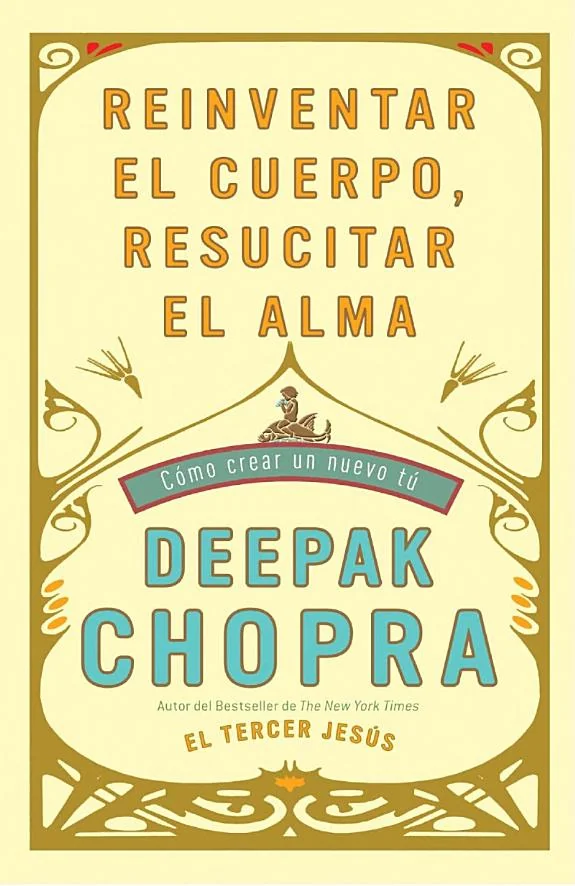
Reinventar el cuerpo, resucitar el alma
 72
72

Reinventar el cuerpo, resucitar el alma
Chopra's "Reinventar el cuerpo, resucitar el alma" attempts a structured approach to what he terms "auto transformación." The division into five steps for the body and five for the soul offers a clear framework, though at times the distinction feels somewhat artificial, as the physical and spiritual are so deeply intertwined. A particular strength lies in Chopra's ability to translate complex philosophical ideas into digestible prose, making the concept of aligning physical vitality with soul purpose accessible to a broad audience. However, some readers might find the prescribed steps to be more conceptual than practical, lacking concrete, actionable guidance beyond the initial inspiration. The book’s central argument, that miracles occur when we connect our bodies to the soul's mysteries, is elegantly presented but could benefit from more empirical illustration. Ultimately, it serves as a gentle, encouraging guide for those already predisposed to Chopra's blend of quantum physics and spiritual philosophy.
📝 Description
72
Deepak Chopra's 2010 book proposes ten steps to personal transformation, balancing physical health and spiritual renewal.
"Reinventar el cuerpo, resucitar el alma" (Reinventing the Body, Resurrecting the Soul) is structured around ten steps designed for personal transformation. Five of these steps focus on physical well-being, while the remaining five address spiritual revitalization. Chopra aims to connect the material aspects of life with the intangible nature of the soul, suggesting that true fulfillment comes from integrating these two dimensions.
The book is for readers interested in a holistic approach to self-improvement, especially those who feel a disconnect between their physical health and their sense of purpose or inner peace. It will resonate with those familiar with Chopra's prior work on consciousness and healing. The text speaks to the idea that the body and soul are interconnected, not separate. Chopra argues that by attending to both physical and spiritual aspects, individuals can reach a state of deep well-being.
Published in 2010, this book arrived during a time of widespread public interest in New Age spirituality, alternative medicine, and self-help. Chopra, already known for his work on mind-body connections, continued to explore themes of holistic health. This approach stood in contrast to purely biomedical models, drawing on concepts emphasizing the interconnectedness of mind, body, and spirit, aligning with traditions that view the soul's connection to a universal consciousness.
💡 Why Read This Book?
• Gain a structured, ten-step method for self-transformation that explicitly links physical health with spiritual awakening, as detailed in the book's dual-pronged approach. • Understand the interconnectedness of body and soul through Chopra's accessible explanations, fostering a more integrated view of personal well-being beyond conventional approaches. • Explore the idea of "miracles" occurring through conscious connection to life's deeper meaning, as presented in the book's invitation to link the body directly to the soul's mysteries.
⭐ Reader Reviews
Honest opinions from readers who have explored this book.
❓ Frequently Asked Questions
What is the core philosophy behind Deepak Chopra's 'Reinventar el cuerpo, resucitar el alma'?
The book's core philosophy is that true transformation and fulfillment arise from the integration of the physical body and the spiritual soul. It proposes ten steps, five for each aspect, to achieve this holistic rejuvenation and connect with life's deeper meaning.
When was 'Reinventar el cuerpo, resucitar el alma' by Deepak Chopra first published?
'Reinventar el cuerpo, resucitar el alma' was first published on June 8, 2010. This places it within Chopra's extensive body of work exploring mind-body connections and consciousness.
Does the book offer practical exercises for physical and spiritual improvement?
Yes, the book is structured around ten steps—five for the body and five for the soul—intended to guide readers toward self-transformation. While conceptual, these steps aim to inspire practical shifts in perspective and practice.
Who is the intended audience for this book?
The book targets individuals seeking holistic self-improvement, those interested in the interplay between physical health and spiritual purpose, and readers familiar with Deepak Chopra's existing explorations of consciousness and healing.
What does Deepak Chopra mean by 'resurrecting the soul'?
Resurrecting the soul, in Chopra's context, refers to revitalizing one's spiritual essence and reconnecting with the deeper meaning and purpose of life, moving beyond mere existence to a state of profound significance.
How does this book relate to Chopra's other works on the mind-body connection?
This book builds upon Chopra's long-standing work, applying his principles of consciousness and healing to a structured ten-step program for dual physical and spiritual renewal, emphasizing the soul's connection to life's mysteries.
🔮 Key Themes & Symbolism
Body-Soul Integration
The central thesis posits that physical vitality and spiritual depth are not separate pursuits but interconnected facets of existence. Chopra argues that true self-transformation hinges on addressing both dimensions concurrently. This theme challenges the common dualistic thinking that separates the material from the immaterial, advocating instead for a unified approach where the body's health directly influences the soul's vibrancy, and vice versa. The book suggests that by consciously engaging with these integrated aspects, individuals can unlock a profound sense of wholeness and purpose.
The Soul's Connection to Mystery
This theme explores the idea that the soul is intrinsically linked to the universe's profound mysteries and the inherent meaning of life. Chopra invites readers to move beyond the mundane by fostering a direct connection between their physical being and this deeper, soulful dimension. It suggests that embracing these 'wonderful mysteries' is not an abstract philosophical exercise but a practical path to experiencing life's richness and finding true significance. This connection is presented as the key to spiritual revitalization.
Ten Steps to Transformation
The book outlines a specific methodology for achieving holistic well-being through ten distinct steps. Divided equally between physical and spiritual rejuvenation, these steps are designed to guide readers through a process of self-discovery and renewal. The structure provides a clear pathway, moving from the tangible aspects of bodily health to the more intangible domains of the soul. This methodical approach aims to explain the process of transformation, making it accessible and actionable for anyone seeking to reinvent themselves.
Consciousness and Healing
Echoing Chopra's broader philosophical framework, this theme emphasizes the power of consciousness in both physical and spiritual healing. The work suggests that our awareness and intentions play a critical role in shaping our reality and well-being. By cultivating a conscious connection between the body and the soul, individuals can tap into innate healing capacities and experience profound shifts. This perspective aligns with mind-body medicine, highlighting the transformative potential that lies within our own awareness.
💬 Memorable Quotes
Direct passages from the work, attributed to the author.
“Miracles happen when we connect the body directly to the soul's mysteries.”
— This interpretation captures the essence of Chopra's message: extraordinary positive changes and profound experiences are possible when we bridge the physical self with the deeper, often-unexplored dimensions of our spiritual essence.
“Reinventing the body and resurrecting the soul are pathways to a more meaningful existence.”
— This interpretation reflects the book's overarching goal: to guide readers toward a holistic state of being where physical well-being and spiritual awakening combine to create a life imbued with greater purpose and depth.
💡 Key Ideas
Editorial paraphrase of the work's core concepts — not direct quotes.
Five steps for the body and five for the soul will lead us to self-transformation.
This paraphrased concept highlights the book's structured approach, emphasizing that genuine personal evolution requires attention to both physical and spiritual aspects, presented as a balanced, ten-part journey.
The soul finds meaning and significance when directly linked to life's mysteries.
This paraphrased concept underscores the book's focus on spiritual revitalization, suggesting that a sense of purpose and a richer understanding of existence emerge from engaging with the profound, often ineffable, aspects of life.
Chopra invites us to live with him the miracles that occur when mind, body, and spirit align.
This paraphrased concept emphasizes the author's invitational style and the core outcome promoted by the book – the experience of profound, positive shifts that arise from achieving a state of holistic integration.
🌙 Esoteric Significance
Tradition
Chopra's work draws heavily from Vedanta philosophy, particularly the concept of non-duality (Advaita Vedanta), and integrates it with modern understandings of quantum physics and consciousness. While not strictly adhering to a single Western esoteric lineage like Hermeticism or Kabbalah, it shares common ground with Gnostic ideas regarding the divine spark within and the potential for spiritual awakening. The emphasis on transcending material limitations and realizing one's true, divine nature aligns with mystical traditions that seek direct experience of the ultimate reality.
Symbolism
The book implicitly uses the 'body' as a symbol for the material, manifest world and the 'soul' for the spiritual, unmanifest essence. The number 'ten' itself can be seen symbolically, representing completion and wholeness, as it comprises the digits 1 (unity) and 0 (potentiality). The concept of 'miracles' serves as a symbol for the extraordinary shifts in consciousness and reality that occur when this integration is achieved, signifying a departure from ordinary perception to one aligned with universal forces.
Modern Relevance
Chopra's ideas continue to influence contemporary wellness culture, mindfulness practices, and consciousness research. His holistic approach appeals to modern thinkers and practitioners who explore the intersection of psychology, neuroscience, and spirituality. Schools of thought emphasizing psychosomatic medicine, energy healing modalities, and integral theory often draw upon or echo Chopra's core concepts regarding the power of consciousness and the interconnectedness of all things.
👥 Who Should Read This Book
• Individuals exploring holistic wellness and seeking to understand the link between physical health and spiritual fulfillment, particularly those drawn to Eastern philosophies. • Readers familiar with Deepak Chopra's previous works who wish to engage with a structured, ten-step program for personal transformation. • Those feeling a disconnect between their physical well-being and their sense of purpose, looking for guidance on integrating these aspects of life.
📜 Historical Context
Published in 2010, "Reinventar el cuerpo, resucitar el alma" emerged during a period when Deepak Chopra was already a globally recognized figure in the New Age and holistic health movements. The early 21st century saw continued public fascination with mind-body connections, consciousness studies, and alternative spiritualities, often influenced by quantum physics metaphors. Chopra's work found fertile ground amidst this intellectual climate, offering accessible interpretations of complex spiritual and scientific ideas. He stood alongside contemporaries like Andrew Weil in popularizing integrative health, though Chopra's approach often leaned more heavily into metaphysical and quantum philosophical interpretations of consciousness than Weil's more clinically focused methods. The book's emphasis on a structured, ten-step program reflected a trend in self-help literature aiming to provide clear, actionable guidance for personal growth, contrasting with more abstract philosophical explorations.
📔 Journal Prompts
Reflect on the proposed five steps for the body and five for the soul, identifying potential synergies.
Consider how connecting your physical existence to life's 'wonderful mysteries' might alter your daily experience.
Analyze the concept of 'resurrecting the soul' in the context of your personal journey.
Explore the notion of 'miracles' occurring through the integration of body and soul as presented in the book.
Identify one aspect of your physical self and one aspect of your soul that you wish to reinvent or revive.
🗂️ Glossary
Auto transformation
A process of profound personal change and self-reinvention, focusing on evolving both the physical and spiritual dimensions of an individual.
Soul
The non-physical essence of a person, often associated with consciousness, spirit, and the deepest sense of self or identity, connected to universal meaning.
Body
The physical form and its health, considered by Chopra as intrinsically linked to the spiritual self, and a crucial element in the overall process of transformation.
Miracles
Extraordinary events or positive shifts in experience that Chopra suggests can occur when one consciously integrates their physical being with the deeper mysteries of the soul.
Mysteries of life
The profound, often ineffable, aspects of existence, consciousness, and the universe that give life meaning and significance, which the soul is said to connect with.
Integration
The act of bringing together separate elements—in this case, the body and the soul—into a unified and harmonious whole, leading to enhanced well-being.
Spiritual revitalization
The process of renewing or reawakening one's spiritual essence, purpose, and connection to deeper meaning, often achieved through practices that connect the soul to life's mysteries.
This book appears in 1 collection
🔮 Readers Also Liked
Browse all →









From the “Transcendental Meditation” Collection
View all →








More Free Spiritual Development Books
View all →