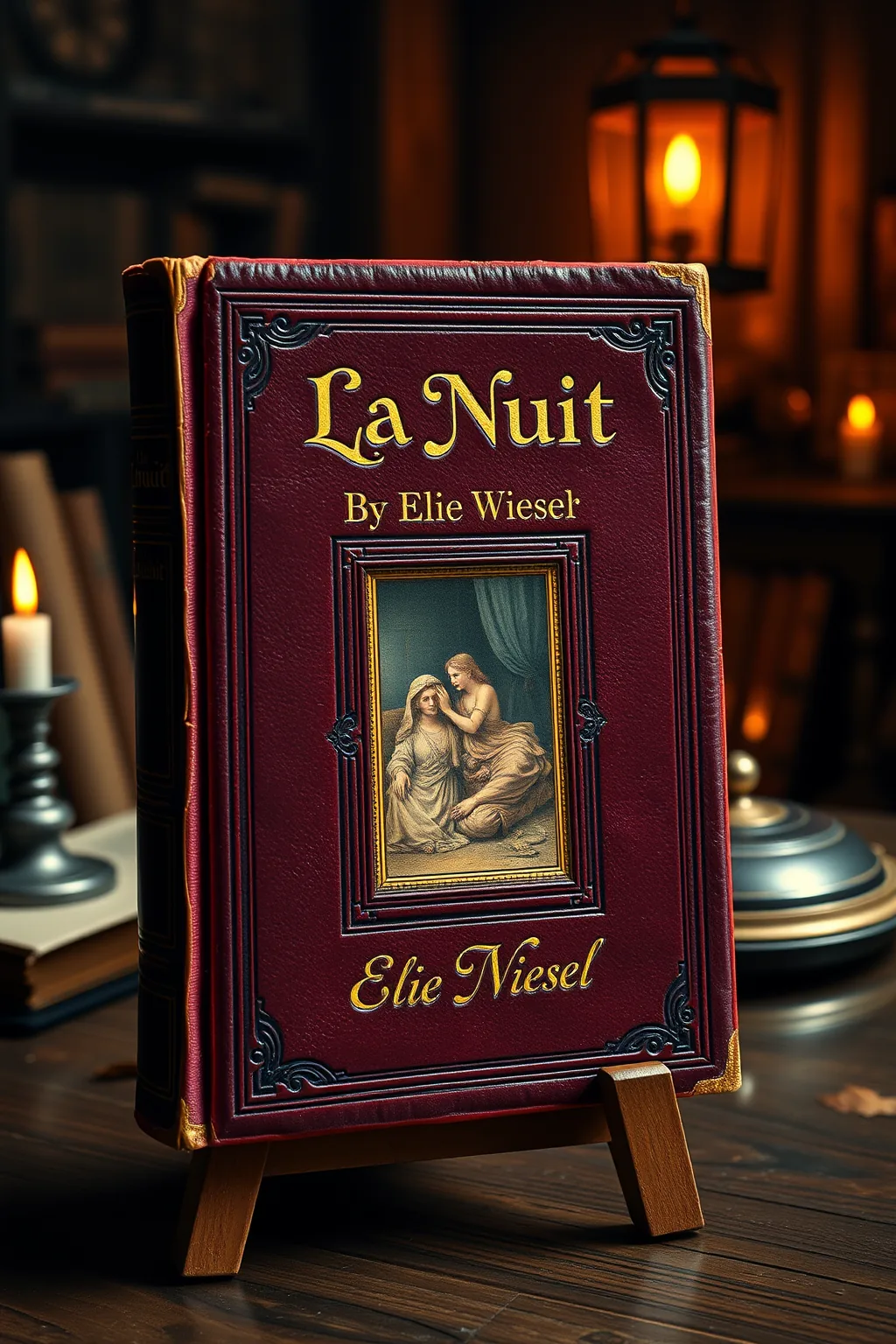
La Nuit
 84
84

La Nuit
Elie Wiesel's *La Nuit* confronts the reader with a stark, almost brutal honesty that few accounts of the Holocaust achieve. The initial passages, detailing the author's waning faith and his desperate questions directed at a silent God amidst the horrors of Auschwitz, are particularly potent. Wiesel doesn’t offer easy answers or comforting platitudes; instead, he lays bare the existential crisis of a young boy stripped of everything, including his spiritual certainties. A significant strength lies in its relentless focus on the internal experience of survival, the erosion of selfhood under duress. However, the sheer unrelenting bleakness, while authentic, can make sustained engagement emotionally taxing for some readers. The moment where Wiesel observes the burning of children, a scene of unparalleled horror, encapsulates the work's power and its difficulty. It is a necessary, albeit harrowing, testament to the human capacity for both suffering and endurance.
📝 Description
84
Elie Wiesel published "La Nuit" in 1955, a stark personal account of his Holocaust experiences.
"La Nuit" is Elie Wiesel's direct chronicle of his internment in concentration camps during the Holocaust. It is not a historical analysis but a personal testament to survival. The book details the author's experiences with systematic dehumanization and the psychological and spiritual effects of this atrocity. Wiesel writes about the struggle to retain one's identity and humanity when stripped of all external markers of personhood.
The work confronts the realities of the Holocaust through unvarnished narrative. It addresses the philosophical questions that arise from extreme trauma. Readers interested in the literature of witness, existentialism, and the philosophy of suffering will find substantial content. This is a challenging read, but one that offers a personal perspective on a horrific historical period.
While not typically categorized as esoteric in the occult sense, "La Nuit" engages with profound spiritual and existential questions that resonate with esoteric traditions. It confronts the nature of human suffering and the possibility of maintaining inner light amidst absolute darkness. Wiesel's account, though rooted in historical fact, touches upon universal themes of the soul's resilience, the search for meaning in destruction, and the enduring human spirit's confrontation with the abyss. This resonates with contemplative and philosophical traditions that examine the human condition at its extremes.
💡 Why Read This Book?
• You will learn how Elie Wiesel articulates the crisis of faith in the face of systematic extermination, particularly his questioning of God's presence at Auschwitz, providing a unique perspective on spiritual resilience. • You will feel the weight of collective memory through Wiesel's commitment to bearing witness, understanding how the act of writing about the Holocaust serves as a bulwark against historical erasure. • You will gain insight into the profound psychological impact of dehumanization, as described in the concentration camp setting, offering a visceral understanding of how identity is challenged under extreme conditions.
⭐ Reader Reviews
Honest opinions from readers who have explored this book.
❓ Frequently Asked Questions
What is the original title of Elie Wiesel's book about the Holocaust?
The original French title of Elie Wiesel's seminal work is *La Nuit*. It was first published in 1955 and later translated into English as *Night*.
When was La Nuit first published?
*La Nuit* was first published in 1955, making it one of the earlier significant literary testimonies to emerge from the Holocaust.
What is the main theme explored in La Nuit?
The primary theme is the struggle with faith and the silence of God in the face of the Holocaust's atrocities, alongside the dehumanization and loss of identity experienced in concentration camps.
What historical events does La Nuit cover?
The book covers Elie Wiesel's personal experiences as a Jewish teenager deported to concentration camps, including Auschwitz and Buchenwald, during the Nazi regime's systematic genocide of European Jews.
Is La Nuit a factual account?
Yes, *La Nuit* is a memoir, a factual account based on Elie Wiesel's own experiences as a survivor of the Holocaust. It is considered a work of testimony.
What does the title 'La Nuit' signify?
The title 'La Nuit' (The Night) symbolizes the darkness, suffering, and spiritual void that Wiesel experienced during his time in the concentration camps, representing the darkest period of his life and the Holocaust.
🔮 Key Themes & Symbolism
The Silence of God
Central to *La Nuit* is the author's profound crisis of faith, triggered by the unimaginable suffering he witnesses. He grapples intensely with the apparent absence of divine intervention amidst the systematic extermination of millions. The text repeatedly questions God's silence and justice, particularly during moments of extreme barbarity like the crematoria at Auschwitz. This theme explores the existential dilemma of maintaining belief when confronted with overwhelming evil, forcing a re-evaluation of traditional religious tenets in the face of unprecedented human cruelty.
Dehumanization and Identity
The work meticulously details the process by which prisoners in concentration camps were systematically stripped of their humanity. From the shaving of heads and the assignment of numbers to the starvation rations and brutal labor, every aspect of camp life was designed to erase individuality. Wiesel recounts the struggle to retain a sense of self, the importance of memory, and the desperate need to hold onto one's name and identity as a form of resistance. This theme highlights the psychological warfare waged by the oppressors and the resilience required to preserve one's inner life.
Memory as Witness
The act of remembering and recounting his experiences is presented as a vital imperative for Wiesel. *La Nuit* itself functions as a powerful act of bearing witness, ensuring that the atrocities are not forgotten. The narrative emphasizes the moral obligation to testify, to speak for those who perished and cannot speak for themselves. This theme underscores the power of literature to combat oblivion and to serve as a historical record, preserving the truth of the Holocaust against attempts at denial or distortion. It is a call to remember and learn from the past.
The Nature of Evil
Wiesel portrays evil not as a supernatural force, but as a chillingly bureaucratic and mundane reality. The efficiency of the death machine, the casual cruelty of the guards, and the indifference of the world are depicted with stark clarity. The book examines how ordinary individuals can become instruments of immense cruelty and how systems can facilitate unprecedented atrocities. It forces a contemplation of the banality of evil, as described by Hannah Arendt later, and the human capacity for both extreme suffering and the perpetration of horrific acts.
💬 Memorable Quotes
Direct passages from the work, attributed to the author.
“Where is the Master of the Universe? Who dares question Him?”
— This reflects Wiesel's internal struggle and defiance. Faced with the systematic murder of his people, he directly confronts the perceived inaction or absence of God, questioning divine justice and authority in the face of unimaginable suffering.
“The SS offered me a fine present: my shoes. I wanted to tear them off, but I had to wait.”
— This seemingly minor detail points to the complete loss of autonomy and the constant state of subjugation. Even a simple act like removing one's own shoes becomes a controlled event, emphasizing the prisoners' utter lack of control over their own bodies and possessions.
💡 Key Ideas
Editorial paraphrase of the work's core concepts — not direct quotes.
Never shall I forget that night, the first night in camp, which has turned my life into one long night still.
This line captures the profound and lasting trauma inflicted by the Holocaust. The 'night' here is not just a temporal period but a metaphor for the darkness, despair, and spiritual death experienced, suggesting that the horrors permanently altered the author's perception of life.
Behind me, I heard the same cri de coeur. 'Poor father, where is God? Where is He?'
This quote highlights the shared existential despair among prisoners. The repeated question about God's whereabouts signifies a collective loss of faith and a desperate search for meaning or solace in the midst of hellish conditions.
I did not know that this was the moment when I was separated from my mother and sister. The world became a dark, enclosed galaxy.
This passage illustrates the brutal efficiency of the deportation and arrival process, where families were torn apart without ceremony. The 'dark, enclosed galaxy' conveys the overwhelming sense of isolation and the shattering of the known world.
🌙 Esoteric Significance
Tradition
While not explicitly aligned with a single esoteric tradition, *La Nuit* deeply engages with themes resonant in Gnostic and Kabbalistic thought, particularly concerning divine silence, suffering, and the struggle for spiritual liberation amidst a fallen or corrupted world. The questioning of a seemingly absent God echoes Gnostic critiques of a lesser creator, while the intense focus on personal suffering and the search for inner light in profound darkness touches upon Kabbalistic concepts of divine concealment (Tzimtzum) and the rectification of cosmic sparks.
Symbolism
The pervasive symbol of 'Night' (La Nuit) represents not just the temporal darkness of the Holocaust but a spiritual and existential void, a state of profound alienation from God and humanity. The crematoria at Auschwitz serve as a horrific symbol of ultimate destruction and the apparent annihilation of the sacred. The lingering smoke is a potent motif representing the obscuring of divine presence and the perversion of life itself, forcing a confrontation with the ultimate questions of existence and mortality.
Modern Relevance
Wiesel's exploration of existential crisis, the nature of evil, and the imperative of bearing witness continues to inform contemporary discussions on human rights, genocide studies, and the philosophy of trauma. Thinkers and activists grappling with the aftermath of mass atrocities, the challenges of collective memory, and the ethical responsibilities in the face of injustice frequently draw upon the moral and spiritual urgency conveyed in *La Nuit*. Its relevance extends to spiritual seekers questioning faith in a secular or suffering world.
👥 Who Should Read This Book
• Students of Holocaust literature and history: To gain a deeply personal and visceral understanding of the lived experience beyond statistical data, focusing on the psychological and spiritual dimensions. • Seekers of existential philosophy: To explore profound questions about faith, suffering, the nature of good and evil, and the search for meaning in a seemingly absurd universe. • Individuals interested in the literature of witness: To understand the power and ethical imperative of testimony in confronting historical trauma and preventing future atrocities.
📜 Historical Context
Published in 1955, Elie Wiesel's *La Nuit* emerged during a critical period of post-war reckoning with the Holocaust. The preceding decade had seen the systematic annihilation of European Jewry by the Nazi regime, a horror whose scale was still being fully comprehended and documented. In intellectual circles, existentialism, with its focus on individual freedom, responsibility, and the search for meaning in an absurd world, was gaining traction, providing a philosophical framework through which Wiesel's personal testimony could be understood. Contemporaries like Albert Camus were exploring similar themes of revolt against injustice and the human condition. While many historical accounts were emerging, Wiesel's work distinguished itself by offering a deeply personal, spiritual, and psychological perspective, directly challenging the silence and denial that still lingered in some quarters. Its reception, though initially modest, grew to establish it as a foundational text of Holocaust literature.
📔 Journal Prompts
The silence of God during the Auschwitz selections.
The internal struggle to retain identity amidst systematic dehumanization.
The imperative of bearing witness to atrocity.
The author's confrontation with the SS.
The symbolism of the 'night' in the text.
🗂️ Glossary
Auschwitz
A sprawling complex of Nazi concentration and extermination camps located in occupied Poland during World War II. It became a primary site for the mass murder of Jews and other targeted groups.
SS
Schutzstaffel. A major paramilitary organization under Adolf Hitler and the Nazi Party, responsible for implementing the 'Final Solution' and operating concentration and extermination camps.
Kaddish
A Jewish prayer, recited for the dead as a sign of mourning and remembrance. Wiesel contemplates reciting it for himself, highlighting his profound spiritual crisis.
Dehumanization
The process of stripping individuals of their human qualities, reducing them to objects or numbers. In the context of *La Nuit*, this was a systematic practice in the camps.
Holocaust
The systematic, state-sponsored persecution and murder of six million Jews by the Nazi regime and its collaborators during World War II.
Testimony
A formal statement of fact or belief, often given in court or as a written account. In this context, it refers to the survivor's duty to recount their experiences.
Faith Crisis
A period of intense doubt or questioning regarding one's religious beliefs, often triggered by profound suffering or perceived divine absence.
🔮 Readers Also Liked
Browse all →









More by Elie Wiesel
All books →


More Free Kabbalah & Jewish Mysticism Books
View all →