Kabbalah the Harmony of Opposites

 61
61

Kabbalah the Harmony of Opposites

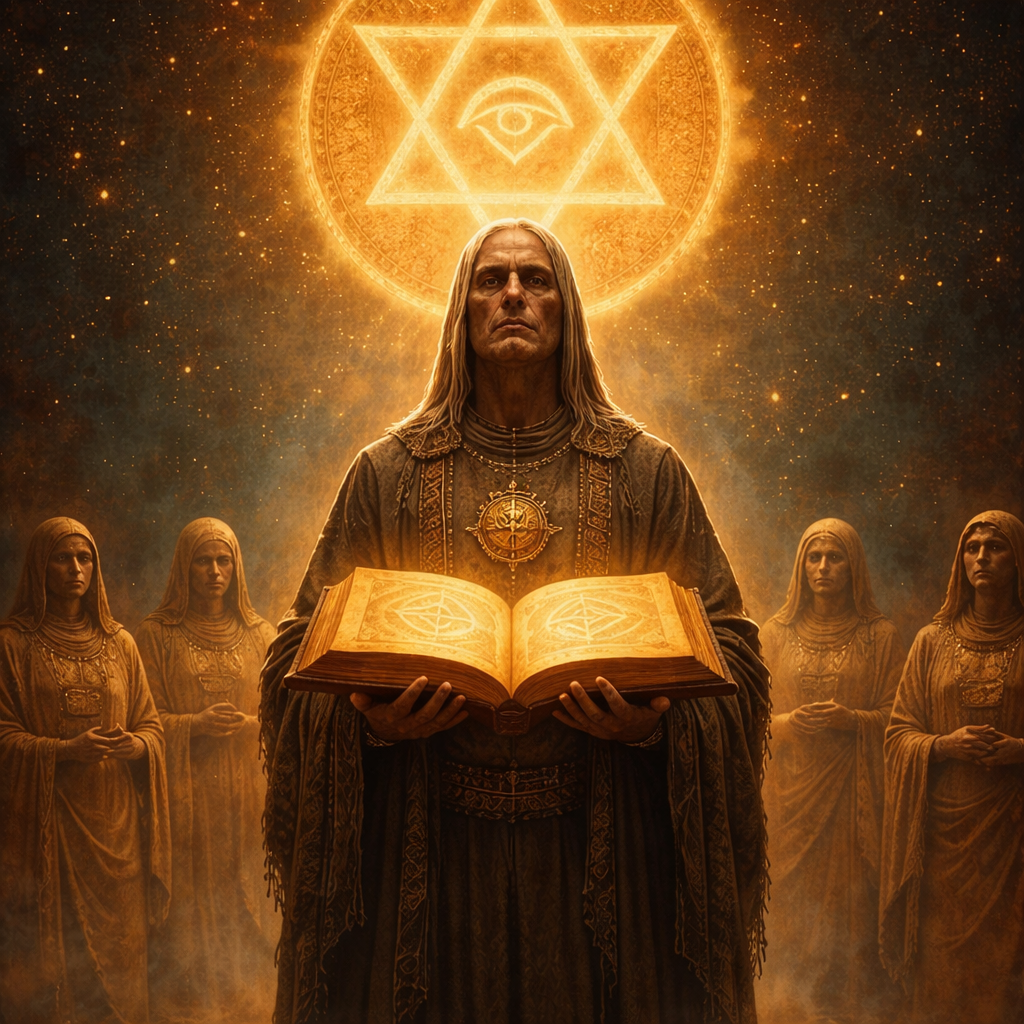

Alaric Kestrel, a seasoned explorer of metaphysical landscapes, hails W. J. Coleville's 'Kabbalah: The Harmony of Opposites' as a seminal text for serious students. Coleville's lucid prose cuts through the often-impenetrable veil of Kabbalistic lore, presenting its core tenets with remarkable clarity. The book excels in its exploration of duality and unity, demonstrating how apparent paradoxes resolve into a divine synthesis. It offers profound insights into the symbolic language of the Zohar, making its esoteric teachings accessible without sacrificing their depth. Ideal for the dedicated practitioner or the intellectually curious scholar seeking a robust introduction to the foundational principles of Kabbalah and its spiritual applications.
📝 Description
61
W. J. Coleville's 1903 book, 'Kabbalah: The Harmony of Opposites,' examines the mystical tradition's core principles.
Published in 1903, W. J. Coleville's 'Kabbalah: The Harmony of Opposites' presents a study of Jewish mysticism. Coleville details the symbolic systems central to Kabbalah, including the Sephiroth and the Tree of Life. He aims to show how these elements reveal a cosmic order and a path toward spiritual understanding.
The book discusses the interconnectedness of all things as understood through Kabbalistic concepts. Coleville's work is intended for those interested in exploring creation, the soul, and the reconciliation of opposing forces within the universe. It seeks to provide a framework for comprehending reality and an individual's role within it, moving beyond a purely academic approach to encourage a deeper metaphysical insight.
This book sits within the Western esoteric tradition, specifically focusing on Kabbalah, a Jewish mystical system. Coleville's interpretation draws connections between Kabbalistic ideas and broader metaphysical concepts, placing it alongside other esoteric writings that seek to explain the universe through symbolic and spiritual frameworks. It engages with themes common in esoteric thought, such as divine emanations, cosmic structure, and the nature of the soul, aiming to make these complex ideas accessible.
💡 Why Read This Book?
Embark on a transformative journey into the heart of Jewish mysticism. 'Kabbalah: The Harmony of Opposites' offers a clear and accessible pathway to understanding the intricate symbolism and philosophical depth of Kabbalistic wisdom. Ideal for spiritual seekers, students of comparative religion, and practitioners desiring to deepen their connection to the divine through ancient esoteric teachings. Discover the profound harmony that underpins existence and unlock hidden spiritual insights.
⭐ Reader Reviews
Honest opinions from readers who have explored this book.
❓ Frequently Asked Questions
What is the primary focus of 'Kabbalah: The Harmony of Opposites'?
The book primarily focuses on the esoteric teachings of Kabbalah, particularly the concept of divine harmony found in the interplay of opposing forces within the cosmos and spiritual realms. It delves into symbolism and the Tree of Life.
Is prior knowledge of Kabbalah required to read this book?
While prior knowledge is beneficial, Coleville's clear exposition makes it accessible to earnest beginners. The book serves as an excellent introduction and a valuable resource for those with some existing familiarity.
What are the key Kabbalistic texts referenced or alluded to?
The book draws upon the foundational texts and concepts within Kabbalah, including the Zohar, with its major assemblies like the 'Book of Concealed Mystery,' 'The Greater Holy Assembly,' and 'The Lesser Holy Assembly.'
How does the book explain the 'Harmony of Opposites'?
It illustrates how seemingly contradictory forces (e.g., justice and mercy, expansion and contraction) are essential components of divine creation, representing a unified, balanced cosmic order when understood through the Kabbalistic lens.
What is the intended audience for this work?
The intended audience includes spiritual seekers, students of mysticism and esotericism, scholars of comparative religion, and anyone interested in exploring the profound wisdom of Kabbalah and its philosophical underpinnings.
🔮 Key Themes & Symbolism
The Divine Unity in Duality
This theme explores the core Kabbalistic principle that seemingly opposing forces are not in conflict but are, in fact, complementary aspects of a singular divine reality. Coleville illuminates how concepts like justice and mercy, masculine and feminine divine energies, and even good and evil, find their ultimate resolution and harmony within the divine plan. Understanding this duality as a unified whole is presented as a key to unlocking spiritual wisdom and achieving inner balance, reflecting the intricate structure of the Sephiroth on the Tree of Life.
Symbolic Language of the Cosmos
The book meticulously deciphers the rich symbolic language inherent in Kabbalistic cosmology. It examines the profound meanings embedded within archetypal imagery, sacred geometry, and the numerical significance of Hebrew letters, as found in texts like the Zohar. Coleville guides the reader to perceive these symbols not as mere representations but as living conduits of divine energy and truth, offering a framework for understanding the hidden architecture of creation and the spiritual forces at play in the universe.
The Path of Spiritual Illumination
At its heart, 'Kabbalah: The Harmony of Opposites' is a guide to spiritual ascent. It presents Kabbalah not just as a system of theology or philosophy, but as a practical path towards self-realization and union with the divine. Through understanding the interconnectedness of all things and the divine order, the reader is encouraged to cultivate inner harmony, awaken latent spiritual potentials, and align their consciousness with the higher frequencies of existence, leading to profound personal transformation.
💬 Memorable Quotes
Direct passages from the work, attributed to the author.
“The Sephiroth are not merely attributes, but divine currents flowing through existence.”
— This highlights the dynamic, active nature of the Kabbalistic emanations, emphasizing their role as channels of divine energy and consciousness that shape and sustain the manifest universe.
“To know the Tree of Life is to know the blueprint of the soul.”
— This profound statement connects the cosmic structure of Kabbalah to the individual human consciousness, positing that understanding the divine arrangement reveals the intricate design and potential of our own inner being.
“In the echo of opposites, the voice of the One is heard.”
— This poetic expression reinforces the idea that by contemplating and integrating seemingly contradictory elements, one can ultimately perceive the underlying unity and singular source of all phenomena.
💡 Key Ideas
Editorial paraphrase of the work's core concepts — not direct quotes.
Within the heart of all apparent conflict lies the seed of perfect harmony.
This quote captures the central theme of the book, suggesting that apparent dualities are not sources of strife but integral parts of a divinely orchestrated unity waiting to be recognized and understood.
The veiled mystery is but a truth waiting for the discerning eye.
This quote speaks to the nature of esoteric knowledge, suggesting that the hidden aspects of reality are not inherently inaccessible but require a prepared mind and a diligent search to be revealed.
🌙 Esoteric Significance
Tradition
This work is firmly rooted in the Western Esoteric Tradition, specifically drawing from the rich and ancient lineage of Kabbalah, the mystical dimension of Judaism. It interprets Kabbalistic concepts through a lens that seeks universal spiritual truths, often bridging its teachings with broader metaphysical inquiries and esoteric philosophies prevalent in Coleville's era. The book serves as a conduit, making the profound, often cryptic, wisdom of Kabbalah accessible to a wider audience interested in the hidden knowledge of the cosmos and the human soul.
Symbolism
The book is replete with Kabbalistic symbolism, most notably the Tree of Life (Etz Chaim) and its ten Sephiroth, which represent divine emanations and attributes. Coleville elucidates the symbolic meanings of Hebrew letters, divine names, and cosmological diagrams. He emphasizes how these symbols are not mere intellectual constructs but are keys to understanding the structure of reality, the pathways of divine energy, and the stages of spiritual evolution, offering a profound symbolic language for the initiated.
Modern Relevance
In an age often marked by fragmentation and existential questioning, the Kabbalistic emphasis on unity and harmony resonates deeply. 'Kabbalah: The Harmony of Opposites' offers a timeless framework for understanding the interconnectedness of all things and finding balance amidst complexity. Its exploration of the divine interplay of opposing forces provides useful insights for personal growth, spiritual resilience, and working through the dualities of modern life. The book's teachings on the soul's journey and the search for meaning remain profoundly relevant for contemporary seekers.
👥 Who Should Read This Book
This informative text is a treasure for the dedicated spiritual seeker, offering a pathway to understanding the profound mysteries of existence. Scholars of comparative religion and comparative mysticism will find it an invaluable resource for its clear exposition of core Kabbalistic principles. Practitioners of meditation and contemplative arts will discover rich symbolic language and philosophical depth to enhance their practices. Even those new to esotericism, who possess an earnest curiosity about the hidden workings of the universe and the nature of the divine, will find Coleville's accessible yet profound approach a compelling introduction to the wisdom of Kabbalah.
📜 Historical Context
W. J. Coleville's 'Kabbalah: The Harmony of Opposites' emerged during a period of burgeoning interest in esoteric traditions within the late 19th and early 20th centuries. This era saw a widespread fascination with ancient wisdom, mysticism, and spiritual philosophies as a counterpoint to the burgeoning materialism and industrialization of the Western world. Influenced by figures like Helena Blavatsky and the Theosophical Society, Coleville's work contributed to the popularization and interpretation of Kabbalah for a Western audience, often seeking to synthesize its teachings with other spiritual and philosophical systems. His approach aimed to present Kabbalah not as a purely religious doctrine but as a universal system of spiritual understanding, accessible to all seekers of truth, thereby making its profound concepts more palatable and relevant to a broader intellectual and spiritual landscape.
📔 Journal Prompts
Reflect on a personal experience where seemingly opposite forces in your life eventually led to a harmonious outcome. How did this experience shape your understanding?
Consider the Tree of Life as a map of consciousness. Which Sephirah do you feel most connected to currently, and why?
Explore the concept of divine attributes (like Justice and Mercy) in your own life. How do you balance these seemingly opposing forces in your decisions and interactions?
What are the 'hidden mysteries' in your own life that you feel are waiting to be revealed through deeper introspection or study?
How can embracing the 'harmony of opposites' in your worldview lead to greater peace and understanding?
🗂️ Glossary
Kabbalah
An esoteric tradition within Judaism that seeks to understand the nature of God and the universe through mystical interpretation of scripture and contemplation of divine emanations.
Sephiroth
Ten divine emanations or attributes through which God reveals Himself and creates the universe, often visualized as a diagram known as the Tree of Life.
Tree of Life (Etz Chaim)
A central symbolic diagram in Kabbalah representing the structure of the universe, the divine emanations (Sephiroth), and the pathways of spiritual ascent.
Zohar
The foundational text of Kabbalistic mysticism, a collection of mystical commentaries on the Torah, written in Aramaic, attributed to Rabbi Shimon bar Yochai.
Harmony of Opposites
A core Kabbalistic concept positing that seemingly contradictory forces are integral, complementary aspects of a unified divine reality, essential for the balance and creation of the cosmos.
This book appears in 1 collection
🔮 Readers Also Liked
Browse all →









More by W. J. Coleville
All books →

From the “Kabbalah” Collection
View all →






More Free Kabbalah & Jewish Mysticism Books
View all →