Kupilikula
 75
75

Kupilikula
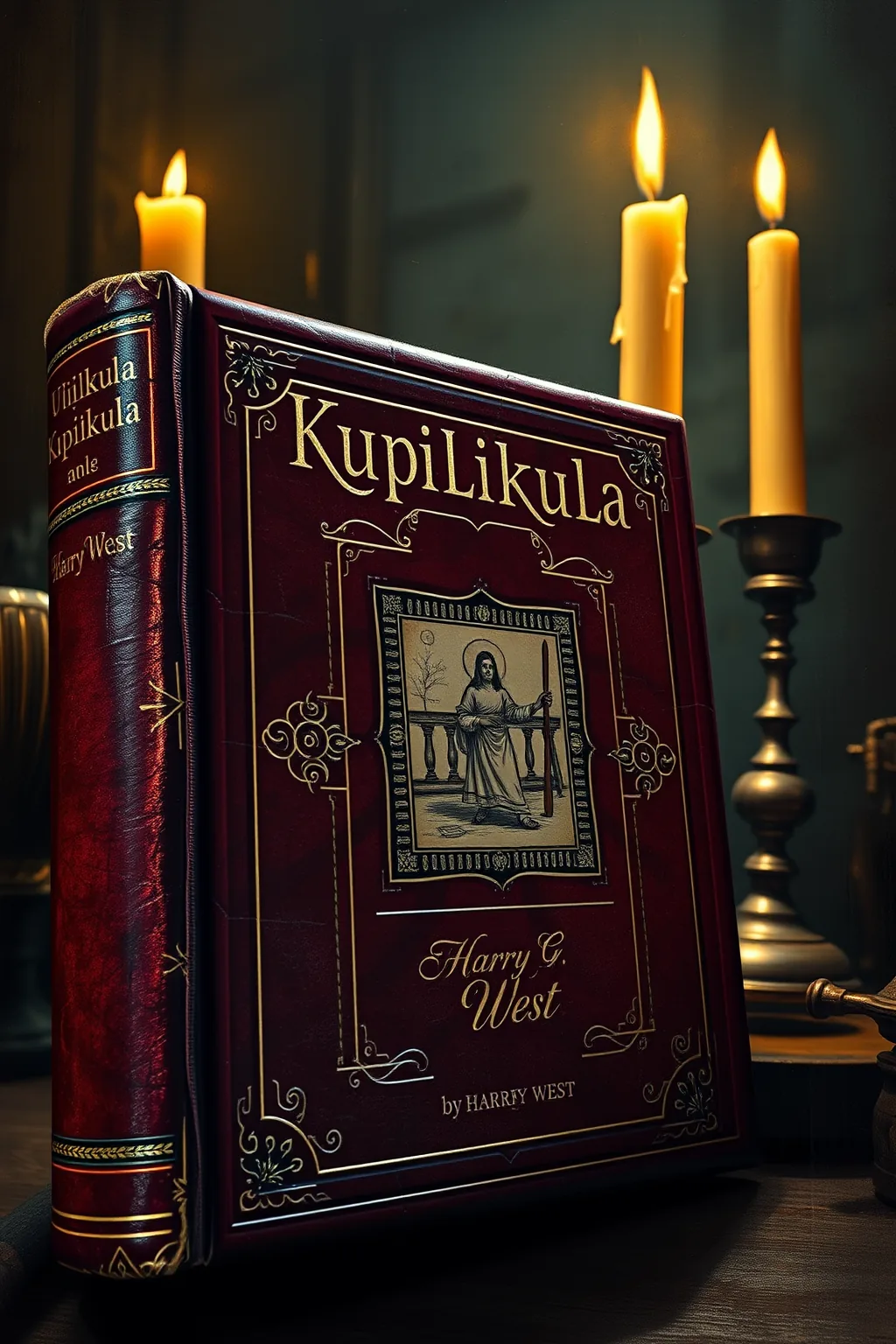
Harry G. West's Kupilikula offers a commendable immersion into the spiritual universe of the Mwami people. Its strength lies in its meticulous detail, presenting a cosmology that is both alien and intellectually coherent. West avoids the common pitfall of sensationalism, instead opting for a sober, academic exposition that respects the complexity of Mwami belief systems. A particularly striking element is the discussion surrounding the 'Kupilikula' itself, which the work frames not as a fetish but as a locus of spiritual power and connection. However, the dense academic prose, while precise, can occasionally obscure the very lived experience it seeks to illuminate, making certain passages feel more theoretical than experiential. The limited scope, focusing almost exclusively on the Mwami, might leave readers seeking broader comparative analysis wanting. Nevertheless, Kupilikula stands as a significant contribution to the ethnographic study of African spiritual traditions.
📝 Description
75
Harry G. West's 2009 book examines the Kupilikula tradition of the Mwami people.
Published in 2009, Harry G. West's Kupilikula moves beyond standard ethnographic descriptions to analyze the spiritual practices of the Mwami people in southeastern Democratic Republic of Congo. The book details how the Mwami worldview is shaped by their understanding of animate and inanimate forces and their relationship with their spiritual environment. West focuses on the Kupilikula itself, presenting it not just as a ritual object but as a center for spiritual energy and communication.
The work engages with anthropological theory, particularly discussions about representing indigenous knowledge and questioning colonial influences in ethnographic writing. West offers a participant-centered perspective on Mwami spiritual life, treating their beliefs as a coherent philosophical system rather than superstition. This approach informs his analysis of social structures, healing practices, and the Mwami connection to their natural surroundings. The book is intended for those with a serious interest in anthropology, religious studies, and African indigenous cosmologies.
Kupilikula is situated within the study of African indigenous spiritual traditions, often discussed under headings like animism or shamanism. It specifically addresses how a particular community conceptualizes the spiritual essence of the world and its inhabitants, both living and non-living. The book's focus on a central ritual object as a conduit for spiritual energy aligns with broader esoteric concepts of sacred items and their role in connecting the mundane and spiritual realms.
💡 Why Read This Book?
• Understand the Mwami cosmology: Gain insight into how the Mwami people conceptualize spiritual forces and their connection to the physical world, a perspective distinct from Western ontological frameworks, as detailed in West's 2009 research. • Explore the concept of Kupilikula: Learn about the specific role and significance of the Kupilikula as a focal point of spiritual energy and communication within Mwami ritual practices. • Engage with nuanced ethnography: Appreciate a scholarly approach to indigenous spirituality that moves beyond superficial descriptions, offering a deeper appreciation for the intellectual depth of non-Western belief systems.
⭐ Reader Reviews
Honest opinions from readers who have explored this book.
❓ Frequently Asked Questions
What is the primary focus of Harry G. West's book, Kupilikula?
Kupilikula primarily focuses on the spiritual cosmology and ritual practices of the Mwami people in the Democratic Republic of Congo, as researched and presented by Harry G. West in 2009.
Who are the Mwami people discussed in Kupilikula?
The Mwami people are an indigenous group from southeastern Democratic Republic of Congo, whose spiritual traditions and worldview are the central subject of Harry G. West's ethnographic study.
What does the term 'Kupilikula' refer to in the context of the book?
In the book, 'Kupilikula' refers to a central concept or ritual object within the Mwami spiritual tradition, representing a focal point for spiritual energy and communication.
What academic disciplines would benefit from reading Kupilikula?
Disciplines such as anthropology, religious studies, African studies, and the sociology of religion would find Kupilikula to be a valuable resource due to its detailed ethnographic and theoretical analysis.
When was Kupilikula first published?
Kupilikula by Harry G. West was first published in 2009, contributing to contemporary anthropological discourse on indigenous spirituality.
Does the book offer a comparative analysis with other spiritual traditions?
While deeply rooted in the Mwami tradition, the work implicitly engages with broader anthropological theories on religion, offering a nuanced perspective that can inform comparative studies.
🔮 Key Themes & Symbolism
Mwami Cosmology
The book meticulously details the Mwami worldview, presenting it not as a collection of superstitions but as a sophisticated philosophical system. West illustrates how the Mwami understand the world as fundamentally animate, filled with spiritual forces that influence daily life, social relations, and the natural environment. This intricate cosmology forms the bedrock of their spiritual practices and their perception of reality, emphasizing a deep interconnectedness between the human and the non-human realms.
The Kupilikula Object/Concept
Central to the work is the exploration of the Kupilikula itself. West elaborates on its complex significance within Mwami society, moving beyond a simple definition. It functions as a conduit for spiritual power, a means of communication with ancestral or spiritual entities, and a focal point for ritual. The book examines how this concept shapes Mwami identity and their engagement with the sacred, highlighting its role in maintaining social order and spiritual equilibrium.
Ritual and Spiritual Practice
Kupilikula looks at the practical manifestations of Mwami spirituality through their rituals. West provides ethnographic accounts of ceremonies and practices, illustrating how they enact and reinforce their cosmology. These rituals are depicted as vital mechanisms for reading through the spiritual landscape, addressing illness, ensuring fertility, and maintaining harmonious relationships with the spiritual forces that govern their lives. The work underscores the performative nature of their religious expression.
Anthropology of Religion
As a scholarly work published in 2009, Kupilikula contributes significantly to the anthropology of religion by offering a participant-centered perspective. It challenges earlier, potentially biased, ethnographic approaches by prioritizing the Mwami's own interpretations of their beliefs and practices. The book engages with theoretical debates concerning animism, shamanism, and the representation of indigenous knowledge, advocating for a deeper, more respectful understanding of non-Western spiritual traditions.
💬 Memorable Quotes
Direct passages from the work, attributed to the author.
“Mwami cosmology posits a world where the distinction between animate and inanimate is fluid.”
— This interpretation emphasizes a core tenet of Mwami belief as presented by West: their perception of the world is not rigidly divided, with spiritual potency often attributed to elements Western thought might deem inert.
“Ethnographic representation demands a departure from colonialist perspectives.”
— This interpretation reflects the book's underlying methodological stance, suggesting a conscious effort by West to present Mwami culture with respect and to avoid the biases inherent in earlier ethnographic traditions.
“The study offers an ethnographic lens on the Democratic Republic of Congo's spiritual landscape.”
— This statement highlights the book's geographical and thematic focus, positioning it as a detailed exploration of the spiritual beliefs and practices specific to the Mwami people within their Congolese context.
💡 Key Ideas
Editorial paraphrase of the work's core concepts — not direct quotes.
The Kupilikula is not merely an object, but a nexus of spiritual influence.
This paraphrased concept highlights how the book views the Kupilikula not as a static artifact but as an active agent within the Mwami spiritual system, capable of transmitting and receiving spiritual energy.
Rituals serve as crucial interfaces with the spiritual domain.
This paraphrased concept underscores the functional importance of ceremonies within Mwami life, positioning them as essential tools for interacting with and influencing the spiritual forces that shape their reality.
🌙 Esoteric Significance
Tradition
Kupilikula engages with the broader tradition of the anthropology of religion and indigenous spiritual studies, rather than a specific Western esoteric lineage like Hermeticism or Kabbalah. However, its detailed exploration of a complex, participant-understood cosmology can be seen as contributing to the esoteric project of understanding diverse paths to spiritual knowledge and reality. It offers an external perspective on systems that, for their practitioners, are inherently esoteric, revealing the sophisticated philosophical underpinnings of non-Western spiritual life.
Symbolism
The primary symbol explored is the Kupilikula itself, which functions as a focal point for spiritual energy and communication. Its meaning is not fixed but context-dependent, embodying the Mwami understanding of interconnectedness. Other significant motifs likely include natural elements within their environment, which are understood as imbued with spiritual agency, reflecting a worldview where the material and spiritual realms are deeply intertwined and symbolic of each other.
Modern Relevance
Contemporary scholars of animism, shamanism, and critical indigenous studies draw on works like Kupilikula to understand the diverse ways humans conceptualize and interact with the spiritual dimensions of existence. It informs discussions on post-colonial theory and the ethics of ethnographic representation. Modern practitioners of comparative spirituality or those interested in non-Western psychological frameworks might also find its detailed ethnography valuable for broadening their understanding of consciousness and belief.
👥 Who Should Read This Book
• Anthropologists and religious studies scholars: Researchers seeking in-depth ethnographic data and theoretical engagement with African indigenous cosmologies will find this work an essential resource for understanding Mwami spiritual life. • Students of comparative religion: Those studying the diversity of human spiritual beliefs will benefit from the nuanced portrayal of a non-Western spiritual system, offering insights distinct from Abrahamic or Eastern traditions. • Ethnobotanists and ethnographers of Africa: Individuals interested in the cultural and spiritual dimensions of the Democratic Republic of Congo and its indigenous populations will gain a deeper appreciation for the Mwami worldview.
📜 Historical Context
Published in 2009, Harry G. West's Kupilikula emerged during a period of critical self-reflection within anthropology regarding the representation of indigenous cultures. The early 21st century saw a continued questioning of colonial legacies in ethnographic studies, prompting scholars to adopt more participant-centered approaches. West's work on the Mwami people of southeastern Democratic Republic of Congo engages with these currents, offering a detailed analysis of their spiritual cosmology. It implicitly responds to earlier, often less nuanced, ethnographic accounts of African religions, which sometimes categorized such beliefs as 'primitive' or 'superstitious.' While not directly engaging in public debate, West's meticulous research and theoretical framing align with a broader academic movement towards decolonizing knowledge and respecting the intellectual sophistication of non-Western traditions. The book's publication year places it within a context where scholars like Thomas J. Csordas were also exploring the phenomenology of religious experience, contributing to a richer understanding of embodied belief.
📔 Journal Prompts
The Mwami concept of animate vs. inanimate forces: how does this contrast with your own perceived world?
Reflections on the Kupilikula as a locus of spiritual power.
Analyze the role of ritual in mediating spiritual and material realities.
Consider the implications of fluid distinctions between animate and inanimate for understanding consciousness.
How does West's approach to ethnography challenge common perceptions of indigenous spirituality?
🗂️ Glossary
Mwami
The indigenous people of southeastern Democratic Republic of Congo who are the subject of Harry G. West's ethnographic study, known for their distinct spiritual cosmology.
Kupilikula
A central concept or ritual object within the Mwami spiritual tradition, functioning as a focal point for spiritual energy, communication, and influence.
Cosmology
The framework of beliefs and ideas that explain the origin, structure, and workings of the universe, as understood by a particular culture or group, in this case, the Mwami.
Animism
The belief that objects, places, and creatures all possess a distinct spiritual essence, often found in indigenous spiritual traditions, and central to the Mwami worldview as explored in the book.
Ethnography
The scientific description of peoples and cultures and their relationships based on fieldwork, a methodological approach employed by Harry G. West in his study of the Mwami.
Ritual
A set of actions or ceremonies performed in a prescribed order, serving a religious or spiritual purpose, which are analyzed in detail within the context of Mwami practices.
Spiritual Potency
The inherent power or energy believed to reside in beings, objects, or places within the Mwami spiritual system, influencing life and events.
🔮 Readers Also Liked
Browse all →






More by Harry G. West
All books →




More Free Magic & Ritual Books
View all →