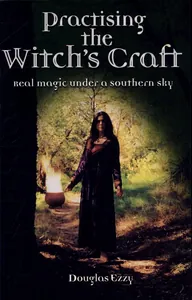
Bless Me, Ultima

 75
75

Bless Me, Ultima
Anaya’s *Bless Me, Ultima* is less a neatly plotted novel and more a potent evocation of a specific time and place, filtered through the consciousness of a young boy grappling with immense spiritual and existential questions. The strength lies in its deeply realized sense of setting and its unvarnished portrayal of childhood’s intense perceptions. Ultima herself, the wise woman and healer, is a compelling figure, embodying a connection to ancient wisdom that contrasts sharply with the dogma and violence Antonio witnesses. A notable limitation, however, is the sometimes-overwrought prose, particularly in passages attempting to convey profound spiritual revelations, which can veer into the didactic. The pivotal scene where Antonio must choose between the Catholic faith of his father and the indigenous spirituality represented by Ultima, particularly concerning his spiritual baptism, highlights this tension vividly. Ultimately, the novel succeeds more as a vibrant cultural artifact and a spiritual bildungsroman than a perfectly polished literary work.
📝 Description
75
Rudolfo A. Anaya's *Bless Me, Ultima*, published in 1972, follows a young boy's spiritual awakening in rural New Mexico.
The novel chronicles Antonio Márez's childhood in wartime New Mexico, guided by the wise curandera Ultima. Their relationship grounds Antonio amidst conflicting cultural and spiritual forces. He grapples with his family's ancestral traditions, the Catholic faith he was raised in, and the indigenous beliefs he encounters. Ultima, a healer who carries a great owl, becomes Antonio's spiritual mentor as he confronts questions of good and evil, fate, and his own identity. The story is steeped in the unique landscape and customs of the American Southwest.
Anaya weaves a narrative rich with Chicano folklore and magical realism. Antonio's coming-of-age involves witnessing harsh realities while holding onto childhood innocence. The book examines the strength found in community and heritage, particularly within the context of cultural activism and the burgeoning Chicano identity of the early 1970s. It reflects themes of cultural hybridity and the fight for self-definition against a dominant American narrative.
Published in 1972, *Bless Me, Ultima* engages with the spiritual and cultural currents present in Chicano communities. It uses the figure of the curandera, Ultima, as a conduit for indigenous healing practices and ancestral knowledge. The novel contrasts the spiritual paths of the nomadic Lupenos and the settled farmers, exploring their connection to the land and their respective belief systems. The Golden Carp, a symbol of a pre-Christian spiritual presence, further situates the work within a tradition that acknowledges alternative spiritualities alongside dominant religious structures.
💡 Why Read This Book?
• Gain insight into the syncretic nature of New Mexican spirituality, as depicted through Ultima’s healing practices and Antonio’s internal spiritual conflicts, offering a unique perspective on faith beyond Western religious structures. • Experience the vivid portrayal of rural New Mexico in the 1940s, an immersive setting that grounds the narrative and influences Antonio's understanding of his heritage and the forces shaping his life. • Explore the symbolic tension between the *Lupenos* and the *Curanderos*, representing ancestral legacies and differing life philosophies, which directly informs Antonio's quest for identity and belonging.
⭐ Reader Reviews
Honest opinions from readers who have explored this book.
❓ Frequently Asked Questions
What is the significance of Ultima in Rudolfo Anaya's novel?
Ultima is a powerful curandera, or healer, who acts as a spiritual guide to young Antonio. She embodies ancient wisdom, indigenous traditions, and a deep connection to nature, representing a bridge between the old world and the new for Antonio.
What historical period does Bless Me, Ultima take place in?
The novel is set in rural New Mexico during World War II, specifically between 1944 and 1945. This period influences the social and cultural backdrop of the story.
What are the main spiritual themes explored in Bless Me, Ultima?
The book explores the clash between Catholicism and indigenous spiritual beliefs, the nature of faith, the concept of a spiritual baptism, and the search for personal truth amidst conflicting worldviews.
Who are the Lupenos and the Curanderos in the novel?
The Lupenos represent Antonio's father's restless, wandering spirit, while the Curanderos represent his mother's more settled, agricultural heritage. These represent two ancestral lines influencing Antonio's identity.
What is the symbolism of the Golden Carp?
The Golden Carp is a pagan deity introduced by Narciso and Florence. It represents an alternative spiritual path and a rejection of traditional Catholic doctrines, offering a symbol of nature's power and beauty.
When was Bless Me, Ultima first published?
Rudolfo Anaya's *Bless Me, Ultima* was first published in 1972, a significant year for Chicano literature and cultural expression in the United States.
🔮 Key Themes & Symbolism
Spiritual Syncretism and Choice
The novel intricately portrays Antonio's internal struggle to reconcile the Catholic faith of his parents with the indigenous and folk spiritual traditions embodied by Ultima. This conflict culminates in his contemplation of a spiritual baptism, questioning the efficacy of traditional rites versus a more personal, nature-infused understanding of divinity. The presence of figures like Ultima, who practices *curanderismo*, and the symbolic representation of the Golden Carp, challenge Antonio’s inherited beliefs, pushing him toward a unique synthesis of spiritual truths.
The Role of the Curandera
Ultima functions not merely as a healer but as a spiritual matriarch and a conduit to ancient wisdom. Her presence introduces Antonio to a worldview that is deeply connected to the earth, its cycles, and its inherent spiritual power. She represents a lineage of knowledge distinct from formal religious institutions, offering guidance on life, death, and the interconnectedness of all things, thereby shaping Antonio's nascent understanding of the cosmos and his place within it.
Ancestral Legacies and Identity
Antonio grapples with two distinct ancestral legacies: the restless, nomadic spirit of his *Lupeno* father and the agrarian, faithful heritage of his *Curandero* mother. This internal division mirrors the broader cultural identity struggles within the Chicano community. The novel uses these opposing forces to explore how heritage influences personal destiny and the complex process of forming an individual identity that honors multiple roots.
The Power of Place and Nature
The New Mexican landscape is not just a setting but an active participant in the spiritual and psychological development of Antonio. The vast plains, the *llano*, and the river are imbued with spiritual significance. Nature's rhythms and inherent power offer solace and reveal truths that are often obscured by human dogma and conflict, serving as a constant reminder of a primal, sacred order.
💬 Memorable Quotes
Direct passages from the work, attributed to the author.
“The golden carp was a god, and he was beautiful.”
— This statement, spoken by Antonio, signifies a key moment where he acknowledges the divine beauty and power of a pagan symbol, directly challenging the exclusivity of his Catholic faith and embracing a broader spiritual understanding.
“I was seven then, and the Luna brothers were my uncles. My mother’s brothers. They were farmers, and they prayed for the sun and the rain.”
— This highlights the significance of Antonio's maternal lineage, the *Curanderos*, and their deep connection to the land and the natural forces that govern life, contrasting with his father’s more nomadic heritage.
“The priest said that all men were born in sin. Ultima said that all men were born with a spirit.”
— This expresses the central conflict between religious doctrine and spiritual intuition. It starkly contrasts the concept of inherent sin with the idea of an innate, divine spirit, representing the differing worldviews Antonio must navigate.
“I wanted to be a priest, and then I wanted to be a farmer. But I was born to be a vaquero.”
— Antonio’s early aspirations reflect the conflicting familial and cultural influences shaping him. His ultimate recognition of his father's *Lupeno* heritage suggests an acceptance of his destiny, tied to movement and the spirit of the plains.
💡 Key Ideas
Editorial paraphrase of the work's core concepts — not direct quotes.
Ultima said that the golden carp was a god, and that he was beautiful. She said that the carp was the spirit of the river, and that the river was the soul of the land.
This quote emphasizes Ultima's role in validating indigenous spirituality and connecting it to the sacredness of the natural world, framing the Golden Carp not just as a fish but as a divine entity integral to the land's essence.
🌙 Esoteric Significance
Tradition
While not adhering strictly to a single Western esoteric lineage, *Bless Me, Ultima* draws heavily from Gnostic themes of hidden knowledge and the inherent divinity within the individual, contrasting with orthodox dogma. It also aligns with animistic traditions found in indigenous spiritual practices, where nature itself is imbued with spirit and consciousness. The figure of Ultima, the *curandera*, embodies a form of folk magic and earth-based wisdom that predates and often exists parallel to formal esoteric orders.
Symbolism
The **Golden Carp** serves as a potent symbol of pagan divinity and natural spiritual power, representing an alternative to the suffering-centric Christ figure. **Ultima's owl** acts as a familiar and a spiritual guardian, symbolizing heightened perception, wisdom, and a connection to the unseen world, often associated with shamanic traditions. The **river** itself is a symbol of life, flow, and the continuous cycle of existence, representing the sacredness of nature and its spiritual sustenance.
Modern Relevance
Contemporary practitioners of ecopsychology and eco-spirituality find resonance in Anaya's portrayal of the sacredness of the land and nature's role in spiritual well-being. The novel's exploration of cultural hybridity and the synthesis of diverse belief systems continues to inform discussions on identity in multicultural societies. Furthermore, Anaya's work is often cited in studies of magical realism and its capacity to integrate the mystical into the everyday, influencing writers and thinkers exploring consciousness and alternative spiritual paths.
👥 Who Should Read This Book
• Students of Chicano literature and cultural studies will find this novel essential for understanding the development of a distinct American literary voice and its engagement with identity politics. • Readers interested in comparative religion and spirituality will appreciate the nuanced depiction of syncretism, exploring the interplay between Catholicism, indigenous beliefs, and folk magic. • Those drawn to coming-of-age narratives that grapple with profound moral and spiritual questions will connect with Antonio's journey of discovery and his search for meaning.
📜 Historical Context
Rudolfo A. Anaya's *Bless Me, Ultima*, published in 1972, emerged from the fertile ground of the Chicano Movement, a period of intense cultural and political assertion by Mexican Americans. It arrived alongside works by authors like Tomás Rivera (*...y no se lo tragó la tierra*) and Sandra Cisneros, contributing significantly to the nascent Chicano literary canon. The novel’s deep engagement with Catholic mysticism, indigenous folklore, and the specific cultural range of rural New Mexico offered a counter-narrative to mainstream American literature. Its exploration of *curanderismo* and folk spirituality provided a unique lens through which to view spiritual development, diverging from more secular or Eurocentric literary trends of the era. The book was widely embraced within Chicano communities for its authentic voice and resonated with readers grappling with issues of identity, heritage, and cultural hybridity.
📔 Journal Prompts
Antonio's spiritual baptism and his internal debate regarding the Golden Carp.
The significance of Ultima's owl as a spiritual guide and protector.
The contrasting ancestral legacies of the Lupenos and the Curanderos.
The role of the New Mexican landscape in shaping Antonio’s spiritual awareness.
Ultima’s healing practices and their connection to nature’s inherent power.
🗂️ Glossary
Curandera
A traditional folk healer in Hispanic cultures, often combining herbal remedies, spiritual rituals, and psychological counseling. Ultima is the prime example in the novel.
Llano
A Spanish term referring to a vast, open, and often treeless plain or flatland. The llano of New Mexico is a significant geographical and symbolic setting in the novel.
Curanderismo
The system of traditional healing practiced by curanderos, involving spiritual, symbolic, and physical healing techniques rooted in indigenous and folk Catholic traditions.
La Virgen de Guadalupe
The Virgin Mary as she appeared to Juan Diego in Mexico in 1531, becoming a powerful symbol of Mexican identity, faith, and syncretism between indigenous and Catholic beliefs.
Lupeno
Referring to the lineage of Antonio's father, characterized by a restless, wandering spirit, a connection to the vaquero (cowboy) lifestyle, and a love for the open plains.
Curandero (lineage)
Referring to the lineage of Antonio's mother, characterized by a settled, agrarian lifestyle, deep connection to the land, and strong adherence to Catholic faith and community traditions.
Spiritual Baptism
A concept explored in the novel where Antonio questions the necessity of a traditional Catholic baptism, contemplating a spiritual cleansing or awakening that transcends institutional rites.
🔮 Readers Also Liked
Browse all →







More by Rudolfo A. Anaya, Rudolfo Anaya, Ruben Anaya
All books →
More Free Magic & Ritual Books
View all →