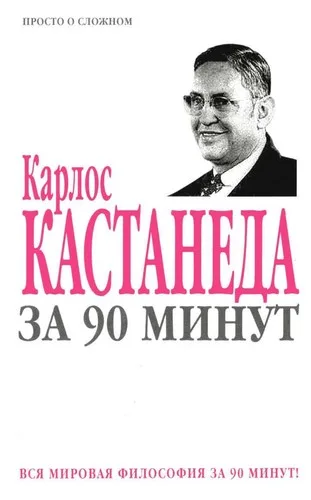
Karlos Kastaneda za 90 minut
 81
81

Karlos Kastaneda za 90 minut
Karlos Kastaneda za 90 minut succeeds in its stated goal of providing a rapid overview of a complex body of work. The efficiency with which it summarizes Castaneda's primary concepts is commendable, offering a digestible entry point for newcomers. Its strength lies in its ability to condense the multifaceted narrative of Don Juan Matus and his teachings into an accessible format. However, the brevity inherent in a '90-minute' guide inevitably sacrifices depth. Nuances of Castaneda's philosophical evolution and the critical reception of his work are necessarily glossed over. A particularly insightful section likely touches upon the concept of the 'assemblage point,' a core idea for understanding shifts in perception within Castaneda's framework. This summary is a useful starting point, but it cannot replace the immersive experience of engaging with Castaneda's original writings.
📝 Description
81
Published in 2004, Karlos Kastaneda za 90 minut offers a brief guide to Carlos Castaneda's shamanic writings.
This 2004 work distills the core ideas and narrative arcs from Carlos Castaneda's books. It concentrates on the shamanic teachings attributed to Don Juan Matus, a Yaqui sorcerer, and Castaneda's own documented experiences. The book is suitable for those curious about Castaneda's impact but daunted by his extensive original texts. It functions as an introduction for students of shamanism, altered states, and alternative spiritual paths. Readers wanting a quick overview of concepts such as the 'path of the warrior' and the nature of 'seeing' will find it useful.
The text addresses Castaneda's discussions of non-ordinary reality, perception mechanics, and the mentor's role in spiritual growth. Recurring themes include personal power, criticism of the ordinary world as a construct, and the use of specific techniques to disrupt habitual thinking. The narrative style, often featuring dialogues and experiential accounts, reflects Castaneda's original approach.
By 2004, Castaneda's work, which gained prominence in the late 1960s and 1970s, faced ongoing re-evaluation. Academic debates about the authenticity of his ethnography and claims had persisted for decades, notably after Richard de Mille's critiques. Despite this skepticism, a consistent interest in Castaneda's ideas continued within New Age and esoteric communities, positioning this summary within a tradition that grappled with the blend of anthropology, mysticism, and personal transformation.
💡 Why Read This Book?
• Gain a foundational understanding of Carlos Castaneda's shamanic teachings, including the concept of the 'path of the warrior,' as presented in his initial works from the late 1960s. • Grasp the essence of Don Juan Matus's philosophy and methods for altering perception, as detailed in the text's summary of key dialogues. • Quickly assess the relevance of Castaneda's ideas on personal power and non-ordinary reality to contemporary esoteric studies without committing to his extensive bibliography.
⭐ Reader Reviews
Honest opinions from readers who have explored this book.
❓ Frequently Asked Questions
Is Karlos Kastaneda za 90 minut an official biography of Carlos Castaneda?
No, this book is not an official biography. It is an interpretive summary of the concepts and narrative found within Carlos Castaneda's published works, focusing on the teachings attributed to Don Juan Matus.
What are the main themes covered in Karlos Kastaneda za 90 minut?
The book likely covers core themes such as the shamanic path, altered states of consciousness, the nature of reality, personal power, and the mentor-apprentice relationship central to Castaneda's writings.
When was Karlos Kastaneda za 90 minut first published?
Karlos Kastaneda za 90 minut was first published in 2004, making it a relatively modern interpretation of Castaneda's earlier works.
Does this book explain the concept of 'seeing' as described by Don Juan Matus?
Yes, a summary of Castaneda's writings would typically include explanations of 'seeing,' which refers to a direct, non-analytical perception of the energy inherent in all things.
Is this book suitable for someone completely new to Carlos Castaneda's work?
Absolutely. Its purpose is to provide a brief, introductory overview, making it ideal for readers unfamiliar with Castaneda's extensive bibliography and complex philosophical ideas.
What is the 'path of the warrior' as discussed in relation to Castaneda's work?
The 'path of the warrior' is a central concept in Castaneda's books, representing a disciplined way of life focused on awareness, personal power, and the pursuit of knowledge without succumbing to weakness or ego.
🔮 Key Themes & Symbolism
The Warrior's Path
This theme captures the disciplined approach to life advocated by Don Juan Matus through Carlos Castaneda's accounts. It emphasizes awareness, control over one's actions and emotions, and the relentless pursuit of knowledge and personal power. The path is presented not as a passive state but as an active, ongoing engagement with the world and oneself, requiring constant vigilance and a willingness to confront fear and doubt. It's a framework for navigating existence with intentionality and purpose, distinct from conventional societal expectations.
Perception and Reality
Central to Castaneda's work is the idea that ordinary reality is a construct, a shared agreement that limits our perception. The teachings of Don Juan Matus introduce methods for shifting one's 'assemblage point' to access different ways of perceiving the world. This involves questioning habitual assumptions and developing the capacity for 'seeing' – a direct apprehension of the energetic nature of beings and objects, moving beyond conceptual filters and rational analysis.
The Sorcerer's Apprentice
This theme explores the dynamic between the mentor, Don Juan Matus, and the apprentice, Carlos Castaneda. It details the process of initiation into shamanic knowledge, often involving seemingly paradoxical instructions, challenging experiences, and the gradual dismantling of the apprentice's preconceived notions. The relationship highlights the importance of trust, patience, and the rigorous application of teachings to achieve genuine transformation.
Personal Power
The concept of personal power is fundamental, viewed not as dominance over others, but as an internal locus of control and energy. Don Juan teaches Castaneda how to conserve and cultivate this power, which is essential for reading through the complexities of the shamanic path and engaging with non-ordinary realities. It involves discipline, self-awareness, and the ability to act decisively without being swayed by external influences or internal hesitation.
💬 Memorable Quotes
Direct passages from the work, attributed to the author.
“The path of the warrior is a path of solitude.”
— This statement underscores the deeply personal nature of spiritual or shamanic development. It suggests that true growth and understanding often require internal focus and a degree of detachment from external validation or companionship.
“We are social animals, and we tend to follow the herd.”
— This highlights a critique of conformity. The concept implies that societal norms and groupthink can hinder individual awareness and the pursuit of unconventional knowledge, a recurring theme in Castaneda's exploration of breaking free from ordinary perception.
“Seeing is not looking, it is understanding.”
— This contrasts passive observation with active, intuitive comprehension. It points towards the shamanic ability to perceive the underlying energetic reality of things, moving beyond superficial appearances to grasp their true nature.
“A warrior does not give up easily.”
— This emphasizes the perseverance required on the shamanic path. It speaks to the resilience needed to face obstacles, overcome fear, and remain committed to the pursuit of knowledge and self-mastery despite difficulties.
“The world is exactly as it is.”
— This assertion, often made by Don Juan, challenges the apprentice's subjective interpretations. It suggests a fundamental reality that exists independently of our perceptions, and that 'seeing' allows one to apprehend this underlying truth.
🌙 Esoteric Significance
Tradition
Castaneda's work is deeply embedded within the Western esoteric tradition, particularly drawing from shamanic practices, but filtered through a modern, often psychological lens. It intersects with concepts found in Gnosticism (the critique of ordinary reality) and Hermeticism (the emphasis on hidden knowledge and transformation). While not adhering strictly to any single lineage, Castaneda synthesized elements that appealed to a generation seeking alternatives to established religious and scientific paradigms, creating a unique, accessible form of modern shamanism.
Symbolism
Key symbols in Castaneda’s work often relate to transformation and perception. The 'roadrunner,' for instance, can symbolize cunning, speed, and the ability to evade danger or illusion. 'Peote' (peyote) is frequently depicted as a sacrament and a tool for initiating altered states of consciousness, a gateway to perceiving energies beyond the mundane. The 'trickster' figure, embodied by Don Juan himself, represents the force that disrupts ordinary thinking and facilitates radical shifts in understanding.
Modern Relevance
Contemporary neo-shamanic practices, certain branches of transpersonal psychology, and even elements within consciousness studies often reference Castaneda's concepts. Thinkers and practitioners exploring non-ordinary states, the nature of subjective experience, and embodied knowledge find value in his descriptions of 'seeing' and the 'assemblage point.' His influence persists in communities dedicated to personal power, self-discovery, and the exploration of reality's perceived boundaries.
👥 Who Should Read This Book
• Individuals interested in the foundational concepts of modern shamanism and altered states of consciousness, seeking a concise overview of Castaneda's key ideas. • Students of comparative spirituality and esoteric traditions who wish to understand Castaneda's unique contribution and its place within broader mystical movements. • Curious readers who have heard of Carlos Castaneda but are looking for a brief, accessible introduction before committing to his more extensive original texts.
📜 Historical Context
Published in 2004, Karlos Kastaneda za 90 minut emerged during a period where the legacy of Carlos Castaneda’s work was firmly established but also subject to ongoing critical scrutiny. Castaneda’s initial books, beginning with 'The Teachings of Don Juan: A Yaqui Way of Knowledge' in 1968, seized the public imagination, offering a compelling blend of anthropology, mysticism, and counter-cultural philosophy. By the 1970s, however, Castaneda faced significant academic challenges, notably from anthropologist Richard de Mille, who questioned the ethnographic veracity of his accounts. Despite these controversies, Castaneda cultivated a devoted following within esoteric and New Age circles throughout the late 20th century. The 2004 publication date places this summary in a time when Castaneda's impact on alternative spirituality was undeniable, even as debates about his authorship and the nature of his experiences continued.
📔 Journal Prompts
The warrior's awareness of solitude.
Shifting the assemblage point in daily life.
The role of the trickster in challenging assumptions.
Conserving personal power through intentional action.
Distinguishing seeing from mere looking.
🗂️ Glossary
Assemblage Point
A concept in Castaneda's work referring to the luminous nexus of energy that organizes our perception of reality. Shifting this point is believed to alter one's experience and understanding of the world.
Path of the Warrior
A disciplined way of life focused on awareness, personal power, and the pursuit of knowledge, characterized by self-control, intentionality, and the constant confrontation of fear.
Seeing
A shamanic mode of perception that apprehends the energetic essence of beings and objects directly, bypassing analytical thought and conceptual filters.
Personal Power
An individual's internal reservoir of energy and capacity for action, cultivated through discipline and awareness, essential for reading through the shamanic path.
Don Juan Matus
The shamanic mentor figure in Carlos Castaneda's books, who guides Castaneda through a series of teachings on sorcery, perception, and the nature of reality.
Non-ordinary reality
States or areas of experience accessible through altered consciousness, shamanic practices, or shifts in perception, distinct from the consensus reality of everyday life.
Sorcery
In Castaneda's context, a path of knowledge and power focused on understanding and manipulating the energetic nature of the universe, distinct from common notions of magic.
🔮 Readers Also Liked
Browse all →







More by Unknown
All books →



More Free Occult Philosophy Books
View all →