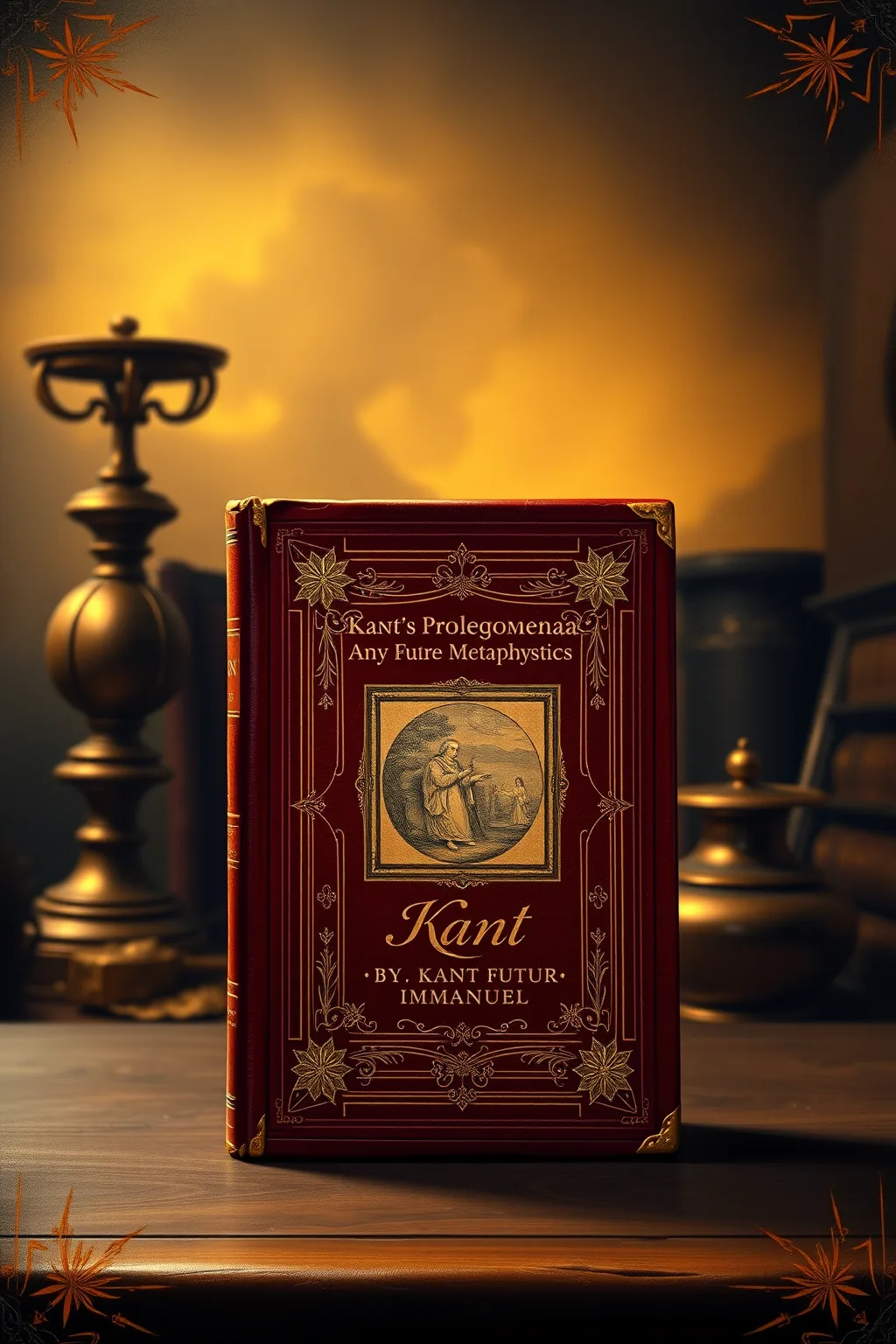
Kant's Prolegomena to Any Future Metaphysics
 71
71

Kant's Prolegomena to Any Future Metaphysics



Kant's Prolegomena to Any Future Metaphysics is a foundational text that continues to captivate esoteric seekers and philosophers alike. Immanuel Kant's meticulous examination of metaphysical theories and the nature of knowledge is both enlightening and thought-provoking. For those delving into the occult, this book offers a philosophical framework that can enhance the understanding of mystical experiences and esoteric practices. Kant's arguments about the limits of human understanding and the structure of reality provide a solid grounding for exploring the deeper dimensions of existence. The text is dense and requires careful reading, but the effort is well-rewarded with profound insights. Modern esoteric seekers will find that Prolegomena challenges their assumptions and broadens their perspectives, making it an invaluable addition to any occult library.
📝 Description
71
In 1783, Kant sought to make metaphysics accessible to a wider audience.
Kant's Prolegomena to Any Future Metaphysics was written to clarify his complex Critique of Pure Reason. Kant aimed to show how metaphysics could become a science, addressing the questions of whether such a science is even possible and what its proper limits are. He argued that our knowledge of the world is shaped by the structure of our own minds. This means we can only know things as they appear to us, not as they are in themselves. The book therefore sets out the conditions under which we can have certain knowledge about the objects of experience. Kant distinguishes between analytic and synthetic judgments, and between a priori and a posteriori knowledge. He contends that synthetic a priori judgments are possible and necessary for mathematics and natural science, but not for traditional metaphysics.
This work acts as a guide to Kant's critical philosophy, specifically its implications for understanding the possibility of metaphysical knowledge. It lays the groundwork for a philosophy that respects the boundaries of human understanding while still allowing for reasoned inquiry into fundamental questions. Kant's arguments here are crucial for anyone interested in the nature of knowledge itself and the scope of human reason.
While Kant's philosophy is primarily a system of critical idealism, its focus on the mind's role in constructing reality has resonated with esoteric traditions. Thinkers in areas like hermeticism and certain mystical philosophies often emphasize the internal source of perceived reality. The Prolegomena's examination of how the mind structures experience, separating phenomena from noumena, can be seen as a philosophical parallel to esoteric ideas about consciousness shaping the manifest world. It provides a framework for understanding how subjective mental structures might underlie objective experience, a concept explored in various esoteric schools.
✍️ Author
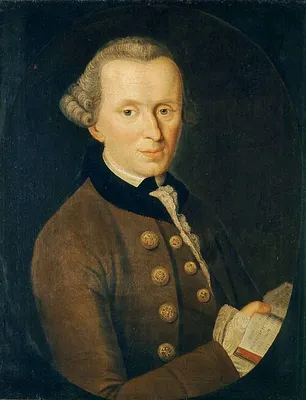
Kant, Immanuel
Immanuel Kant (born Emanuel Kant; 22 April 1724 – 12 February 1804) was a German philosopher. Born in Königsberg in the Kingdom of Prussia, he is considered one of the central thinkers of the Enlightenment.
💡 Why Read This Book?
Reading Kant's Prolegomena to Any Future Metaphysics today offers a unique opportunity to engage with one of the most influential works in the history of philosophy. This book provides a deep dive into the foundations of metaphysical thought, offering insights that are as relevant now as they were in the 18th century. For esoteric seekers, it provides a philosophical framework for understanding the mysteries of existence and the nature of reality. Whether you are looking to deepen your philosophical knowledge or explore the occult, this book is an essential read.
⭐ Reader Reviews
Honest opinions from readers who have explored this book.
❓ Frequently Asked Questions
What is the main focus of Kant's Prolegomena to Any Future Metaphysics?
The main focus of this book is the examination of the possibilities and limitations of human understanding, particularly in the context of metaphysical inquiry. Kant explores fundamental questions about the nature of reality and the structure of the mind.
Is this book suitable for beginners in philosophy?
While this book is foundational, it is quite dense and may be challenging for beginners. However, those with a basic understanding of philosophical concepts will find it enriching.
How does this book relate to occult philosophy?
Kant's Prolegomena provides a philosophical framework that can enhance the understanding of mystical experiences and esoteric practices, making it a valuable resource for those interested in the occult.
🔮 Key Themes & Symbolism
The Limits of Human Knowledge
Kant's exploration of the boundaries of human understanding reveals the esoteric dimensions of our perception. By questioning the very foundations of our knowledge, Kant invites readers to study the mysteries of the mind and the metaphysical realms that lie beyond our immediate experience.
Transcendental Idealism
This theme looks at the idea that our perceptions of the world are shaped by our mental frameworks. Kant's transcendental idealism suggests that there is a hidden structure to reality that can only be uncovered through philosophical inquiry.
The Nature of Metaphysics
Kant's work challenges traditional views of metaphysics, proposing that it is not merely a speculative discipline but a critical examination of the conditions of human experience. This theme invites readers to explore the esoteric underpinnings of our existence.
💬 Memorable Quotes
Direct passages from the work, attributed to the author.
“Human reason has this peculiar fate that in one species of its knowledge it is burdened by questions which, as prescribed by the very nature of reason itself, it is not able to ignore, but which, as transcending all its powers, it is also not able to answer.”
— Kant highlights the inherent limitations of human reason, suggesting that true understanding lies in the esoteric realms beyond our immediate grasp.
“The question of whether there is a God is one which at least the speculative reason of man cannot dismiss.”
— Kant's exploration of the divine suggests a deeper, esoteric understanding of the universe.
“The most that can be said of the objects of sense is, that they exist only in the experience of them.”
— Kant's perspective on the nature of reality invites readers to question the very foundations of their beliefs.
💡 Key Ideas
Editorial paraphrase of the work's core concepts — not direct quotes.
Experience and observation, therefore, cannot give us occasion to pass judgment on the question whether there is an external world—real objects corresponding to sensations.
This quote underscores the mystical nature of reality, implying that our perceptions are shaped by hidden forces.
The possibility of experience is the sole key to the solution of the problem of the limitation of pure reason.
This quote emphasizes the importance of experiential knowledge in uncovering the hidden truths of the metaphysical realm.
🌙 Esoteric Significance
Tradition
Kant's work belongs to the Hermetic tradition, which emphasizes the unity of all things and the hidden knowledge that lies beyond our immediate perception. This tradition seeks to uncover the esoteric underpinnings of reality, making Kant's philosophical inquiries particularly relevant to practitioners of the occult.
Symbolism
Key symbols in this work include the notion of the 'thing-in-itself,' representing the hidden reality that lies beyond our sensory experience. Kant's exploration of the limits of human knowledge also symbolizes the journey into the esoteric dimensions of the mind.
Modern Relevance
Today, Kant's insights into the nature of knowledge and reality continue to inspire seekers of truth and practitioners of the occult. Modern thinkers and scholars often turn to Kant's work to deepen their understanding of the metaphysical realms and the hidden truths of the universe.
👥 Who Should Read This Book
This book is ideal for beginners seeking an introduction to the mysteries of metaphysics, scholars looking to deepen their understanding of Kant's philosophy, spiritual seekers exploring the esoteric dimensions of human experience, and practitioners of the occult who wish to integrate philosophical insights into their spiritual practices. It is particularly suited for those who are curious about the hidden knowledge that lies beyond our immediate perception and are willing to engage with complex ideas.
📜 Historical Context
Published in 1783, 'Prolegomena to Any Future Metaphysics' emerged during a time of significant intellectual and scientific progress. The Enlightenment era was marked by a growing emphasis on reason and empirical observation, but Kant's work challenged these assumptions by exploring the limits of human knowledge. This book was crucial in shaping the philosophical range of the time, influencing subsequent generations of thinkers and providing a foundation for modern metaphysical inquiry.
📔 Journal Prompts
Reflect on the limits of your own knowledge and how they might be expanded through philosophical inquiry.
Consider the role of transcendental idealism in shaping your understanding of reality.
Explore the esoteric dimensions of your own experiences and perceptions.
How does Kant's exploration of metaphysics challenge your assumptions about the world?
What hidden truths do you believe lie beyond our immediate grasp, and how can you uncover them?
🗂️ Glossary
Transcendental Idealism
The philosophical view that our perceptions of the world are shaped by our mental frameworks, suggesting a hidden structure to reality.
Metaphysics
The branch of philosophy that explores the nature of reality, existence, and the fundamental principles of the universe.
Esoteric Knowledge
Hidden or secret knowledge that is not readily accessible to the general public, often involving mystical or occult themes.
Empirical Observation
The process of gathering knowledge through sensory experience and experimentation, as opposed to theoretical speculation.
Occult Philosophy
The study of hidden or mystical knowledge, often involving esoteric practices and beliefs.
This book appears in 8 collections
🔮 Readers Also Liked
Browse all →








From the “Transcendental Meditation” Collection
View all →






More Free Occult Philosophy Books
View all →