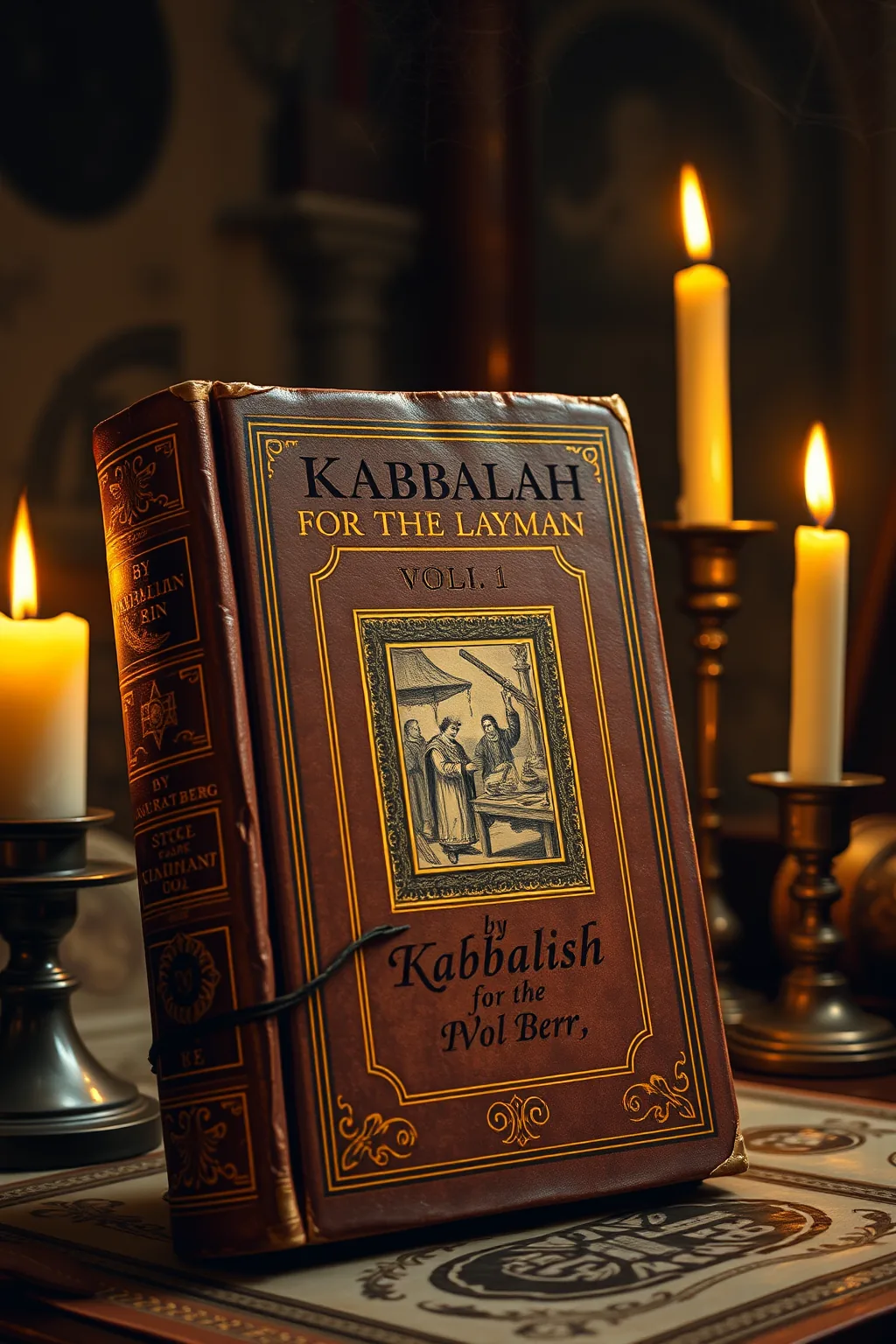
Kabbalah for the Layman (Vol. 1)
 68
68

Kabbalah for the Layman (Vol. 1)



Ophelia Vance, Mystical Literature Reviewer: Kabbalist Rav Berg's 'Kabbalah for the Layman, Vol. 1' is a masterful portal into the esoteric depths of Jewish mysticism. Berg possesses a rare gift for translating complex, ancient concepts into accessible, yet profoundly resonant, language. He peels back the layers of symbolic representation, revealing the practical spiritual insights woven into Kabbalistic thought. This volume is an indispensable primer for anyone drawn to understanding the divine architecture of existence, the nature of consciousness, and the inner workings of the universe. It serves as both an introduction and a profound spiritual guide, laying a solid foundation for continued exploration. Highly recommended for genuine seekers of hidden wisdom.
📝 Description
68
Rav Berg's 1965 'Kabbalah for the Layman, Vol. 1' aims to make Jewish mysticism accessible.
This volume introduces the core concepts of Kabbalah, a tradition of Jewish mysticism. Rav Berg explains its symbolic language and philosophical underpinnings, seeking to make them understandable to a general audience. The book addresses fundamental questions about existence, such as origins, purpose, and individual destiny. It discusses the interconnectedness of all things and a divine plan guiding the cosmos.
The author uses straightforward language to describe complex ideas. The aim is to enable readers to see the world from a spiritual perspective. Readers will encounter specific Kabbalistic teachings, including the Sephirot and the Tree of Life. The text intends to reveal the hidden structure of reality and the potential within human consciousness.
Kabbalah, a form of Jewish mysticism, emerged in the medieval period. It offers a complex system of interpreting the Torah and understanding God's relationship with the universe. Key texts like the Zohar and the writings of Isaac Luria shaped its development. Kabbalistic thought often involves meditative practices and symbolic interpretations of scripture, aiming for a direct experience of the divine. This book, Volume 1 of 'Kabbalah for the Layman,' is positioned as an introductory guide to these traditions for those outside of academic or rabbinic circles.
💡 Why Read This Book?
Unravel the universe's deepest secrets and your own spiritual blueprint. 'Kabbalah for the Layman' offers profound insights into the divine order, human potential, and the interconnectedness of all things. Ideal for seekers of truth, students of mysticism, and practitioners wishing to deepen their understanding of this ancient, transformative wisdom.
⭐ Reader Reviews
Honest opinions from readers who have explored this book.
❓ Frequently Asked Questions
Is prior knowledge of Kabbalah required to read this book?
No, this volume is specifically designed for the 'layman,' making complex Kabbalistic concepts accessible without requiring prior esoteric knowledge. It serves as an excellent starting point.
What is the primary focus of Volume 1?
Volume 1 lays the groundwork for understanding Kabbalistic cosmology, introducing fundamental principles such as the Tree of Life, the Sephirot, and the divine emanations.
How does this book differ from other Kabbalah introductions?
Rav Berg's approach emphasizes the practical, transformational aspects of Kabbalah, aiming to connect the reader with the underlying spiritual forces that shape reality.
Can this book be read alongside practical Kabbalistic exercises?
Yes, the foundational knowledge provided in this volume is highly beneficial for anyone wishing to engage in practical Kabbalistic meditation or study.
What spiritual benefits can one expect from reading this book?
Readers can anticipate an expanded worldview, a deeper understanding of spiritual principles, and the potential for personal transformation and a greater sense of purpose.
🔮 Key Themes & Symbolism
The Divine Blueprint of Creation
This theme studies the Kabbalistic understanding of the universe as an ordered, divinely designed system. It explores how God's consciousness manifests through various levels of existence, from the highest spiritual realms to the physical world we inhabit. The book illuminates the interconnectedness of all phenomena, revealing that beneath the surface of apparent chaos lies a profound and intricate cosmic structure. Understanding this blueprint is presented as the key to comprehending our own existence and purpose within the grand scheme.
The Tree of Life and the Sephirot
Central to Kabbalistic thought, the Tree of Life is presented as a symbolic map of consciousness and divine emanation. Rav Berg meticulously details the ten Sephirot, the divine attributes or vessels through which God's energy flows into creation. Each Sephirah represents a distinct aspect of divinity and consciousness, offering insights into spiritual growth, emotional intelligence, and the path to self-realization. This section is crucial for grasping the mechanics of spiritual ascent and the divine qualities accessible to humanity.
The Nature of Human Consciousness and Potential
This theme explores the profound idea that human beings are microcosms reflecting the macrocosm of the universe. The book examines the spiritual potential inherent within each individual, emphasizing that we are not merely physical beings but spiritual entities capable of connecting with the Divine. It discusses the role of free will, the challenges of ego, and the path to spiritual awakening through an understanding of Kabbalistic principles, encouraging readers to tap into their innate divine spark and achieve their highest potential.
💬 Memorable Quotes
Direct passages from the work, attributed to the author.
“Nothing but our equally unfathomable instincts, intuitions, and reasoning abilities to tell us where we came from.”
— Highlights the innate human capacity for seeking knowledge and the inherent mystery surrounding our origins, underscoring the need for deeper wisdom.
“Why we are here and what we are supposed to do.”
— Articulates the fundamental questions of purpose and destiny that Kabbalah seeks to answer, offering a framework for understanding life's mission.
“The universe is a reflection of the divine consciousness.”
— A core tenet of Kabbalistic philosophy, emphasizing the sacred nature of all existence and the presence of God in every aspect of reality.
“Spiritual growth is a journey of unveiling.”
— Suggests that enlightenment is not an external acquisition but an internal process of revealing the divine already present within oneself.
💡 Key Ideas
Editorial paraphrase of the work's core concepts — not direct quotes.
Into this mysterious universe we are born, with no apparent set of instructions.
This quote captures the existential yearning for meaning and guidance that drives spiritual inquiry, setting the stage for Kabbalah's role as a cosmic map.
🌙 Esoteric Significance
Tradition
This book is a gateway into the esoteric tradition of Kabbalah, specifically drawing from the practical and philosophical teachings that have evolved over centuries within Jewish mysticism. It represents an effort to distill complex metaphysical doctrines into digestible principles, focusing on the spiritual architecture of the universe and the human soul's journey towards divine consciousness.
Symbolism
Fundamentally, Kabbalah for the Layman explores profound symbolism, most notably the Tree of Life, a diagram representing the ten Sephirot (divine emanations) and their interrelationships. Other key symbols include Hebrew letters, cosmic cycles, and archetypal energies, all used to illuminate the hidden pathways between the material and spiritual realms and the divine source.
Modern Relevance
In an age of information overload and spiritual seeking, this book offers a structured framework for understanding existence and one's place within it. Its emphasis on consciousness, interconnectedness, and personal transformation resonates deeply with contemporary desires for meaning, purpose, and inner peace, providing practical tools for reading through the complexities of modern life from a spiritual perspective.
👥 Who Should Read This Book
This volume is a beacon for anyone feeling the tug of existential questions. Beginners in spiritual studies will find a clear, welcoming introduction to a profound tradition. Scholars of religion and philosophy will appreciate Rav Berg's accessible yet thorough exposition. Those actively on a path of self-discovery and spiritual growth will find practical insights and a deeper understanding of the divine mechanics at play. Practitioners of meditation or yoga seeking to integrate a more profound metaphysical understanding into their practices will also benefit immensely.
📜 Historical Context
Kabbalah, with roots stretching back into ancient Jewish tradition, experienced significant development and popularization during the medieval period. 'Kabbalah for the Layman' by Rav Berg draws upon this rich historical collection, particularly the Lurianic Kabbalah of the 16th century, which introduced concepts like Tzimtzum (contraction) and Shevirat HaKelim (shattering of the vessels). While its origins are deeply embedded in Jewish mystical texts like the Zohar, Rav Berg's work emerged in the late 20th and early 21st centuries, aiming to make these profound, often recondite, teachings accessible to a global audience beyond traditional religious or academic circles. His approach reflects a modern endeavor to integrate ancient spiritual wisdom with contemporary life, bridging the gap between esoteric knowledge and practical application.
📔 Journal Prompts
Reflect on a moment you felt profoundly connected to something larger than yourself. How does this connect to the concept of divine emanation?
Consider the Sephirot as described. Which attribute do you feel most aligned with, and which do you find most challenging to embody?
How does the idea of a 'divine blueprint' for the universe influence your perception of your own life's journey and challenges?
What 'instructions' or 'guideposts' do you rely on in your life, and how might Kabbalistic wisdom offer new perspectives?
Explore the concept of the 'unfathomable' within yourself. How can understanding Kabbalah help illuminate these inner mysteries?
🗂️ Glossary
Kabbalah
An ancient Jewish mystical tradition that seeks to understand the nature of God, the universe, and humanity's relationship with the Divine through esoteric interpretation of scripture and symbolic systems.
Sephirot
The ten divine emanations or attributes described in Kabbalah, forming the structure of the Tree of Life, through which God's energy flows into creation.
Tree of Life
A central diagram in Kabbalah, depicting the ten Sephirot and their interconnected pathways, symbolizing the structure of the cosmos, consciousness, and the path to spiritual perfection.
Ein Sof
The Kabbalistic concept of the infinite, unknowable essence of God beyond all manifestation and comprehension.
Malkhut
The tenth Sephirah on the Tree of Life, often representing the physical world, the feminine principle, and the culmination of divine emanation into manifestation.
This book appears in 1 collection
🔮 Readers Also Liked
Browse all →








More by Kabbalist Rav Berg
All books →

From the “Kabbalah” Collection
View all →








More Free Kabbalah & Jewish Mysticism Books
View all →