Path of the kabbalah

 62
62

Path of the kabbalah

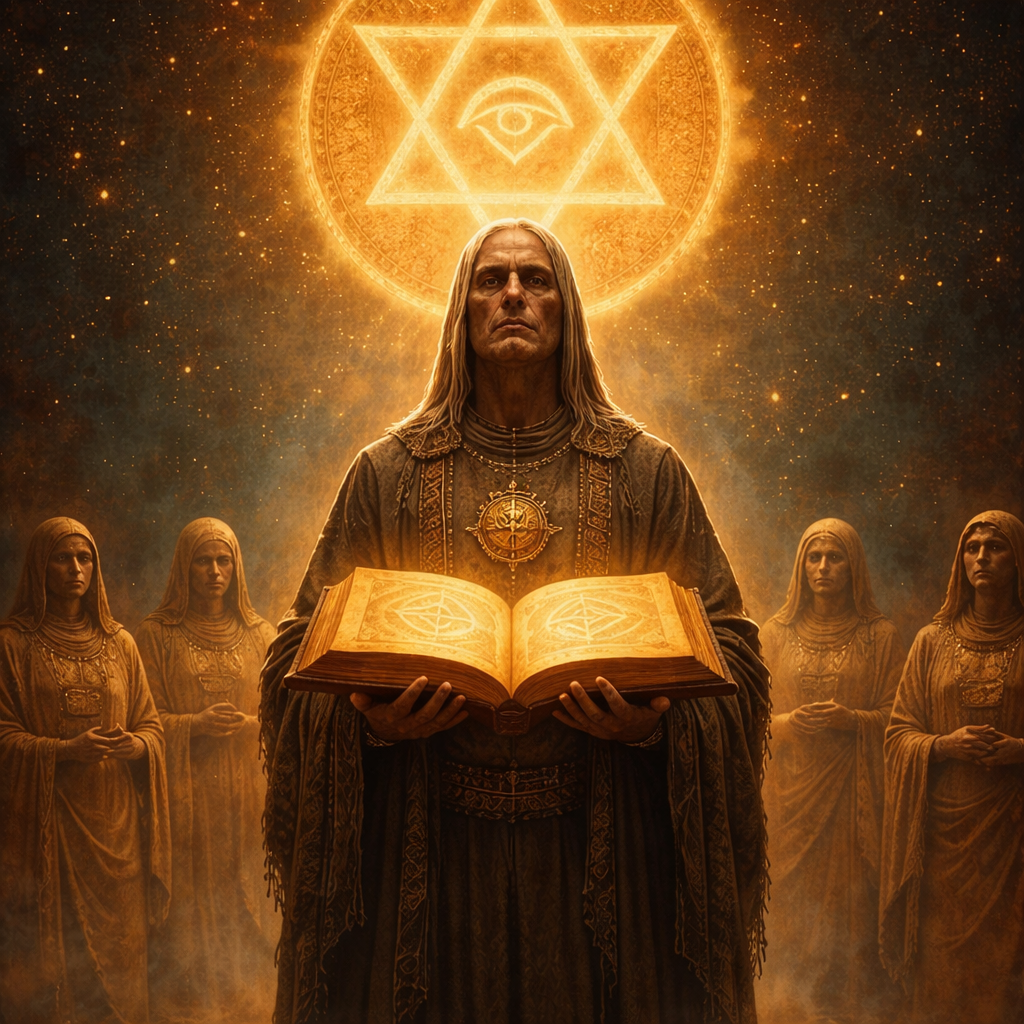

Sophia Crane (Associate Editor) — David Sheinken's 'Path of the Kabbalah' is a scholarly yet accessible exploration of one of mysticism's most revered traditions. Dr. Sheinken, with his medical background, brings a unique analytical clarity to the often-esoteric subject matter, demystifying complex concepts without sacrificing their profound spiritual depth. He expertly navigates the intricate symbolism of the Tree of Life and the numerological secrets inherent in Hebrew, offering readers a tangible framework for understanding the Kabbalistic cosmology. This work is an invaluable resource for serious students and practitioners of Kabbalah, providing a solid foundation for further study and personal contemplation.
📝 Description
62
David Sheinken's 'Path of the Kabbalah' explains Jewish mysticism's core tenets.
David Sheinken's 'Path of the Kabbalah' details the principles of Jewish mysticism. The book focuses on the symbolic structure of the Tree of Life and the significance of Hebrew letters within Kabbalistic thought. Sheinken aims to connect the reader to a deeper spiritual understanding through these concepts. The work addresses fundamental questions about existence and the divine. It is written for those seeking to move beyond ordinary understanding and engage with sacred knowledge.
The text covers the celestial pathways that link the physical world to the spiritual. It acts as a guide for individuals interested in the philosophical aspects of Kabbalah. Sheinken's approach is intended to foster a personal connection with the cosmic order. The book is for readers who want to understand the historical and spiritual inquiries within this tradition.
Kabbalah, a body of Jewish mystical teachings, seeks to explain the relationship between the divine essence, the creation, and humanity. Its traditions, which developed over centuries, involve interpreting scripture, meditation on divine names, and contemplation of symbolic structures like the Tree of Life. These teachings are often passed down through a master-disciple relationship, emphasizing experiential knowledge alongside theoretical study. 'Path of the Kabbalah' engages with these core elements of the Kabbalistic tradition.
💡 Why Read This Book?
Delve into the heart of Jewish mysticism and uncover the hidden architecture of reality. 'Path of the Kabbalah' offers a clear, insightful guide to the Tree of Life, divine emanations, and the transformative power of sacred symbolism. Ideal for spiritual seekers, students of comparative religion, and practitioners of esoteric arts who desire a deeper understanding of Kabbalistic principles and their application to personal growth.
⭐ Reader Reviews
Honest opinions from readers who have explored this book.
❓ Frequently Asked Questions
Is prior knowledge of Kabbalah required to read this book?
While some familiarity with spiritual concepts can be helpful, Sheinken's clear exposition makes 'Path of the Kabbalah' accessible to newcomers. The book builds foundational understanding systematically.
What is the primary focus of the book?
The book's primary focus is to elucidate the core principles, symbolism, and philosophical underpinnings of Kabbalah, particularly as represented by the Tree of Life, offering a pathway to spiritual understanding.
How does Dr. Sheinken's background influence the book?
Dr. Sheinken's medical background lends a structured, analytical approach, helping to clarify complex esoteric concepts and present them in a logical, comprehensible manner for the reader.
Can this book be used for practical application?
Yes, while emphasizing understanding, the book provides insights that can inform personal spiritual practices, meditation, and self-reflection, encouraging a deeper connection to universal principles.
What makes this book unique among Kabbalah texts?
Its blend of scholarly rigor with a clear, accessible narrative style distinguishes it. Sheinken's ability to translate profound, ancient wisdom into understandable modern language is a key strength.
🔮 Key Themes & Symbolism
The Tree of Life
The central organizing principle of Kabbalistic cosmology, the Tree of Life, is meticulously dissected. Sheinken guides readers through its ten Sephiroth (divine emanations) and twenty-two paths, revealing them not as static diagrams but as dynamic conduits of divine energy and stages of creation. Understanding this sacred geometry is presented as fundamental to grasping the interconnectedness of all existence and the journey of the soul.
Symbolism and Gematria
This work delves deeply into the rich symbolic language of Kabbalah, particularly the mystical significance of Hebrew letters and their numerical values (Gematria). Sheinken demonstrates how these elements are not mere linguistic tools but potent keys to unlocking hidden layers of meaning within sacred texts and the universe itself. The interplay between letters, words, and divine intent is revealed as a profound system for spiritual insight.
The Ascent of the Soul
A core theme is the Kabbalistic concept of spiritual ascent – the soul's journey from its earthly manifestation back towards its divine source. Sheinken outlines the challenges and transformations involved, framing Kabbalah as a practical path of self-discovery and spiritual evolution. The book emphasizes the inherent potential within each individual to achieve greater consciousness and unity with the divine.
💬 Memorable Quotes
Direct passages from the work, attributed to the author.
“Each letter is a divine breath.”
— This speaks to the profound power and sacred essence attributed to the Hebrew alphabet within Kabbalistic thought, viewing each character as a manifestation of divine energy.
“The Tree of Life is a map of consciousness.”
— This interpretation positions the Kabbalistic diagram as a guide to understanding the different levels and states of awareness, from the mundane to the divine.
“To know God is to know oneself.”
— This captures the introspective nature of Kabbalistic practice, suggesting that self-understanding is the pathway to comprehending the divine.
“Wisdom flows from above to below.”
— This illustrates the concept of divine emanation, where divine light and knowledge descend through the various levels of existence, impacting the lower realms.
💡 Key Ideas
Editorial paraphrase of the work's core concepts — not direct quotes.
The Kabbalah is not a religion, but a science of the soul.
This quote highlights the structured, systematic, and investigative nature of Kabbalah, emphasizing its focus on the inner workings of consciousness and the universe rather than dogma.
🌙 Esoteric Significance
Tradition
This book is a reference for understanding Jewish Mysticism, specifically Kabbalah. It examines the esoteric dimensions of Judaism, exploring the hidden meanings and spiritual dimensions of its sacred texts and practices. The work acts as a bridge, translating these ancient, often recondite, teachings into a framework that speaks to modern spiritual seekers interested in the deeper currents of existence.
Symbolism
The Kabbalah is inherently symbolic, and Sheinken masterfully unpacks its rich visual and conceptual language. The Tree of Life, with its ten Sephiroth and twenty-two paths, is presented as a cosmic blueprint. The book explores the profound meanings embedded in Hebrew letters, divine names, and numerological relationships (Gematria), illustrating how these symbols serve as keys to understanding the structure of reality and the divine emanations.
Modern Relevance
In an era often characterized by materialism and spiritual seeking, 'Path of the Kabbalah' offers a profound antidote. It provides a sophisticated yet accessible framework for exploring consciousness, the nature of reality, and one's place within the cosmos. The book’s emphasis on inner transformation and the interconnectedness of all things makes its ancient wisdom remarkably relevant for personal growth, psychological insight, and a deeper sense of spiritual purpose in contemporary life.
👥 Who Should Read This Book
This clear work is essential for anyone drawn to the profound depths of Jewish mysticism. Beginners will find Sheinken's clear exposition a welcoming entry point into the complex world of Kabbalah, offering a solid foundation. Scholars of religion and philosophy will appreciate the meticulous detail and insightful analysis. Spiritual seekers yearning for a deeper understanding of the universe and their place within it will find practical guidance and profound inspiration. Practitioners of esoteric arts seeking to expand their metaphysical toolkit will discover a rich source of symbolic wisdom and contemplative practices.
📜 Historical Context
David Sheinken's 'Path of the Kabbalah' emerges within a wide range of Jewish mystical thought that has flourished for centuries. While its roots trace back to ancient prophetic traditions and early mystical texts like Sefer Yetzirah, Kabbalah saw significant development during the medieval period, particularly in 12th-century Provence and 13th-century Spain with the Zohar. This era was marked by intense intellectual and spiritual inquiry, often in response to philosophical challenges and societal upheaval. Sheinken's work, though contemporary, draws upon this profound historical legacy, offering a modern interpretation of these timeless teachings. It reflects an ongoing engagement with Kabbalah as a living tradition, relevant to contemporary seekers grappling with spiritual questions in a rapidly changing world.
📔 Journal Prompts
Reflect on the concept of divine emanation as described in the book. How does this concept resonate with your personal understanding of creation?
Consider the Tree of Life as a map of your own consciousness. Which Sephiroth or paths feel most prominent in your current life experience?
How does the Kabbalistic understanding of the divine name influence your perception of power and intention?
Explore the idea of 'divine breath' as it relates to the Hebrew letters. What does this suggest about the fundamental nature of language and reality?
If Kabbalah is a 'science of the soul,' what experiments or observations can you conduct within your own inner world based on its principles?
🗂️ Glossary
Sephirah
One of the ten divine emanations or attributes of God, forming the structure of the Kabbalistic Tree of Life. Each Sephirah represents a distinct aspect of the divine and its manifestation in creation.
Tree of Life
A central diagram in Kabbalah, depicting the ten Sephiroth and twenty-two paths, representing the structure of the universe, the divine emanations, and the ascent of the soul.
Gematria
A Kabbalistic system of numerology where Hebrew letters are assigned numerical values, used to find hidden meanings and connections within sacred texts and concepts.
Ein Sof
Literally 'Without End' or 'Infinite,' this refers to the unknowable, absolute divine essence that precedes all creation and emanations in Kabbalah.
Tzimtzum
The Kabbalistic concept of divine 'contraction' or withdrawal, creating a conceptual 'empty space' in which creation could manifest, allowing for free will and individuality.
This book appears in 1 collection
🔮 Readers Also Liked
Browse all →








From the “Kabbalah” Collection
View all →






More Free Kabbalah & Jewish Mysticism Books
View all →
![Kabbalah Dictionary [Hebrew To English].pdf (PDFy mirror)](/img/thumb/kabbalah-dictionary-hebrew-to-english-pdf-pdfy-mirror.webp)