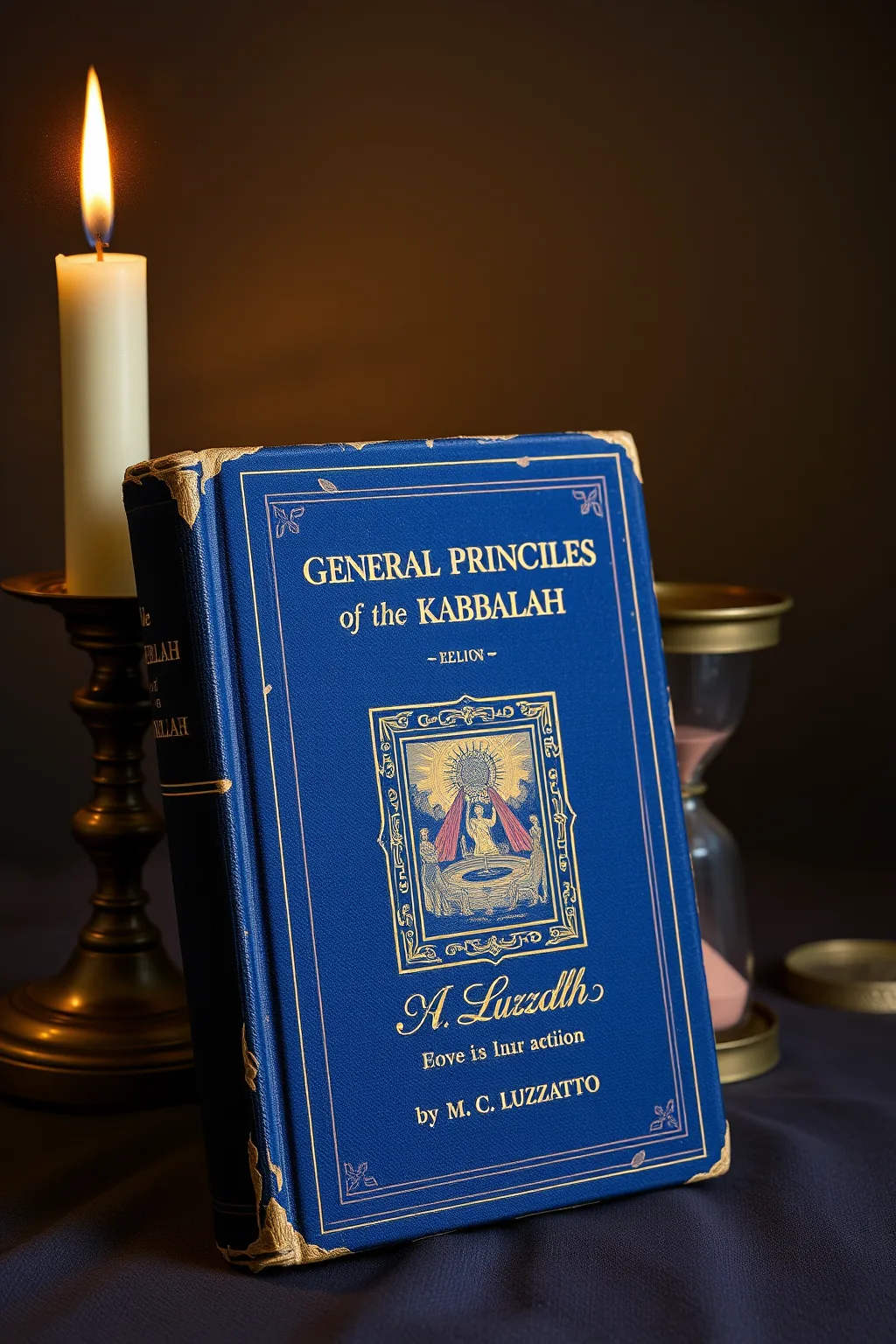
General Principles of the Kabbalah
 61
61

General Principles of the Kabbalah



Alaric Kestrel, Metaphysical Studies Reviewer — M. C. Luzzatto's 'General Principles of the Kabbalah' stands as a beacon for serious students of esoteric lore. Luzzatto masterfully demystifies the complex tapestry of Kabbalistic thought, presenting its core tenets with clarity and profound insight. He navigates the labyrinthine symbolism of the Sephiroth and the divine emanations with a scholar's precision and a mystic's intuition, offering a robust framework for understanding cosmic order and spiritual evolution. This work is indispensable for anyone seeking to delve beyond surface-level interpretations into the profound philosophical and practical dimensions of Kabbalah. Its strength lies in its systematic approach, making it accessible yet deeply rewarding for both neophytes and seasoned practitioners.
📝 Description
61
M. C. Luzzatto's 'General Principles of the Kabbalah' (1754) explains the core concepts of Jewish mysticism.
Written by Moses Chaim Luzzatto in 1754, this book aims to clarify the fundamental ideas of Kabbalah. Luzzatto structures the text to guide readers through the essential elements of this mystical tradition. He discusses the structure of the divine emanations, known as the Sephiroth, and their role in creating and sustaining the universe. The book also covers the spiritual path individuals can follow to connect with the divine. Luzzatto's approach is both systematic and accessible, intended for students serious about understanding the philosophical and theological aspects of Kabbalah.
This work provides a framework for comprehending the relationship between the divine and the created world. It examines the symbolic language used in Kabbalistic texts and offers a way to approach concepts like divine providence and human destiny. Luzzatto's intention was to present these complex ideas in a clear manner, making them understandable to those dedicated to spiritual study. The book encourages a deeper perception of existence, highlighting the underlying unity of all things.
This book is situated within the tradition of Lurianic Kabbalah, a major school of Jewish mysticism that gained prominence in the 16th century. Luzzatto, writing in the 18th century, synthesized and clarified many of the complex concepts developed by earlier figures like Isaac Luria. His work focuses on making the theoretical aspects of Kabbalah, such as the structure of the divine realm and the process of creation, accessible. It represents an effort to systematize a tradition often characterized by its complex symbolism and meditative practices, offering a more structured entry point for students.
💡 Why Read This Book?
Embark on a journey into the heart of Jewish mysticism. 'General Principles of the Kabbalah' offers a clear, authoritative exposition of this ancient wisdom tradition. Ideal for seekers of spiritual understanding, scholars of comparative religion, and practitioners looking to deepen their Kabbalistic knowledge, this book unlocks the fundamental concepts of creation, divine consciousness, and the soul's connection to the Infinite.
⭐ Reader Reviews
Honest opinions from readers who have explored this book.
❓ Frequently Asked Questions
Is this book suitable for beginners in Kabbalah?
Yes, Luzzatto's 'General Principles' is designed to lay a foundational understanding, making it an excellent starting point for those new to Kabbalistic studies, provided they approach it with earnest intellectual curiosity.
What are the primary concepts discussed?
The book delves into the Sephiroth, divine emanations, the structure of the cosmos, the nature of God, and the soul's journey towards spiritual unification.
How does Luzzatto's approach differ from other Kabbalistic texts?
Luzzatto emphasizes a systematic and philosophical exposition, aiming to provide clear, general principles rather than focusing on highly esoteric or practical applications initially.
What is the significance of the Sephiroth?
The Sephiroth are central to Kabbalah, representing ten divine attributes or emanations through which God interacts with and creates the universe. They form the structure of the Tree of Life.
Can this book be used for spiritual practice?
While primarily an exposition of principles, understanding these foundational concepts is crucial for any meaningful spiritual practice within the Kabbalistic tradition, informing meditation and contemplation.
🔮 Key Themes & Symbolism
The Emanation of Divine Light
This theme explores the Kabbalistic concept of Ein Sof (the Infinite) and how its light emanates through ten distinct Sephiroth, forming the structure of reality. Luzzatto meticulously details this process, revealing how the divine essence manifests in the created world, influencing everything from cosmic order to the human soul. It's a journey from the unmanifested to the manifested, showcasing the intricate divine blueprint that underpins existence and offering insights into the sacred mechanics of creation.
The Structure of the Kabbalistic Cosmos
Look at the profound architecture of the universe as understood through Kabbalistic lenses. Luzzatto illuminates the interconnectedness of the spiritual and material realms, detailing the celestial hierarchies and the subtle energies that govern existence. The Tree of Life, with its interconnected spheres and pathways, is presented not just as a symbol but as a dynamic map of spiritual ascent and cosmic processes, guiding the reader to perceive the underlying order of all creation.
The Ascent of the Soul
This crucial theme addresses the Kabbalistic understanding of the human soul's journey. Luzzatto outlines the principles that govern spiritual growth, purification, and eventual reunification with the divine source. It explores the soul's inherent connection to the Sephiroth and the pathways it can traverse for spiritual enlightenment, offering a profound perspective on human potential and the ultimate destiny of consciousness within the grand cosmic design.
💬 Memorable Quotes
Direct passages from the work, attributed to the author.
“The Kabbalah is the science of divine things.”
— This statement defines Kabbalah as a disciplined study, akin to a scientific pursuit, dedicated to understanding the nature of God and divine realities.
“The Sephiroth are the ten fingers of God.”
— This powerful metaphor illustrates the Sephiroth as channels of divine action and creation, actively shaping and interacting with the manifest world.
“Every created thing has its root in the divine.”
— This emphasizes the fundamental Kabbalistic tenet of interconnectedness, asserting that all existence stems from and is sustained by the divine source.
“The study of Kabbalah opens the eyes of the soul.”
— This suggests that Kabbalistic knowledge is not merely intellectual but transformative, leading to a deeper, spiritual perception of reality.
💡 Key Ideas
Editorial paraphrase of the work's core concepts — not direct quotes.
Wisdom is the first Sephirah.
Highlighting Chochmah (Wisdom) as the primordial emanation, this quote points to the genesis of divine thought and creation from pure intellect.
🌙 Esoteric Significance
Tradition
This work is a central to Classical Kabbalah, particularly drawing upon the foundational teachings of Lurianic Kabbalah while presenting them through a more systematized, philosophical lens. It offers a comprehensive overview of the core principles that underpin Jewish mysticism, serving as an essential text for understanding the esoteric cosmology and theology prevalent in this tradition.
Symbolism
The text meticulously unpacks the strong symbolism of the Kabbalah, most notably the Sephiroth and the Tree of Life. These are not merely decorative elements but dynamic forces and divine attributes that structure reality. Luzzatto elucidates how these symbols represent the emanations of God, the pathways of spiritual consciousness, and the intricate interplay between the divine and the created realms, revealing a profound symbolic language of existence.
Modern Relevance
In an era seeking deeper meaning and interconnectedness, Luzzatto's 'General Principles' offers timeless wisdom. Its exploration of consciousness, divine order, and the soul's potential for growth resonates profoundly with contemporary spiritual seekers. The book provides a robust framework for understanding the universe not as a random occurrence but as a divinely ordered system, offering a path to inner transformation and a more profound connection to the sacred.
👥 Who Should Read This Book
This foundational text is ideal for a broad spectrum of readers. **Beginners** seeking a clear introduction to Kabbalistic concepts will find Luzzatto's systematic approach invaluable. **Scholars** of religion and philosophy will appreciate its rigorous exposition and historical context. **Spiritual seekers** yearning to understand the deeper architecture of reality and their place within it will discover useful insights. **Practitioners** of Jewish mysticism looking to solidify their understanding of core principles and refine their contemplative practices will find it an indispensable resource.
📜 Historical Context
Written in the 18th century by Rabbi Moshe Chaim Luzzatto, 'General Principles of the Kabbalah' emerged during a period of intense intellectual and spiritual ferment within Jewish communities. Following the expulsion from Spain and the subsequent rise of Lurianic Kabbalah, there was a growing need for systematic and accessible explanations of its complex doctrines. Luzzatto, a prolific mystic, philosopher, and theologian, sought to synthesize and clarify these teachings, presenting them in a logical and coherent manner. His work transcended mere academic interest, aiming to provide a foundational understanding that could guide individuals on their spiritual paths. This era witnessed a desire to both preserve and revitalize ancient mystical traditions, making Luzzatto's contribution important in bridging the gap between esoteric knowledge and the earnest seeker.
📔 Journal Prompts
Reflect on the concept of divine emanation. How does the idea of the Sephiroth influencing reality challenge or affirm your current worldview?
Consider the Tree of Life as a map. Where do you perceive yourself situated on this map, and what pathways are you drawn to explore further?
Luzzatto speaks of the soul's ascent. What personal obstacles might hinder your spiritual progress, and how can understanding Kabbalistic principles aid in overcoming them?
How does the Kabbalistic understanding of interconnectedness between the divine and the created world influence your perception of everyday life and relationships?
Explore the idea of 'Wisdom' as the first Sephirah. How can cultivating wisdom be a pathway to understanding deeper spiritual truths in your own life?
🗂️ Glossary
Ein Sof
The Kabbalistic term for the Infinite, unknowable, absolute Godhead that exists beyond all comprehension and manifestation.
Sephiroth
Ten divine emanations or attributes through which God reveals Himself and creates the universe. They form the structure of the Tree of Life.
Tree of Life (Etz Chaim)
A central diagram in Kabbalah, representing the ten Sephiroth and the pathways connecting them, symbolizing the structure of the cosmos and the divine emanations.
Keter
The first Sephirah, representing the Crown, the ultimate divine will and the highest point of emanation, closest to Ein Sof.
Malkuth
The tenth and final Sephirah, representing the Kingdom, the manifested world, and the receptacle of divine influence.
This book appears in 1 collection
🔮 Readers Also Liked
Browse all →








From the “Kabbalah” Collection
View all →







More Free Kabbalah & Jewish Mysticism Books
View all →