Jungian Dream Interpretation
 76
76

Jungian Dream Interpretation
James Albert Hall's "Jungian Dream Interpretation" tackles a vast subject with commendable clarity, particularly in its detailed breakdown of common dream symbols and the function of complexes. Hall's strength lies in his methodical approach, grounding Jung's often abstract theories in practical interpretive steps. He makes a solid case for dreams as vital dialogues with the unconscious, not mere nocturnal phantasms. However, the 1983 publication date does lend the text a certain academic formality that might feel dense to the casual reader seeking immediate, transformative insights. A passage discussing the 'shadow' complex, for instance, is particularly illuminating in how it demonstrates the dream's role in confronting repressed aspects of the self. While thorough, the book occasionally feels more like a scholarly treatise than an intimate guide to the soul's nocturnal whispers. It remains, however, a solid, if somewhat dry, reference for serious students of Jungian thought.
📝 Description
76
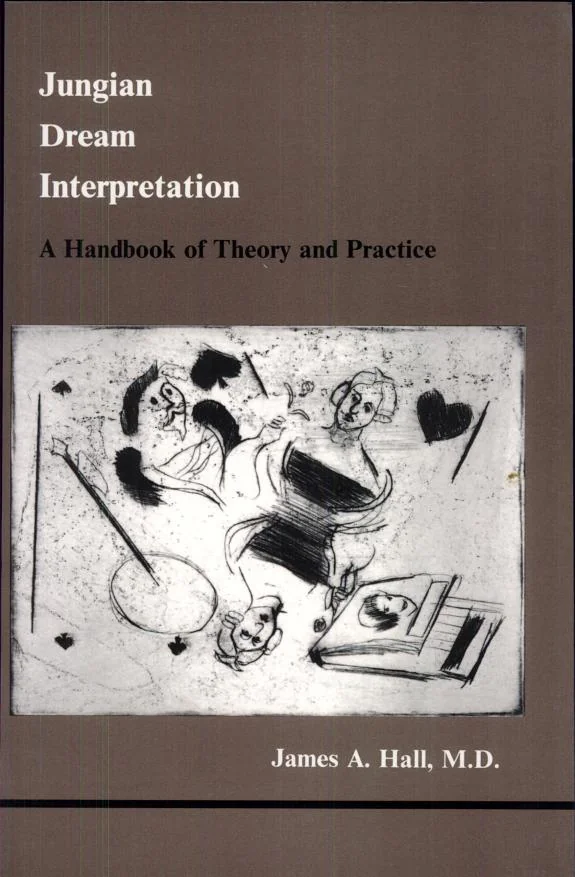
James Albert Hall's Jungian Dream Interpretation, published in 1983, moves beyond simple dream dictionaries.
This 1983 book by James Albert Hall breaks down Carl Jung's approach to understanding dreams. Hall argues that dreams are not random but purposeful communications from the psyche, offering guidance and revealing hidden aspects of the self. He systematically explains how to interpret dream imagery, making Jungian psychological theories accessible to a wider audience. The book is for anyone interested in their inner life and what their dreams might communicate. It is particularly useful for students of Jungian psychology and individuals pursuing personal growth. Therapists and counselors might also find practical methods for incorporating Jungian dream work into their practice.
The work emerged when Jungian psychology was still actively re-examined and applied to new fields. Hall's book joined a continuing conversation about Jungian concepts, following major works by Jung himself. It offered a clear structure for applying Jungian ideas to dream analysis, setting itself apart from more purely mythological or obscure methods of dream interpretation.
Published in 1983, Hall's work engages with the tradition of depth psychology that views dreams as significant expressions of the unconscious. This approach, rooted in the theories of Carl Jung, contrasts with purely materialistic or reductionist psychological models. It aligns with a broader esoteric interest in the inner world, where symbols and dreams are seen as a direct, albeit often veiled, language of the soul or psyche. Hall's book offers a structured method within this tradition, aiming to make the symbolic language of dreams understandable and applicable for personal insight.
💡 Why Read This Book?
• Gain practical methods for analyzing your own dreams by learning to identify the role of complexes and archetypal motifs, as detailed in Hall's structured approach to interpretation. • Understand the compensatory function of dreams, a core Jungian concept, to better grasp how your unconscious mind seeks balance with your conscious attitudes, drawing on examples from the 1983 text. • Discover how dream analysis can facilitate individuation, the process of psychological wholeness, by exploring specific dream symbols and their potential meaning within the framework of analytical psychology.
⭐ Reader Reviews
Honest opinions from readers who have explored this book.
❓ Frequently Asked Questions
What distinguishes Jungian dream interpretation from Freudian methods?
Jungian dream interpretation, as explored in "Jungian Dream Interpretation," views dreams as compensatory and forward-looking, seeking to integrate the personality. Freudian interpretation, by contrast, often focuses on repressed sexual desires and backward-looking analysis of past traumas.
What are 'complexes' in Jungian dream analysis?
In Jungian psychology, complexes are emotionally charged groups of unconscious ideas and memories. Hall's book details how these complexes, such as the 'shadow' or 'anima/animus,' significantly influence dream content and reveal underlying psychological dynamics.
How does "Jungian Dream Interpretation" address common dream symbols?
The book provides a framework for understanding recurring motifs like falling, flying, or being chased. It stresses that symbols are not fixed but carry personal and collective meanings, requiring careful consideration within the dreamer's unique context.
What is the 'collective unconscious' according to Jungian theory?
The collective unconscious, a concept central to Jungian thought and discussed in Hall's work, is a universal, inherited layer of the psyche containing archetypes. These are primal patterns and images that manifest across cultures and time.
Can this book help me interpret my own dreams?
Yes, "Jungian Dream Interpretation" offers principles and methods for self-analysis. By understanding concepts like the persona, shadow, and the compensatory nature of dreams, readers can begin to decipher the symbolic language of their own nocturnal narratives.
When was "Jungian Dream Interpretation" first published?
"Jungian Dream Interpretation" by James Albert Hall was first published in 1983, placing it within the later wave of Jungian scholarship applying analytical psychology to practical fields.
🔮 Key Themes & Symbolism
The Compensatory Function
Hall's work emphasizes that dreams serve a vital compensatory role, actively working to balance the conscious attitude of the individual. If one is too focused on a particular viewpoint, dreams might present contrasting imagery or scenarios to restore psychic equilibrium. This function is crucial for psychological health and prevents one-sided development. The book illustrates how this principle applies to various dream scenarios, suggesting that even unsettling dreams are part of a larger, healing process aimed at wholeness.
Archetypes and the Collective Unconscious
A central to Jungian psychology, archetypes are universal, primordial images and patterns residing in the collective unconscious. Hall's "Jungian Dream Interpretation" explains how these archetypal figures and motifs—such as the Wise Old Man, the Great Mother, or the Trickster—appear in dreams, transcending personal experience. Understanding these patterns allows for a deeper interpretation, connecting individual dream narratives to the shared psychic heritage of humanity and revealing profound symbolic meanings.
Complexes as Dream Drivers
The book dedicates significant attention to the role of psychological complexes in shaping dream content. Complexes are clusters of emotionally charged thoughts, memories, and perceptions that operate semi-autonomously within the psyche. Hall details how personal complexes, like the 'shadow' (unacknowledged aspects of the self) or 'anima/animus' (contrasexual aspects), manifest symbolically in dreams. Recognizing these complex-driven narratives is key to uncovering hidden conflicts and facilitating personal integration.
Individuation and Dream Purpose
Ultimately, Hall frames dream interpretation within the Jungian concept of individuation—the lifelong process of psychological differentiation and integration, leading to the realization of the whole self. Dreams are presented as essential guides on this path, providing insight, revealing obstacles, and clear the way toward greater self-awareness and authenticity. The work suggests that engaging with one's dreams is not merely an academic exercise but a crucial component of becoming fully oneself.
💬 Memorable Quotes
Direct passages from the work, attributed to the author.
“The interpretation of a dream must consider both the personal associations of the dreamer and the universal archetypal meanings.”
— This emphasizes a dual approach to dream analysis. Hall's text explains how to differentiate between symbols that hold unique personal significance and those that tap into the collective unconscious, reflecting broader human patterns.
“Complexes act as nuclei around which dream imagery often coalesces.”
— This concisely explains how emotional clusters influence dreams. Hall's detailed examination of complexes like the 'shadow' shows how they manifest symbolically, revealing underlying psychological dynamics and conflicts.
“The goal of dream work is to facilitate the process of individuation.”
— This statement captures the ultimate aim of Jungian dream analysis as presented by Hall. It posits that understanding dreams is integral to the journey of becoming a complete and integrated individual.
“Dreams reveal what the conscious mind overlooks or suppresses.”
— This highlights the diagnostic power of dreams. Hall's book illustrates how the unconscious uses symbolic language in dreams to bring to our awareness aspects of ourselves or situations that our waking consciousness might ignore or deny.
💡 Key Ideas
Editorial paraphrase of the work's core concepts — not direct quotes.
Dreams are a natural expression of the unconscious, aiming to achieve a balance with the conscious mind.
This paraphrased concept highlights the core Jungian idea that dreams are not random but purposeful. Hall's work elaborates on this by showing how dreams compensate for one-sided conscious attitudes, guiding the dreamer towards psychic wholeness and integration.
🌙 Esoteric Significance
Tradition
This work firmly situates itself within the broad tradition of analytical psychology, a school of thought deeply influenced by esoteric concepts, particularly Hermeticism and Gnosticism, through Carl Jung's personal explorations. While not overtly mystical, its focus on the unconscious, archetypes, and the symbolic language of dreams draws heavily on Gnostic ideas of hidden knowledge and the Hermetic principle of 'as above, so below' applied to the psyche. Hall's approach seeks to uncover the 'hidden' meanings within the individual psyche, aligning with esoteric traditions' quest for inner gnosis.
Symbolism
Key symbols explored include the 'shadow,' representing the repressed, unacknowledged aspects of the personality, often appearing as dark figures or antagonists in dreams. The 'anima' and 'animus,' contrasexual archetypes, are also crucial, symbolizing the integration of feminine qualities in men and masculine qualities in women, often appearing as specific figures in dream narratives. The book also addresses archetypal motifs like the 'wise old man' or 'great mother,' which symbolize deeper wisdom and nurturing principles originating from the collective unconscious.
Modern Relevance
Hall's "Jungian Dream Interpretation" remains relevant today for contemporary practitioners of depth psychology, transpersonal psychology, and even those in fields like mythology and comparative religion. Thinkers and therapists exploring consciousness, the symbolic life, and the integration of the unconscious continue to draw upon its methodical approach. Its principles are echoed in modern dream analysis techniques and therapeutic modalities that emphasize self-discovery through symbolic exploration, bridging the gap between classical Jungian thought and contemporary psychological and spiritual seeking.
👥 Who Should Read This Book
• Students of analytical psychology: Those studying Jungian theory will find a structured and comprehensive guide to a foundational aspect of the discipline, offering clear explanations of core concepts. • Individuals engaged in self-exploration: Anyone seeking to understand their inner world and unlock the messages of their subconscious will benefit from the practical interpretive tools and theoretical framework provided. • Therapists and counselors: Practitioners looking to deepen their understanding of dream analysis from a Jungian perspective will find valuable insights and methods to apply in their clinical work.
📜 Historical Context
Published in 1983, James Albert Hall's "Jungian Dream Interpretation" emerged during a period of continued academic and popular interest in Carl Jung's analytical psychology, which had gained significant traction since the mid-20th century. Jung's theories, particularly his emphasis on archetypes, the collective unconscious, and the process of individuation, offered a compelling alternative to the more behaviorist or Freudian schools dominating psychology at the time. Hall's work contributed to the body of literature that sought to systematize and apply Jungian principles. It followed seminal texts by Jung himself, such as "Man and His Symbols" (1964), and was contemporary with ongoing discussions in depth psychology. While not a controversial text, it solidified a specific approach to dream analysis within the established Jungian framework, providing a structured method for practitioners and students reading through the symbolic field of the psyche.
📔 Journal Prompts
The shadow complex: How might its appearance in dreams reflect conscious avoidance?
Archetypal motifs in recent dreams: What universal patterns emerge?
Dream compensation: How do dream scenarios balance waking attitudes?
Personal associations vs. collective meaning: Differentiating symbol interpretation.
Individuation journey: How do dreams guide personal growth?
🗂️ Glossary
Analytical Psychology
The school of psychology founded by Carl Jung, emphasizing the integration of the conscious and unconscious mind, archetypes, and the process of individuation.
Archetype
Universal, archaic patterns and images that derive from the collective unconscious and are the psychic counterpart of instinct. They manifest in dreams, myths, and art.
Collective Unconscious
A deeper layer of the unconscious psyche, inherited and common to all humanity, containing archetypes and primordial images.
Complex
An emotionally charged group of associated ideas, memories, and emotions in the unconscious, often stemming from personal experiences but can also be archetypally influenced.
Individuation
The lifelong psychological process of differentiation of the self, enabling a person to become whole and integrated by realizing their unique potential.
Persona
The social mask or role that an individual presents to the world, often concealing their true self or inner nature.
Shadow
The unconscious or repressed aspect of the personality, often containing qualities that the ego does not wish to acknowledge. It can manifest symbolically in dreams.
This book appears in 1 collection
🔮 Readers Also Liked
Browse all →









From the “Jungian Psychology” Collection
View all →








More Free Occult Philosophy Books
View all →