Through the Looking-Glass
 81
81

Through the Looking-Glass
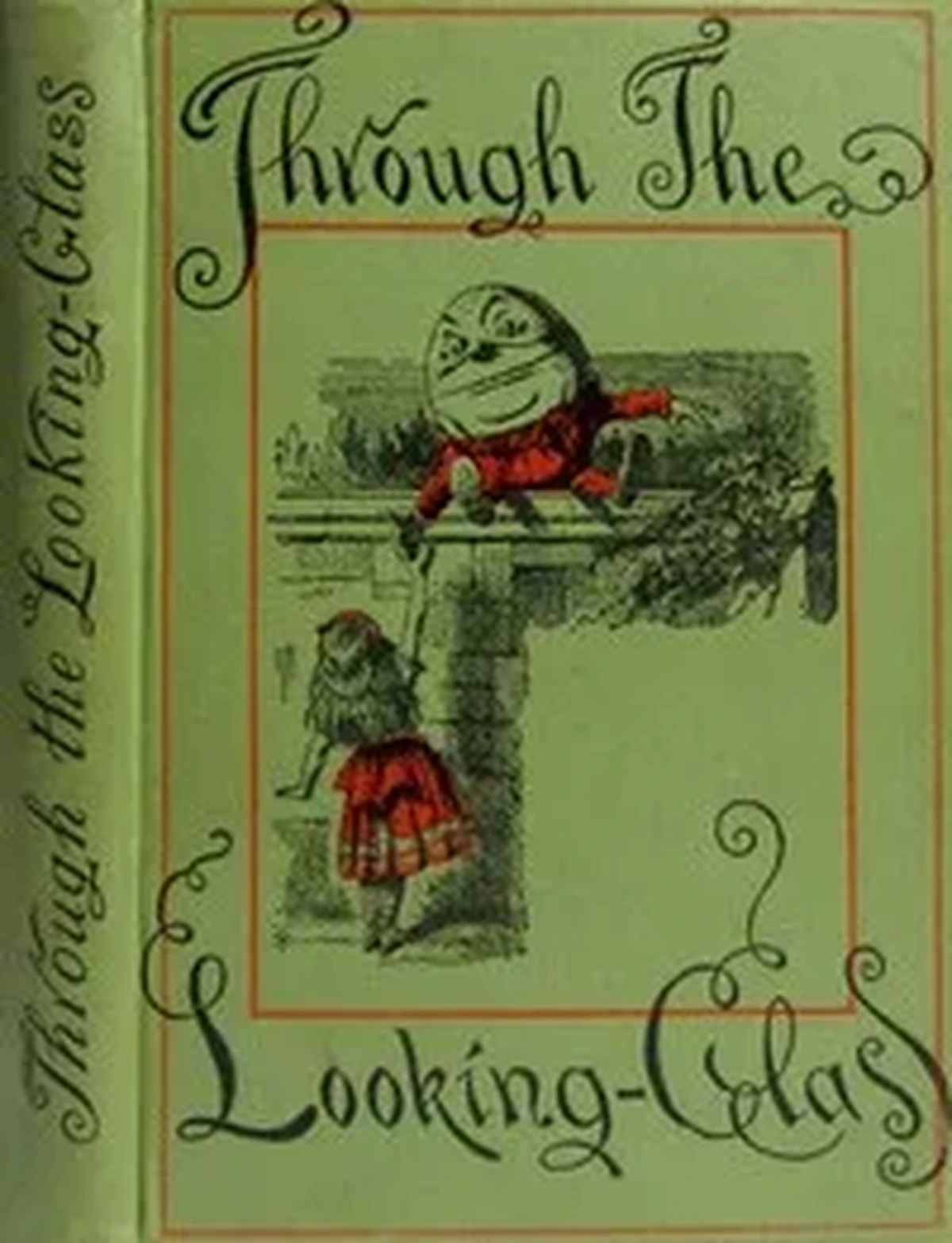
Carroll’s "Through the Looking-Glass" is less a narrative and more a meticulously constructed labyrinth of linguistic and logical absurdities. The strength lies in its unwavering commitment to its own peculiar rules, creating a self-contained universe where a talking flower can be both haughty and dismissive with equal measure. The brilliance of the Red Queen's race, where one must run as fast as possible merely to stay in the same place, remains a potent metaphor for futility. However, the book occasionally falters under its own intellectual weight; the relentless procession of paradoxes can, at times, feel more like an academic exercise than a story. The introduction of Humpty Dumpty and his linguistic theories, while fascinating, slows the momentum. The verdict: a masterful, albeit sometimes dry, dissection of meaning and reality.
📝 Description
81
Lewis Carroll published "Through the Looking-Glass" in 1865, a sequel that further examined logic and playful subversion.
Alice steps through a mirror into a world structured like a chessboard in Lewis Carroll's 1865 book, "Through the Looking-Glass, and What Alice Found There." The narrative follows her encounters with eccentric characters and peculiar situations, all governed by rules that invert common understandings of space, time, and language. This work continues the exploration of logic and whimsical narrative found in "Alice's Adventures in Wonderland."
The book appeals to readers who enjoy wordplay, logical paradoxes, and philosophical puzzles. It is for those who question the nature of reality and engage with literature that operates on multiple levels. Carroll, a mathematician, embedded his interest in logic puzzles and symbolic logic into the text. The book emerged during a period of intellectual ferment in Victorian England, a time of scientific advancement and growing interest in spiritualism and alternative philosophies.
Published in 1865, "Through the Looking-Glass" arrived during a Victorian era marked by intellectual curiosity and a fascination with spiritualism and the unconventional. Lewis Carroll, a mathematician, infused his work with a deep engagement with logic puzzles and the nascent field of symbolic logic. This interest in structured, yet paradoxical, systems resonates with esoteric traditions that question conventional reality and explore hidden orders. The book’s playful subversion of language and logic can be seen as a literary parallel to certain mystical inquiries into the nature of perception and truth, presented through a child's innocent yet sharp perspective.
💡 Why Read This Book?
• You will learn to question the foundational assumptions of language and logic, similar to how Alice grapples with Humpty Dumpty’s pronouncements on word meanings, revealing the arbitrary nature of semantics. • You will experience the disorienting yet illuminating effect of inverse causality, where actions like "running" result in no forward movement, mirroring philosophical discussions on effort versus outcome. • You will gain an appreciation for narrative structure as a tool for exploring abstract concepts, evident in the chess-board progression of Alice’s journey through the Looking-Glass world, which reflects structured thought processes.
⭐ Reader Reviews
Honest opinions from readers who have explored this book.
❓ Frequently Asked Questions
What is the significance of the chess board in 'Through the Looking-Glass'?
The chess board forms the literal and structural foundation of the Looking-Glass world. Alice progresses through the narrative as a white pawn, advancing through eight squares to become a queen, mirroring the strategic progression and limitations of a chess game.
Who was Lewis Carroll and what was his background?
Lewis Carroll was the pen name of Charles Lutwidge Dodgson, a mathematician at Christ Church, Oxford, who lived from 1832 to 1898. His expertise in logic and mathematics profoundly influenced his literary works.
How does 'Through the Looking-Glass' relate to 'Alice's Adventures in Wonderland'?
While both books feature Alice and explore fantastical worlds, 'Through the Looking-Glass' (1865) is a distinct sequel. It presents a different logic system, mirroring a looking-glass world, and introduces new characters and challenges beyond Wonderland.
What does the Red Queen's race symbolize?
The Red Queen's race, where one must run continuously to remain stationary, symbolizes the futility of effort without progress in certain systems, a concept that resonates with discussions of existentialism and systemic inertia.
Is 'Through the Looking-Glass' public domain?
Yes, 'Through the Looking-Glass, and What Alice Found There' was first published in 1865, making it well within the public domain in most countries.
What is Humpty Dumpty's philosophy on words?
Humpty Dumpty famously asserts that words mean whatever he chooses them to mean, a concept he calls 'mastery.' This challenges conventional linguistic theory and highlights the subjective nature of interpretation and meaning.
🔮 Key Themes & Symbolism
Logic and Language Subversion
Carroll masterfully deconstructs conventional logic and language, presenting a world where rules are fluid and meaning is subjective. The character of Humpty Dumpty, who claims mastery over words, exemplifies this theme. His assertion that "When I use a word, it means just what I choose it to mean—neither more nor less" directly challenges linguistic determinism and suggests that meaning is an act of will or convention. This subversion mirrors philosophical inquiries into semiotics and the arbitrary nature of signs, inviting readers to question the very foundations of communication and understanding.
The Nature of Reality and Perception
The looking-glass itself serves as a potent symbol for the inverted or altered perception of reality. Alice's journey through this mirrored world questions the objective nature of what we consider real. The characters and their illogical behaviors, such as the Red Queen's paradoxical race, highlight how perceived reality is often a construct. This exploration aligns with Gnostic ideas of illusion (maya) and the search for a deeper, truer reality beneath the surface of appearances, prompting contemplation on the limitations of sensory input and rational frameworks.
Order, Chaos, and Transformation
Alice's progression through the Looking-Glass world, structured like a chess game, represents a journey towards order and self-discovery. She begins as a pawn and aims to become a queen, a transformation that requires navigating a chaotic landscape populated by nonsensical figures. This journey can be interpreted through an alchemical lens, where the raw material (Alice's initial state) is subjected to trials and transformations to achieve a higher form. The constant shifts in environment and character interactions reflect the alchemical process of dissolution and reintegration.
Identity and Selfhood
The work probes the fragility of identity in a world that constantly challenges one's sense of self. Alice frequently questions who she is, especially when confronted by characters who claim to know her or who behave in ways that destabilize her self-concept. The looking-glass itself implies a reversed or distorted self-image. This theme speaks to psychological concepts of ego formation and the fluid nature of identity, particularly in relation to external validation and internal coherence. The narrative suggests that selfhood is not fixed but is actively negotiated within a shifting external reality.
💬 Memorable Quotes
Direct passages from the work, attributed to the author.
““When I use a word, it means just what I choose it to mean—neither more nor less.””
— This declaration by Humpty Dumpty is a central to linguistic relativism and a direct challenge to lexicographical authority. It suggests that meaning is not inherent but is assigned by the user, highlighting the arbitrary nature of language and the power dynamics involved in defining terms.
““Why, sometimes I’ve believed as many as six impossible things before breakfast.””
— The White Queen’s statement represents an embrace of the irrational and the paradoxical. It suggests that the capacity for belief is not limited by logical constraints, and that accepting multiple contradictory ideas can be a form of mental agility or even a prerequisite for understanding certain realities.
““We must run, as fast as we can, to stay in the same place.””
— This famous line from the Red Queen expresses a profound sense of futility and systemic inertia. It illustrates a situation where immense effort yields no progress, a concept applicable to bureaucratic systems, personal stagnation, and even certain philosophical paradoxes of motion and change.
““Curiouser and curiouser!””
— Alice's repeated exclamation reflects her growing astonishment and disorientation as she encounters the increasingly bizarre logic and phenomena of the Looking-Glass world. It signifies a mind struggling to reconcile extraordinary experiences with established understanding.
💡 Key Ideas
Editorial paraphrase of the work's core concepts — not direct quotes.
“It’s a poor sort of memory that only works backwards.”
Spoken by the White Queen, this line inverts the typical understanding of memory as a faculty for recalling the past. It playfully suggests a temporal fluidity, where memory might also be a premonition or a recollection of future events, questioning our linear perception of time.
🌙 Esoteric Significance
Tradition
While not explicitly belonging to a single esoteric tradition, "Through the Looking-Glass" shares thematic resonance with Gnosticism and Hermeticism through its exploration of illusion, hidden realities, and the subversion of conventional perception. The mirrored world can be seen as a form of 'lower' reality, distinct from a 'higher' truth that Alice seeks to understand. The journey mirrors the Gnostic quest for gnosis—knowledge of the divine—through an allegorical landscape that challenges the material world's apparent solidity and logic.
Symbolism
The looking-glass itself is a primary symbol, representing a threshold between the mundane and the fantastical, the conscious and the subconscious, or the literal and the symbolic. The chess board structure symbolizes the underlying order (or perceived order) that governs reality, with Alice’s progression as a pawn highlighting the journey of the soul through different stages of existence. The characters, such as the Red Queen and Humpty Dumpty, function as archetypal figures representing fixed ideas, paradoxical truths, and the arbitrary nature of social or linguistic constructs.
Modern Relevance
Contemporary thinkers in fields ranging from post-structuralist philosophy to cognitive psychology draw upon Carroll's work. The exploration of language games, subjective reality, and the breakdown of binary oppositions finds echoes in the theories of philosophers like Jacques Derrida and in the study of cognitive biases. Surrealist artists and writers continue to be inspired by the dreamlike logic and unexpected juxtapositions. The book's enduring appeal lies in its ability to serve as a flexible allegorical framework for understanding complex ideas about consciousness, reality, and meaning in the modern era.
👥 Who Should Read This Book
• Students of logic and philosophy: Those interested in paradoxes, linguistic philosophy, and the nature of truth will find fertile ground in Alice's encounters with characters like Humpty Dumpty and the Red Queen. • Comparative mythology and folklore scholars: Readers examining archetypal journeys, dream logic, and the subversion of traditional narrative structures will find parallels with various cross-cultural mythologies. • Aspiring surrealists and experimental writers: Artists and writers seeking inspiration for unconventional narratives, illogical sequences, and dreamlike imagery can glean techniques from Carroll's masterful construction of the Looking-Glass world.
📜 Historical Context
Published in 1865, "Through the Looking-Glass, and What Alice Found There" emerged from the intellectual milieu of Victorian England, a period marked by rapid scientific discovery and a simultaneous fascination with the unseen. Lewis Carroll, the pseudonym of mathematician Charles Lutwidge Dodgson, was a fellow of Christ Church, Oxford, and his deep engagement with logic and mathematics is palpably present. The book arrived on the heels of the sensational success of "Alice's Adventures in Wonderland" (1865), which had already provoked considerable debate regarding its nonsensical yet structured narratives. Contemporaries like George MacDonald, a writer who explored fantasy with moral and spiritual undertones, were also active, though Carroll's approach was more focused on logical paradoxes and linguistic play. The work itself, while seemingly whimsical, engaged with Victorian anxieties about education, rationality, and the burgeoning field of psychology, offering a unique counterpoint to more earnest didactic literature.
📔 Journal Prompts
The White Queen's backwards memory: how does anticipating the future influence present actions?
Humpty Dumpty's word mastery: explore the implications of arbitrary meaning in communication.
The Red Queen's race: reflect on systems where effort does not equate to progress.
Alice's changing size: consider how external circumstances alter one's sense of self.
The mirror's inversion: contemplate the relationship between perception and objective reality.
🗂️ Glossary
Looking-Glass World
The mirrored, inverted reality that Alice enters through the looking-glass. It operates on a logic distinct from the real world, characterized by reversed spatial relationships and paradoxical events.
Pawn
In the context of the book, Alice begins her journey as a white pawn on a giant chessboard. This signifies her initial status as a beginner, moving one square at a time, with the ultimate goal of reaching the eighth rank to become a queen.
Red Queen
A tyrannical and demanding character who embodies the concept of running in place. Her rule dictates that one must exert maximum effort merely to maintain their current position, illustrating a system of perpetual, unproductive motion.
Humpty Dumpty
A character who sits on a wall and claims absolute authority over the meaning of words. He represents the arbitrary nature of language and the idea that meaning can be dictated by the speaker rather than inherent in the word itself.
White Queen
A character who experiences extreme nervousness and possesses an unusual form of memory, often remembering events after they have happened. She embodies a concept of reversed temporality and emotional volatility.
Tweedledum and Tweedledee
Identical twin brothers who recite a long poem and engage in a nonsensical battle. They symbolize duality, mirroring, and the potential for conflict arising from perceived differences that are ultimately superficial.
The Jabberwock
While primarily from Carroll's poem 'Jabberwocky' (often included in editions of 'Through the Looking-Glass'), this monstrous creature represents a primal, illogical threat that must be overcome, symbolizing the confrontation with chaos or the unknown.
🔮 Readers Also Liked
Browse all →









More by Lewis Carroll
All books →





More Free Occult Philosophy Books
View all →