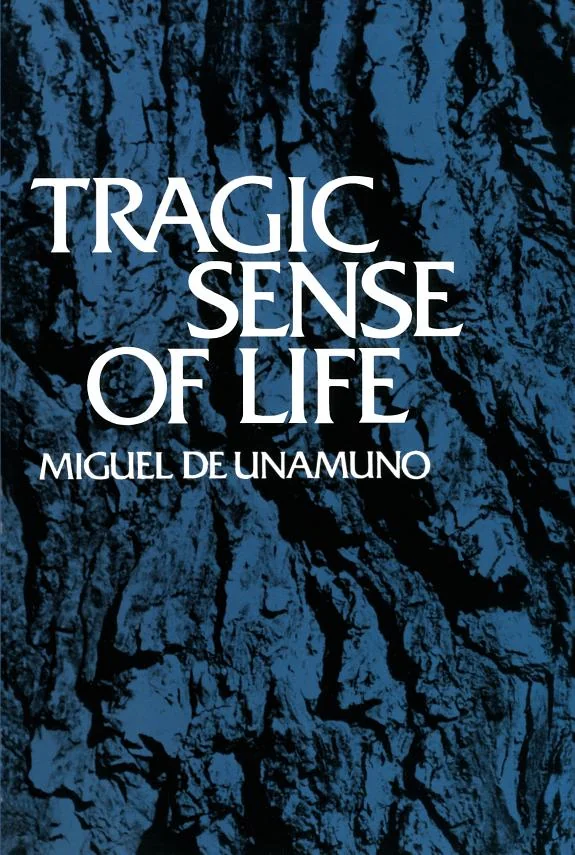
Tragic Sense of Life
 82
82

Tragic Sense of Life
Unamuno's "The Tragic Sense of Life" is less a book to be read and more a confrontation to be endured. His relentless pursuit of the agonizing paradox of human existence—the craving for eternity against the certainty of death—is palpable on every page. The work’s greatest strength lies in its raw, unfiltered honesty; Unamuno doesn't shy away from the abyss. He articulates the "hunger for immortality" with a visceral intensity that few philosophers achieve. However, this very intensity can become a limitation. At times, the relentless focus on personal anguish and the oscillation between faith and despair can feel cyclical, offering little in the way of intellectual resolution, a point made evident in his wrestling with the concept of "faith as a desperate wager." A particularly striking passage is his contemplation of the "silence of God," a silence that fuels the very desperation driving his quest for meaning. It is a book that demands much of the reader but offers a unique, albeit somber, communion with the existential struggle. Ultimately, "The Tragic Sense of Life" is a powerful, albeit bleak, testament to the enduring human spirit's confrontation with mortality.
📝 Description
82
Miguel de Unamuno published "The Tragic Sense of Life" in 1913, confronting the human condition.
This philosophical inquiry, first published in 1913, examines humanity's deep desire for meaning, the fear of death, and the longing for eternal life. Unamuno does not present a systematic argument but rather a passionate reflection on these core existential concerns. His writing style is intensely personal, often mixing logical reasoning with emotional expression. He grapples with the tension between faith and reason, and the individual's struggle against a silent universe.
Unamuno's work emerged during a time of shifting intellectual certainties in early 20th-century Europe. Associated with Spain's Generation of '98, he engaged with thinkers like Kierkegaard and Nietzsche but maintained a distinct Spanish Catholic viewpoint. The book challenges both secular and religious viewpoints, focusing on the individual soul's quest for salvation. It was noted for its complex reception, provoking thought in both philosophical and religious circles.
While not strictly an occult text, Unamuno's work engages with the perennial human quest for transcendence and meaning beyond material existence. It touches on themes of spiritual yearning and the individual soul's confrontation with mortality, aligning with broader traditions that explore the inner life and the search for purpose in the face of existential doubt. The book reflects a deep engagement with the spiritual anxieties of its time, seeking a form of enduring significance in a world of flux.
💡 Why Read This Book?
• Grasp the "tragic sense of life" by understanding Unamuno's 1913 framework for the human struggle between the desire for immortality and the reality of death. • Explore the concept of "faith as a desperate wager" to see how Unamuno argues for belief as a courageous act in the face of profound doubt. • Connect with the "man of flesh and bone" concept to prioritize individual, concrete existence over abstract philosophical ideals in your own existential considerations.
⭐ Reader Reviews
Honest opinions from readers who have explored this book.
❓ Frequently Asked Questions
What is the core philosophy presented in 'The Tragic Sense of Life'?
The core philosophy is the "tragic sense of life," which Unamuno articulates as the inherent conflict between humanity's profound desire for eternal existence and the knowledge of our mortality, first explored in his 1913 work.
Who was Miguel de Unamuno and what was his historical significance?
Miguel de Unamuno (1864-1936) was a prominent Spanish writer and philosopher, a leading figure of the Generation of '98. His work, like 'The Tragic Sense of Life' (1913), profoundly influenced Spanish thought by grappling with existential questions during a period of national introspection.
What does Unamuno mean by 'the hunger for immortality'?
Unamuno uses 'the hunger for immortality' to describe the deep, instinctual human longing for unending life. He posits this yearning as the fundamental impulse driving our quest for meaning, belief, and spiritual salvation, as explored in his 1913 book.
How does 'The Tragic Sense of Life' relate to existentialism?
While predating formal existentialism, Unamuno's 1913 work is a key precursor, intensely focusing on individual consciousness, the anxiety of existence, the confrontation with death, and the subjective nature of faith, themes later central to existentialist philosophers.
Is 'The Tragic Sense of Life' a religious book?
It is deeply concerned with faith and salvation, but not in a dogmatic sense. Unamuno grapples intensely with doubt and the silence of God, framing faith as a necessary, courageous wager rather than a certainty, as presented in his 1913 text.
What is the significance of the 'man of flesh and bone' in Unamuno's philosophy?
The 'man of flesh and bone' refers to the concrete, individual human being, contrasted with abstract philosophical concepts. Unamuno emphasizes this lived, personal reality as the true subject of philosophical and spiritual inquiry, a key theme in his 1913 work.
🔮 Key Themes & Symbolism
The Hunger for Immortality
This theme is central to Unamuno's philosophy as presented in his 1913 work. He argues that the innate, irrefutable human desire for eternal life is not merely a wish, but a fundamental drive that shapes our consciousness, our search for meaning, and our spiritual aspirations. This 'hunger' fuels the existential struggle, pushing individuals to seek solace, belief, and purpose in a universe that offers no guarantee of continued existence. It is the engine behind both faith and despair.
Faith as a Desperate Wager
Unamuno approaches faith not as intellectual assent to dogma, but as a vital, often agonizing, act of will. In 'The Tragic Sense of Life,' he posits faith as a necessary 'wager' made in the face of overwhelming doubt and the perceived silence of God. This perspective challenges traditional religious frameworks, suggesting that true faith is born from existential struggle and a courageous commitment to belief, even without empirical proof, as he grapples with this in his 1913 text.
The Man of Flesh and Bone
This concept emphasizes the primacy of the concrete, individual human experience over abstract philosophical systems or universal theories. Unamuno insists that philosophy must begin with and return to the lived reality of each person – their suffering, desires, and mortality. The 'man of flesh and bone' is the subject whose unique existential drama is the true focus of concern, a central to his 1913 exploration of life's tragic dimensions.
The Silence of God
A pervasive element in Unamuno's 1913 work is the profound sense of divine absence or indifference. This 'silence' is not necessarily an atheistic statement but a description of the felt experience of many seeking spiritual connection. It intensifies the existential dilemma, making the act of faith even more crucial and the 'tragic sense of life' more pronounced, as individuals must forge meaning in the apparent void.
💬 Memorable Quotes
Direct passages from the work, attributed to the author.
“The ultimate problem of human life is the problem of our survival, of our immortality.”
— This statement captures Unamuno's core thesis in 'The Tragic Sense of Life.' It highlights his belief that the fear of death and the yearning for continued existence are not peripheral concerns but the very foundation of human consciousness and our deepest philosophical and spiritual quests.
“Faith is not the absence of doubt, but the triumph over doubt.”
— This interpretation of faith, central to Unamuno's 1913 text, reframes belief. It suggests that genuine faith is not a passive acceptance of certainty, but an active, courageous struggle against uncertainty and existential angst, requiring a conscious commitment to hope.
“We seek God, and we find ourselves.”
— This suggests that the outward search for divine meaning is inherently an inward journey. In confronting the big questions of existence, as Unamuno does in his 1913 work, the individual often comes face-to-face with their own limitations, desires, and the profound reality of their own being.
“The greatest tragedy is not death, but the loss of the desire for life.”
— This highlights Unamuno's focus on the vitality of the human spirit. For him, the true tragedy lies not simply in physical demise, but in the extinguishment of the passionate longing for existence and meaning, a sentiment deeply explored in his 1913 book.
“To live is to carry the weight of our mortality.”
— This interpretation underscores the inescapable burden of consciousness. Unamuno argues that acknowledging our finite existence is not a passive state but an active component of living, shaping our every experience and decision, as detailed in his 1913 philosophical inquiry.
🌙 Esoteric Significance
Tradition
While not strictly adhering to a single esoteric lineage, Unamuno's work deeply speaks to Gnostic and Hermetic traditions through its intense focus on the individual's internal struggle for salvation against a seemingly indifferent or illusory material world. His emphasis on the "man of flesh and bone" grappling with existential angst and seeking a transcendent truth mirrors the Gnostic concern with the spark of divinity trapped within the material prison. The book explores the yearning for a higher reality, a quest for understanding the divine, and the profound loneliness of the individual soul.
Symbolism
The "silence of God" serves as a potent symbol of the perceived distance between humanity and the divine, a void that compels the individual to create their own meaning or seek faith. The "hunger for immortality" functions as a symbol of the soul's innate yearning for its true, eternal nature, a core concept in many mystical traditions. The "man of flesh and bone" symbolizes the individuated consciousness, the point of entry for both existential despair and spiritual revelation.
Modern Relevance
Unamuno's exploration of existential dread, the crisis of faith in a secularizing world, and the desperate human need for meaning continues to find echoes in contemporary philosophy and spirituality. Thinkers and practitioners interested in existential psychology, the phenomenology of religious experience, and the intersection of doubt and belief find his work relevant. His stark confrontation with mortality and the search for purpose speaks to modern anxieties, making "The Tragic Sense of Life" a touchstone for those questioning the ultimate significance of human existence.
👥 Who Should Read This Book
• Individuals grappling with existential questions about life, death, and the search for meaning, seeking philosophical explorations that acknowledge profound doubt. • Students and scholars of Spanish literature and philosophy, particularly those interested in the Generation of '98 and the development of existential thought in the early 20th century. • Readers interested in the philosophy of religion who wish to examine faith not as dogma, but as a courageous, personal confrontation with uncertainty and the perceived silence of the divine.
📜 Historical Context
Published in 1913, Miguel de Unamuno's "The Tragic Sense of Life" emerged from a Spain grappling with its identity and a Europe questioning foundational beliefs. Unamuno, a key voice of the Generation of '98, responded to the intellectual climate dominated by positivism and scientific rationalism, which often seemed to diminish the importance of individual spiritual life. His work engaged implicitly with existentialist precursors like Søren Kierkegaard, offering a uniquely Spanish Catholic perspective that differed from the more secular existentialism of figures like Jean-Paul Sartre later in the century. Unamuno’s passionate defense of the individual's quest for immortality and meaning, even in the face of apparent divine silence, set his work apart. The book's reception highlighted its challenge to both orthodox religious thought and purely materialistic philosophies, positioning it as a significant, albeit often unsettling, contribution to early 20th-century European thought.
📔 Journal Prompts
The "man of flesh and bone" and his mortality.
The profound "hunger for immortality" as a driving force.
The nature of "faith as a desperate wager" in your own life.
Reflecting on the "silence of God" and its impact on meaning.
Confronting the "tragic sense of life" through personal experience.
🗂️ Glossary
Tragic Sense of Life
Unamuno's concept describing the fundamental human condition of yearning for eternal life while being acutely aware of mortality, leading to a profound existential conflict and struggle for meaning.
Hunger for Immortality
The innate, deep-seated human desire for unending existence, which Unamuno identifies as the primary motivator behind our spiritual quests, our beliefs, and our overall engagement with life.
Man of Flesh and Bone
Unamuno's term for the concrete, individual human being, emphasizing lived experience, personal suffering, and unique consciousness over abstract philosophical categories.
Faith as a Desperate Wager
Unamuno's view of faith not as certainty, but as a courageous act of commitment and hope undertaken in the face of doubt and the apparent silence of God.
Silence of God
The perceived absence, indifference, or incomprehensibility of the divine, which intensifies the existential struggle and the need for personal faith or the creation of meaning.
Generation of '98
A group of Spanish writers, poets, and essayists who were profoundly affected by Spain's defeat in the Spanish-American War in 1898. They sought to redefine Spanish identity and grapple with national and existential issues.
Existentialism
A philosophical movement that emphasizes individual existence, freedom, and choice. It typically holds that humans define their own meaning in life and try to make rational decisions despite existing in an irrational universe.
This book appears in 1 collection
🔮 Readers Also Liked
Browse all →









From the “Immortality” Collection
View all →







More Free Occult Philosophy Books
View all →