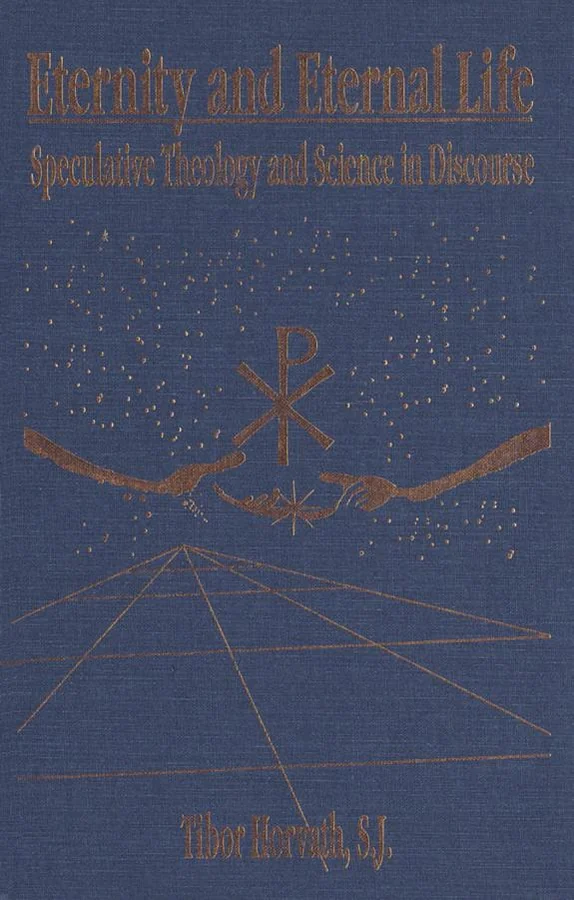
Eternity and Eternal Life
 72
72

Eternity and Eternal Life
Tibor Horvath’s "Eternity and Eternal Life" undertakes the ambitious task of reconciling modern physics’ understanding of time with age-old eschatological doctrines. The author’s strength lies in meticulously outlining the conceptual chasm created by Einstein’s theories of relativity for pre-modern theological language. He demonstrates how notions of a universal 'last day' or a spatially defined 'heaven' become problematic when time is understood as relative and interwoven with space. A limitation, however, is the book’s dense philosophical argumentation, which can sometimes obscure the direct theological implications. One particularly illuminating section analyzes how the concept of 'immortality' shifts from a simple negation of death to a more complex relationship with temporal existence, particularly when considering concepts like the 'eternal return' or states of being outside linear progression. Horvath’s work is a rigorous intellectual exercise for those seeking to bridge scientific and theological discourse.
📝 Description
72
Tibor Horvath's 1993 book connects Newtonian and Einsteinian physics to theological concepts of eternity.
This 1993 study by Tibor Horvath examines how modern physics, particularly the shift from Newtonian mechanics to Einsteinian relativity, influences our understanding of time and its relation to theological frameworks. Horvath questions how contemporary scientific views challenge traditional notions of the afterlife, divine judgment, and existence beyond mortality. The book addresses the potential for traditional eschatological terms like 'heaven,' 'hell,' and 'resurrection' to maintain their meaning or necessitate reinterpretation in a universe where time is not a fixed, absolute constant. It considers whether these concepts can be understood within a framework informed by contemporary physics, where time is relative. This work is relevant for students of comparative theology, the philosophy of time, and those interested in the intersection of science and metaphysics. It appeals to readers seeking to understand how scientific paradigm shifts affect religious thought and the ongoing human search for meaning.
Published in 1993, this book engages with a tradition of thought that seeks to reconcile scientific understanding with spiritual or metaphysical inquiry. It follows in a lineage that has historically grappled with how new discoveries about the cosmos affect religious and philosophical views on existence, consciousness, and the nature of reality itself. By analyzing the impact of physics on theological frameworks, Horvath situates his work within discussions that have occupied thinkers from Henri Bergson to contemporary philosophers of science and religion, who question the limits of empirical knowledge and its relation to ultimate questions of being.
💡 Why Read This Book?
• Gain a precise understanding of how Einsteinian relativity fundamentally alters the framework for traditional eschatological concepts like 'final judgment,' moving beyond simplistic scientific explanations. • Explore the philosophical implications of time's relativity on the meaning of 'immortality' as presented in the book's 1993 publication context, challenging static definitions. • Grasp the reinterpretation of terms such as 'heaven' and 'hell' in light of temporal physics, as discussed in specific sections of Horvath's analysis.
⭐ Reader Reviews
Honest opinions from readers who have explored this book.
❓ Frequently Asked Questions
How does "Eternity and Eternal Life" connect Einstein's theories to theological concepts?
The book meticulously details how Einstein's theories of relativity, which propose time is not absolute, create challenges for traditional eschatological ideas like a universal 'last day' or a fixed 'heaven' and 'hell'.
What specific eschatological concepts does Tibor Horvath re-examine?
Horvath re-examines concepts such as heaven, hell, death, immortality, life after death, resurrection, the last day, and final judgments, seeking to reinterpret them in light of modern physics.
When was "Eternity and Eternal Life" first published?
The book was first published on November 15, 1993, reflecting intellectual discussions prevalent in the late 20th century regarding science and theology.
Is this book suitable for someone unfamiliar with physics?
While it engages with physics, the book focuses on the philosophical and theological implications, making it accessible to readers interested in the conceptual impact rather than the technicalities of relativity.
What is the main argument regarding pre-Einsteinian views of the universe?
Horvath argues that traditional eschatological expressions presuppose a Newtonian, absolute view of time and space, which is now challenged by Einsteinian insights into the relativity of spacetime.
Does the book offer solutions for reconciling science and faith?
Rather than offering definitive solutions, the work aims to articulate the problems and explore potential avenues for reinterpreting theological language to remain relevant within a modern scientific worldview.
🔮 Key Themes & Symbolism
Relativity and Divine Time
The core of Horvath's exploration lies in the tension between the absolute, linear time often assumed in theological discourse and the relativistic spacetime described by Einstein. The work scrutinizes how concepts like 'eternity' and 'eternal life' function when time itself is not a universal constant but is relative to the observer and intertwined with space. This re-evaluation challenges traditional eschatological timelines, prompting a reconsideration of what 'life after death' or a 'resurrection' might entail beyond a literal, chronologically ordered event.
Eschatology in a Post-Newtonian Universe
Horvath addresses the difficulty of maintaining traditional eschatological frameworks—such as heaven, hell, and final judgment—within a scientific paradigm that has moved beyond Newtonian mechanics. These doctrines often rely on a pre-Einsteinian understanding of a universal, simultaneous present. The book proposes that these terms may require significant reinterpretation or conceptual reframing to retain their theological significance for contemporary minds accustomed to scientific relativism and the non-absolute nature of time.
Immortality and Temporal Existence
The book questions the very notion of immortality when time is understood as a fluid dimension. It contrasts the idea of an unending existence within a linear temporal framework with potential states of being that might transcend temporal limitations altogether. This leads to a deeper inquiry into what 'life after death' truly signifies, moving beyond simple cessation of biological function to a more nuanced understanding of existence beyond the confines of conventional time and space.
💬 Memorable Quotes
Direct passages from the work, attributed to the author.
“The Newtonian concept of time has been changed by Einsteinian insight.”
— This foundational statement highlights the central thesis: scientific progress, specifically Einstein's theories, necessitates a re-examination of long-held philosophical and theological ideas about time and existence.
“Einsteinian world view might make it difficult to appreciate traditional concepts of eschatology.”
— This points to the core challenge Horvath addresses—how to bridge the gap between a modern scientific understanding of the cosmos and ancient religious beliefs about the end times and afterlife.
“Expressions presuppose a pre-Einsteinian view of the universe.”
— This interpretation underscores the author's argument that many religious terms related to eternity and the afterlife are rooted in an older, absolute conception of time that is no longer scientifically tenable.
“Theology cannot remain unaffected by the new research in concepts of time.”
— This emphasizes the inevitability of theological adaptation. Horvath posits that religious thought must engage with and respond to developments in scientific understanding, particularly concerning fundamental concepts like time.
“Eternity and Eternal Life tries to express the eschatol”
— This fragmented phrase, likely from the original blurb, suggests the book's aim is to articulate and perhaps redefine eschatological ideas within a new temporal framework established by modern physics.
🌙 Esoteric Significance
Tradition
While not strictly confined to a single esoteric lineage, Horvath's work appeals to traditions that engage in philosophical cosmology and the reinterpretation of sacred texts through evolving paradigms. It shares an intellectual kinship with Gnostic thought in its critical examination of established cosmologies and a drive to understand existence beyond conventional limitations, and with Hermeticism in its pursuit of universal principles underlying reality.
Symbolism
The primary symbols addressed are temporal ones: 'eternity' (often depicted as a circle or endless duration), 'resurrection' (a transformation of being), and 'judgment' (a moment of ultimate accounting). Horvath reinterprets these not as fixed, literal events within a universal timeline, but as states of consciousness or modes of existence that may operate independently of linear causality or absolute temporal sequence.
Modern Relevance
Contemporary thinkers in fields like consciousness studies, speculative philosophy, and process theology draw upon the kind of conceptual restructuring Horvath champions. His work provides a framework for discussing concepts such as timelessness, eternal recurrence, or non-linear existence, which are increasingly explored in discussions of quantum consciousness and the nature of reality beyond empirical observation.
👥 Who Should Read This Book
• Students of comparative theology and philosophy of religion seeking to understand the impact of scientific paradigms on doctrine. • Esoteric scholars interested in how concepts of time, eternity, and the afterlife are re-examined beyond traditional metaphysical systems. • Readers grappling with existential questions who wish to explore frameworks that reconcile scientific understanding with spiritual or metaphysical inquiries.
📜 Historical Context
Published in 1993, "Eternity and Eternal Life" emerged during a period of robust interdisciplinary discourse, where the implications of quantum mechanics and relativity continued to be debated across philosophy, theology, and science. This era saw thinkers like Stephen Hawking, in his popular works, engaging with cosmological questions that touched upon the nature of time and existence. Horvath’s work specifically addresses the challenge posed by Einsteinian relativity to traditional eschatological doctrines, which were often built upon a Newtonian framework of absolute time and space. While not a direct engagement with a specific contemporary theologian or philosopher on this precise point, the book participates in a broader intellectual current that sought to reconcile scientific advancements with enduring spiritual inquiries, a dialogue also explored by figures like Ian Barbour in his studies of science and religion.
📔 Journal Prompts
The implications of relativistic time for the concept of 'final judgment'.
Reinterpreting 'resurrection' outside a linear temporal sequence.
How does the Einsteinian view of time alter one's personal understanding of 'immortality'?
Reflecting on the term 'eternity' as explored in the book's context.
The challenge of reconciling 'heaven' and 'hell' with a non-absolute temporal framework.
🗂️ Glossary
Eschatology
The branch of theology concerned with death, judgment, and the final destiny of the soul and of humankind. It addresses concepts like the end of the world, the afterlife, and resurrection.
Newtonian Time
The concept of time as an absolute, universal, and independent entity, flowing uniformly regardless of observers or events, as described by classical mechanics.
Einsteinian Time
The concept of time as relative, intertwined with space (spacetime), and affected by gravity and velocity, as described by Einstein's theories of relativity.
Immortality
The quality or state of living forever; exemption from death. In theological contexts, often refers to the soul's existence after the death of the physical body.
Resurrection
The act of rising from the dead. In religious contexts, typically refers to the divine restoration of life to a deceased person, often implying a transformed existence.
Final Judgment
A future event in Christian eschatology where God will judge all humanity, determining their eternal fate, often envisioned as a singular, universal event.
Spacetime
The four-dimensional continuum (three spatial dimensions and one temporal dimension) in which all physical events occur, as described by Einstein's theory of relativity.
This book appears in 1 collection
🔮 Readers Also Liked
Browse all →









From the “Eternal Life” Collection
View all →





More Free Occult Philosophy Books
View all →