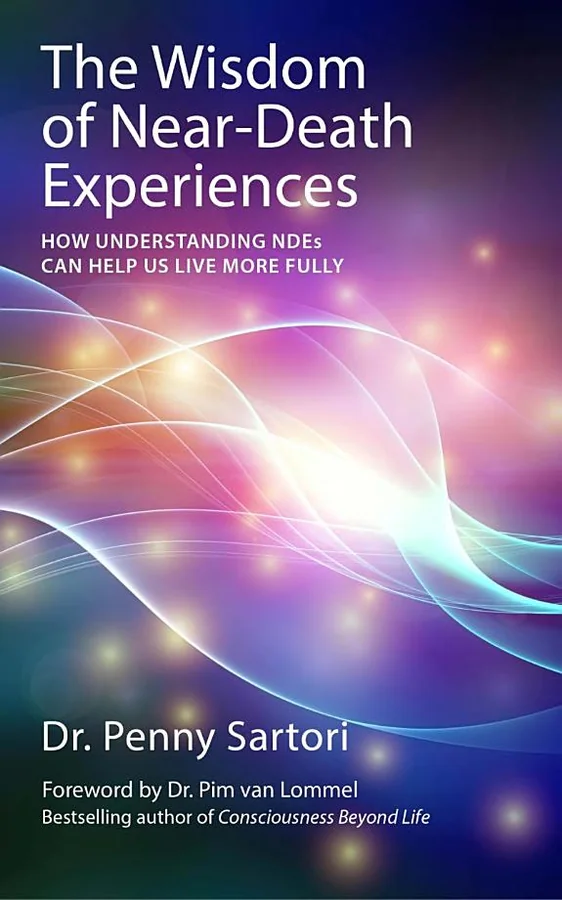
Wisdom of Near-Death Experiences
 81
81

Wisdom of Near-Death Experiences
Dr. Penny Sartori’s clinical study of near-death experiences offers a much-needed bridge between the medical and the metaphysical. Her background as a registered nurse lends immediate credibility to the patient accounts she meticulously details. What elevates "Wisdom of Near-Death Experiences" beyond a mere collection of anecdotes is Sartori’s persistent questioning of the conventional medical paradigm. She highlights how the drive to pathologize these profound events may cause us to overlook vital information about human consciousness and the dying process. A particular strength is her exploration of the transformative impact NDEs have on individuals, altering their life perspectives and reducing existential dread. The work could benefit from a more direct engagement with the philosophical implications of her findings, moving beyond the purely clinical to address the broader existential questions these experiences raise. Nevertheless, Sartori provides a valuable, empirically-informed perspective on a phenomenon that continues to baffle and inspire.
Verdict: A grounded, nurse-led investigation into the profound implications of near-death experiences.
📝 Description
81
Dr. Penny Sartori's 2014 book investigates near-death experiences from a clinical nursing perspective.
Published in 2014, "Wisdom of Near-Death Experiences" by Dr. Penny Sartori examines the phenomenon of near-death experiences (NDEs) through the lens of clinical investigation. Drawing on five years of research, Sartori, a registered nurse, compiles patient accounts alongside her professional observations. The book moves beyond simple documentation, aiming to understand the broader implications of NDEs for individuals and society. It challenges the common medical tendency to dismiss NDEs as mere physiological responses, suggesting that this perspective might overlook significant insights into consciousness and existence.
The work is intended for readers interested in consciousness, the afterlife, and altered states of awareness. It will resonate with those who have personally experienced or know someone who has had an NDE and seek a clinically informed viewpoint. Healthcare professionals, particularly those in nursing and palliative care, may find Sartori's patient-focused methodology and research valuable. The book also speaks to spiritual seekers and students of philosophy who are interested in empirical studies of mystical phenomena.
Sartori's research enters a conversation about consciousness and the afterlife that has long been a part of esoteric traditions. While her approach is grounded in empirical nursing, it touches upon themes explored in spiritualism and parapsychology, such as the nature of the soul, potential realms beyond physical death, and the limits of materialistic explanations for consciousness. Her work builds on earlier investigations into NDEs that sought to validate subjective, transformative experiences within a more scientific framework, aligning with a broader esoteric interest in bridging the material and immaterial worlds.
💡 Why Read This Book?
• You will learn how a registered nurse's direct clinical experience, particularly with a patient in 1995, informed a rigorous five-year study on NDEs, offering a unique perspective not found in purely academic or anecdotal accounts. • You will gain an understanding of the specific elements common to NDEs, such as the life review and out-of-body experiences, as analyzed through Sartori's professional lens, challenging potential medical dismissals. • You will feel empowered by insights into how NDEs can lead to profound personal transformations, fostering a reduced fear of death and an increased sense of purpose, as documented through patient narratives.
⭐ Reader Reviews
Honest opinions from readers who have explored this book.
❓ Frequently Asked Questions
What is the main argument of "Wisdom of Near-Death Experiences"?
The book argues that near-death experiences (NDEs) offer valuable insights into consciousness and life that are often overlooked when the medical community solely attempts to pathologize them. Dr. Sartori suggests these experiences can be transformative and beneficial.
How long did Dr. Penny Sartori's study on NDEs last?
Dr. Penny Sartori's clinical study of near-death experiences spanned five years, providing a substantial foundation for the research presented in the book.
What is the author's professional background?
Dr. Penny Sartori is a registered nurse, and her professional background in intensive care nursing heavily influences her research and perspective on near-death experiences.
What common elements of NDEs does the book discuss?
The book discusses common elements reported by individuals during NDEs, including out-of-body experiences, encountering a light, life reviews, and feelings of profound peace and love.
Does the book suggest NDEs have a positive impact?
Yes, the book explores how NDEs can empower individuals, leading to significant personal transformations such as a reduced fear of death, increased compassion, and a re-evaluation of life priorities.
What is the book's stance on the medical interpretation of NDEs?
Dr. Sartori questions the medical tendency to pathologize NDEs, suggesting that by focusing solely on physiological explanations, we might miss the deeper meaning and potential benefits these experiences can offer.
🔮 Key Themes & Symbolism
The Clinical Lens on NDEs
Sartori applies her rigorous nursing background to the study of near-death experiences, moving beyond anecdotal accounts. The book details patient narratives gathered over a five-year clinical study, emphasizing observable phenomena and their reported psychological and spiritual effects. This approach grounds the often-ethereal subject of NDEs in empirical observation, challenging purely speculative interpretations and highlighting the need for serious consideration by the medical community. The work specifically questions the impulse to label NDEs as mere neurological events, suggesting such a reductionist view misses their wide impact.
Transformation and Post-NDE Life
A central theme is the profound and lasting changes NDEs can instigate in individuals. Sartori documents how survivors often report a diminished fear of death, an increased sense of purpose, greater compassion for others, and a shift in values away from materialism. These transformations are presented not as transient psychological reactions, but as deep-seated alterations in perspective that guide the remainder of the individual's life. The book explores how these shifts can benefit not only the individual but also society, fostering more empathetic and less fearful communities.
Critique of Medical Skepticism
The work directly addresses the medical establishment's historical reluctance to accept NDEs as genuine experiences with meaningful content. Sartori critiques the tendency to dismiss these accounts as hallucinations or physiological side effects of trauma. She argues that this approach, exemplified by the drive to pathologize, prevents healthcare professionals from understanding the full scope of human consciousness and the potential for spiritual growth even in the face of death. Her research highlights the limitations of a purely materialistic worldview when confronted with subjective accounts of transcendence.
Consciousness Beyond the Brain
While maintaining a clinical perspective, the book implicitly or explicitly engages with the question of whether consciousness is solely a product of brain activity. The reported experiences of out-of-body phenomena and awareness during periods of profound physiological distress challenge conventional neuroscientific models. Sartori presents these accounts without definitive pronouncements, but their consistent nature across different individuals suggests that consciousness might possess qualities not yet fully understood or explained by current scientific paradigms, opening avenues for metaphysical inquiry.
💬 Memorable Quotes
Direct passages from the work, attributed to the author.
“By trying to pathologize NDEs, are we missing out on what they can tell us about life?”
— This question expresses Sartori's core critique of the medical establishment. It challenges the impulse to reduce profound subjective experiences to mere symptoms, suggesting that such a reductionist approach blinds us to potentially vital lessons about existence, consciousness, and the nature of reality.
“A doctor presents riveting patient stories to explore how NDEs can empower us and society as a whole.”
— This highlights the dual focus of the book: individual empowerment through transformative NDEs and the broader societal benefits that could arise if these experiences were better understood and integrated.
“Drawing on a 5-year clinical study of near-death experiences...”
— This emphasizes the methodological rigor behind Sartori's work. The five-year duration lends weight to her findings, positioning the book as a serious inquiry rather than a collection of unsupported tales.
“Dr. Penny Sartori is a registered nurse who began researching Near-Death Experiences (NDEs) in 1995...”
— This establishes the author's credentials and the genesis of her research, rooted in a specific professional encounter that sparked a long-term dedication to understanding NDEs.
“Her long-term intensive care patients begged her to let him die in peace.”
— This specific patient interaction from 1995 is identified as the catalyst for Sartori's research, illustrating the compassionate, patient-centered motivation behind her extensive work on NDEs.
🌙 Esoteric Significance
Tradition
This work engages with the broader esoteric tradition of exploring consciousness beyond the physical body, aligning loosely with concepts found in Spiritualism, Theosophy, and certain branches of Western esotericism that posit a non-material reality. While not explicitly tied to a single lineage like Hermeticism or Kabbalah, Sartori's empirical approach to phenomena traditionally explored through mysticism and spiritual revelation offers a modern, scientifically-informed perspective. It bridges the gap between subjective spiritual experience and objective inquiry, a hallmark of later esoteric movements seeking to reconcile ancient wisdom with modern understanding.
Symbolism
The primary symbolic motif explored is the 'light' often reported in NDEs, which in many esoteric traditions symbolizes divine presence, ultimate truth, or pure consciousness. The 'life review' can be seen as a symbolic mirroring of karmic principles or divine judgment found in various religious and esoteric systems, representing an opportunity for ultimate self-understanding and reconciliation. The profound sense of 'peace' and 'love' experienced during NDEs symbolizes the return to a unified, transcendent state, often described in mystical literature as the divine source or the underlying interconnectedness of all beings.
Modern Relevance
Dr. Sartori's work remains highly relevant to contemporary discussions in consciousness studies, transpersonal psychology, and palliative care. Thinkers and practitioners exploring the boundaries of neuroscience and subjective experience, such as those involved with the Applied Consciousness Sciences Foundation or proponents of neurotheology, find value in her empirical data. Her research informs modern approaches to end-of-life care, encouraging a more holistic and less fear-driven perspective on death, and continues to inspire individuals exploring spiritual emergence and non-ordinary states of consciousness.
👥 Who Should Read This Book
• Individuals seeking a clinically grounded perspective on near-death experiences, moving beyond purely anecdotal or philosophical treatments, will find Sartori's nursing background invaluable. • Healthcare professionals, particularly those in critical care, hospice, or palliative care settings, can gain a deeper, more empathetic understanding of patient experiences that transcend conventional medical explanations. • Students of consciousness studies, comparative religion, and esoteric philosophy will benefit from empirical data that challenges materialistic assumptions and opens doors to metaphysical inquiry.
📜 Historical Context
First published in 2014, "Wisdom of Near-Death Experiences" emerged during a period of sustained public and academic fascination with NDEs, building on decades of research initiated by figures like Raymond Moody Jr. in the 1970s. Sartori's work arrives in contrast to the prevailing skeptical scientific viewpoint, which often attributes NDEs to neurological or psychological phenomena under duress. While thinkers like Stanislav Grof were exploring expanded states of consciousness through psychedelic therapy and holotropic breathwork, Sartori's approach offered a grounded, nursing-based empirical investigation. The book's reception likely occurred within a landscape where popular books on spirituality and consciousness were abundant, yet rigorously researched clinical perspectives remained less common. Sartori's specific critique of the medical tendency to pathologize NDEs directly challenges established psychiatric diagnostic frameworks, positioning her work as a significant contribution to the ongoing debate about consciousness and its relation to the physical body.
📔 Journal Prompts
The patient encounter from 1995 that initiated Sartori's research.
Common elements reported during NDEs, such as life review or encountering a light.
The potential societal benefits of understanding NDEs.
Critiques of the medical establishment's pathologizing approach to NDEs.
Personal reflections on the transformative impact of altered states of consciousness.
🗂️ Glossary
Near-Death Experience (NDE)
A profound subjective experience reported by some individuals who have been close to death or have undergone clinical death, often involving altered states of consciousness, out-of-body sensations, and encounters with light or deceased relatives.
Pathologize
To view or treat a physical or mental condition as disease or illness. In the context of NDEs, it refers to the tendency to explain them solely as symptoms of medical distress rather than meaningful experiences.
Clinical Study
A research investigation involving human subjects, designed to answer specific questions about health, illness, and medical treatments, often involving systematic data collection and analysis.
Out-of-Body Experience (OBE)
A sensation of floating or feeling one's consciousness detached from one's physical body, often reported during NDEs.
Life Review
A common feature of NDEs where the individual experiences a rapid, often panoramic, playback of their life events, accompanied by an understanding of the consequences of their actions.
Transcendence
The state of existing beyond the physical or material world; overcoming the limitations of ordinary existence. NDEs are often described as experiences of transcendence.
Consciousness
The state of being aware of and responsive to one's surroundings; the totality of one's thoughts, feelings, and intentions. The nature of consciousness is a central question explored in relation to NDEs.
This book appears in 1 collection
🔮 Readers Also Liked
Browse all →









From the “Out-of-Body Experience” Collection
View all →








More Free Occult Philosophy Books
View all →