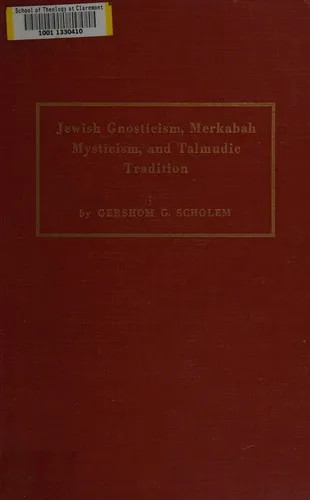
Jewish gnosticism, Markavah mysticism and Talmudic tradition

 83
83

Jewish gnosticism, Markavah mysticism and Talmudic tradition
Gershom Scholem's 1960 exploration of Jewish Gnosticism and Merkavah mysticism remains a vital, if demanding, resource. The book's signal strength lies in its meticulous tracing of esoteric motifs through ancient Jewish texts, offering a scholarly counterpoint to speculative histories. Scholem’s precise distinction between early Merkavah ascent and later Kabbalah is particularly illuminating, grounding the study in textual evidence rather than myth. A limitation, however, is the dense academic prose, which can make certain passages challenging for those not already steeped in the field. The discussion of the Hekhalot literature, for instance, while crucial, requires considerable reader focus to fully absorb its implications for understanding early Jewish visionary practices. Scholem’s work provides an indispensable, albeit academically rigorous, foundation for understanding the roots of Jewish mysticism.
📝 Description
83
Gershom Scholem's 1960 book traces Jewish mysticism from Ezekiel's chariot to the Talmud.
First published in 1960, Gershom Scholem's work examines esoteric currents within Judaism. It details the development of mystical thought, beginning with early Jewish apocalyptic literature. The book then follows this lineage through Merkavah (Chariot) mysticism and into the Talmudic discourse. Scholem, a key figure in the academic study of Jewish mysticism, offers a critical analysis. He distinguishes these early traditions from later Kabbalah while emphasizing their significance in shaping Jewish spiritual history.
This study is aimed at serious students and scholars of Jewish mysticism, Gnosticism, and religious history. It is especially relevant for those interested in the roots of esoteric Jewish thought, the evolution of ecstatic and visionary practices, and the scholarly interpretation of religious texts. A basic understanding of Jewish history and religious concepts is beneficial for fully grasping Scholem's detailed arguments and textual analysis.
Scholem's analysis positions early Jewish mysticism as distinct from later Kabbalistic forms, tracing its roots in apocalyptic visions and Talmudic discourse. His work provides a scholarly framework for understanding these traditions not as isolated phenomena but as integral to Jewish intellectual and spiritual history. The book engages with scholarly debates on the origins and influences of these practices, including their relationship with Hellenistic and early Christian milieux.
💡 Why Read This Book?
• Gain an understanding of the *Merkavah* mystical ascent, a core practice involving visionary journeys through heavenly palaces described in early Jewish texts, offering a unique perspective on ancient ecstatic experiences. • Learn about the specific characteristics of Jewish Gnosticism, differentiating it from other Gnostic schools and revealing its particular expressions within Jewish cosmology and theological debates. • Explore the intricate relationship between esoteric Jewish traditions and the Talmudic discourse, understanding how mystical ideas were integrated or contained within the broader rabbinic framework, as analyzed by Scholem.
⭐ Reader Reviews
Honest opinions from readers who have explored this book.
❓ Frequently Asked Questions
What is Merkavah mysticism according to Scholem's analysis?
Scholem describes Merkavah mysticism as an early form of Jewish mysticism centered on the ecstatic ascent to the divine throne, inspired by Ezekiel's vision of the divine chariot. It involved complex visionary journeys through heavenly realms.
How does Jewish Gnosticism differ from other Gnostic traditions?
In Scholem's work, Jewish Gnosticism often features a singular, transcendent God and an emphasis on the creation narrative within a Jewish framework, distinct from the dualistic cosmologies prevalent in many non-Jewish Gnostic systems.
What role did the Talmud play in Jewish esoteric traditions?
Scholem shows that the Talmud, while primarily a legal and aggadic corpus, also contains elements and discussions that reflect or influenced esoteric traditions, including mystical interpretations and accounts of visionary experiences.
When was Gershom Scholem's book first published?
Gershom Scholem's seminal work, Jewish Gnosticism, Merkavah Mysticism, and Talmudic Tradition, was first published in 1960, establishing a new standard for the academic study of Jewish mysticism.
Is this book a good starting point for beginners in Jewish mysticism?
While foundational, the book is scholarly and dense. It's best suited for those with some prior knowledge of Jewish history and religious studies, rather than absolute beginners seeking an introductory overview.
What specific texts does Scholem analyze regarding Merkavah mysticism?
Scholem extensively analyzes early Jewish apocalyptic literature and the Hekhalot texts, which describe the ascent through heavenly palaces and the experience of divine mysteries.
🔮 Key Themes & Symbolism
The Merkavah Ascent
This theme centers on the early Jewish mystical practice of ascending through heavenly palaces to reach the divine throne. Scholem details the visionary experiences, the dangers involved, and the complex angelic hierarchies encountered by mystics. The imagery drawn from Ezekiel's vision of the divine chariot becomes a sophisticated vehicle for exploring cosmological beliefs and the quest for direct divine encounter, predating later Kabbalistic developments.
Jewish Gnostic Elements
Scholem meticulously identifies and analyzes Gnostic ideas that manifested within Jewish circles, distinct from their more widely known Christian counterparts. This includes explorations of creation myths, the nature of divine emanations, and the role of intermediary figures. The focus is on how these concepts were adapted and integrated into Jewish theological frameworks, often challenging or reinterpreting established biblical narratives.
Talmudic Interactions
A crucial aspect of the work is its examination of how esoteric thought interacted with the mainstream Talmudic tradition. Scholem demonstrates that mystical themes, visions, and cosmologies were not entirely separate from rabbinic discourse but were sometimes discussed, alluded to, or even subtly incorporated into aggadic (non-legal) sections of the Talmud, revealing a complex relationship between exoteric and esoteric Judaism.
Distinguishing Esoteric Strata
Scholem's scholarship excels at differentiating various layers of Jewish mysticism. He carefully distinguishes the early Merkavah and Gnostic traditions from the later, more systematized Kabbalah that emerged centuries later. This analytical rigor is essential for understanding the historical development of Jewish esoteric thought and avoiding anachronistic interpretations.
💬 Memorable Quotes
Direct passages from the work, attributed to the author.
“The phenomenon of Jewish mysticism cannot be understood without reference to the Gnosis.”
— This statement highlights Scholem's central thesis that understanding Jewish esoteric traditions, particularly early forms, requires acknowledging the influence and presence of Gnostic ideas, even within a Jewish context.
“The Merkavah mystics were concerned with the ascent to the divine throne.”
— This succinctly captures the core practice of Merkavah mysticism as described by Scholem: a visionary journey aimed at reaching the celestial realm and experiencing the presence of God.
“The Talmud contains traces and discussions relevant to esoteric speculation.”
— This interpretation underscores Scholem's argument that the Talmudic corpus is not solely a legal text but also preserves hints and debates that shed light on the development of Jewish mystical thought.
“Early Jewish mysticism differs significantly from later Kabbalah.”
— This reflects Scholem's critical approach to historical development, stressing the distinct characteristics and historical periods of different esoteric movements within Judaism.
💡 Key Ideas
Editorial paraphrase of the work's core concepts — not direct quotes.
Hekhalot literature describes the visionary's journey through heavenly palaces.
This paraphrase points to the primary textual evidence Scholem uses to reconstruct Merkavah mysticism, emphasizing the structured, multi-stage nature of the mystical ascent described in these ancient texts.
🌙 Esoteric Significance
Tradition
This work firmly places itself within the study of Jewish esoteric traditions, specifically tracing the lineage from early apocalyptic literature through Merkavah mysticism to its subtle presence within Talmudic discourse. Scholem argues that these are distinct precursors to, rather than direct components of, the later Zoharic Kabbalah, offering a critical genealogical account of Jewish mystical expression.
Symbolism
Key symbols explored include the *Merkavah* (divine chariot) itself, representing the structure of the divine realm and the goal of mystical ascent. The heavenly palaces (*Hekhalot*) symbolize the stages of this ascent, each presenting trials and revelations. Angelic figures and divine names are also crucial, acting as markers and aids in the mystic's perilous journey through the celestial spheres.
Modern Relevance
Scholem's work continues to inform contemporary scholars of religion, Jewish studies, and mysticism. Thinkers and practitioners exploring the historical roots of ecstatic experience, altered states of consciousness, and visionary cosmology draw heavily on his meticulous analysis of the Merkavah and Gnostic traditions within Judaism.
👥 Who Should Read This Book
• Academic researchers in Jewish studies, religious history, and Gnosticism seeking a foundational text on the origins of Jewish mysticism. • Students of comparative religion interested in the development of esoteric practices and cosmological beliefs across different ancient traditions. • Advanced practitioners of Kabbalah or Western esotericism aiming to understand the deep historical roots and textual foundations of their respective paths.
📜 Historical Context
Gershom Scholem's Jewish Gnosticism, Merkavah Mysticism, and Talmudic Tradition, published in 1960, arrived during a central moment in the academic study of Jewish mysticism. Scholem, widely regarded as the founder of the modern field, provided a rigorous, textually grounded counterpoint to earlier, often speculative, scholarship. The work engaged with contemporary intellectual currents in religious studies and the history of ideas, particularly regarding the influence of Hellenistic thought and Gnosticism on early Jewish traditions. It sought to establish the historical authenticity and distinctiveness of these esoteric movements, separating them from later, more popular conceptions of Jewish mysticism. Scholem's scholarship implicitly engaged with scholars like Erwin Goodenough, who explored Hellenistic influences, by offering a more Judaic-centric perspective on Gnostic elements. The book's reception solidified Scholem's reputation and set the agenda for subsequent research into the origins of Jewish esoteric traditions.
📔 Journal Prompts
The Merkavah ascent as a visionary journey through Hekhalot.
Jewish Gnostic cosmology versus other Gnostic systems.
Talmudic discussions and their esoteric implications.
Scholem's distinction between early mysticism and later Kabbalah.
The symbolic architecture of the heavenly palaces.
🗂️ Glossary
Merkavah Mysticism
An early form of Jewish mysticism focused on ecstatic ascent to the divine throne, inspired by Ezekiel's vision of the divine chariot. It involved visionary journeys through heavenly realms and encounters with angels.
Gnosticism
A diverse set of religious and philosophical systems emphasizing salvation through secret knowledge (gnosis). Jewish Gnosticism refers to Gnostic ideas and movements that emerged within or influenced Jewish communities.
Talmudic Tradition
The body of Jewish civil and ceremonial law and lore, compiled in the Babylonian and Palestinian Talmuds. It includes legal discussions (halakha) and ethical/narrative material (aggadah).
Hekhalot Literature
A body of early Jewish mystical texts describing ascents through heavenly palaces ('Hekhalot') to the divine throne, often detailing angelic encounters and divine hymns.
Aggadah
The non-legalistic portion of rabbinic literature, including legends, theological discussions, ethical teachings, and interpretations of scripture.
Halakha
The collective body of Jewish religious laws derived from the Written and Oral Torah, as interpreted by rabbinic authorities.
Apocalyptic Literature
A genre of religious literature, prominent in Judaism and Christianity from ancient times, that purports to reveal divine mysteries about the end times, often through visions and symbolic imagery.
🔮 Readers Also Liked
Browse all →






More by Gershom Scholem
All books →



More Free Mysticism & Contemplation Books
View all →