Israel's Beneficent Dead
 82
82

Israel's Beneficent Dead
Brian B. Schmidt's "Israel's Beneficent Dead" dissects the complex relationship between the living and the deceased in ancient Israel with academic rigor. The central argument, that the dead were often viewed as potential benefactors rather than solely malevolent spirits, is compellingly supported by close readings of biblical and extra-biblical texts. Schmidt's analysis of funerary practices and lamentations, particularly concerning the perceived agency of ancestors, provides a significant corrective to earlier, more simplistic interpretations. A notable strength lies in the careful exegesis of passages that might otherwise be overlooked in discussions of Israelite religion. However, the book's dense academic prose, a natural byproduct of its origins as a 1992 Oxford thesis, may present a barrier for readers less accustomed to specialized theological and philological argumentation. The exploration of how neglected ancestors could bring ruin, as detailed in discussions of certain prophetic or wisdom literature, highlights the practical, socio-religious implications of ancestor veneration. Ultimately, Schmidt delivers a meticulously researched and valuable contribution to understanding ancient Israelite beliefs about death and the afterlife.
📝 Description
82
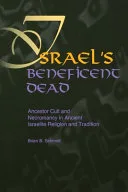
Brian B. Schmidt's 1996 book examines ancient Israelite beliefs about the dead's influence on the living.
Brian B. Schmidt's "Israel's Beneficent Dead" scrutinizes ancient Israelite views on the afterlife and ancestor veneration. Originally Schmidt's 1992 Oxford doctoral thesis, this 1996 publication moves past simple ideas of Sheol to consider how the deceased might have actively influenced their living descendants. The book investigates the perception of the dead not as passive figures in the underworld, but as agents who could impact the fortunes and well-being of their families.
This work is intended for scholars and advanced students of biblical studies, ancient Near Eastern religions, and the history of magic and ritual. Readers interested in the development of religious thought, particularly concerning death cults, ancestor veneration, and early Israelite cosmology, will find value here. It is not an introductory text but a rigorous academic treatment for those familiar with foundational texts and scholarly discussions.
This book engages with the study of ancient Israelite religion, a tradition often examined within broader discussions of early spiritual practices. It questions the assumption of solely negative or fearful attitudes toward the dead, proposing instead a model where ancestors played a role in the lives of the living. This perspective aligns with scholarly interests in understanding the complex and varied ways ancient peoples perceived death, the spirit world, and the ongoing connection between generations.
💡 Why Read This Book?
• Understand the nuanced view of ancient Israelite ancestor veneration, moving beyond simple notions of the underworld, by examining specific funerary rites discussed in the text. • Gain insight into the concept of the 'beneficent dead' and their perceived influence on the living, a key theme explored through textual analysis from Schmidt's 1992 Oxford thesis. • Appreciate the socio-religious dynamics of ancient Israelite communities, learning how proper treatment of the deceased was linked to community well-being, as evidenced in the book's critique of earlier scholarly views.
⭐ Reader Reviews
Honest opinions from readers who have explored this book.
❓ Frequently Asked Questions
What is the main argument of Brian B. Schmidt's 'Israel's Beneficent Dead'?
The book argues that ancient Israelites viewed their deceased ancestors not just with fear, but also as potential benefactors who could influence the living community's fortunes through proper veneration and ritual.
When was 'Israel's Beneficent Dead' first published and what was its origin?
The book was first published in 1996, stemming from the author's doctoral thesis completed at Oxford University in 1992.
Does the book discuss the Israelite concept of the afterlife?
Yes, it revises earlier understandings of the Israelite afterlife, exploring how the dead were perceived as active agents rather than passively existing in the underworld.
Who would benefit most from reading this scholarly work?
Scholars and advanced students of biblical studies, ancient Near Eastern religions, and the history of magic and ritual would find this detailed examination most beneficial.
What kind of textual evidence does Schmidt use to support his claims?
Schmidt analyzes biblical texts, including passages from prophetic and wisdom literature, alongside extra-biblical sources to reconstruct ancient Israelite beliefs about ancestor veneration.
How does this book differ from general introductions to ancient Israelite religion?
Unlike introductory texts, 'Israel's Beneficent Dead' offers a specialized, in-depth scholarly treatment focused specifically on the complex beliefs and practices surrounding the deceased and their perceived influence.
🔮 Key Themes & Symbolism
The Beneficent Dead
This theme centers on the core argument that ancient Israelites perceived their deceased ancestors as potentially benevolent forces. Schmidt challenges the notion that views were solely negative, highlighting texts and practices suggesting ancestors could offer protection or prosperity if honored. This concept revises traditional interpretations of Sheol and the underworld, presenting a more dynamic relationship between the living and the dead where the latter retained agency and influence within the community's spiritual and social fabric.
Ancestral Agency and Influence
Schmidt investigates how the dead were believed to actively participate in the lives of the living. This includes the idea that neglected ancestors could bring misfortune, while properly appeased ones ensured blessings. The work scrutinizes rituals, lamentations, and burial customs as evidence of this perceived ancestral power, suggesting a reciprocal relationship where the living's actions directly impacted the deceased's disposition and efficacy.
Revision of Afterlife Concepts
A significant contribution of the book is its revisionary approach to understanding ancient Israelite eschatology. It moves away from monolithic views of the underworld, demonstrating a spectrum of beliefs where the dead could retain connections and exert influence. This theme is explored through detailed textual exegesis, offering a more sophisticated picture of how death was conceptualized and how the boundary between the living and the dead was understood to be permeable.
Ritual and Remembrance
The book emphasizes the critical role of ritualistic practices and communal remembrance in maintaining a positive relationship with the dead. Proper burial, ongoing sacrifices, and mourning ceremonies are presented not merely as expressions of grief, but as vital mechanisms for ensuring the ancestors' favor and averting their potential wrath. This highlights the practical, lived religion of ancient Israel, where theological concepts were deeply intertwined with communal actions.
💬 Memorable Quotes
Direct passages from the work, attributed to the author.
“Proper funerary rites ensured the ancestors' continued goodwill.”
— This interpretation highlights the reciprocal nature of the relationship between the living and the dead, emphasizing that adherence to specific burial and memorial practices was crucial for maintaining a positive spiritual connection and receiving ancestral blessings.
“Neglect of the departed could invite divine or ancestral retribution.”
— This concept underscores the potential negative consequences of failing to honor the dead, suggesting that their influence could manifest as misfortune or punishment, thereby reinforcing the importance of consistent veneration.
“The living community's well-being was intrinsically linked to the state of its ancestors.”
— This interpretation emphasizes the communal dimension of ancestor veneration, suggesting that the prosperity and health of the entire society were believed to be dependent on the proper care and appeasement of the deceased.
💡 Key Ideas
Editorial paraphrase of the work's core concepts — not direct quotes.
The dead were not simply absent entities, but potent forces shaping the present.
This paraphrased concept captures Schmidt's central thesis, suggesting that ancient Israelite beliefs endowed the deceased with an active, influential role in the lives of their descendants, contrary to views of them as merely passive inhabitants of the underworld.
Ancient Israelite conceptions of the afterlife were more varied than previously assumed.
This paraphrased point reflects the book's revisionary stance, arguing against simplistic understandings of the Israelite view of death and the underworld, and instead presenting a more complex and nuanced picture of beliefs concerning the deceased.
🌙 Esoteric Significance
Tradition
While rooted in biblical studies, the work touches upon themes relevant to Western Esotericism, particularly concerning ancestor veneration and the perceived permeability between the physical and spiritual realms. It aligns with traditions that explore the agency of spirits and the efficacy of ritual in influencing worldly affairs. The book offers a scholarly, critical lens on practices that resonate with folk magic and necromancy, providing a historical and textual basis for understanding the ancient roots of such concepts within a specific religious tradition.
Symbolism
The primary symbolic motif is the ancestral figure, representing not just lineage but also a source of spiritual power and influence. Burial sites themselves function symbolically as liminal spaces connecting the living and the dead, where rituals of appeasement and remembrance occur. The concept of 'Sheol' or the underworld, while critiqued as simplistic, symbolizes the perceived state of the deceased, with the book emphasizing its potential to be a place of influence rather than mere oblivion.
Modern Relevance
Contemporary practitioners of various esoteric paths, particularly those interested in ancestral healing, spirit work, or the historical underpinnings of ritual magic, can find valuable context in Schmidt's research. Thinkers exploring the intersection of psychology and religion, or comparative studies of death cults across cultures, may also draw upon its findings. The book provides a scholarly foundation for understanding the deep historical roots of practices that seek to engage with and benefit from the spiritual power of ancestors.
👥 Who Should Read This Book
• Researchers in comparative religion and ancient Near Eastern studies will find a detailed analysis of a specific cultural manifestation of ancestor veneration, offering comparative data for broader studies. • Students of biblical theology and history seeking to understand the evolution of Israelite beliefs about death and the afterlife will gain a nuanced perspective beyond simplistic interpretations. • Scholars of magic, ritual, and folk religion interested in the historical precedents for practices involving the deceased will benefit from Schmidt's examination of perceived ancestral agency.
📜 Historical Context
Brian B. Schmidt's "Israel's Beneficent Dead" emerged in 1996, a period marked by robust scholarly re-evaluation of the Hebrew Bible's historical and religious context. The late 20th century saw a move away from purely theological readings towards understanding ancient Israelite religion as embedded within broader ancient Near Eastern cultural practices. Schmidt's work participates in this trend, particularly engaging with scholarship on ancestor cults and the veneration of the dead, a topic also explored by scholars like Karel van der Toorn. The book implicitly critiques earlier, often Hellenocentric, interpretations that projected Greek notions of Hades onto Israelite beliefs. While not a direct engagement with a specific reception event like a major review or censorship, its publication contributed to the ongoing academic discourse that sought to reconstruct a more nuanced picture of ancient Israelite cosmology and funerary practices, challenging monolithic assumptions about their views on death and the afterlife.
📔 Journal Prompts
The concept of the 'beneficent dead' in ancient Israel:
Ancestral agency and its impact on the living community:
Rituals of remembrance and their perceived efficacy:
Revisionary interpretations of Sheol and the afterlife:
The reciprocal relationship between living and deceased ancestors:
🗂️ Glossary
Beneficent Dead
A term coined or popularized by Schmidt to describe the ancient Israelite perception of deceased ancestors as potential sources of blessing, protection, or prosperity for the living, rather than solely malevolent entities.
Ancestor Veneration
The practice of honoring, appeasing, or communicating with deceased ancestors, often believed to possess the power to influence the fortunes of their living descendants.
Sheol
The Hebrew term for the underworld in ancient Israelite belief, traditionally understood as a shadowy place of the dead; Schmidt's work revises simplistic interpretations of its nature and the status of its inhabitants.
Funerary Rites
The rituals and ceremonies performed at the death and burial of an individual, which Schmidt argues were crucial in ancient Israel for maintaining a positive relationship with the deceased and ensuring their favor.
Ancestral Agency
The perceived ability of the deceased to actively affect or intervene in the lives of the living, a central theme explored in Schmidt's work regarding ancient Israelite beliefs.
Eschatology
The theological study of 'end things,' including beliefs about death, the afterlife, and the ultimate destiny of humanity; Schmidt's work offers a specific contribution to Israelite eschatology.
Cosmology
The study of the origin, evolution, and eventual fate of the universe; in this context, it refers to ancient Israelite understandings of the structure of the cosmos, including the areas of the living and the dead.