Intrigue Archetypes
 79
79

Intrigue Archetypes
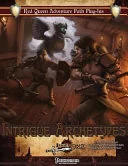
The 2017 release, Intrigue Archetypes, by Legendary Games, offers a potent injection of specialized roles for Pathfinder campaigns. Its strength lies in the sheer variety of meticulously crafted archetypes, moving beyond generic class variants. The 'Spell Hacker Wizard,' for instance, recontextualizes arcane magic not just as raw power, but as a tool for infiltration and system manipulation—a concept that feels remarkably current. However, the supplement occasionally strains under the weight of its own ambition; some archetypes, while flavorful, require significant GM adjudication to integrate seamlessly into a campaign, particularly those leaning heavily on narrative control like the 'Mastermind Psychic.' The core conceit of providing distinct, playable roles for intrigue is executed with flair, but the balance between unique mechanics and table compatibility is not always perfectly struck. It's a valuable toolkit for groups committed to deep narrative play.
📝 Description
79
Intrigue Archetypes, published in 2017, offers ten specialized character classes for Pathfinder.
This 40-page supplement from Legendary Games provides ten distinct character archetypes designed for tabletop role-playing games, particularly within the Pathfinder system. These classes focus on enhancing gameplay related to espionage, political intrigue, and urban conflict. They introduce unique abilities and thematic elements that allow players to assume roles in sophisticated schemes and clandestine operations.
The supplement is aimed at players and game masters who want to add more depth and character specialization to their role-playing sessions. It is especially suitable for campaigns set in environments featuring courtly politics, criminal networks, or urban decay. Players who enjoy characters with complex motivations and specialized skill sets, such as manipulation, deception, or tactical combat, will find these archetypes useful.
Released in early 2017, Intrigue Archetypes appeared during a period of significant growth for tabletop RPGs, including the Pathfinder system. The market saw many third-party publishers creating content to expand upon core game mechanics and settings. This work contributed to a trend of highly specialized character options that moved beyond traditional fantasy roles, reflecting player interest in theme-driven gameplay.
While not a traditional esoteric text, Intrigue Archetypes taps into the human fascination with hidden knowledge and power dynamics. The archetypes, such as the 'mastermind psychic' and 'spell hacker wizard,' represent figures who operate outside conventional social structures, using specialized skills and knowledge to influence events. This aligns with esoteric traditions that examine hidden forces, manipulation, and the acquisition of secret power, often through unconventional means and specialized understanding.
💡 Why Read This Book?
• Gain access to ten unique character archetypes, such as the 'Cityscape Hierophant Druid,' offering specialized mechanics for urban-centric campaigns that deviate from standard fantasy roles. • Enhance your Pathfinder game with new options for courtly intrigue and criminal underworlds, inspired by the 2017 supplement's focus on skulduggery and manipulation. • Explore character concepts like the 'Wild Card Swashbuckler,' providing distinct gameplay experiences and tactical approaches not readily available in core rulebooks.
⭐ Reader Reviews
Honest opinions from readers who have explored this book.
❓ Frequently Asked Questions
What is the primary system compatibility for Intrigue Archetypes?
Intrigue Archetypes is designed primarily for the Pathfinder Roleplaying Game system. It introduces new character options and mechanics intended to integrate seamlessly with Pathfinder's existing ruleset and campaign settings.
How many new archetypes are included in this supplement?
The supplement features a total of ten distinct and original archetypes, each offering a unique thematic and mechanical focus for player characters.
What kind of campaign settings does Intrigue Archetypes best support?
It is ideal for campaigns focused on courtly intrigue, urban decay, crime, corruption, and sophisticated manipulation, providing options for characters operating in such environments.
Who are the main credited authors for Intrigue Archetypes?
The primary credited creators include Legendary Games, with contributions from N Jolly and Jason Nelson, who first published the work in 2017.
Does Intrigue Archetypes offer new spells or magic items?
While the archetypes often interact with magic in unique ways (e.g., the Spell Hacker Wizard), the supplement primarily focuses on introducing new character class archetypes rather than a broad list of new spells or items.
What is the page count of the Intrigue Archetypes supplement?
Intrigue Archetypes is a 40-page supplement, offering a focused collection of new character options within a concise format.
🔮 Key Themes & Symbolism
The Art of Manipulation
This theme explores characters who thrive not on brute force, but on subtle influence and calculated deception. Archetypes like the Mastermind Psychic or the scheming Priest exemplify this, suggesting that true power lies in controlling perceptions and orchestrating events from the shadows. The supplement provides mechanics that reward clever planning and social maneuvering, reflecting a philosophical stance that intellect and strategy often triumph over overt might in the pursuit of objectives.
Urban Decay and Corruption
The supplement grounds its archetypes within settings marked by urban blight and systemic corruption. This context provides fertile ground for characters who operate outside the law or exploit its weaknesses. The Trickshot Sniper Vigilante or the Wild Card Swashbuckler, for example, fit naturally into environments where justice is scarce and survival depends on adaptability and resourcefulness. It paints a picture of a world where societal rot creates opportunities for unique forms of heroism or villainy.
Specialized Skill Application
Intrigue Archetypes emphasizes the application of skills in unconventional ways, moving beyond standard combat or exploration roles. The Spell Hacker Wizard, for instance, reinterprets arcane knowledge as a tool for infiltration and system disruption. This focus highlights a key concept: that mastery can be found in niche applications, allowing characters to excel in specific, often overlooked, areas of expertise within the game world.
Subverting Traditional Roles
The collection actively subverts traditional fantasy archetypes by placing them in contexts of intrigue and crime. A Druid becomes a Cityscape Hierophant, adapting nature's power to the urban jungle, while a Priest engages in political machinations. This theme suggests that established roles can be reinterpreted and repurposed, offering fresh perspectives on familiar fantasy tropes and encouraging players to think outside the box when creating characters.
💬 Memorable Quotes
Direct passages from the work, attributed to the author.
“10 incredible new archetypes replete with panache and flair”
— This phrase highlights the supplement's focus on delivering character options that are not only mechanically distinct but also possess a strong thematic identity and style, encouraging players to embody characters with personality.
“Scheming priest and mastermind psychic”
— These examples point to archetypes designed for characters who excel in manipulation, social engineering, and covert operations, emphasizing mental acuity and strategic planning over direct confrontation.
“Trickshot sniper vigilante, wild card swashbuckler”
— These archetypes suggest characters with specialized combat prowess and unpredictable tactics, appealing to players who enjoy skillful execution and a flair for the dramatic in action sequences.
“Spell hacker wizard”
— This concept frames arcane magic users not just as purveyors of destructive spells, but as individuals who can manipulate magical systems and information, akin to modern-day computer hackers.
“Cityscape hierophant druid”
— This archetype reimagines the traditional nature-focused Druid within an urban environment, suggesting a unique adaptation of primal forces to the concrete jungle and its inherent challenges.
🌙 Esoteric Significance
Tradition
While not overtly tied to a single esoteric lineage like Hermeticism or Gnosticism, Intrigue Archetypes draws implicitly from archetypal psychology and the concept of the 'shadow self' prevalent in Jungian thought. The archetypes represent distinct psychological masks or roles people adopt, particularly in situations requiring cunning, deception, or the navigation of complex social hierarchies. It reflects a modern interpretation of esoteric principles applied to character creation within a gamified system.
Symbolism
The supplement employs symbolism related to urban environments and hidden knowledge. Concepts like the 'cityscape' symbolize the modern labyrinth, a place of both opportunity and danger, reflecting the complexities of contemporary life. 'Hacking' magic or systems implies a transgression of boundaries, a modern take on forbidden knowledge or alchemical transformation, where established rules are subverted to achieve new ends.
Modern Relevance
Contemporary thinkers and practitioners in fields like game design and narrative psychology continue to explore archetypes as frameworks for understanding behavior and motivation. The 'mastermind' or 'trickster' figures presented in Intrigue Archetypes resonate with modern analyses of power dynamics and social manipulation, finding application in tabletop gaming, interactive fiction, and even performance coaching that utilizes role-playing scenarios.
👥 Who Should Read This Book
• Players seeking specialized Pathfinder character options beyond standard fighter/mage/rogue archetypes, particularly those interested in roles focused on manipulation, espionage, or urban settings. • Game Masters running campaigns with themes of courtly politics, crime syndicates, or urban decay who need compelling NPCs and player character options that fit the narrative. • Tabletop RPG enthusiasts interested in exploring how specific character archetypes can facilitate unique playstyles and narrative possibilities within a structured game system.
📜 Historical Context
Intrigue Archetypes arrived in 2017, a period when the Pathfinder Roleplaying Game, published by Paizo, enjoyed significant popularity and a thriving ecosystem of third-party content. The tabletop RPG market was experiencing a renaissance, with players seeking deeper customization and thematic richness beyond core rulebooks. This supplement tapped into a growing demand for character options that catered to non-traditional fantasy narratives, such as espionage, political thrillers, and urban crime dramas. It emerged in an era where publishers like Super Genius Games (with their Ultimate series) and Kobold Press were also releasing specialized content. While not directly engaging with a specific philosophical movement, it reflected broader trends in gaming towards narrative depth and character agency. The reception likely aligned with other niche archetype supplements, appreciated by players looking for specific playstyles but requiring GM buy-in for full integration.
📔 Journal Prompts
The Spell Hacker Wizard's approach to arcane power.
The Cityscape Hierophant Druid's relationship with the urban environment.
Reflect on the motivations of a Mastermind Psychic.
How does the Wild Card Swashbuckler's unpredictability manifest?
Consider the societal conditions that foster a Trickshot Sniper Vigilante.
🗂️ Glossary
Archetype
In this context, an archetype refers to a specialized subclass or variant of a base character class, offering a unique set of abilities, themes, and playstyle focused on a specific concept or role within the game.
Pathfinder
A popular tabletop role-playing game system known for its fantasy setting and intricate ruleset, developed by Paizo Publishing. Intrigue Archetypes is designed to be compatible with this system.
Courtly Intrigue
Refers to gameplay and character concepts centered around political maneuvering, social manipulation, secrets, and power struggles within noble courts or similar hierarchical societies.
Urban Decay
A thematic element describing settings characterized by blight, neglect, crime, and social problems within a city environment, providing a backdrop for gritty or noir-inspired stories.
Skulduggery
A term encompassing deceitful, underhanded, or dishonest behavior, often associated with espionage, crime, and clandestine activities within the context of the game.
Vigilante
A character archetype focused on operating outside the law to enact justice or pursue personal goals, often possessing a secret identity and specialized skills for combat or investigation.
Swashbuckler
A character archetype typically associated with flamboyant combat, daring maneuvers, and charismatic dueling, often employing agility and precise strikes.
This book appears in 1 collection
🔮 Readers Also Liked
Browse all →







From the “Archetypes” Collection
View all →





More Free Occult Philosophy Books
View all →