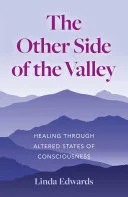
The Other Side of the Valley
 75
75

The Other Side of the Valley
Linda Edwards' *The Other Side of the Valley* offers a compelling narrative of a skeptic's conversion to the power of altered states for healing. What distinguishes this work is Edwards' commitment to bridging the gap between personal testimony and pragmatic application. She meticulously details her journey, moving from doubt to conviction, and crucially, translates these profound personal shifts into a coherent, accessible approach. The strength lies in its grounded perspective; it avoids esoteric jargon and instead focuses on actionable insights derived from a wide array of global healing traditions and her own experiences. A particularly effective section details the process of integrating non-ordinary states into daily life, making the profound feel tangible. However, while the book champions a simple approach, some readers might find the distillation process occasionally simplifies nuances that more deeply entrenched practitioners might seek. Despite this, Edwards succeeds in presenting a well-researched and personally resonant account that demystifies consciousness exploration for a broader audience. It’s a valuable exploration for anyone seeking to understand healing beyond conventional paradigms.
📝 Description
75
Linda Edwards published "The Other Side of the Valley" in 2019, chronicling her shift from skepticism to exploring altered states for healing.
This book details Linda Edwards' personal journey from deep skepticism to actively engaging with altered states of consciousness for healing purposes. Published in 2019, it aims to connect diverse healing methods and personal experiences into a usable system for improved well-being. Edwards bridges personal accounts with an examination of their scientific basis, seeking to clarify practices often viewed as outside mainstream understanding. The work is for individuals curious about consciousness beyond normal perception, especially those with a rational outlook looking for practical ways to explore healing and personal development. It will interest readers who study comparative healing practices, the links between psychology and spirituality, and how altered states can be used for self-improvement. Those feeling detached from common wellness advice might find Edwards' down-to-earth viewpoint refreshing.
Published in 2019, "The Other Side of the Valley" emerged during a period of growing public interest in psychedelics and altered states, following decades of cultural and scientific sidelining. This resurgence of research into substances like psilocybin and MDMA echoes earlier periods of exploration. Edwards' work engages with figures like Stanislav Grof, known for documenting transpersonal experiences and holotropic breathwork, though her focus remains on a more personal integration rather than a clinical framework.
💡 Why Read This Book?
• Gain a practical framework for understanding and integrating altered states of consciousness for healing, directly applicable to personal well-being, as explored in the book's detailed personal narrative. • Understand the author's journey from skepticism to acceptance, providing a relatable entry point for those new to esoteric concepts, mirroring the 2019 publication context of renewed interest in consciousness studies. • Discover a coherent and simple approach to life that blends scientific inquiry with subjective experience, drawing from diverse global healing paradigms as presented by Linda Edwards.
⭐ Reader Reviews
Honest opinions from readers who have explored this book.
❓ Frequently Asked Questions
What is the central theme of Linda Edwards' The Other Side of the Valley?
The central theme is the author's personal journey from skepticism to passionate belief in healing through altered states of consciousness, culminating in a practical, coherent approach to life and well-being.
When was The Other Side of the Valley first published?
The book was first published on January 25, 2019, placing it within a contemporary resurgence of interest in consciousness studies.
What kind of healing paradigms does the book draw from?
It draws from a wide range of healing paradigms from around the world, blending research with personal stories and subjective experiences to create a unified approach.
Is the book suitable for beginners interested in esoteric subjects?
Yes, the book is designed to be accessible, particularly for those who start from a skeptical viewpoint, offering a pragmatic approach to healing and well-being.
What makes Linda Edwards' approach unique?
Its uniqueness lies in the author's transition from skeptic to practitioner, and her success in distilling complex scientific and subjective experiences into a simple, coherent method.
What is the main benefit readers can expect from this book?
Readers can expect to find a pragmatic approach to healing and well-being, grounded in both research and personal narrative, demystifying altered states of consciousness.
🔮 Key Themes & Symbolism
Skepticism to Acceptance
The narrative arc of *The Other Side of the Valley* is fundamentally about overcoming ingrained skepticism. Linda Edwards details her path from a rationalist viewpoint, where concepts like healing through altered states were dismissed, to becoming a fervent advocate. This transition isn't presented as a sudden epiphany but a gradual process informed by research, personal experimentation, and a willingness to confront preconceived notions. The book provides a roadmap for others who may hold similar doubts, showing how empirical observation and subjective experience can coexist and inform one another.
Holistic Healing Paradigms
Edwards meticulously explores a spectrum of healing traditions, demonstrating a commitment to a holistic understanding of well-being. The work synthesizes insights from diverse cultures and modalities, suggesting that true healing encompasses mental, emotional, and spiritual dimensions. By referencing healing practices from around the world, the book positions altered states of consciousness not as fringe phenomena but as integral components of human experience and potent tools for restoration. This comparative approach underscores the universality of seeking balance and harmony.
Pragmatic Application of Consciousness
A core tenet of *The Other Side of the Valley* is its emphasis on practicality. Beyond theoretical exploration or anecdotal accounts, the book aims to distill complex subjective experiences into a coherent and simple approach to life. Edwards focuses on how altered states can be consciously utilized for tangible improvements in health and well-being. This pragmatic angle makes the esoteric accessible, offering readers concrete methods and perspectives that can be integrated into their daily lives, transforming potentially abstract concepts into actionable strategies.
Bridging Science and Subjectivity
The book strives to bridge the perceived chasm between scientific inquiry and subjective, personal experience. Linda Edwards integrates research findings with her own lived narrative, demonstrating how these seemingly disparate realms can inform and validate each other. This approach seeks to provide a more comprehensive understanding of consciousness and healing, moving beyond purely empirical or purely introspective viewpoints. By combining objective data and personal testimony, the work offers a richer, more nuanced perspective on the human condition.
💬 Memorable Quotes
Direct passages from the work, attributed to the author.
“The journey from sceptic to passionate practitioner.”
— This concise phrase captures the book's narrative core: Linda Edwards' personal evolution in understanding and embracing the efficacy of altered states for healing and personal growth.
“Blending research with personal stories.”
— Highlights the book's methodological approach, aiming to validate subjective experiences through academic study and grounding abstract concepts in relatable lived events.
“Drawing from healing paradigms from around the world.”
— Underscores the diverse influences informing the author's perspective, suggesting a universal human quest for well-being that transcends cultural boundaries.
“Distils reams of scientific and subjective experience into a coherent and simple approach to life.”
— Emphasizes the book's primary goal: to simplify complex information from both research and personal experience into an actionable framework for daily living.
“A pragmatic approach to healing and well-being.”
— Signals that the book is not purely theoretical but offers practical applications and methods for readers seeking tangible improvements in their health and consciousness.
🌙 Esoteric Significance
Tradition
While not explicitly aligned with a single esoteric lineage like Hermeticism or Kabbalah, *The Other Side of the Valley* engages with perennialist themes found across many mystical traditions. It touches upon the universal concept of inner journeys and the potential for accessing deeper realities or healing energies through non-ordinary states of consciousness. Edwards' work can be seen as a modern, secularized interpretation of shamanic or mystical practices, clarifying them for a contemporary audience and framing them within a psychological and wellness context.
Symbolism
The title itself, 'The Other Side of the Valley,' serves as a potent metaphor. The 'valley' represents the mundane, ordinary state of consciousness, characterized by limitations and perhaps suffering. 'The Other Side' signifies an expanded awareness, a place of healing, insight, and transformation. While specific symbols are not heavily elaborated upon in the blurb, the journey implies crossing thresholds, moving from darkness to light, or from limitation to liberation, common symbolic arcs in spiritual and esoteric literature.
Modern Relevance
This work is highly relevant to contemporary discussions surrounding mental wellness, mindfulness, and the therapeutic potential of psychedelics. It speaks to a growing interest in self-directed healing and personal growth practices that extend beyond conventional medicine. Thinkers and practitioners in fields like psychedelic-assisted therapy, transpersonal psychology, and even secularized mindfulness movements can find resonance in Edwards' effort to create a practical, evidence-informed bridge between subjective experience and tangible well-being.
👥 Who Should Read This Book
• Individuals skeptical of consciousness-altering practices: Those with a rational or scientific inclination who are curious about healing through non-ordinary states but require a grounded, evidence-informed approach. • Seekers of holistic well-being: Readers interested in integrating mind, body, and spirit, looking for practical methods that draw from diverse global healing traditions beyond conventional wellness trends. • Personal growth advocates: Anyone on a journey of self-discovery seeking to understand and harness the potential of their own consciousness for transformation and improved quality of life.
📜 Historical Context
Published in 2019, *The Other Side of the Valley* emerged during a period of significant public and scientific re-engagement with altered states of consciousness, particularly psychedelics. This era saw a marked shift from the widespread prohibition and stigma of the late 20th century back towards clinical research and open discussion, echoing trends from the 1950s and 60s. Linda Edwards' work can be seen as contributing to this broader cultural conversation, offering a personal narrative that parallels academic and therapeutic explorations. While figures like Stanislav Grof had already extensively documented transpersonal psychology and holotropic breathwork, Edwards' approach focuses on a more generalized, accessible integration of these concepts for everyday well-being, distinct from clinical settings. The book arrived in a landscape where alternative healing modalities were gaining broader acceptance, yet still faced scrutiny from established medical and psychological institutions.
📔 Journal Prompts
The transition from skepticism to acceptance: Describe a personal experience where your initial doubt evolved into understanding or belief.
The 'Other Side of the Valley' metaphor: What does crossing this threshold represent in your own life, and what are the perceived barriers?
Synthesizing research and personal stories: How can you integrate information from external sources with your own lived experiences to form a coherent belief system?
Pragmatic application of altered states: Identify one aspect of your well-being that could potentially benefit from a shift in consciousness, and outline a cautious first step.
Global healing paradigms: Reflect on a healing practice from a different culture that intrigues you and consider its potential relevance to modern well-being.
🗂️ Glossary
Altered States of Consciousness
Mental states that differ noticeably from normal waking consciousness. This can include experiences induced by meditation, hypnosis, dreams, sensory deprivation, or psychoactive substances, often characterized by profound subjective shifts in perception, thought, and emotion.
Healing Paradigms
Distinct frameworks or models that explain the nature of health, illness, and healing. These can range from biomedical models to traditional, spiritual, or energy-based approaches, each offering a unique perspective on restoration and well-being.
Skepticism
An attitude of doubt or a disposition to incredulity, either in general or toward a particular subject. In the context of the book, it refers to a rational, evidence-based approach that initially questions phenomena outside conventional scientific understanding.
Subjective Experience
Experiences unique to an individual's consciousness and personal perspective. It encompasses feelings, thoughts, perceptions, and sensations that are internal and not directly observable by others, often contrasted with objective, verifiable data.
Coherent Approach
A system or method that is logical, consistent, and interconnected. In the book, it refers to Linda Edwards' goal of creating a unified and understandable framework for understanding healing and consciousness.
Well-being
A holistic state of health encompassing physical, mental, emotional, and spiritual dimensions. It implies a sense of balance, contentment, and flourishing, often achieved through various practices and perspectives.
Practitioner
An individual who actively engages in and applies a particular skill, art, or profession. In this context, it refers to someone who actively utilizes altered states of consciousness for healing and personal development.