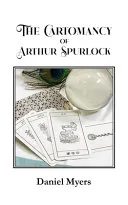
The Cartomancy of Arthur Spurlock
 81
81

The Cartomancy of Arthur Spurlock
Daniel Myers’s The Cartomancy of Arthur Spurlock confronts the ossified imagery of traditional Tarot head-on. His assertion that historical card symbolism has become "petrified" is a bold statement, one that might alienate purists but offers a necessary jolt to those feeling confined by established dogma. Myers’s critique of the Tarot’s historical fusion with "old ways" is particularly sharp, suggesting that its fixed iconography no longer serves the fluid needs of contemporary seekers. The work is strongest when it articulates the necessity for a more adaptable, personally resonant form of divination. However, the book sometimes feels like it’s building a case against a straw man; the rich, evolving interpretations within the Tarot community itself are often overlooked. A passage discussing the "active cartomancy" method, where the reader actively shapes meaning, is the book’s most compelling contribution. It’s a necessary, if sometimes abrasive, call for evolution in esoteric practice.
📝 Description
81
Daniel Myers' 2021 book argues traditional Tarot imagery has become 'petrified'.
The Cartomancy of Arthur Spurlock, published in 2021, presents a critique of conventional Tarot interpretations. Daniel Myers contends that the historical symbolism of Tarot, while once vibrant, has calcified, limiting its usefulness for contemporary divination. Myers advocates for a reevaluation of card reading, one that prioritizes personal connection and adaptability over strict adherence to established meanings. The book examines how symbolic language changes and suggests methods for card interpretation that better suit modern understanding.
This work is aimed at practitioners of divination who find existing frameworks restrictive, especially those using or feeling confined by traditional Tarot decks. It will interest readers concerned with the philosophy of symbols, the evolution of esoteric practices, and anyone aiming to cultivate a more personal style of cartomancy. Students of comparative esotericism and those researching divination history will also find its arguments relevant.
Published in 2021, Myers' work responds to a resurgence in esoteric interests, often driven by online communities seeking personalized spiritual paths. His critique of 'petrified' symbolism challenges the commercialization and superficial engagement with Tarot that became common in the late 20th and early 21st centuries. This echoes historical calls for more dynamic approaches within spiritual traditions, pushing for less dogmatic engagement with established systems.
💡 Why Read This Book?
• Gain a framework for "active cartomancy," allowing you to develop a more personalized and intuitive method of card reading that moves beyond fixed historical interpretations. • Understand the concept of "petrified symbolism" as described by Myers, enabling you to critically assess how outdated imagery might be hindering your own divinatory practice. • Explore how to adapt symbolic language to "our channeled" modern consciousness, offering a practical approach to making ancient tools relevant to present-day spiritual and psychological needs.
⭐ Reader Reviews
Honest opinions from readers who have explored this book.
❓ Frequently Asked Questions
What is "petrified symbolism" in the context of cartomancy?
Petrified symbolism refers to the idea that the imagery and meanings of traditional divination cards, like the Tarot, have become rigid and unchanging over time, hindering their ability to offer fresh insights for contemporary seekers.
What does Daniel Myers mean by "active cartomancy"?
Active cartomancy is an approach proposed by Myers where the reader actively imbues cards with personal meaning and adapts interpretations to the present moment, fostering a dynamic dialogue rather than relying solely on pre-defined meanings.
How does The Cartomancy of Arthur Spurlock differ from traditional Tarot books?
Unlike many Tarot books focused on historical symbolism and established interpretations, Myers's work critiques this fixedness, advocating for a more fluid and personally resonant method of card reading suited to modern consciousness.
When was The Cartomancy of Arthur Spurlock first published?
The book was first published on August 16, 2021.
What kind of insights does this book offer about divination?
It offers insights into the evolution of symbolic language in divination and suggests methods for practitioners to create a more adaptable and personally meaningful connection with their chosen divinatory tools.
Is this book suitable for beginners in cartomancy?
While it critiques traditional methods, beginners might benefit more from understanding foundational Tarot principles first. However, those seeking a philosophical or advanced perspective on adapting divination will find it valuable.
🔮 Key Themes & Symbolism
Beyond Petrified Symbols
This theme addresses Myers's central argument that traditional card imagery, particularly from the Tarot, has become static and resistant to change. He posits that this "petrified symbolism" limits its effectiveness for modern divination, as it remains fused to outdated contexts. The work encourages readers to recognize when established meanings hinder rather than help, paving the way for a more dynamic engagement with symbolic tools. It suggests that true insight requires moving beyond rote memorization of historical iconographies.
Active Cartomancy
Myers introduces "active cartomancy" as a method to counteract the rigidity of "petrified symbolism." This approach emphasizes the practitioner's role in co-creating meaning with the cards, rather than passively receiving pre-determined messages. It involves an intuitive dialogue where the reader's present consciousness and personal resonance actively shape the interpretation. This theme highlights the potential for divination to be a fluid, evolving practice that adapts to the individual's current life circumstances and spiritual development.
Channeled Modern Insight
The book contrasts the perceived limitations of historical card systems with the potential for "channeled" modern insight. Myers suggests that contemporary seekers can access a more direct and relevant form of wisdom by adapting symbolic languages to their own psychic and spiritual currents. This theme explores how the evolving nature of human consciousness in the 21st century necessitates a more flexible approach to divination, one that can integrate personal experience and contemporary understanding with ancient symbolic frameworks.
The Evolution of Divination
This theme examines the historical trajectory of divination practices, particularly focusing on how methods like cartomancy have developed and, according to Myers, sometimes stagnated. The work implies that for divination to remain a vital tool, it must evolve alongside human understanding and societal change. It challenges the notion that older systems are inherently superior and advocates for innovation and adaptation, suggesting that the future of cartomancy lies in its ability to remain relevant and responsive to the present moment.
💬 Memorable Quotes
Direct passages from the work, attributed to the author.
“The old cards are indeed potent, but they are mired in the past.”
— This highlights the book's core critique: while historical divination tools hold power, their adherence to past contexts can make them less effective for contemporary seekers who require more adaptable insights.
“Their images and symbolism are petrified, permanently fused to the old ways.”
— This vivid metaphor expresses Myers's view that traditional card iconography has become rigid and unyielding, no longer suitable for the fluid and evolving nature of modern spiritual and psychological exploration.
“and as such are no longer suited to our channeled...”
— This fragmented quote suggests that the fixed nature of older card systems is incompatible with the more fluid, intuitive, and perhaps digitally-influenced ways in which modern individuals receive or process information and insight.
“The use of fortune-telling cards is one of the most ancient and fascinating.”
— This acknowledges the deep historical roots and inherent allure of cartomancy, setting the stage for Myers's argument that while fascinating, its traditional forms require re-evaluation for modern application.
“I have written much about their history and how the Tarot came to prominence...”
— This indicates the author's background and familiarity with traditional cartomantic history, lending authority to his subsequent critique and proposals for a new approach to card divination.
🌙 Esoteric Significance
Tradition
This work positions itself within the broader Hermetic and Gnostic traditions of seeking direct, personal gnosis, while simultaneously critiquing established symbolic languages used within these lineages. It departs from strict adherence to historical esoteric schools by advocating for a personalized, adaptive approach to divination, emphasizing present-moment consciousness over inherited dogma. It suggests a path towards modern esoteric practice that is less about memorizing ancient texts and more about cultivating an ongoing, intuitive dialogue with symbolic tools.
Symbolism
The core symbolism discussed is the "petrified" imagery of traditional cards, which Myers argues has become fused to "old ways." He contrasts this with the concept of "channeled" modern insight, implying a dynamic, flowing symbolic language relevant to contemporary consciousness. The work implicitly values symbols that are adaptable and personally resonant over those that are fixed and historically determined, suggesting that the true power of symbols lies in their ability to evolve with the seeker.
Modern Relevance
The Cartomancy of Arthur Spurlock speaks directly to contemporary practitioners seeking to move beyond perceived limitations in traditional Tarot or other divinatory systems. Its emphasis on "active cartomancy" and adapting symbolism appeals to modern psychological approaches to self-discovery and the growing interest in intuitive development. Thinkers and practitioners focused on personalized spirituality, the philosophy of symbols, and the evolution of esoteric practices find in Myers's work a validation for their desire to forge unique paths rather than solely relying on historical frameworks.
👥 Who Should Read This Book
• Experienced Tarot readers or diviners who feel their practice has become stale or overly reliant on memorized meanings, seeking a method to revitalize their connection with the cards. • Students of esoteric philosophy and comparative religion interested in how symbolic systems evolve and how historical practices can be adapted for contemporary understanding. • Individuals exploring personal spiritual development who wish to cultivate a more intuitive and personalized approach to divination, moving beyond rigid interpretations.
📜 Historical Context
Published in 2021, Daniel Myers's The Cartomancy of Arthur Spurlock arrived during a significant resurgence of interest in esoteric practices, amplified by online communities and a global search for personal meaning. Myers’s central thesis—that traditional cartomantic symbolism has become "petrified"—can be viewed as a direct challenge to the dominant, often historically-focused, interpretations prevalent in the Tarot community. This work implicitly engages with a lineage of esoteric thinkers who have sought to revitalize ancient systems for contemporary life, though Myers’s critique is particularly pointed. While not directly engaging with contemporaries like Lon Milo DuQuette, whose work often explores the practical application of esoteric systems, Myers’s argument for adaptation echoes a broader intellectual current seeking to move beyond rigid dogma. The book's reception is likely influenced by the ongoing debates about authenticity and evolution within modern occultism, particularly the tension between preserving tradition and fostering innovation.
📔 Journal Prompts
The concept of "petrified symbolism" and its impact on your current practices.
Your personal definition of "active cartomancy" and how to implement it.
How can the idea of "channeled" modern insight inform your card readings?
Reflecting on the evolution of a specific symbol from historical context to your personal understanding.
Identifying symbols in your life that feel "fused to the old ways" and require reinterpretation.
🗂️ Glossary
Petrified Symbolism
A term coined by Daniel Myers to describe traditional card imagery and meanings that have become rigid, unchanging, and potentially limiting for modern divination practices.
Active Cartomancy
An approach to card reading advocated by Myers, where the practitioner actively co-creates meaning with the cards, emphasizing personal resonance and present-moment adaptation over fixed interpretations.
Channeled Insight
Refers to contemporary wisdom or intuition that is perceived as directly accessible to an individual, contrasting with knowledge derived solely from historical or traditional sources.
Cartomancy
The practice of divination using cards, encompassing various systems including Tarot, oracle cards, and standard playing cards.
Esoteric
Relating to or concerned with the occult, mystical, or supernatural. Often involves specialized knowledge or practices understood by a select group.
Divination
The practice of seeking knowledge of the future or the unknown by supernatural means or by interpretation of omens or symbols.
Symbolism
The use of symbols to represent ideas or qualities. In esoteric contexts, symbols are often seen as keys to deeper understanding or spiritual truths.