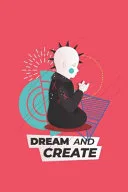
Dream and Create Red
 78
78

Dream and Create Red
Dream and Create Red offers a functional, no-frills approach to dream logging, a practice vital for anyone serious about understanding their inner landscape. Its strength lies in its uncluttered layout, which encourages consistent use by making the recording process straightforward. The provision of fields for pre-sleep thoughts and post-awakening feelings is particularly valuable, establishing a clear link between conscious state and subconscious narrative. A notable limitation is the absence of any guiding prompts or interpretive frameworks beyond the user's own initiative; it is a blank slate, demanding self-direction. For instance, the section labeled 'Dream Interpretation' is entirely open-ended, which can be daunting for novices. The book's value is thus directly proportional to the user's existing knowledge or willingness to research dream symbolism independently. It serves as a sturdy vessel for one's dream life, but does not provide the map.
📝 Description
78
Dream and Create Red, published in 2019, is a 110-page journal for systematic dream recording.
This 2019 journal, measuring roughly A5, offers structured pages for documenting dreams. It guides users to record thoughts and emotions before sleep, the dream narrative, and feelings upon waking. The format is intended to promote consistent dream recall and analysis.
Individuals interested in subconscious exploration through dreams will find this journal useful. It suits those seeking personal insight or creative inspiration, or who use dream journaling as part of a broader spiritual or psychological practice. Its clear layout is accessible for newcomers, while the detailed fields support deeper examination by experienced journalers.
While a contemporary tool, this journal connects to ancient practices of dream interpretation found across cultures. For millennia, dreams have been regarded as a source of spiritual guidance and psychological insight. From Egyptian dream temples to the work of modern analysts like Freud and Jung, understanding dreams has been central to self-inquiry. This journal provides a modern method for engaging with that enduring human interest in the dream world.
💡 Why Read This Book?
• You will learn to meticulously document your dreams, capturing pre-sleep states and post-awakening feelings, a method practiced by figures like Carl Jung in his exploration of the psyche. • You will develop a personal system for analyzing your dreams by filling out structured fields, moving beyond mere recall to active interpretation of your subconscious narratives. • You will gain a tangible record of your dream life, creating a unique archive that can reveal patterns over time, similar to the annotated dream journals kept by mystics and artists.
⭐ Reader Reviews
Honest opinions from readers who have explored this book.
❓ Frequently Asked Questions
What is the primary purpose of the Dream and Create Red journal?
Its primary purpose is to provide a structured format for users to consistently record, track, and analyze their dreams, facilitating self-discovery and subconscious exploration.
How many dreams can be recorded in this journal?
The journal has space to record up to 109 distinct dreams, with dedicated fields for each entry.
What kind of information can I record about each dream?
You can document the date, time, emotions and thoughts before sleep, the dream itself, your feelings upon awakening, and additional comments or notes for interpretation.
Is this journal suitable for beginners in dream analysis?
Yes, its straightforward layout makes it accessible for beginners, though it doesn't provide interpretive guidance, requiring users to bring their own knowledge or research.
What are the physical dimensions of the Dream and Create Red journal?
The journal is a softcover book with dimensions of 6x9 inches, approximately equivalent to an A5 size, making it portable yet spacious.
When was Dream and Create Red first published?
This particular dream journal was first published on August 30, 2019.
🔮 Key Themes & Symbolism
Subconscious Pattern Recognition
The journal encourages users to treat dreams not as random occurrences but as data points. By systematically noting 'Emotions before sleep' and 'Thoughts before sleep,' individuals can begin to identify how their waking mental states correlate with dream content. This detailed record-keeping aims to uncover recurring symbols, themes, and emotional landscapes within the subconscious, offering a path toward understanding the deeper currents of one's psyche. It facilitates a dialogue with the self, using the dream narrative as a mirror.
Personalized Dream Interpretation
Dream and Create Red provides the framework, but the interpretation is deeply personal. The structured fields prompt users to engage actively with their dreams post-awakening, moving beyond simple recall. Recording 'Dream,' 'Feeling upon awakening,' and 'Comments and notes' allows for a comparative analysis over time. This process mirrors the approach taken by early psychoanalysts like Carl Jung, who emphasized the subjective meaning of dream symbols within the individual's unique psychological context.
Disciplined Esoteric Practice
The act of consistently filling out a dream journal is itself an esoteric discipline. It requires dedication and a commitment to self-observation, akin to meditative practices. By dedicating space for 109 dreams, the journal promotes a sustained engagement with the dream world. This practice can be integrated into various spiritual or occult paths, serving as a tool for divination, self-mastery, or communion with subtle realms, as has been historically documented in various traditions.
The Link Between Waking and Dreaming
This journal emphasizes the interconnectedness of our conscious and unconscious lives. The inclusion of fields for 'Emotions before sleep' and 'Thoughts before sleep' explicitly links waking experiences to dream formation. Similarly, 'Feeling upon awakening' bridges the gap between the dream state and the return to consciousness. This holistic approach allows users to observe how their daily lives, anxieties, and aspirations manifest symbolically in their dreams, providing a continuous feedback loop.
💬 Memorable Quotes
Direct passages from the work, attributed to the author.
“Fields to fill in: Date Time Emotions before sleep Thoughts before sleep Dream Dream Interpretation Feeling upon awakening Comments and notes”
— This list defines the core structure of the journal, highlighting the specific data points the user is encouraged to capture for comprehensive dream analysis and self-reflection.
“Beautiful dream diary Journal to fill out with room for 109 dreams.”
— This phrase emphasizes the journal's aesthetic appeal and its capacity for extensive, long-term use, suggesting it's designed for dedicated dreamers.
“Cool Softcover 6x9 inches (approx. A5) 110 pages”
— This provides practical details about the journal's physical attributes, indicating a portable yet substantial format suitable for daily use.
“Dream Interpretation”
— This field serves as the primary space for users to consciously engage with the meaning of their dreams, applying personal insights or learned symbolic associations.
“Feeling upon awakening”
— This prompt focuses on the immediate emotional residue of the dream experience, acknowledging that the impact of a dream often lingers into the waking state.
🌙 Esoteric Significance
Tradition
This journal aligns with esoteric traditions focused on inner exploration and self-knowledge, particularly those influenced by Jungian psychology and modern occultism. It serves as a practical tool for accessing the subconscious, a realm often explored in Hermeticism (as the 'inner cosmos') and Gnosticism (as the source of divine spark or gnosis). The systematic recording and interpretation echo methods of scrying or automatic writing, where direct communication with non-physical realms or the deeper self is sought.
Symbolism
While the journal itself is largely a blank slate, the *practice* it enables engages with universal dream symbolism. Recurring motifs like falling, flying, or encountering specific figures (archetypes) within dreams are central. The 'Feeling upon awakening' field captures the symbolic 'color' or emotional resonance of the dream, which esoteric traditions often associate with the influence of elemental forces or planetary alignments impacting the psyche.
Modern Relevance
Contemporary practices in Jungian analysis, transpersonal psychology, and various forms of modern witchcraft and neo-shamanism often incorporate dream work. Thinkers like Robert A. Johnson and Clarissa Pinkola Estés continue to popularize Jungian dream interpretation. Digital detox movements and mindfulness practices also encourage a return to introspection, where detailed dream journaling can serve as a powerful tool for understanding the self in an increasingly externalized world.
👥 Who Should Read This Book
['• Aspiring psychoanalysts and depth psychologists: To develop rigorous personal dream recording habits and understand the foundational elements of dream analysis, mirroring early 20th-century practices.', '• Practitioners of modern esoteric paths: To systematically track subconscious messages and symbolic language relevant to magical or spiritual development, integrating dream work into their rituals.', '• Individuals seeking enhanced self-awareness: To gain deeper insight into personal patterns, emotions, and the subconscious mind through consistent documentation and reflection on nightly visions.']
📜 Historical Context
The practice of dream journaling, as facilitated by contemporary tools like Dream and Create Red, finds roots stretching back millennia. Ancient civilizations, from the Egyptians who used dreams for prophecy and healing in temples, to the Greeks who consulted dream interpreters, placed immense significance on the nocturnal visions. The early 20th century saw a resurgence of interest in dreams, primarily through the psychoanalytic work of Sigmund Freud and later Carl Jung. Freud, in his 1900 work 'The Interpretation of Dreams,' posited dreams as the 'royal road to the unconscious.' Jung expanded upon this, viewing dreams as compensatory mechanisms and sources of individuation, developing concepts like archetypes and the collective unconscious. While this journal is a modern publication from 2019, it directly engages with this enduring tradition of seeking meaning and understanding within the dream state, a practice that has persisted alongside major intellectual currents and philosophical shifts.
📔 Journal Prompts
Emotions before sleep: Note specific anxieties or joys present.
Dream narrative: Detail the sequence of events and imagery.
Feeling upon awakening: Capture the immediate emotional tone.
Pre-sleep thoughts and their dream manifestations.
Connection between dream symbols and waking life events.
🗂️ Glossary
Dream Interpretation
The process of analyzing the content and symbols within a dream to understand its potential meaning, often related to the dreamer's subconscious thoughts, emotions, or life experiences.
Subconscious
The part of the mind of which we are not fully aware but which influences our actions and feelings; the repository of repressed thoughts, feelings, and memories.
Esoteric
Intended for or likely to be understood by only a small number of people with a specialized knowledge or interest; relating to or concerned with the occult.
Psyche
The human soul, mind, or spirit; in psychology, the totality of the id, ego, and superego.
Symbolism
The use of symbols to represent ideas or qualities; in dreams, the representation of unconscious thoughts or feelings through images or actions.
Archetype
A very typical example of a certain person or thing; in Jungian psychology, a primordial image, pattern of thought, or symbol universally present in the collective unconscious.
Individuation
The process of developing one's personality; the integration of the conscious and unconscious aspects of the psyche into a unified whole.