Rudi
 77
77

Rudi
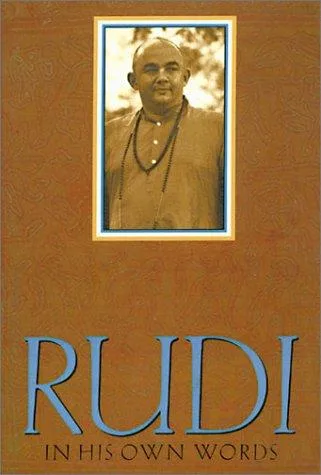
Swami Rudrananda's 'Rudi' presents a unique challenge to the reader. Unlike many spiritual texts that offer polished narratives or systematic doctrines, this book is a direct transcription of a swami's spoken words. This immediacy is its greatest strength, offering an unvarnished glimpse into his consciousness and teaching style. The sheer directness can, however, be a hurdle. Rudrananda's pronouncements are often forceful, demanding, and can appear contradictory to conventional spiritual advice. A notable passage discusses the nature of 'Grace' not as something external, but as an internal alignment one must cultivate, which stands in stark contrast to many devotional traditions. While the lack of editorializing preserves authenticity, it also leaves the reader to grapple with the more challenging aspects of his philosophy without much guidance. The book is a powerful artifact of 20th-century spiritual transmission, but requires a discerning and prepared reader. It is a challenging, authentic transmission from a singular voice.
📝 Description
77
Published in 1994, Rudi collects the direct discourses of Swami Rudrananda, bypassing academic framing.
Rudi offers an unfiltered look into the spiritual teachings and personal reflections of Swami Rudrananda, also known as Rudi. This work compiles his direct discourses and insights, capturing the essence of his teachings as they were delivered. It is less a narrative and more a collection of spoken wisdom, presenting a raw portrayal of a spiritual teacher's life and his unique approach to inner transformation. The book is intended for seekers who appreciate direct, unmediated spiritual instruction and are not deterred by unconventional or challenging perspectives. Readers looking for a teacher's personal voice, devoid of excessive commentary or interpretation, will find value here. It is for individuals ready to engage with spiritual material on its own terms, seeking authentic spiritual dialogue.
The initial publication of Rudi in 1994 places it within a period of significant Western interest in Eastern spiritual traditions. Swami Rudrananda himself was a figure who emerged during this era, establishing a teaching presence in the United States. His teachings often contrasted with more ascetic or renunciate traditions, emphasizing a more engaged, worldly approach to spiritual practice. The book reflects this milieu, where direct transmission from an Indian master to Western disciples was a prominent phenomenon.
Swami Rudrananda's teachings emerged in the West during the latter half of the 20th century, a time when Indian yogis and swamis established presences and guided disciples. His approach often differed from more ascetic or renunciate traditions, advocating for a spiritual practice integrated with worldly engagement. This book reflects that specific historical and spiritual milieu, focusing on direct transmission from a master to his students.
💡 Why Read This Book?
• Gain insight into Swami Rudrananda's unique concept of "Grace" as an internal state, distinct from external bestowal, as articulated in his direct discourses. • Understand the practical "Work" or "Sadhana" as Rudrananda defined it – an active, daily application of spiritual principles, not mere passive contemplation. • Explore the direct transmission of "Shakti" within the teacher-student dynamic as presented through Rudrananda's interactions, offering a glimpse into potent spiritual energy transfer.
⭐ Reader Reviews
Honest opinions from readers who have explored this book.
❓ Frequently Asked Questions
Who was Swami Rudrananda, also known as Rudi?
Swami Rudrananda, or Rudi, was an Indian yoga master who taught in the United States during the latter half of the 20th century. He was known for his direct, often unconventional teachings on spiritual practice and consciousness.
What is the primary focus of the book 'Rudi'?
The book 'Rudi' primarily focuses on the direct teachings, discourses, and personal reflections of Swami Rudrananda, offering an unmediated look at his spiritual philosophy and methods.
When was 'Rudi' first published?
The book 'Rudi' was first published in 1994, reflecting a period of active spiritual exchange between Eastern teachers and Western students.
Does 'Rudi' present a systematic spiritual philosophy?
No, 'Rudi' is not a systematic philosophical treatise. It is a collection of spoken teachings, capturing the spontaneous and direct nature of Swami Rudrananda's spiritual guidance.
Is 'Rudi' suitable for beginners in spirituality?
It can be, but it is best suited for those who appreciate direct, unvarnished spiritual instruction and are ready to engage with challenging concepts without extensive academic framing.
What is the significance of 'Sadhana' according to Swami Rudrananda?
According to Swami Rudrananda's teachings in 'Rudi', Sadhana is the 'Work' – the continuous, practical application of spiritual principles in everyday life, emphasizing active engagement.
🔮 Key Themes & Symbolism
The Nature of Grace
The book frequently addresses "Grace," but not as a passive reception of divine favor. Rudrananda posits Grace as an internal state, a quality of being that arises from diligent spiritual practice and alignment. It is something to be cultivated through one's own inner "Work," a direct result of one's efforts and surrender, rather than an external gift bestowed by a deity or guru. This perspective challenges conventional notions and encourages the practitioner to look inward for the source of spiritual ease and progress.
The Mind as Instrument and Obstacle
Swami Rudrananda places significant emphasis on the "Mind," viewing it as the primary arena of spiritual struggle and liberation. He often speaks of the mind's tendency to create illusion and attachment, acting as a barrier to true understanding. However, he also presents the mind as the essential instrument for spiritual advancement. The teachings explore methods for taming, directing, and ultimately transcending the ordinary workings of the mind, transforming it into a tool for realizing higher consciousness.
Sadhana as Daily Work
The concept of "Sadhana," or spiritual practice, is presented in 'Rudi' as "Work" – a continuous, active engagement with life. Rudrananda moves away from purely ascetic or ritualistic interpretations, stressing that true spiritual practice is woven into the fabric of daily existence. This involves conscious effort, self-discipline, and the application of spiritual principles in every action and interaction, making the entirety of one's life a path of transformation and realization.
Teacher-Student Dynamics and Energy
The discourses often allude to the potent energy transfer and unique relationship dynamics inherent in the guru-shishya parampara. Rudrananda's direct interactions, as captured in the text, hint at the transmission of "Shakti" – spiritual power or energy – from teacher to student. This transmission is not always overt but is presented as a crucial, often unspoken, element in the student's spiritual unfolding, facilitating deeper states of awareness and accelerated growth.
💬 Memorable Quotes
Direct passages from the work, attributed to the author.
“Grace is not a gift; it is an internal state.”
— This statement challenges the passive view of grace, suggesting it's an active cultivation of inner alignment and receptivity, a direct outcome of one's spiritual endeavor.
“The mind is the battlefield and the victor.”
— This highlights the dual nature of the mind: it is the source of all illusions and struggles, but also the very tool through which liberation and enlightenment are achieved.
“Your Sadhana is your Work, done every day.”
— Rudrananda emphasizes that spiritual practice is not confined to specific times or places but is a continuous, active process integrated into the entirety of daily life.
“Unless you surrender, you cannot receive.”
— This points to the necessity of ego-dissolution and letting go of personal control as a prerequisite for experiencing deeper spiritual truths and divine assistance.
“See the Divine in all things, especially in yourself.”
— This encourages an expansive vision of divinity, urging the practitioner to recognize the sacred not only in the external world but also within their own being.
🌙 Esoteric Significance
Tradition
Swami Rudrananda's teachings in 'Rudi' draw heavily from the yogic and tantric traditions of India, particularly those emphasizing the direct transmission of spiritual energy and the active engagement with the material world as a path to realization. While not strictly adhering to a single lineage, his emphasis on Shakti, the mind's transformative potential, and the guru-disciple relationship aligns with potent currents within Tantra and certain schools of Hatha Yoga. He departs from more ascetic interpretations by integrating spiritual practice with worldly life.
Symbolism
The concept of "Shakti" is central, representing the divine feminine energy or cosmic power that underlies existence and is awakened through practice. The "Mind" itself functions as a potent symbol; it is both the cage of illusion and the key to liberation, a paradox explored extensively. Rudrananda also implicitly uses the symbol of the "Guru" not just as a teacher, but as a conduit for Grace and Shakti, a living embodiment of the Truth being transmitted.
Modern Relevance
Contemporary seekers interested in embodied spirituality, the practical application of yogic principles beyond mere physical postures, and the dynamics of direct spiritual transmission often find Rudrananda's work compelling. His emphasis on cultivating inner states and engaging with life's challenges as spiritual practice appeals to modern mindfulness and integrated spiritual development movements. Thinkers and practitioners who explore the nature of consciousness and the role of energetic transmission in spiritual growth may find his direct approach a valuable counterpoint to more intellectualized spiritual discourse.
👥 Who Should Read This Book
• Seekers of direct, unmediated spiritual instruction who appreciate authenticity over polished presentation. • Students of 20th-century Eastern spirituality in the West interested in figures who transmitted yogic and tantric principles. • Practitioners looking to integrate spiritual 'Work' into their daily lives, moving beyond ritualistic or purely meditative practices.
📜 Historical Context
The 1994 publication of 'Rudi' places it within a specific cultural moment in the West. Following the initial surge of Indian gurus and spiritual teachers in the 1960s and 70s, a more established, though still eclectic, spiritual landscape had emerged. Swami Rudrananda was part of this milieu, having established himself and his teachings in the United States. His approach, often characterized by a direct, unvarnished style and a focus on practical, everyday spiritual 'Work,' stood in contrast to more academic or purely devotional forms of spirituality gaining traction. While figures like Maharishi Mahesh Yogi were popularizing transcendental meditation, and the Hare Krishna movement offered a distinct devotional path, Rudrananda represented a more direct, personal transmission of yogic and tantric principles, often engaging with Western students on their own terms. The book reflects this post-60s era, where Eastern spiritual concepts were being integrated into Western lifestyles, sometimes challenging established norms.
📔 Journal Prompts
Reflect on the distinction between Grace as an internal state versus an external gift, as presented by Rudrananda.
Consider the "Mind" as both the obstacle and the means to spiritual realization in your own experience.
How does your daily "Work" (Sadhana) reflect the principles of spiritual practice?
Explore the concept of surrender in your spiritual path. What does it mean to truly let go?
What does "seeing the Divine" mean in your personal practice and daily life?
🗂️ Glossary
Grace
In Rudrananda's context, Grace is not an external bestowal but an internal state of being, a quality of consciousness cultivated through diligent spiritual practice and alignment.
Mind
The faculty of thought, perception, and consciousness. Rudrananda emphasizes its dual role as both the primary obstacle to spiritual realization and the essential instrument for achieving it.
Sadhana
Spiritual practice; in 'Rudi,' it is reframed as 'Work,' meaning the continuous, active application of spiritual principles in everyday life.
Shakti
Cosmic energy, divine power, or spiritual force, often associated with the feminine principle, which can be awakened and transmitted within spiritual practice and teacher-student dynamics.
Work
Rudrananda's term for Sadhana, emphasizing the active, diligent, and continuous effort required to apply spiritual principles in all aspects of daily life.
Surrender
The act of yielding personal will and ego-driven control, seen as essential for receiving Grace and aligning with higher consciousness.
Guru
A spiritual teacher who provides guidance and, in some traditions, transmits spiritual energy or wisdom directly to disciples.
🔮 Readers Also Liked
Browse all →







More by Rudrananda Swami, Swami Rudrananda, Cheryl Berling Rosen
All books →
More Free Mysticism & Contemplation Books
View all →