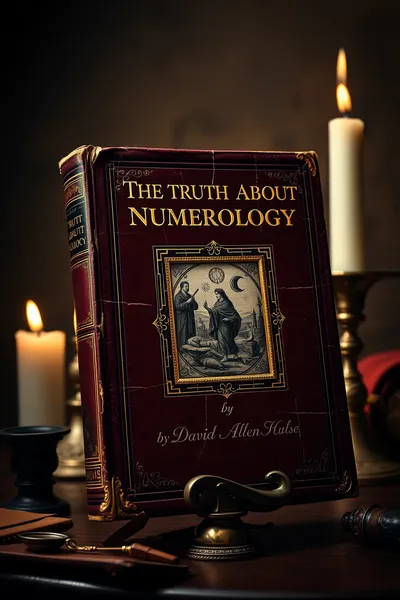
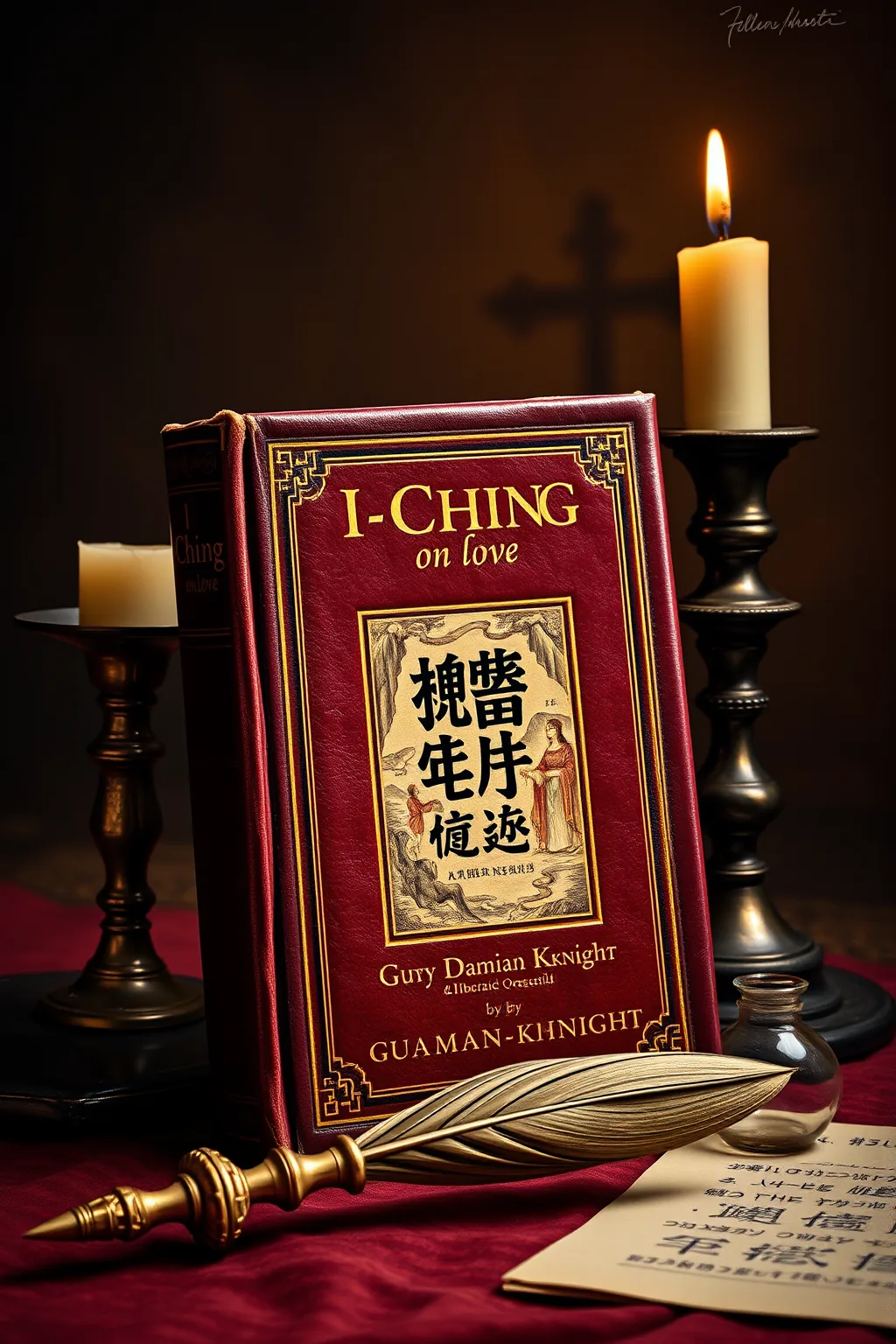
I Ching on love
 84
84

I Ching on love
Guy Damian-Knight's *I Ching on Love* attempts to bridge the ancient wisdom of the Book of Changes with the often-turbulent waters of human affection. The book's strength lies in its singular focus; by isolating romantic relationships as its sole domain, it offers a concentrated perspective rarely found in broader I Ching commentaries. Damian-Knight's interpretation of hexagrams like 'The Lovers' (a non-standard, interpretive reading) or 'The Unfolding' can provide genuinely useful frameworks for understanding relational dynamics. However, the work occasionally falters under the weight of its own specificity. At times, the application feels forced, overlaying a sophisticated philosophical system onto situations that might benefit from simpler, more direct communication. A particularly insightful passage discusses how the hexagram 'Holding Together' suggests that relational strength comes not from external validation but from shared internal principles. Despite its occasional contrivances, the book offers a unique lens for contemplation.
📝 Description
84
Published in 1984, Guy Damian-Knight's *I Ching on Love* applies the ancient Chinese oracle to romantic relationships.
This book applies the principles of the I Ching to the complexities of romantic relationships, partnership, and intimacy. Instead of a general introduction to the oracle's hexagrams, Damian-Knight focuses on how its readings can illuminate present circumstances and foster personal growth within love. The work treats the I Ching as a philosophical system for understanding relational dynamics, rather than solely a tool for future prediction.
The intended audience includes those already familiar with or curious about the I Ching who wish to explore its use beyond traditional or business contexts. It will appeal to readers seeking a focused approach to relationship patterns, communication, and the evolution of romantic bonds. Individuals interested in comparative philosophy, psychology, and practical wisdom for interpersonal connection will find this specific application relevant.
Emerging in 1984, *I Ching on Love* arrived during a period of increased Western interest in Eastern philosophies and esoteric studies. This era saw a rise in self-help literature incorporating spiritual traditions. While figures like Carl Jung had examined the I Ching's psychological facets, Damian-Knight's work carves a niche by concentrating exclusively on its romantic applications, offering a specific guide within the broader exploration of Eastern wisdom.
💡 Why Read This Book?
• Gain a unique interpretive framework for romantic challenges by learning how specific I Ching hexagrams, such as 'The Abysmal' or 'The Gentle', are applied by Damian-Knight to relationship dynamics. • Develop a more nuanced understanding of relational patterns and communication, moving beyond generic advice by exploring the I Ching's cyclical wisdom as presented in the 1984 edition. • Cultivate greater self-awareness in partnerships by applying the book's method of consulting the I Ching for insights into present circumstances and potential relational growth.
⭐ Reader Reviews
Honest opinions from readers who have explored this book.
❓ Frequently Asked Questions
Is 'I Ching on Love' a direct translation of the original I Ching?
No, it is not a direct translation. Published in 1984, it is an interpretive work that applies the principles and readings of the I Ching specifically to the domain of romantic relationships, rather than a scholarly rendering of the classic text itself.
What is the primary focus of Guy Damian-Knight's book?
The book's primary focus is on using the I Ching, the ancient Chinese oracle, as a tool for understanding and navigating the complexities of love, partnership, and intimacy.
When was 'I Ching on Love' first published?
The first edition of 'I Ching on Love' by Guy Damian-Knight was published in 1984.
Does the book offer practical advice for dating?
While not a conventional dating guide, the book offers practical insights derived from I Ching readings to help understand relationship dynamics, communication, and personal growth within partnerships.
Who is Guy Damian-Knight?
Guy Damian-Knight is the author of 'I Ching on Love'. While details about his other works are scarce, this 1984 publication established his focus on applying esoteric systems to interpersonal matters.
What makes this book different from other I Ching commentaries?
Its distinctiveness lies in its exclusive focus on romantic love. Unlike broader commentaries, it tailors the I Ching's wisdom to the specific challenges and nuances of intimate relationships.
🔮 Key Themes & Symbolism
Hexagrams as Relational Maps
The work posits that the 64 hexagrams of the I Ching serve as archetypal maps for the terrain of romantic relationships. Each hexagram, with its specific configuration of yin and yang lines and associated judgments, is presented as a snapshot of a particular relational dynamic or phase. For instance, hexagrams like 'The Joyous' or 'The Clinging' are interpreted not just as abstract concepts but as indicators of specific emotional states or interaction patterns within a partnership, offering a symbolic language to understand interpersonal currents.
The I Ching's Cyclical Nature in Love
Central to the book's thesis is the I Ching's inherent understanding of change and cyclical progression. Damian-Knight applies this to love, suggesting that relationships, like the trigrams and hexagrams, are in constant flux. The oracle's advice, therefore, is not prescriptive but situational, guiding the user to understand the current phase of their relationship and how to act in accordance with its evolving nature. This perspective encourages patience and adaptability, viewing challenges as temporary states within a larger, ongoing process.
Conscious Engagement with Partnership
Rather than mere fortune-telling, *I Ching on Love* emphasizes the use of the oracle for fostering conscious engagement within relationships. By consulting the I Ching, individuals are encouraged to reflect on their own roles, motivations, and reactions. The book frames the process as a dialogue with a deeper wisdom, aiming to enhance self-awareness and relational intelligence. The goal is not to predict outcomes but to empower individuals to make more informed, mindful choices that contribute to the health and longevity of their connections.
💬 Memorable Quotes
Direct passages from the work, attributed to the author.
“Love's path is governed by change, not by static perfection.”
— This interpretation emphasizes the I Ching's core teaching on impermanence, applied here to romantic relationships. It suggests that enduring love is found not in avoiding change, but in understanding and adapting to its natural flow, a key theme in the book's approach.
“Understanding the 'lines' offers specific guidance for action.”
— This concept underscores the practical application of the I Ching's changing lines. The book uses these specific textual elements within a hexagram reading to provide actionable advice tailored to the particular relational situation being explored.
“The oracle illuminates, it does not dictate.”
— This emphasizes the book's non-deterministic approach to the I Ching. It suggests the text serves as a guide for self-reflection and informed decision-making, empowering the reader rather than providing absolute pronouncements on their romantic future.
💡 Key Ideas
Editorial paraphrase of the work's core concepts — not direct quotes.
The hexagram reveals the present state of the relationship's energies.
This paraphrased concept highlights the book's view of the I Ching as a diagnostic tool for romantic connections. It suggests that the oracle doesn't just offer advice, but provides a symbolic representation of the underlying forces at play in a partnership at any given moment.
True connection is built on shared principles, not mere circumstance.
This paraphrased idea reflects a core tenet likely discussed in the book, possibly related to hexagrams emphasizing inner alignment. It contrasts superficial attractions with the deeper, foundational elements that contribute to lasting romantic bonds.
🌙 Esoteric Significance
Tradition
This work draws heavily from the Taoist tradition inherent in the I Ching. It adapts the ancient Chinese system of divination and wisdom, traditionally used for broader philosophical and strategic guidance, into a specific application for understanding interpersonal dynamics, particularly romantic love. It departs from purely philosophical or historical treatments by focusing on the psychological and practical aspects of relationships, aligning with Western esoteric interests in applying ancient systems for personal transformation and relational insight.
Symbolism
Key symbolism includes the Yin and Yang duality, representing complementary forces (feminine/masculine, passive/active) fundamental to understanding relational balance. The hexagrams themselves are potent symbols, each representing archetypal situations or energies that manifest in love – from harmony ('The Great Power') to conflict ('The Abysmal'). The concept of changing lines within a hexagram symbolizes the inherent flux and transformative potential within any relationship, offering a dynamic rather than static view.
Modern Relevance
Contemporary practitioners of esoteric psychology, relationship counselors interested in archetypal frameworks, and individuals exploring mindfulness-based approaches to intimacy can find relevance in Damian-Knight's work. It appeals to modern interests in understanding relationship patterns through symbolic language and ancient wisdom, particularly for those seeking alternatives to purely psychological or sociological models of love. The emphasis on self-awareness and cyclical change aligns with current therapeutic trends.
👥 Who Should Read This Book
• Individuals familiar with or curious about the I Ching seeking to apply its wisdom to their romantic lives, moving beyond general interpretations to specific relationship insights. • Readers interested in esoteric psychology and comparative philosophy who wish to explore how ancient oracles can illuminate interpersonal dynamics and emotional connections. • Those navigating complex relationship challenges who are open to reflective, symbolic guidance and seeking tools for deeper self-awareness within partnerships.
📜 Historical Context
Published in 1984, *I Ching on Love* emerged during a period of significant Western interest in Eastern philosophies and esoteric traditions, often filtered through the lens of personal growth and New Age spirituality. The decade saw a burgeoning market for books that applied ancient wisdom to modern life, including relationships. While the I Ching had been introduced to the West earlier, notably through Richard Wilhelm's German translation (later rendered into English by Cary Baynes) and discussed by figures like Carl Jung for its psychological depth, Damian-Knight's work distinguished itself by carving out a specific niche: its exclusive focus on romantic love. This contrasted with more general I Ching guides or those emphasizing philosophical or strategic applications. The intellectual climate of the 1980s, marked by a desire for self-discovery and alternative spiritual paths, provided fertile ground for such specialized interpretations. The book's reception likely aligned with the broader trend of seeking practical esoteric tools for personal well-being, though specific critical reviews or contemporary scholarly engagement from that exact period are less documented than for earlier foundational works on the I Ching.
📔 Journal Prompts
Reflect on the 'relationship hexagram' presented for your current situation.
Consider the symbolism of Yin and Yang in your primary romantic connection.
How does the I Ching's concept of cyclical change apply to a past relationship?
Explore the 'changing lines' within a hexagram relevant to a recent relational event.
What does the 'oracle's guidance' suggest about your personal role in relationship harmony?
🗂️ Glossary
I Ching
An ancient Chinese divination text and book of wisdom, also known as the Book of Changes. It consists of 64 hexagrams, each composed of six stacked horizontal lines, used to offer guidance and insight into various situations.
Hexagram
A figure composed of six stacked horizontal lines, each line being either solid (yang) or broken (yin). In the I Ching, the 64 hexagrams represent archetypal situations and principles.
Trigram
A figure composed of three horizontal lines, either solid or broken. The eight basic trigrams (e.g., Heaven, Earth, Water) are building blocks for the 64 hexagrams in the I Ching.
Yang Line
In the I Ching, a solid line (—) representing active, masculine, light, or positive principles.
Yin Line
In the I Ching, a broken line (--) representing passive, feminine, dark, or negative principles.
Changing Lines
Specific lines within a hexagram that, according to the I Ching's system, indicate transformation or movement, suggesting a transition to another hexagram.
Oracle
In the context of the I Ching, refers to the system itself as a source of wisdom, guidance, and insight, rather than a person or entity.
🔮 Readers Also Liked
Browse all →








More by Guy Damian-Knight
All books →





More Free Occult Philosophy Books
View all →