The elements of the I Ching
 63
63

The elements of the I Ching



Lorelei Sage (Contemplative Literature Editor) — Stephen L. Karcher's 'The Elements of the I Ching' is an indispensable key to unlocking the oracle's profound esoteric insights. Karcher's erudition shines as he elucidates the complex symbolism and philosophical underpinnings of the Yi Jing, transcending simplistic interpretations. This work doesn't just teach how to consult the I Ching; it reveals its deep resonance with the human condition and the natural world. Ideal for serious students of divination and those seeking a deeper spiritual practice, it offers a pathway to self-understanding and cosmic alignment. A true treasure for the discerning reader.
📝 Description
63
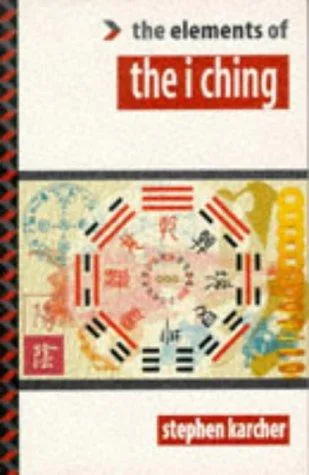
Stephen L. Karcher's 'The Elements of the I Ching' decodes the philosophical underpinnings of the ancient Chinese oracle.
Published in 1987, Stephen L. Karcher's 'The Elements of the I Ching' provides a detailed examination of the classic Chinese text. Karcher approaches the I Ching not as a simple divinatory tool, but as a system for understanding natural patterns and human psychology. He breaks down the structure of the hexagrams and their constituent trigrams, explaining their symbolic meanings and relationships.
The book discusses how the I Ching's imagery connects to natural phenomena and the unfolding of events. It emphasizes the text's role in personal reflection and ethical guidance, suggesting that its principles can inform one's actions and understanding of life's processes. Karcher aims to make the I Ching's core concepts accessible to a contemporary audience, moving beyond superficial interpretations.
This work engages with the I Ching, an ancient Chinese text traditionally used for divination and as a manual for philosophical and ethical understanding. Karcher situates his interpretation within a lineage that views the I Ching's sixty-four hexagrams as a comprehensive map of cosmic and human patterns. It belongs to the tradition of scholarship that seeks to uncover the deeper philosophical and psychological dimensions of the oracle, linking its symbolic language to universal principles of change and balance, often contrasted with purely fortune-telling applications.
💡 Why Read This Book?
Unravel the ancient secrets of the I Ching, a timeless oracle of wisdom. 'The Elements of the I Ching' offers profound insights into the forces shaping your life, providing a compass for navigating change and fostering inner harmony. Ideal for seekers of spiritual truth, practitioners of divination, and scholars of Eastern philosophy who desire a deeper, more nuanced understanding.
⭐ Reader Reviews
Honest opinions from readers who have explored this book.
❓ Frequently Asked Questions
What is the I Ching and its purpose?
The I Ching, or Book of Changes, is an ancient Chinese divination text and philosophical classic. Its purpose is to offer guidance and insight into the present and future by interpreting the patterns of cosmic forces represented by hexagrams.
Who was Stephen L. Karcher?
Stephen L. Karcher was a renowned scholar and translator, deeply dedicated to making ancient wisdom accessible. His work on the I Ching is celebrated for its clarity, depth, and spiritual resonance.
Is this book suitable for beginners?
Yes, Karcher's approach is designed to be accessible, guiding both novices and experienced practitioners through the complexities of the I Ching with clarity and depth.
How does the I Ching relate to divination?
The I Ching is consulted through a process of casting coins or yarrow stalks to generate hexagrams, which are then interpreted to provide symbolic answers and guidance on a given situation.
What are hexagrams in the I Ching?
Hexagrams are the fundamental sixty-four symbols of the I Ching, each composed of six stacked lines (broken or unbroken). They represent archetypal situations and cosmic forces that can be interpreted for guidance.
🔮 Key Themes & Symbolism
The Taoist Cosmos and the Flow of Change
This theme explores the fundamental Taoist concept of the Tao, the underlying order and flow of the universe. Karcher illuminates how the I Ching's sixty-four hexagrams are microcosms of this cosmic dance, reflecting the ceaseless transformation of all things. Readers will discover how understanding these patterns allows for a more harmonious engagement with life's inherent flux, moving from resistance to effortless flow. The book studies the interplay of Yin and Yang as the primal forces driving this change, offering a profound perspective on destiny and free will.
Symbolic Language of the Hexagrams
The I Ching's power lies in its rich, multi-layered symbolism. Karcher meticulously deciphers the visual and conceptual language of each hexagram, revealing how the arrangement of lines and the imagery associated with each symbol offer clear insights into human experience and universal principles. This section highlights the archetypal nature of the hexagrams, presenting them not as static pronouncements, but as dynamic reflections of potentiality and unfolding events. Understanding this symbolic grammar is key to unlocking the oracle's profound predictive and advisory capabilities.
Divination as a Path to Self-Awareness
Beyond mere fortune-telling, 'The Elements of the I Ching' positions the practice of divination as a powerful tool for introspection and personal growth. Karcher guides readers to see the I Ching as a mirror reflecting their inner landscape and the external circumstances they face. The process of consulting the oracle becomes a meditative practice, fostering self-awareness, encouraging conscious decision-making, and promoting a deeper connection to one's intuition. This theme emphasizes how embracing the wisdom of the I Ching can lead to a more authentic and fulfilling life.
💬 Memorable Quotes
Direct passages from the work, attributed to the author.
“The I Ching is not a dogma, but a conversation.”
— This highlights the dynamic and interactive nature of the I Ching, emphasizing that it offers guidance through dialogue rather than rigid pronouncements.
“To know the hexagram is to know a part of yourself.”
— This emphasizes the introspective power of the I Ching, suggesting that its symbols are deeply connected to our own inner psychology and experiences.
“The oracle speaks not of fate, but of potential.”
— This reframes the I Ching's function, presenting it as a guide to possibilities and choices rather than predetermined outcomes.
“Harmony is found in aligning with the Tao.”
— This captures the ultimate goal of engaging with the I Ching: achieving balance and flow by understanding and moving with the natural order of the universe.
💡 Key Ideas
Editorial paraphrase of the work's core concepts — not direct quotes.
Wisdom lies in understanding the patterns of change.
This quote underscores the core philosophy of the I Ching: its value is in discerning the underlying currents and transformations in life.
🌙 Esoteric Significance
Tradition
The I Ching is deeply rooted in the ancient Chinese esoteric traditions of Taoism and Confucianism, with influences from I Ching scholarship and Yijing studies. It is considered a central to Chinese metaphysical thought, exploring the interconnectedness of heaven, earth, and humanity. Its esoteric nature lies in its sophisticated symbolic system and its application as a tool for spiritual insight, self-cultivation, and understanding the underlying principles of the cosmos.
Symbolism
The core symbolism of the I Ching resides in its sixty-four hexagrams, each formed by six lines (solid for Yang, broken for Yin). These lines and their combinations represent archetypal situations, natural phenomena, and human relationships. Key symbols include the trigrams (eight fundamental three-line figures), the Yin-Yang duality, and the dynamic interplay between sixty-four archetypes that map the spectrum of human experience and cosmic forces.
Modern Relevance
In the modern era, the I Ching offers a profound counterpoint to the often chaotic and materialistic pace of contemporary life. Its emphasis on cyclical change, adaptability, and mindful observation provides invaluable tools for navigating uncertainty and stress. For seekers, it offers a rich source of spiritual guidance and self-discovery. For practitioners of various esoteric arts, it serves as a foundational text for understanding universal patterns and energetic flows, promoting a holistic approach to well-being and consciousness.
👥 Who Should Read This Book
This comprehensive guide is essential for anyone seeking to understand the profound wisdom of the I Ching. Beginners will find Karcher's clear explanations and accessible approach an ideal entry point into this ancient oracle. Scholars of Eastern philosophy and comparative religion will appreciate the depth of his scholarship and the historical context provided. Spiritual seekers and practitioners of divination, Tarot, and astrology will discover a powerful tool for enhanced insight, self-awareness, and intuitive development. Ultimately, 'The Elements of the I Ching' is for those who desire to live more consciously, in alignment with the natural rhythms of the universe.
📜 Historical Context
The I Ching, with its origins tracing back over 3,000 years to ancient China, is one of the world's oldest and most influential texts. Its development spans millennia, evolving from early divination practices among the Shang Dynasty to sophisticated philosophical interpretations during the Zhou Dynasty and later Confucian and Taoist scholarship. Confucius himself is believed to have commented extensively on the I Ching, solidifying its place in the Chinese intellectual canon. Its influence extended beyond China, impacting Korean, Japanese, and Vietnamese thought and culture. During periods of intellectual ferment, the I Ching served as a touchstone for understanding governance, personal ethics, and the natural world. Its enduring appeal lies in its ability to address fundamental human questions about destiny, change, and the search for meaning, making it a timeless classic that continues to resonate across cultures and eras.
📔 Journal Prompts
Reflect on a recent situation where you felt resistant to change. How might the principles of the I Ching offer a different perspective?
Consider a current challenge you are facing. If you were to consult the I Ching, what archetypal situation might it represent?
How does the concept of 'flow', as discussed in relation to the Tao, apply to your daily life?
Explore the symbolism of one of the trigrams (e.g., Heaven, Earth, Water). How does its meaning resonate with your personal experiences?
What does it mean to you to live in 'harmony with the Tao'?
🗂️ Glossary
I Ching
An ancient Chinese text and system of divination, also known as the Book of Changes, that uses sixty-four hexagrams to offer guidance and insight into life's situations.
Hexagram
A symbol composed of six stacked lines, either solid (Yang) or broken (Yin), representing an archetypal situation or cosmic pattern within the I Ching.
Trigram
A fundamental building block of the hexagram, consisting of three stacked lines. There are eight basic trigrams, each representing specific natural elements and concepts.
Tao (Dao)
The fundamental principle in Taoism, often translated as 'the Way.' It represents the natural order, the source, and the underlying force of the universe.
Yang
In the I Ching and Taoist philosophy, Yang represents the active, light, masculine, and creative principle, symbolized by a solid line.
This book appears in 3 collections
🔮 Readers Also Liked
Browse all →







More by Stephen L. Karcher
All books →





From the “Tarot” Collection
View all →






More Free Divination & Tarot Books
View all →